



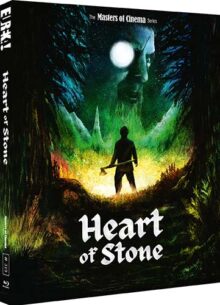
 Director: Paul Verhoeven
Screenplay: Paul Verhoeven and Wolff von Gordon
Based on the story: The Cold Heart by Wilhelm Hauff
Starring: Lutz Moik, Hanna Rucker, Paul Bildt, Erwin Geschonneck, Paul Esser, Lotte Loebinger, Alexander Engel, Hannsgeorg Laubenthal, Karl Hellmer
Country: Germany
Running time: 104 min
Year: 1950
BBFC Certificate: TBC
When boutique label Eureka announced they’d be releasing films from DEFA (Deutsche Film-Aktiengesellschaft), the state-owned film studio of East Germany or German Democratic Republic (GDR) which was created following the end of the Second World War, I knew we’d be in for a treat. Some of the films the studio made are highly acclaimed for their inventiveness, creativity and look and feel and have been long on my to watch list.
DEFA’s science fiction films, in particular, have become legendary, and Eureka’s collection of them, called Strange New Worlds which as released in May 2025, was a fantastic way to launch their extras-packed releases of DEFA films. Their second DEFA release is one of the studio’s most treasured and acclaimed films, Heart of Stone, and one I jumped at the chance to review when it was first announced.
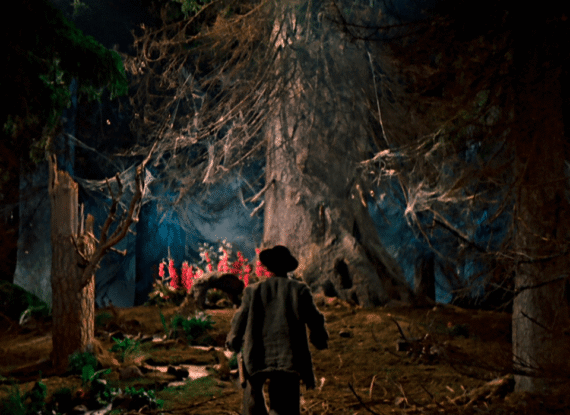
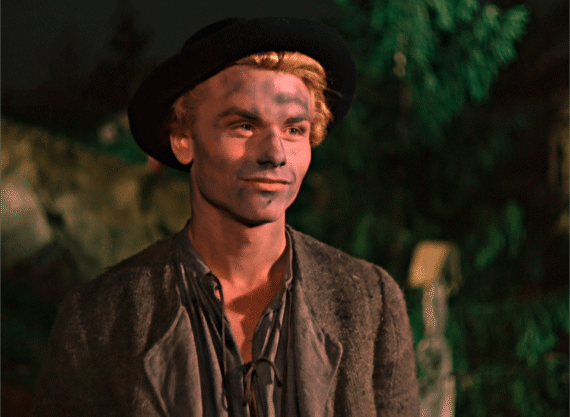
Based on The Cold Heart a fairytale from 1826 by Wilhelm Hauff, Heart of Stone follows Peter (Lutz Moik), a relatively poor charcoal seller who lives in the Black Forest in Germany with his mother (Lotte Loebinger). Peter sets out to improve his social standing after falling head over heels in love with Lisbeth (Hanna Rucker) and becoming jealous of the wealthy merchant Ezechiel (Paul Esser).
Peter encounters and turns to a forest spirit known as the Glass Imp (Paul Bildt), who grants our hero two wishes but, as with any tale of wishes, there are some strict conditions and inevitably two wishes aren’t enough. So, Peter then turns to an infamous and reclusive warlock called Dutch Michael (Erwin Geschonneck), who vows to give Peter anything he wants. All he has to do is exchange his heart for a stone one – the heart of stone of the title. Peter obliges.
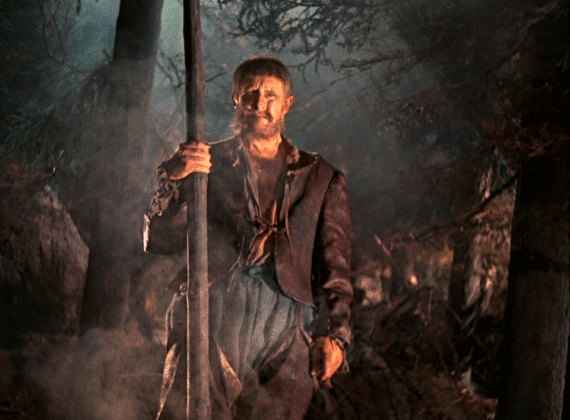
So, what we have is essentially a Faustian tale of a man selling his soul to the devil, or in this case a warlock, to have anything his heart desires, with dire consequences. It’s a tale as old as time, but always one that leads to very entertaining films, and Heart of Stone is no different. It’s a marvellous fairytale.
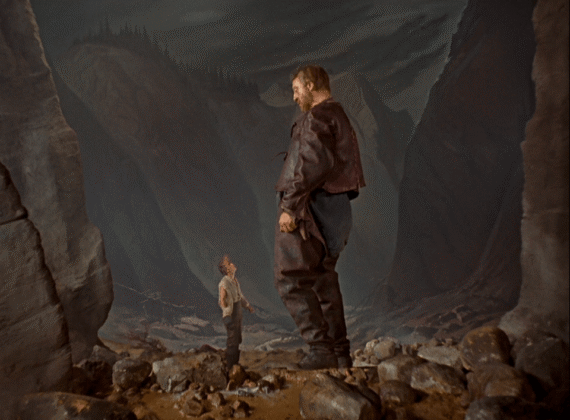
The film, directed by Paul Verhoeven (no, not the RoboCop, Basic Instinct, Total Recall and Starship Troopers one of the same name) was the first East German film production to be shot in colour and a fantastic success, remaining one of the most successful films the GDR ever produced. It’s a visually arresting feast for the senses, with some gorgeous sets, wonderful costumes and production design and some neat special effects, and there’s even the odd musical dance number here and there.

One of the best sets is the Black Forest itself, which feels real yet fantastical, full of magic and animals. It is enticing yet dark and foreboding and, as one of the extras on the disc rightly points out, is a character in its own right. So much that’s memorable about the film is in that forest and it’s a pleasure to spend time amongst the trees, looking out for little details here and there.
The creatures in the forest are marvellously brought to life through real animals and others created from stop motion, puppetry and other special effects. They’re a delight, as are some of the other magical elements like the small glass imp who tells Peter he’ll grant him two wishes. Each of the magical elements feel as though they’re ahead of their time in the way they’re brought to the screen.

But it’s not all magic; the film goes to some very dark places and is a nightmarish tale at times, which I imagine will have given many a child a nightmare over the years, in the same way that the likes of The Singing Ringing Tree which it inspired would have done a few years later. Chief among the nightmare-inducing sequences are the appearances of the partially blind and scarred Dutch Michael, one of which involves trees and other elements of the landscape moving and each seeing the warlock looking ominous and evil, his house full of twitching hearts.
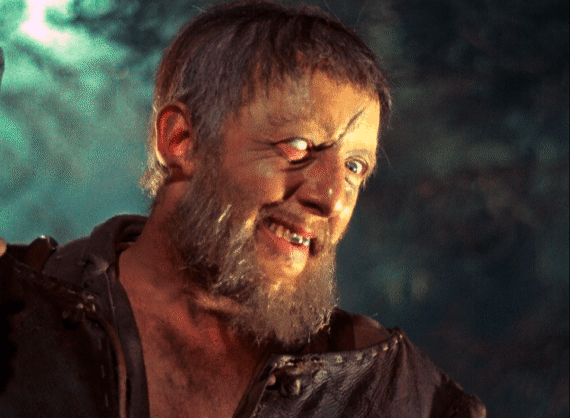
Peter’s descent into heartlessness after his greed takes over and he gives in his heart for a stone way, metaphorically, is also fear-inducing. He gets gradually more devil-like in his look and progressively more nasty and evil to those around him, including his mother, as the film goes on, until it seems there’s no-way back when he violently and fatally strikes Lisbeth shortly after marrying her. Up until this point Lisbeth has all but given up on Peter too; he’s no longer the man she longed to be with and marry, but she doesn’t know why he’s changed, unaware of the pact he’s essentially made with the devil. But the moment when he strikes her is a major turning point in the plot that paves the way for a bittersweet finale.
This being a fairytale, there’s a moral at its heart, here highlighting the evil of greed and polar opposite virtuousness and happiness of kindness, as well as the importance of honesty and making one’s own way in life. It’s a really clear and easy message to take home and is never preachy. There’s also some social realism here, despite the setting, and I can imagine it would have resonated well with the audience at the time.
Heart of Stone was seen by ten million people in East Germany during its theatrical release and won the Best Colour Film award at the Sixth International Karlovy Film Festival in 1951. It’s easy to see why. It is an utterly charming, magical and at times very dark, nightmarish and macabre German fairytale. Rightly lauded as a landmark (it was the first colour film shot in East Germany and paved the way for more than 80 German fairytale features and shorts), it’s a timeless classic that will delight adults and children alike. I fell completely under its spell and hope Eureka will release more DEFA fairytales in the future.
Film: 

Heart of Stone is released on limited-edition Blu-Ray by Eureka on its Masters of Cinema label on 23rd June 2025. The film features a 2K restoration from the original 35mm camera negative and it looks incredible. The colour scheme pops, the skin tones are natural, the level of detail is astonishing and there’s just the right amount of grain. It’s a phenomenal transfer and should be applauded. The audio is also great, dialogue, sound effects and music each set to the right level and with a rich clarity.

Limited edition special features:
Limited Edition [2000 copies]
Limited edition O-card slipcase featuring new artwork by Carly-AF [2000 copies]
Limited edition collector’s booklet featuring new writing on Heart of Stone by Qinna Shen, author of The Politics of Magic: DEFA Fairy-Tale Films [2000 copies]
Heart of Stone presented in 1080p HD from a 2K restoration of the original 35mm camera negative by the DEFA Foundation
Optional English subtitles on the main feature and accompanying shorts, newly revised for this release
New audio commentary by DEFA historian Seán Allan, author of Screening Art: Modernist Aesthetics and the Socialist Imaginary in East German Cinema
Once Upon a Time in the East – new interview with Soviet cinema expert Claire Knight on Heart of Stone and children’s media in the Eastern Bloc
Tales from the Black Forest – new video essay on Heart of Stone, folktales and gothic horror by film and literature scholar Mary Going
The Bremen Town Musicians (Bruno J. Böttge, 1954) – silhouette folktale short produced by the DEFA Studio for Animation Film
The Magic Ring ( Bruno J. Böttge, 1957) – silhouette folktale short produced by the DEFA Studio for Animation Film
Thumbelina’s Adventures (Christl Wiemer, 1958) – animated folktale short produced by the DEFA Studio for Animation Film
Original theatrical trailer
The audio commentary by film professor and author Seán Allen packs so much into the film’s runtime, starting with some history about what it may have felt like to watch the film at the time of its release. Allen looks at the sociological and political issues that were happening in Germany at the time and the film’s place in this history. Allen touches on some of the film’s scenes, the original story it was based on, costumes, actors, the special effects and music sequences and much more. It’s a very informative commentary, which is also a great listen.
Once Upon a Time in the East is a fabulous 24-minute interview with Claire Knight which looks at socialist children’s media. Knight looks at the creativeness of children’s media and subversiveness at the time the film was made. It highlights the reclamation of fairytales for working people, and how these films would meet the values of the audience but also be entertaining. Knight describes what made these stand out and be a “little bit spicy” for audiences at the time given the social backdrop against which they were made. Knight also looks at what makes Heart of Stone a landmark film. It’s a marvellous piece.
Tales from the Black Forest is a 22-minute visual essay by Mary Going which begins with a brief overview of the creation of DEFA and its purpose, and why the studio chose to make Heart of Stone. The importance of the Black Forest in so many aspects of German life is also touched on, with Going highlighting how the location is essentially a character in the film. Going also talks about the importance of gothic horror and folk traditions. It’s another first class extra presented in an entertaining way.
One of the best parts of the new DEFA releases from Eureka is the inclusion of other shorts and here we have three 1950s folktales.
First, The Bremen Town Musicians is a silhouette folktale short from 1954. Running for 20 minutes it’s an adaptation of a fairytale by the Brothers Grimm and tells the tale of four ageing animals who have been excellent hard workers, but whom are mistreated in later life. After a brief narration it’s a silent black and white short that is a delight to watch.
The Magic Ring is a 20-minute black and white silhouette short from 1957 featuring Hansel and Gretel, which sees Hansel encounter a magic ring that grants your heart’s desire. It’s another wonderfully creative, visually arresting and magical short.
Finally, Thumbelina’s Adventures is a 17-minute animated short from 1958, which is in colour and tells the story of Thumbelina in a fun way. It’s a delightful little short, with well animated characters who have a Merry Melodies/early Looney Tunes feel about them. Like the other shorts on the disc, it’s a very welcome inclusion.
Completing the on-disc set of extras is a three-minute trailer which does a good job selling the film and its grandness without spoiling too much of its fantastical elements.
I was provided with a PDF of the booklet for this review and it’s another typically excellent one from Eureka. Running for 20 pages it contains one article, On Wealth and Humanity in DEFA’s Heart of Stone by Qinna Shen, author of The Politics of Magic: DEFA Fairy-Tale Films. The essay covers a lot of ground from the film’s inception, how traditional trades were associated with a supernatural guardian, its production and changes made to the original story when adapting it for the screen. Shen also touches on the reception the film got at the time – some of its grislier moments were criticised – and its lasting legacy. It’s a great essay in a beautifully put together and well appointed booklet.
In closing, Eureka have provided a wonderful release of an important and entertaining German fairytale film. Boasting an excellent audio/visual presentation, headlined by a new 2K restoration, the release includes an audio commentary and two video pieces that together weave the fascinating backstory and history to the film, whilst the inclusion of three shorts is welcome. With their Strange New Worlds boxset and now Heart of Stone, Eureka have begun their releases of films from the DEFA vaults in very fine style and I’m looking forward to future releases of the studio’s films from the boutique label.
Disc/Package: