



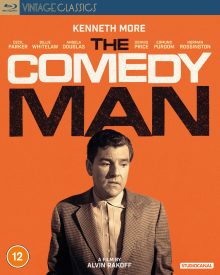
Director: Alvin Rakoff
Writers: Peter Yeldham (screenplay), Douglas Hayes (novel)
Starring: Kenneth More, Billie Whitelaw, Dennis Price, Frank Finlay, Angela Douglas
Year: 1964
Duration: 92 mins
BBFC Certification: PG
Getting the balance right between comedy and drama is a hard thing to pull off. When it works, it’s sublime – films such as Muriel’s Wedding, Little Miss Sunshine, The Apartment or Sideways can easily attest to that. Yet sometimes making a brilliant film is only half the battle. If a movie stakes too fine a line between laughs and tears, marketing teams and producers can sometimes get thrown into disarray about exactly how to sell that to audiences – often to the film’s detriment. It is exactly this fate that befell the brilliant 1964 Kenneth More film The Comedy Man, which died a death at the box office upon its original release. Little seen since, StudioCanal are now releasing the film on Blu Ray, where, if there is any justice, The Comedy Man will find the audience it has always deserved.
Shot in 1962 (but held back and released in 1964, right at the height of Beatlemania) The Comedy Man feels like a strange amalgamation of British film making at the time. Starring Kenneth More as a struggling, out of work actor, it has one foot firmly placed in the light comedy that More excelled in, seen in such films as Genevieve or The Doctor in the House series, while also clearly bearing the influence of the darker, grittier ‘kitchen skink’ dramas that had dominated British cinema during the late fifties and early sixties. The Comedy Man manages to skilfully navigate these potentially disparate tones and emerges as a brisk, effortlessly entertaining look at the acting profession, where a lightness of touch does little to hide a dark, cynical heart beating within.
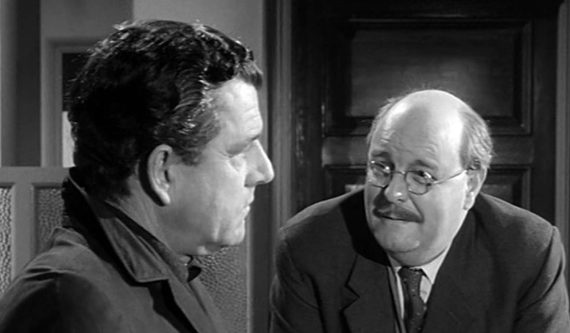
More plays Chick Byrd, a forty something actor who finds himself kicked out of a repertory theatre group after sleeping with the Producer’s wife. Chick finds himself back in London, shacking up in a grotty, damp ridden flat near Paddington with his old thespian friend Julian (Edmund Purdom). Chick, now unemployed, spends his days trying to find acting work while reconnecting with old friends such as Jack (another struggling actor who hasn’t had paid work in 18 months) and old flame Judy (Billie Whitelaw). Soon, tragedy strikes, which forces Chick to make a decision between sticking to his principles or giving up the dreams he has held onto for so long…
At the heart of The Comedy Man is a dilemma that many a creative soul has had to tackle at some point – at which stage do you face reality and give up on your dreams? More to the point, is it even possible? The world of The Comedy Man is filled with these broken, tragic figures, who have never been able to relinquish their ambition, fulled by an eternal optimism that a big break is just around the corner…even when all signs are pointing to the fact that their chance has been and gone. Needless to say, lives are ruined and destroyed.
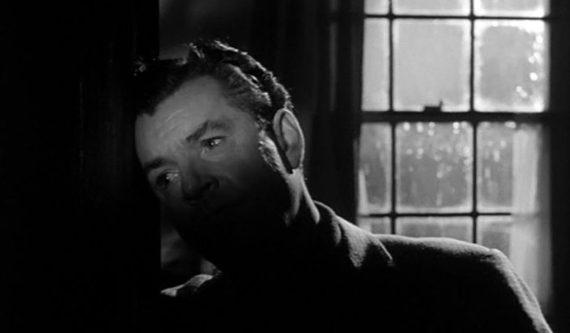
This dilemma cuts at Chick deeper than most. Now in his early forties (More, incidentally, was in his fifties at the time of filming) he is feeling the ticking clock more loudly than others. Fuelled by pride and an instance in only doing ‘worthy’ work, his career has stalled. Yet Chick carries on, hiding his fears and insecurities behind a light, comedic persona that belies the fact that his life has gone nowhere.
Kenneth More delivers a great performance as Chick. While his attempts at comedy have dated and aren’t that all that funny, there is still a breezy charisma to More that helps carry things along. In fact, More shines brighter when tackling the meatier, more dramatic material. Always adept at serious roles (such as in A Night to Remember or Sink the Bismarck!) as well as more comedic ones, The Comedy Man serves to highlight More’s impressive versatility. There is also a pathos in knowing that this was to be the actor’s last leading cinematic role; in a poignant example of life imitating art, More was soon to be pushed into supporting parts and TV work by the new generation of actors coming up behind him (the film, with a quick, throwaway line about Albert Finney, certainly seems aware of this).
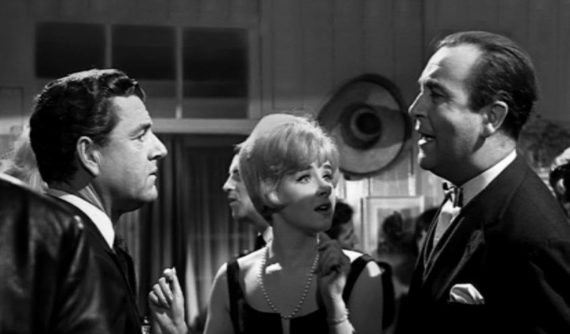
More is ably supported by a wonderful cast, which includes Alan Dobie, Billie Whitelaw, Dennis Price, Frank Finlay, Norman Rossington and Angela Douglas (who would go on to become More’s wife). Yet The Comedy Man isn’t just an actor’s showcase, as director Alvin Rakoff also delivers sterling work.
Building up a reputation in TV, The Comedy Man is only one of a handful of films that bear Rakoff’s name. Although he made a few other features (including the fantastic British noir Passport to Shame and Hoffman with Peter Sellers) he mainly continued to work in TV throughout his career. This is regrettable in some ways, as Rakoff certainly impresses in The Comedy Man. The world he creates to explore the dilemmas of struggling actors is a cruel, cynical one, filled with everything from desperation to lecherous exploitation. With the building that Chick lives in having the words ‘Hell’ and ‘Little Hell’ painted on the front doors of separate flats, there is no doubt that Rakoff, much like Bruce Robinson did so brilliantly a few decades later in Withnail and I, is keen to strip away any veneer of glamour that many people attach to actor’s lives, revealing the stark and brutal reality that many actually face. Technically, Rakoff also manages to elevate the film beyond its small budget. Using various techniques, from a 360 degree pan around a bed to loose, handheld camera work, the film occasionally shows as much ambition as the characters that populate it.
By the end of The Comedy Man, Chick finds himself in what might very well be a literal Hell, where the name of his flat has now morphed into a garish reality. It is at moments like this, when More shifts his breezy performance into one of darker introspection, where The Comedy Man really shines, illuminating a unforgiving world that, just as much then as now, feeds of the ambition of millions but only bestows the rewards on the lucky, chosen few.
Film:


The Comedy Man is being released on Blu Ray, DVD and Digital by Studio Canal, via their Vintage Classics label, on the 18th March. As ever with the current crop of Vintage Classic releases, the picture quality on the Blu Ray was wonderful. Based upon a brand new 4K restoration, the image on disc was clear, sharp and boasted great contrast. There were no encoding errors that I could see. Sound was clean and legible. Altogether, another great A/V presentation of a classic British film.
There are two key extras on the disc. The first is an interview with director Alvin Rakoff. Over an entertaining and candid 22 minutes, he discusses the difficulty he faced with the film once completed (it was re-cut without his permission, for example) as well as offering some great stories about Cary Grant, who visited the set…and some less kind words about Edmund Purdom!
The other main extra features the critic and film historian Neil Sinyard, who provides a typically engaging and insightful overview of the film. He discusses how the film was released at a bad time (at the tail end of British new wave) and explores why the film wasn’t successful. He then goes to talk more broadly about the cast, before offering some thoughts on Kenneth More and how The Comedy Man fitted into his career.
A trailer rounds out the disc.
Disc/Extras: