


 Andrzej Żuławski is a filmmaker known mostly in the UK as the director of Possession, the 1981 arthouse film that cropped up on the infamous ‘video nasties’ list made by the Director of Public Prosecutions (though it was one that, ultimately, wasn’t prosecuted). He was, however, a writer-director with a body of work that stretched from the early 1970s to his death in 2016. Whilst always a divisive figure, Żuławski’s films often received much critical acclaim and he won several awards during his lifetime.
He studied in France and many of his films were made there. However, he was a Polish national and most of his first handful of films were produced in his home country. The reasons behind the move away from Poland will become apparent throughout the rest of my review.
Much of Żuławski’s work has been hard to come by in the UK but Eureka are looking to address the balance by grouping his early Polish films together in a Blu-ray boxset entitled ‘Andrzej Żuławski: Three Films’. I must admit, I initially wasn’t going to review the set as the director’s reputation suggested I’d be in for a tough ride that I’m not sure I wanted to subject myself to. However, when a screener copy arrived on my doorstep regardless, I figured I’d be brave and take the plunge.
Read on to hear my thoughts.
The Third Part of the Night (a.k.a. Trzecia czesc nocy)
Director: Andrzej Żuławski
Screenplay: Andrzej Żuławski, Miroslaw Żuławski
Starring: Leszek Teleszynski, Malgorzata Braunek, Jan Nowicki, Jerzy Golinski, Anna Milewska, Michal Grudzinski
Country: Poland
Running Time: 107 min
Year: 1971
The Third Part of the Night (a.k.a. Trzecia czesc nocy) is set in Nazi-occupied Poland during World War II. We follow Michal (Leszek Teleszynski), a young man who witnesses Nazi soldiers slaughter his wife, son, and mother at their villa. Michal and his father avoid death by hiding in a nearby forest, from where they see the murders.
Michal subsequently joins the resistance but, on the way to his initial meeting, his go-between is killed and he’s chased through the streets. When Michal hides in a nearby apartment building, a man wearing a similar coat is shot and captured in his stead. Michal hides in the man’s house and ends up having to help the man’s wife, Marta (Malgorzata Braunek – Żuławski’s then-wife) who is a doppelganger for his own dead wife and who goes into labour following the trauma of the event.
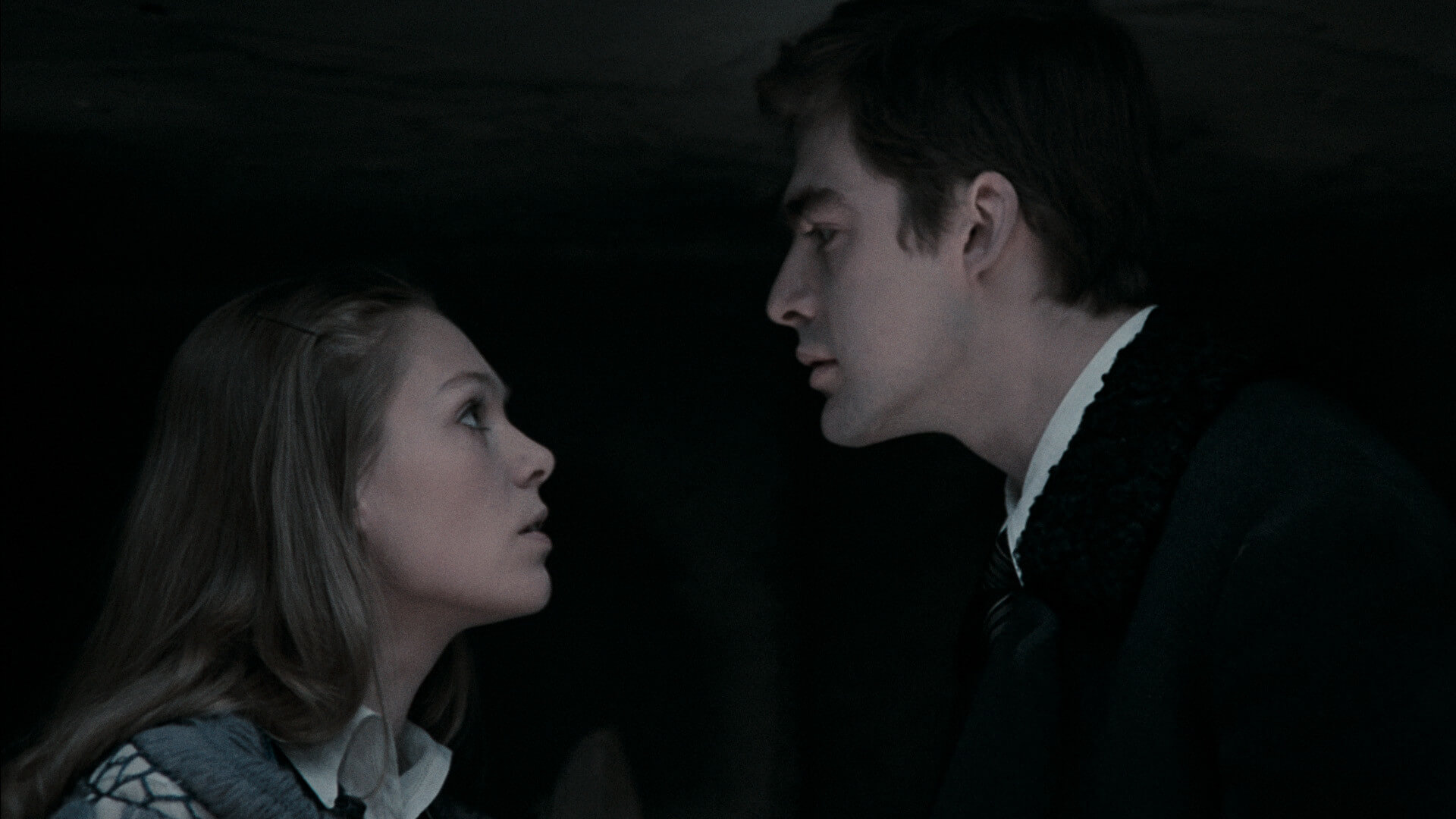
Feeling guilty for his role in getting the man arrested and possibly killed by the Nazis but too afraid to turn himself in, Michal instead does his best to support Marta and her new baby. With little resources to do so, he resorts to desperate measures, including becoming a ‘lice feeder’ (look it up, but not while you eat your lunch).
Meanwhile, he begins to see visions of his dead wife and child and becomes increasingly paranoid and unhinged.
Żuławski was only 5 years old at the end of the war so had no firm memories of the time but his father, Miroslaw Żuławski (who co-wrote the script), did live and suffer through it. As such there are some true life experiences entered into the film, such as the lice feeding. Żuławski has also stated that, during the war, all of his family died, other than he and his parents. His younger sister succumbed to hunger, which likely inspired the dead child in the story.
You might think this personal experience would make for a gritty, naturalistic war movie but The Third Part of the Night plays out like a hallucinogenic nightmare rather than a simple account of the horrors of WWII. You don’t even see much of the Nazis, though the threat of execution is always there. Instead, we’re whisked through a whirlwind of horrific events that get increasingly more fractured and surreal.
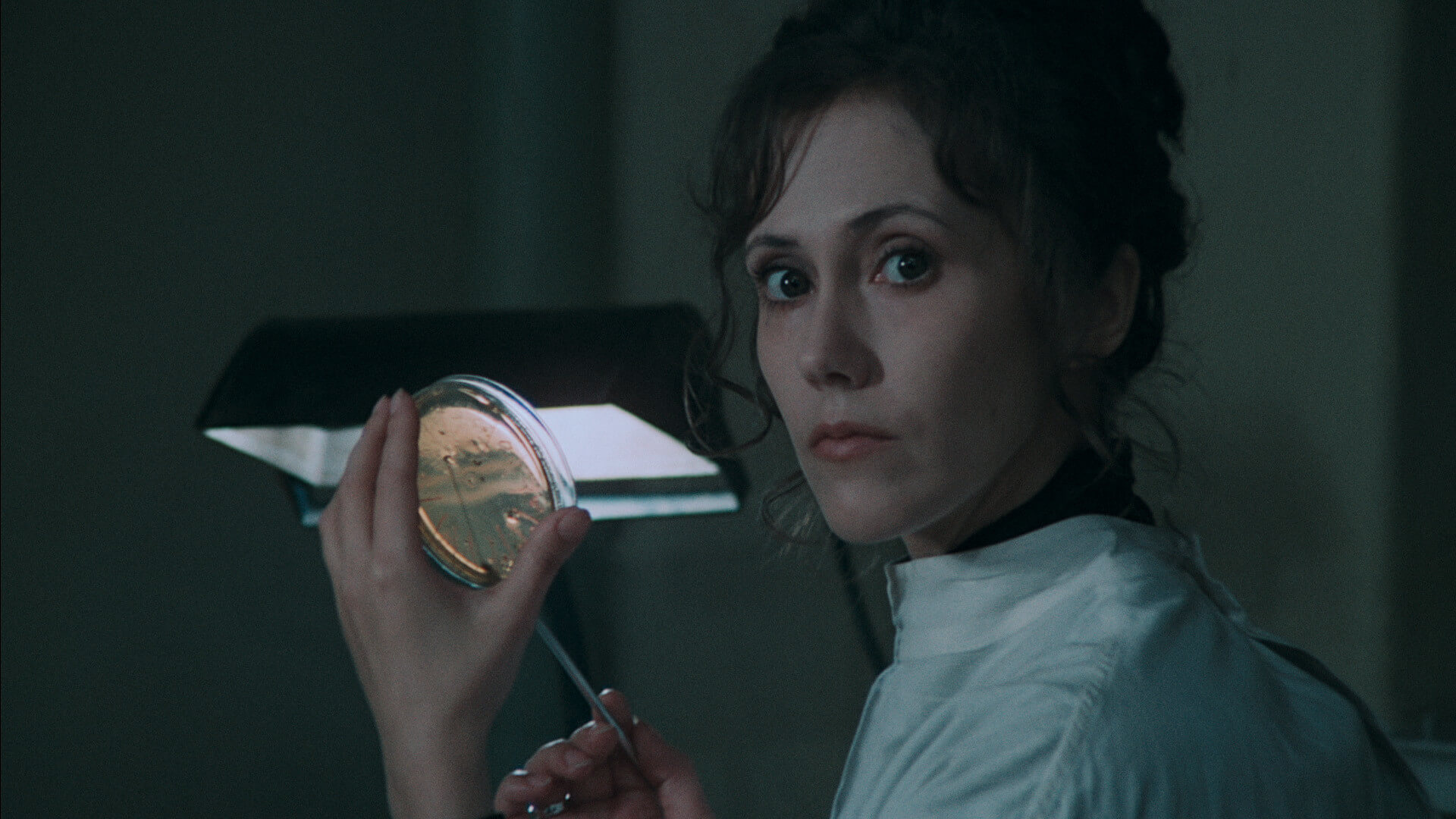
On top of simply creating a terrifying vision of life during wartime, I felt that Żuławski was making a film about survivor’s guilt. Michal feels powerless following the death of his family and tries to make some sort of amends for what happened but these attempts seem futile.
Despite this being my first Żuławski film, I knew of their reputation for being intense and often disturbing. Indeed, I found The Third Part of the Night to be both of those things. It’s constantly firing on all cylinders, with performances heightened and impassioned, whilst the imagery is regularly distressing. It’s certainly not a film for everyone and I wouldn’t argue with those who would say it pushes things over the top, as it does all get a bit much as the film goes on.
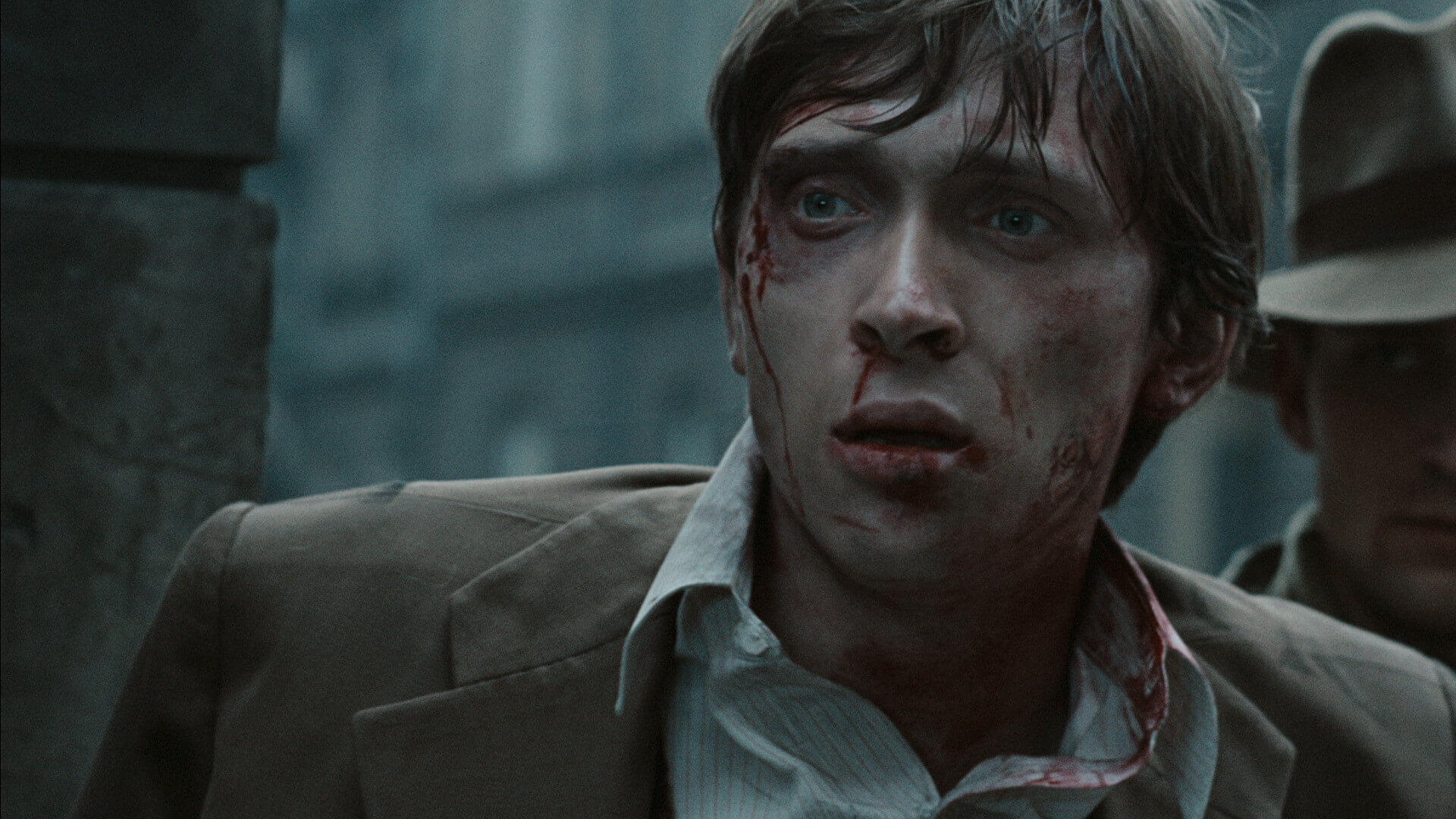
What is difficult to argue against though, is that the film is a visual marvel. It was shot largely handheld, which is incredible, given the vast amount of movement that, whilst wild, isn’t prone to the headache-inducing shakiness you get in more modern handheld-shot films. Great use is made of locations too, as the camera hurtles and spins through them.
Andrzej Korzynski’s score is also unique and effective, using abstract sounds and splashes of anachronistic rock and jazz music to aid the tense and disturbing atmosphere.
Overall, The Third Part of the Night is a grim, confounding nightmare and a stylistic tour-de-force that can be difficult to follow and stomach but is sure to sear a place in your memory.
Film: 

The Devil (a.k.a. Diabel)
Director: Andrzej Żuławski
Screenplay: Andrzej Żuławski
Starring: Leszek Teleszynski, Wojciech Pszoniak, Malgorzata Braunek, Iga Mayr, Anna Parzonka, Michal Grudzinski, Maciej Englert, Lukasz Żulawski, Monika Niemczyk
Country: Poland
Running Time: 125 min
Year: 1972
Żuławski’s follow-up to The Third Part of the Night was The Devil (a.k.a. Diabel). This marked the start of the director’s troubles with the powers-that-be in Communist Poland. Despised by both the government and the Catholic church, The Devil was instantly banned, not being shown anywhere until 15 years after it was finished.
Set in 1793, during the ‘Second Partition’ when Prussia and Russia separated Polish territories, The Devil opens with a young Polish nobleman named Jakub (Leszek Teleszynski again) being saved from imprisonment by a mysterious stranger (Wojciech Pszoniak). Jakub rides back home accompanied by a nun (Monika Niemczyk), due to him still recovering from a grave illness.
When he arrives back home, Jakub witnesses the chaos and moral corruption of the war-torn country. Among a number of disturbing sights, he finds his father dead but still laying in his blood-soaked bed and his fiancée (Malgorzata Braunek again) being forced to marry his best friend. Driven mad by what he has seen and encouraged by the stranger, Jakub commits a number of often motiveless and violent killings.
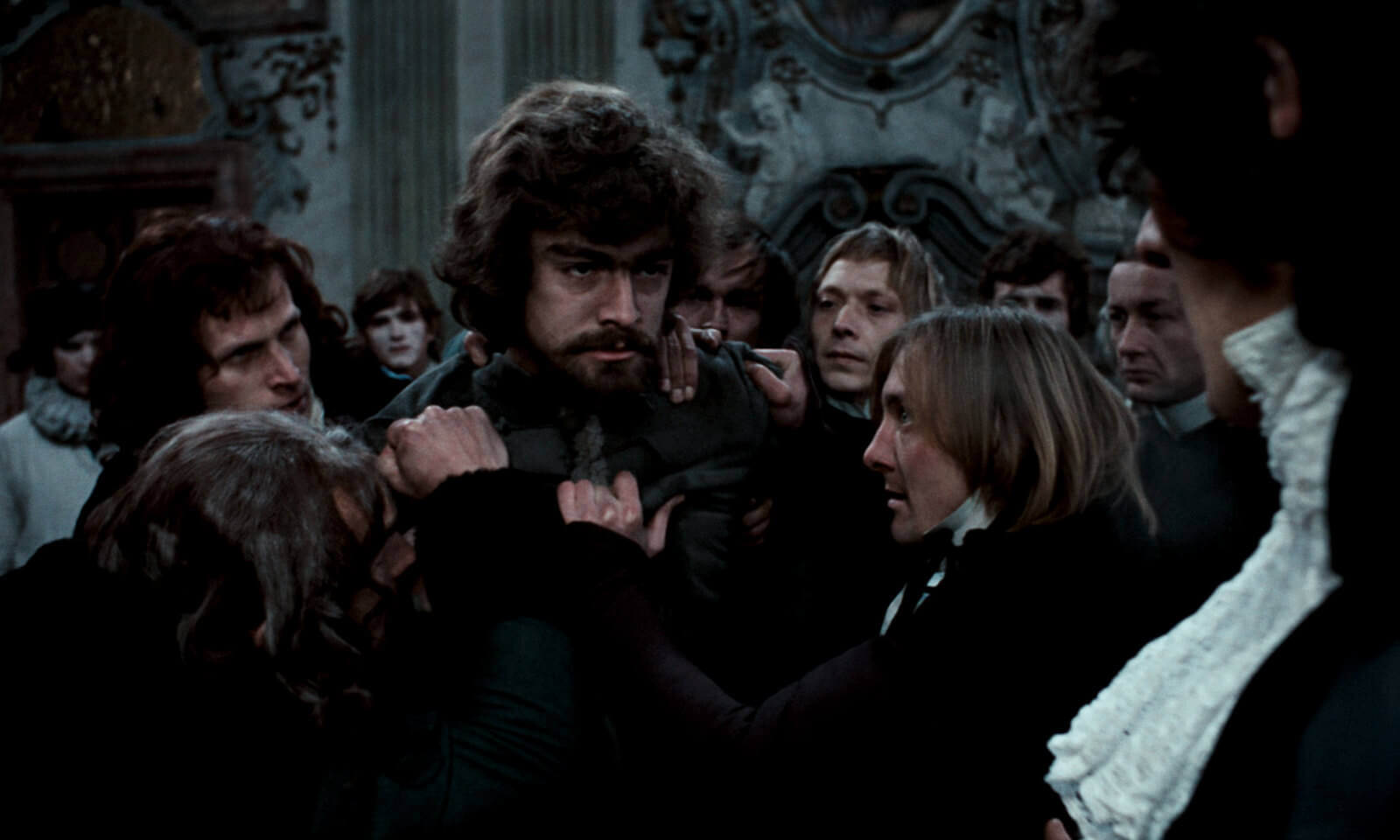
Wow, I thought The Third Part of the Night was intense but this tops it, being a notch wilder and more surreal than that earlier film. The Devil is a film of great excesses, bringing to mind Ken Russell’s The Devils for numerous reasons, not simply its name.
The Devil seems to be goading the Polish censors, with graphic and controversial content from the offset. The actor Lukasz Żulawski, Andrzej’s brother, claims the original script was ‘safer’, to please the authorities who would check them before putting films into production. Once he began shooting the film though, Andrzej veered away from what was down on paper, adding much more extreme content.
As such, The Devil is another nightmarish journey that baffles and disturbs, as we’re plunged head-first into a whirlpool of murder and mayhem.
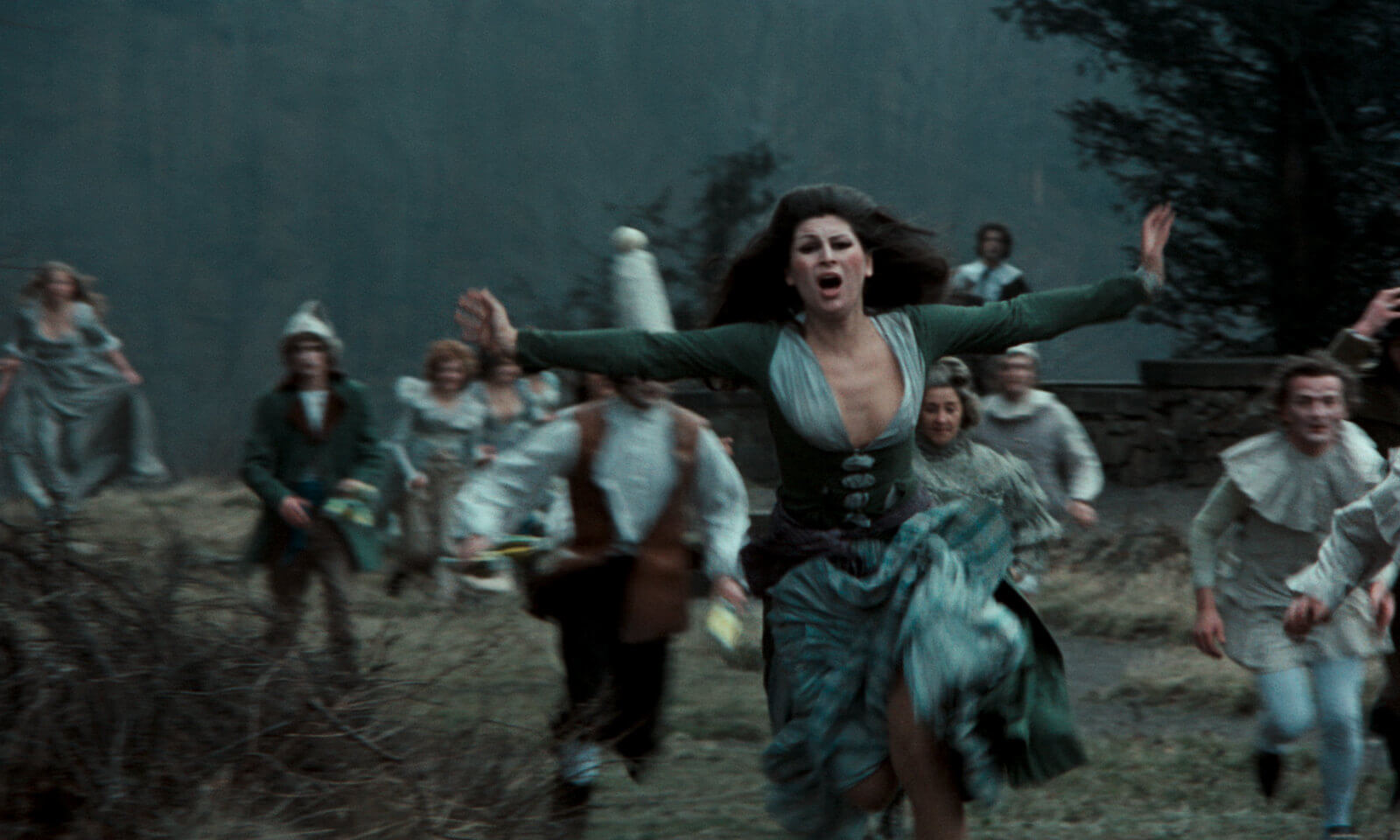
The precise nature of the black-clad figure who acts as Jakub’s guide through his descent to hell is never revealed. He’s a mischievous and evil enigma who could easily be seen as the titular devil but, equally, the atrocities that Jakub gradually acts out could point towards him. In fact, the literal translation of the Polish title could be ‘A Devil’, suggesting there isn’t just one.
Once again, Żuławski and his cinematographer Maciej Kijowski (who was the camera operator on the previous film) make disorientating use of movement and the production design is very impressive. Andrzej Korzynski provides another wonderfully unusual score too, that makes great use of rock instrumentation.
All the screaming, maniacal laughing and stumbling around gets a bit much, but this unrestrained, passionate approach is strangely compelling, if you can settle into its groove.
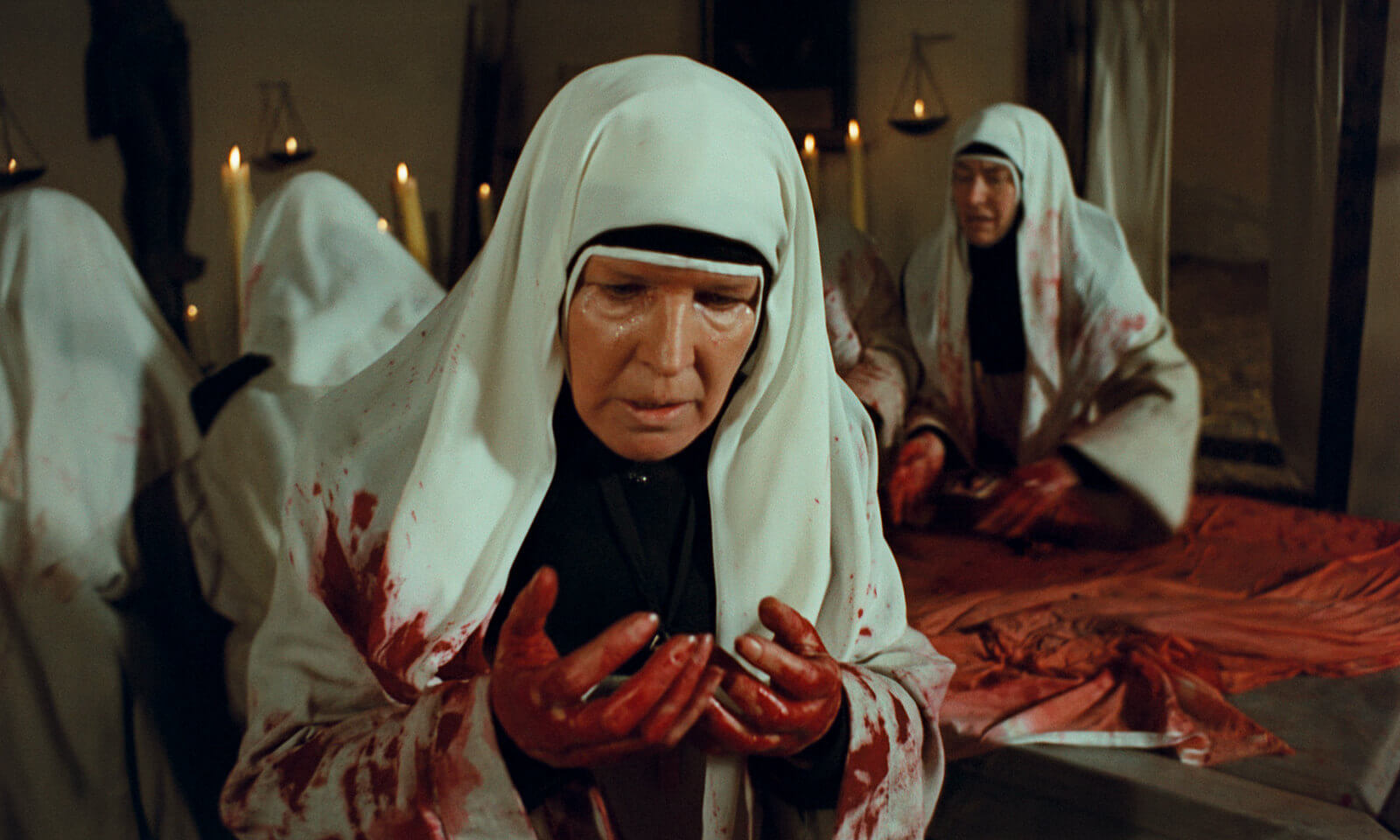
It’s a challenging watch, for sure, and the film could have benefitted from a trim but this is bold, unique and remarkable cinema. Puzzling and exhausting but always jaw-dropping.
Film:
On the Silver Globe (a.k.a. Na srebrnym globie)
Director: Andrzej Żuławski
Screenplay: Andrzej Żuławski, Jerzy Żulawski
Starring: Andrzej Seweryn, Jerzy Trela, Grazyna Dylag, Waldemar Kownacki, Iwona Bielska, Jerzy Gralek, Elzbieta Karkoszka, Krystyna Janda
Country: Poland
Running Time: 165 min
Year: 1988 (though shot between 1976-77)
After The Devil was banned, Żuławski was exiled to France, where he made his next film, That Most Important Thing: Love (an easy move, given his time spent studying in the country and fluency in the language). After this was a huge hit in that country, Żuławski was invited back to Poland to make, in the way he describes it “a film to make people happy”. So Żuławski said he would like to adapt The Lunar Trilogy, a famous series of books written by Jerzy Żuławski (Andrzej’s great-uncle). These books were hugely influential on European sci-fi literature and films, even inspiring members of NASA in their moon landing plans. With this weight behind the project, the authorities agreed to fund the film and production began on On the Silver Globe (a.k.a. Na srebrnym globie) in 1976.
However, when the ambitious shoot was only around four-fifths of the way complete (a fraction described by Żuławski himself), the Polish authorities suddenly stepped in and shut it down. Everything was put to a halt, the cast and crew were sent home and costumes were buried or destroyed.
Some claim the authorities shut the film down because it was deemed too much of an extravagance when times were so tough in Poland, though others believe it was simply an attention-grabbing statement made by the newly stated Minister of Cinematography and Vice-Minister of Culture, Janusz Wilhelmi. The country was experiencing extreme poverty at the time, so many were baffled or disgusted at the fact the country’s film industry (which was controlled by the Communist authorities) was making such an ambitious sci-fi film.

Whatever the reason, Żuławski once again departed for France and what remained of the film sat in the archives for a decade. In 1986, however, as the political state of Poland was coming under drastic changes, Żuławski was invited to complete the film.
Shooting the rest of what was planned was deemed too difficult though, so, instead, Żuławski shot contemporary footage of Poland. This provided a backdrop for a voiceover (spoken by Żuławski himself) that filled the gaps in the narrative.
On the Silver Globe was finally released in 1988, albeit in a truncated form, to considerable critical acclaim.
The plot is rather convoluted but, basically, On the Silver Globe is set in the future and follows the development of, on an unnamed planet, a civilisation that stems from a group of dissident astronauts who have fled from a dystopian Earth.
The astronauts become God-like figures among their descendants and these grow at a rapid rate on the planet, meaning some of the trio of the surviving astronauts get to experience being living deities.
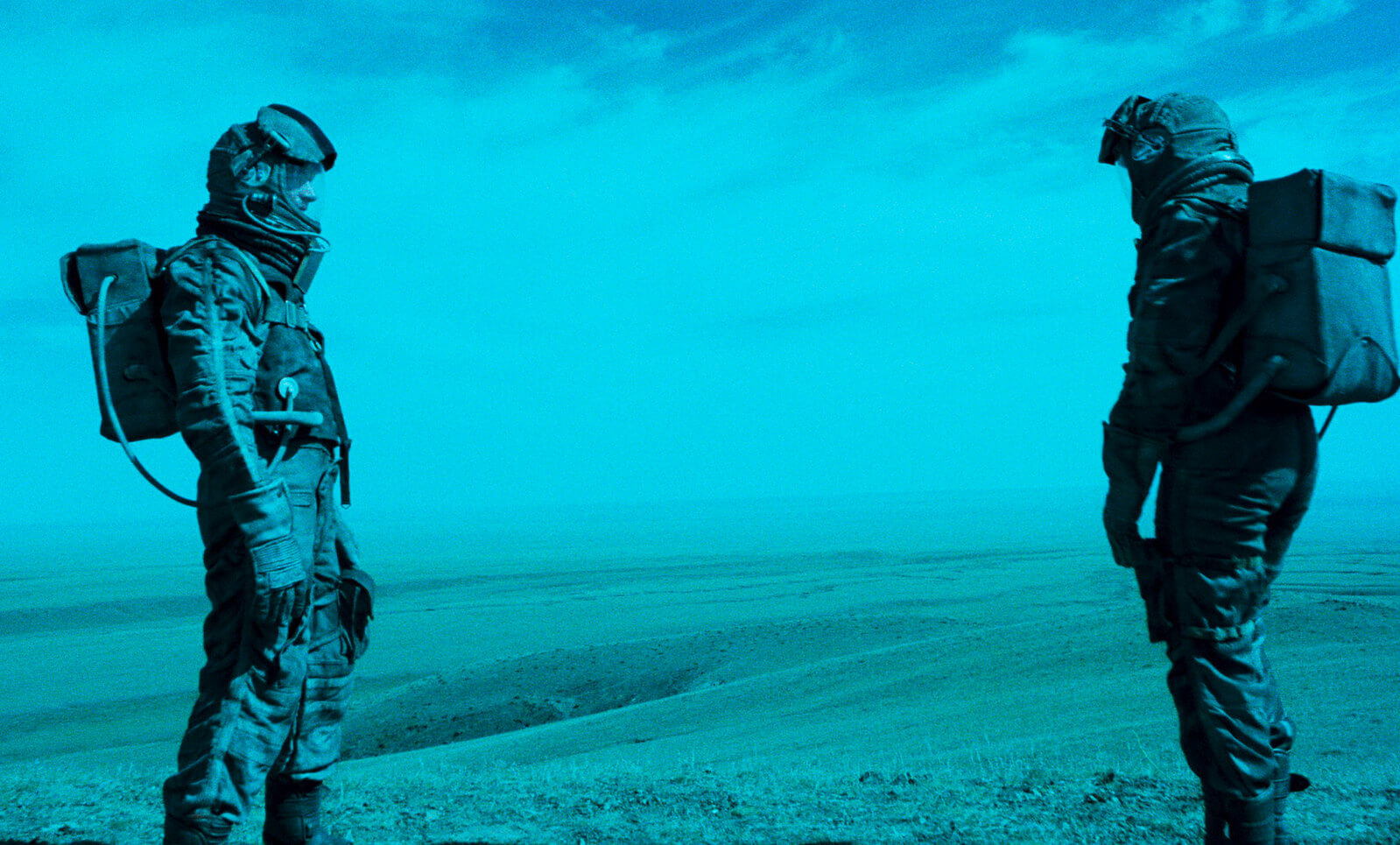
As time goes on and the original astronauts die out, a message from the last survivor reaches Earth and Marek (Andrzej Seweryn), who is devastated by losing the love of his life, decides to head to the other planet to investigate. Being an ‘Earthling’, Marek is thought to be another God sent down to protect the inhabitants against the ‘Sherns’. These are a race of bird-like telepathic humanoid creatures. The bewildered Marek is swept along by his ‘followers’ whilst, back on Earth, his friend and former lover both worry about what’s happened to him.
That’s the ‘nutshell’ version but the film is a long, dense, often confusing sci-fi epic that will frazzle even the most concentrated of minds.
It poses some thought-provoking questions about the role of religion in society. It can be seen as anti-religious in many ways but it’s not always as simple as that. In his commentary, Daniel Bird describes what Żuławski told him was the main theme of the film – “The line running through the various facets of human existence is the compulsion to put on a show, to create a spectacle and the joy of consuming a spectacle.” This isn’t just what we’d first think of as a ‘show’ but includes things like rituals and religious rites. This is reflected strongly in what takes place on-screen. As time rapidly moves on in the film and the planet’s civilisation develops, the activities of the population become less meaningful and more extravagant. It all becomes a pointless display that only ends, as everything does, in death and nothingness. Not a cheerful message then, but an honest and relatable one.
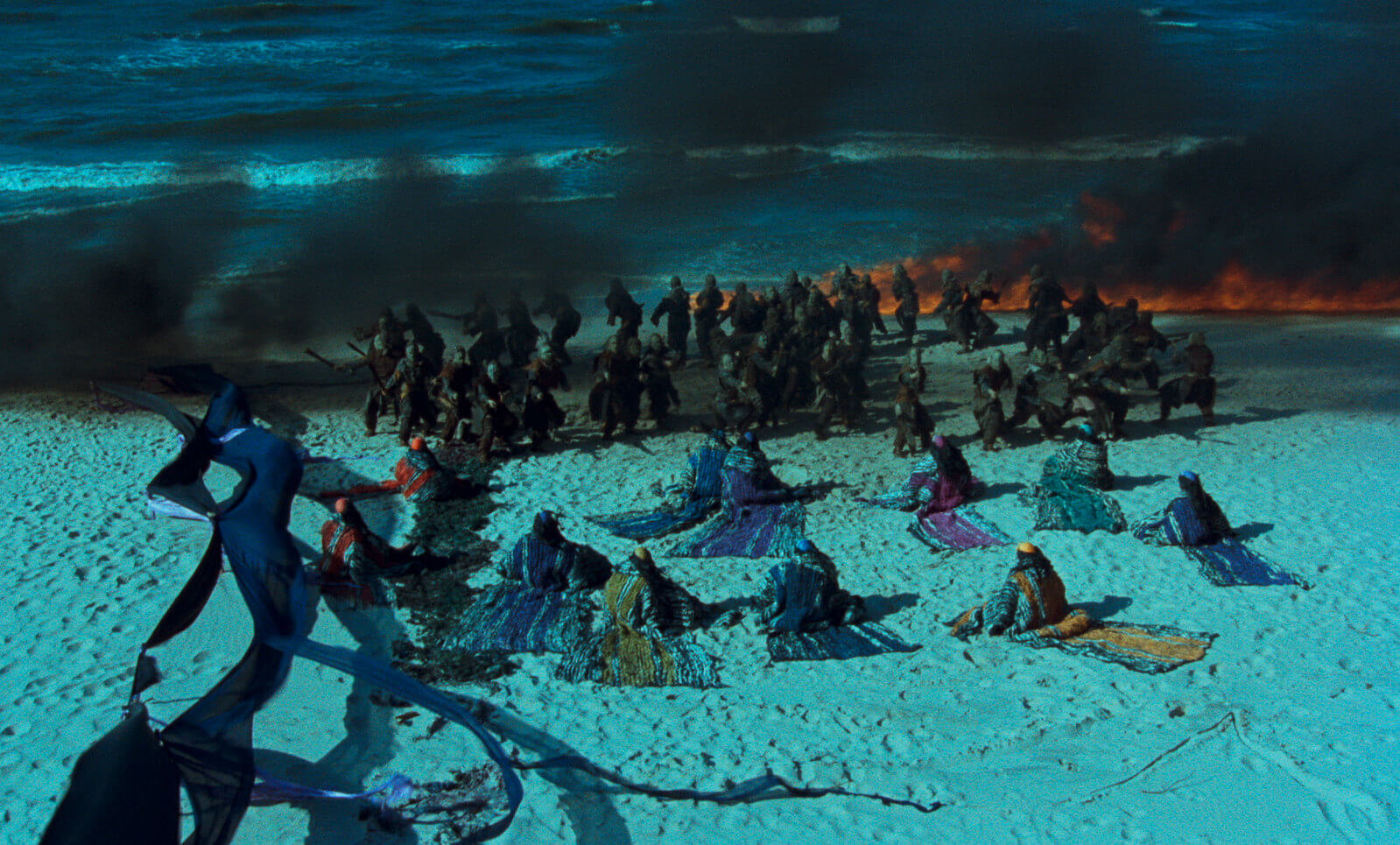
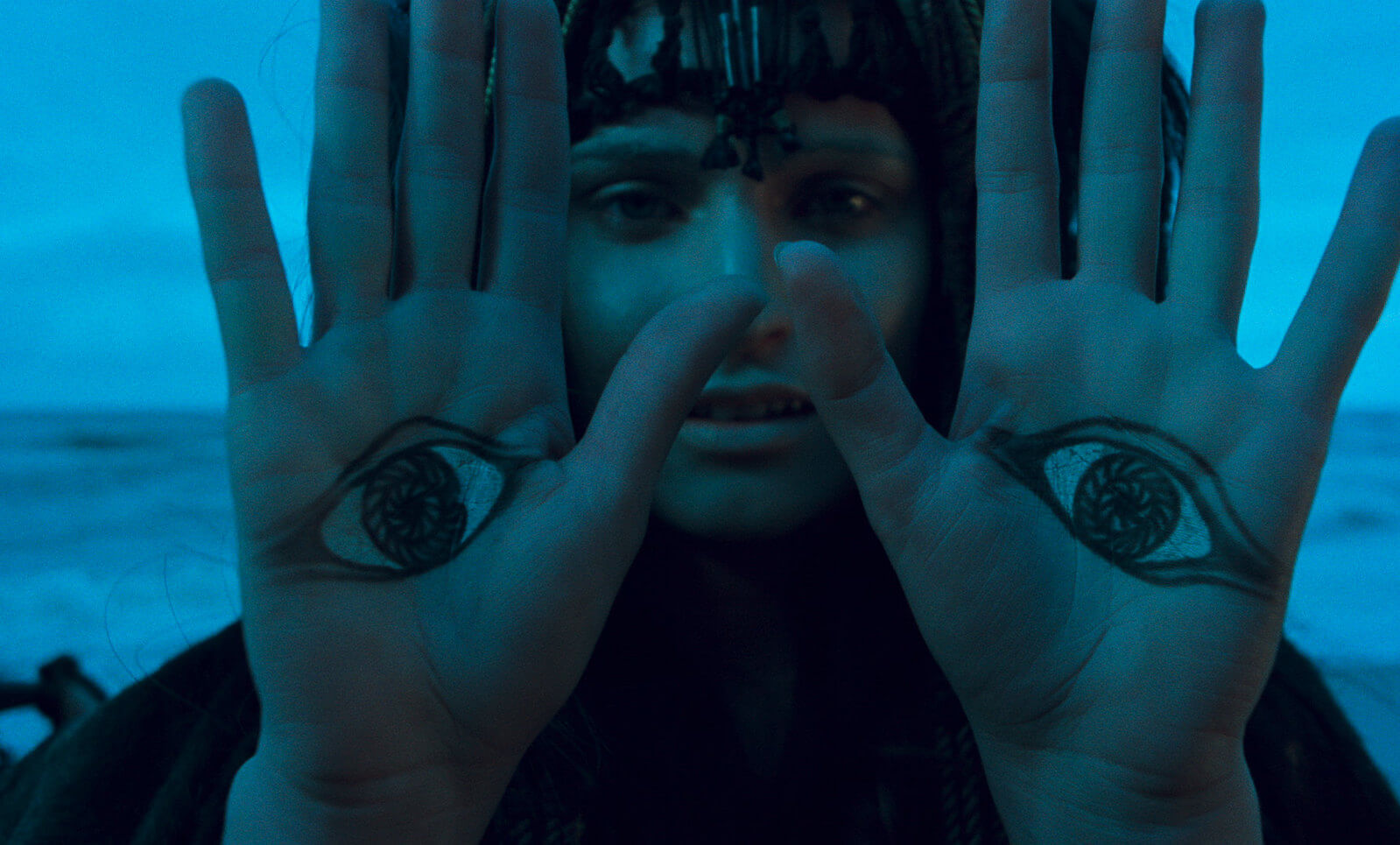
From an aesthetic point of view, the film is remarkable, even more so than its predecessors. The restless camerawork (this time courtesy of Andrzej J. Jaroszewicz) is once again astonishing and incredibly inventive here in a large portion of the film that takes on a ‘found footage’ approach (way before The Blair Witch Project and even Cannibal Holocaust).
Most impressive though, is the production and costume design. Despite being made during a time of great poverty in Poland, the level of detail and invention that went into the look of the film is incredible. Bear in mind too, that On the Silver Globe was shot around the same time as Star Wars so couldn’t have drawn inspiration from that and will have had a fraction of its budget. On the Silver Globe shares the ‘lived in’ look of Lucas’ film, whilst also exploring evolving ‘tribal’ looks for the civilisation that blooms on the planet.
Combining this striking look with Jaroszewicz’s awe-inspiring cinematography leads to imagery that is often simply staggering. This is all done without the aid of CGI or optical FX too. There’s a scene where explosions scatter the landscape that must have been incredibly dangerous to shoot, in particular.
Also, underground sequences, which make up a good portion of the film, were shot in salt mines that could only be accessed by a relatively small 15-person elevator. Non-sparking equipment had to be used too due to the dangers of the methane gas in the atmosphere down there. As such, it was a torturously difficult shoot. According to one of the assistant directors, Halina Hamelko, “one colleague in the group who’d had enough, who wanted to get out of the filming asap, jumped off the stairs and broke his leg.”
Unfortunately though, as much as I could lavish praise on this extraordinary piece of filmmaking, I found it torturously difficult to watch.
The dialogue was the only aspect of the film I actively disliked but it was a big turn-off for me. Daniel Bird explains how this came from a theatrical tradition Żuławski was fond of but I’ve never been a fan of such rambling, flowery language in films, where characters endlessly spout prose or philosophy. I prefer visual poetry and to have philosophical ideas emerge organically from a film, so you have time to digest them. I’ve never been a fan of literal on-screen discussions of such topics, as I can rarely follow them (the cogs of my mind move too slowly for swiftly delivered debates) and they simply don’t make for engaging viewing.
This style is similar to that in the other films in the set but those aren’t quite as dialogue-heavy and are slightly more straightforward. Plus, the earlier titles are notably shorter so your patience isn’t tested to quite the same degree.

Overall then, On the Silver Globe is another stylistic masterpiece that’s quite unlike anything else out there. However, due to the barrage of intellectual dialogue muddying the waters of the narrative and dragging the pace to a standstill, it’s also incredibly difficult to sit through and comprehend. Some might blame the incomplete nature of the film but, to be honest, I would find another half an hour unbearable. It’s a film that deserves to be experienced but don’t expect an easy ride.
Film:
Andrzej Żuławski: Three Films is out on 28th August on Blu-Ray in the UK, released by Eureka as part of their Masters of Cinema series. All three films are stunningly transferred to disc with pin-sharp details, a rich contrast range and pleasing colours. The Third Part of the Night and The Devil have a slightly desaturated look but I believe this is as intended, particularly after the issues Eureka had with initial The Devil grade caused the release to be delayed. The audio on The Third Part of the Night shows some slight flaws, with harsh ‘s’ sounds and a little hiss but, otherwise, it’s pleasing. I had no issues with the other two films.
SPECIAL FEATURES
– Limited Edition Box Set [3000 Copies]
– Limited Edition Hardbound Slipcase
– All three films presented in 1080p HD on Blu-ray, using definitive digital restorations from 4K scans
– Original mono audio tracks
– Optional English Subtitles for all films, from translations by Daniel Bird and approved by director Andrzej Żuławski before his death in 2016
– Escape to the Silver Globe (dir. Kuba Mikurda, 2021) – UK debut of the acclaimed documentary on the production history of On the Silver Globe
– Brand new feature length audio commentary on On the Silver Globe by Daniel Bird
– Michael Brooke on The Third Part of the Night + The Devil – two brand new interviews with film historian Michael Brooke
– Lukasz Żulawski on The Devil – brand new interview
– Adam Żulawski on Jerzy Żulawski – brand new interview
– Return to the Silver Globe – 2019 footage of cinematographer Andrzej Jaroszewicz revisiting the Polish salt mine used as a filming location for On the Silver Globe
– The Cinematography of On the Silver Globe – new documentary by Daniel Bird
– Lunar Futurism – new documentary by Daniel Bird
– A Limited Edition 60-page collector’s book featuring The Enigmas of Żulawski, a new essay by Philip Kemp; Unidentified Film Object, Daniel Bird’s revised and edited notes for a presentation on the production history and restoration of On the Silver Globe; a new essay by Andrew Graves; a transcription from a 1979 samizdat journal criticising the official Polish coverage of On the Silver Globe; and an archival letter written by the crew of On the Silver Globe
Michael Brooke provides a 15-minute interview about The Third Part of the Night. He begins by briefly describing Żuławski’s background and career before discussing his debut feature film, its inspirations and its unique approach to tackling WWII. As is to be expected from Brooke, it’s well-researched and clearly delivered.
In his 18-minute interview on The Devil, Brooke opens by discussing the history of horror in Polish cinema, suggesting the film is one of the very few examples of what you might call a ‘horror film’ that was made in Poland. He goes on to provide background on the film, as well as a little analysis. As such, it’s a valuable accompaniment.
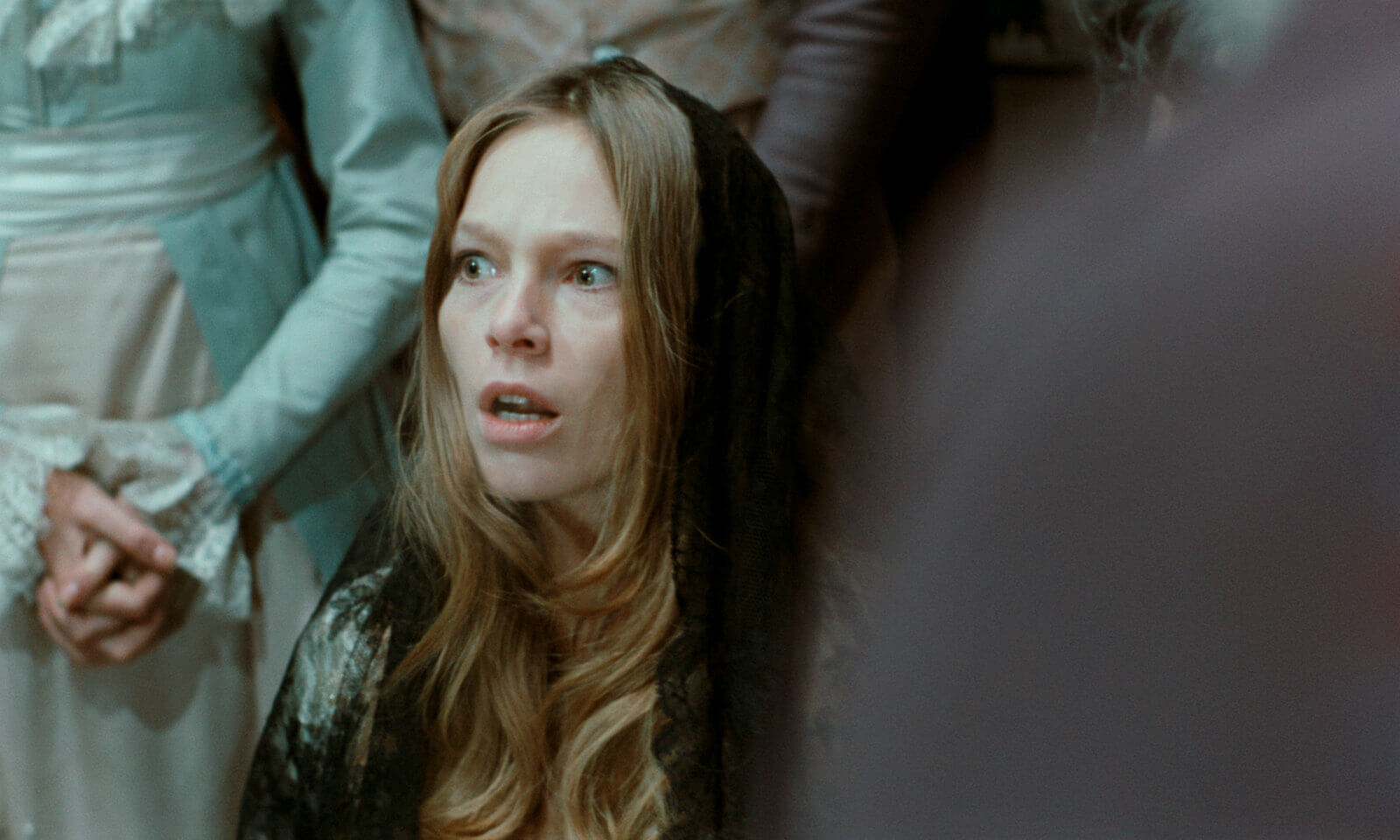
Lukasz Żulawski (who was Andrzej’s brother) speaks for about 19 minutes about his life, career and work on The Devil. He has some eye-opening stories to tell, so it’s an interesting piece.
The On the Silver Globe disc contains the lion’s share of the extras. Daniel Bird’s commentary is vital for better appreciating the incredibly complex film. It’s incredibly well-informed and fascinating. He makes a point that particularly resonated with me, admitting that the dialogue can be a barrier to many and that possibly the best way to watch the film is with the subtitles turned off so you can simply appreciate the film as a cinematic marvel. He also helps make sense of what is happening in the cryptic film, which is welcome. The links he makes between the film and Monty Python were an enjoyable surprise too!
‘Escape to the Silver Globe’, which is housed on its own disc, is a handsomely-produced feature-length documentary about the doomed production. It begins by running through Zulawski’s life and career leading up to the film. From then on, it digs deep into what went into this striking production, as well as explaining what happened when the authorities shut it down and beyond. The contributors, whilst full of praise for the end result, don’t hold back about the difficulties they faced during the production. The interviewees also provide some very interesting thoughts on why the film was cut short before it was finished. It’s an excellent addition to the set.
‘Adam Żulawski on Jerzy Żulawski’ sees the author’s grandson discuss the source material for On the Silver Globe and the importance of Jerzy’s work on developing science fiction literature, which was in its infancy when he wrote his Lunar Trilogy. Adam even describes how Jerzy’s work influenced people working on the first moon landing. It made me keen to find translations of the author’s books and give them a read.

‘Return to the Silver Globe’ is a 10-minute piece that sees cinematographer Andrzej Jaroszewicz revisiting the salt mine location used for On the Silver Globe. It’s a haunting little video that’s largely dialogue-free. When Jaroszewicz does speak, at the end of the piece, sadly what he says isn’t subtitled.
Not listed on the extras list on the Eureka website is a short piece displaying some of the sketches and designs for the props and costumes in On the Silver Globe. These are a treat to see.
When ripping the extra features off the discs (I always do this so I can watch them whilst I’m out and about or cooking), I didn’t get ‘The Cinematography of On the Silver Globe’ or ‘Lunar Futurism’, so either they’ve been dropped or I made a mistake during the ripping process.
The book included in the set is also excellent. Philip Kemp writes about Żulawski’s beginnings and his first two features. He discusses the divisive nature of the director’s work too, quoting reviews from both sides of the coin. Daniel Bird provides a handy timeline summary of the history of On the Silver Globe. This contains some eye-opening quotes from those involved too, so is well worth reading. Andrew Graves’ piece on On the Silver Globe provides a more analytic view of the film that’s more than welcome. There’s also a translation of the official Polish coverage of what happened when the production was shut down, as well as a letter written to the Ministry of Culture to attempt to reverse its decision. Much of the former appears in Bird’s piece in the booklet, but having laid out clearly here is handy.
So, it’s an excellent package for a striking trio of films. None make for easy viewing but, if you have a taste for extreme arthouse cinema, this set is a must-buy.
Discs/Packages: