


 Director: Jim Jarmusch
Screenplay by: Jim Jarmusch
Starring: Masatoshi Nagase, Yûki Kudô, Screamin’ Jay Hawkins, Cinqué Lee, Nicoletta Braschi, Elizabeth Bracco, Tom Noonan, Joe Strummer, Rick Aviles, Steve Buscemi, Vondie Curtis-Hall
Country: USA, Japan
Running Time: 110 min
Year: 1989
BBFC Certificate: 15
Jim Jarmusch gradually created quite a name for himself through the course of the 1980s. His debut film, Permanent Vacation, which was made in 1980 as his final university project, didn’t gain much attention on release, though it did win the Josef von Sternberg Award at the International Filmfestival Mannheim-Heidelberg (formerly known as Filmweek Mannheim). Jarmusch’s two follow-ups, Stranger Than Paradise and Down By Law fared much better though, each bagging several awards on the festival circuit and garnering praise from most critics. He then topped the decade off with Mystery Train in 1989 which was once again greeted by adulation by the majority of critics and nabbed a few awards and nominations. So, whilst his films didn’t make much of an impact at the box office, he’d become a beloved figure in the American independent film scene and he remains a respected writer and director to this day (though his last film, The Dead Don’t Die received a bit of a drubbing).
I’m somewhat hit-and-miss with Jarmusch myself but when I do find myself on the positive side of the spectrum I’ve often been very impressed. A recent first-time watch of Dead Man, for instance, blew me away.
Mystery Train was my introduction to Jarmusch and I liked the film quite a lot when I first saw it back in the late 90s. However, I hadn’t revisited it since, so when Criterion announced they’d be releasing the film on Blu-ray in the UK I thought it was high time to give it another look.

Mystery Train is made up of three only very loosely connected stories that take place in and around the Arcade Hotel in Memphis over the same short period of time. The first story, “Far from Yokohama”, follows a young Japanese couple, Mitsuko (Yûki Kudô) and Jun (Masatoshi Nagase), who arrive in Memphis on a rock and roll pilgrimage. Despite their shared love of the music embedded in the city, the couple is at odds with each other (most notably they fight over who’s best, Elvis Presley or Carl Perkins), and their visit to Memphis becomes an awkward and uncomfortable journey.
The second story, “A Ghost”, revolves around a frazzled, stranded Italian widow, Luisa (Nicoletta Braschi), who is stuck in Memphis overnight. She shares a room at the Arcade Hotel with a talkative and lonely woman, Dee Dee (Elizabeth Bracco), and experiences a spooky vision in the wee small hours.
The third and final story, “Lost in Space”, focuses on a young British man, Johnny (Joe Strummer), whose wife has just told him she wants to leave him. Consoling his friend in a bar, Will Robinson (Rick Aviles) becomes worried about Johnny’s behaviour, particularly the fact he’s drunkenly waving a loaded gun around. He calls Johnny’s brother-in-law Charlie (Steve Buscemi) to come and help calm the distraught man. They do their best but a shocking incident sends the trio into hiding at the Arcade Hotel, late that night.
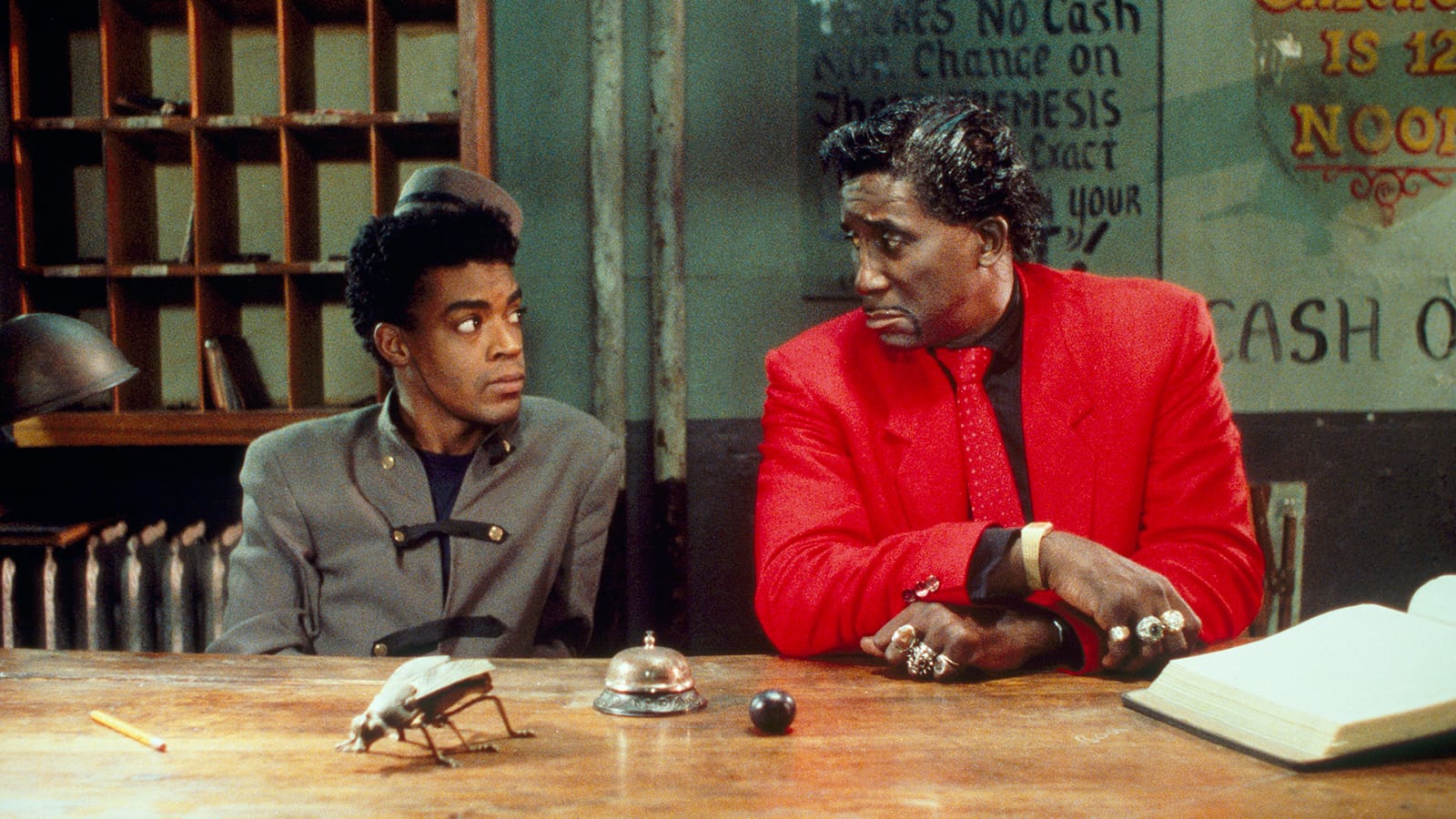
Tying all three strands together are the Arcade’s staff, a night clerk played by Screamin’ Jay Hawkins and a bellboy played by Cinqué Lee (Spike Lee’s brother).
In a Q&A featured on this disc, one of the questioners describes watching Jarmusch’s films as a form of meditation. I can see that. They often, including here, take their time, never getting bogged down in plot but quietly throwing out several ideas to mull over, rather than answering any questions or prescribing any particular message. It can make for an elusive experience that might not be for everyone and, occasionally, I can be switched off by this approach when I can’t find a handle to grasp. In Mystery Train, however, I found myself hooked from the offset, aided by a memorable setting and characters.
Indeed, you could say that the setting of Memphis is the main character in Mystery Train. Jarmusch’s signature side-tracking shots feature heavily, allowing the audience to soak in the backdrop along with our protagonists.
Reportedly, Jarmusch was drawn in by the musical heritage of Memphis and formed stories and characters around it. He explores the myth and the legend of the city through these. Memphis is shown as a ghost town, haunted by (literally in one scene) the memory of its musical past without moving forward with the times.

After Martin Luther King was assassinated, big portions of the city were raised in riots and, whilst this isn’t explicitly referenced, the run-down nature of Memphis points to this for then-contemporary audiences who may have remembered the fact. The racial divide inherent in the city and the culture of the USA plays a part too but only subtly so. Jarmusch never preaches but he adds suggestive elements into the mix to provide food for thought. Using ‘foreigners’ as the chief protagonists of each story provides an outside-looking-in view of Memphis and America too.
You don’t need to spend time digging into hidden meanings in the film to enjoy it though. Like most of Jarmusch’s films, Mystery Train is imbued with deadpan humour which makes for a pleasurable viewing experience. This is all delivered perfectly via a strong cast, which is filled with great character actors like Tom Noonan and Steve Buscemi, as well as a few musicians, such as Joe Strummer and Screamin’ Jay Hawkins. The latter is one of the most memorable players inMystery Train, though relative unknowns Masatoshi Nagase and Yûki Kudô do a superb job of opening the film. Kudô is simply adorable and Nagase is amusingly unflinching in his attempts to exude old-school cool 24-7. The performances throughout the film have a slightly stilted quality but it’s all part of the quirky style that Jarmusch implements throughout his work.
Also helping make this leisurely-paced trio of tales easy to watch is the fact that it looks and sounds fantastic. The use of colour is often striking (particularly in the case of Hawkins’ red suit) and the great Robby Müller, who was the DOP, proves he’s a master of light and composition. Jarmusch’s use of music is excellent too, as you’d expect. Classic Memphis rock and roll tracks are put to good use, on top of some effective score cues from composer John Lurie.

Overall then, Mystery Train is an offbeat, quietly philosophical delight. Its laidback nature won’t suit those with shorter attention spans but there’s charm to enjoy in spades for the rest of us.
Film: 

Mystery Train is out on 24th April on Blu-Ray in the UK, released by The Criterion Collection. The transfer is exceptional. The picture looks gorgeous with rich colours and impressive details. Some hairs in the gate are kept intact but this is how it should be. It sounds lovely too, with a nice, rich sound.
Director-Approved Special Features:
– New, restored high-definition digital transfer, supervised and approved by director Jim Jarmusch, with uncompressed monaural soundtrack on the Blu-ray edition
– Q&A with Jarmusch in which he responds to questions sent in by fans
– Excerpts from the 2001 documentary Screamin’ Jay Hawkins: I Put a Spell on Me
– Original documentary on the film’s locations and the rich social and musical history of Memphis
– On-set photos by Masayoshi Sukita and behind-the-scenes photos
– New and improved English subtitle translation
– English subtitles for the deaf and hard of hearing
– PLUS: New essays by writers Dennis Lim and Peter Guralnick
Jarmusch doesn’t like doing commentaries but his Q&A is a hefty 69 mins, so is every bit as valuable. You could argue it’s even more so due to the questions taking him in some interesting and occasionally quite unusual directions. It gives you a fascinating insight into the man himself, on top of providing some background on the film.
The location piece is surprisingly good too (I’m not usually a big fan of these), taking a suitably leisurely look around the Memphis locations. The contributors provide plenty of background and anecdotes. It takes an interesting turn into looking at Martin Luther King and his assassination in Memphis. Later, it moves onto the importance of music in the city and, for one, describes how Elvis embodied and helped create the racial separation that formed in US culture.
The Screamin’ Jay Hawkins documentary excerpt provides thoughts from Jarmusch as well as interviews and performances from the man himself. It’s a loving tribute to the unique artist.
I didn’t receive a copy of the booklet, unfortunately.
So, it’s not one of Criterion’s most expansive set of extras but what is here is first-rate and the film looks and sounds gorgeous, so it’s still an easy recommendation.
Disc/Package: