


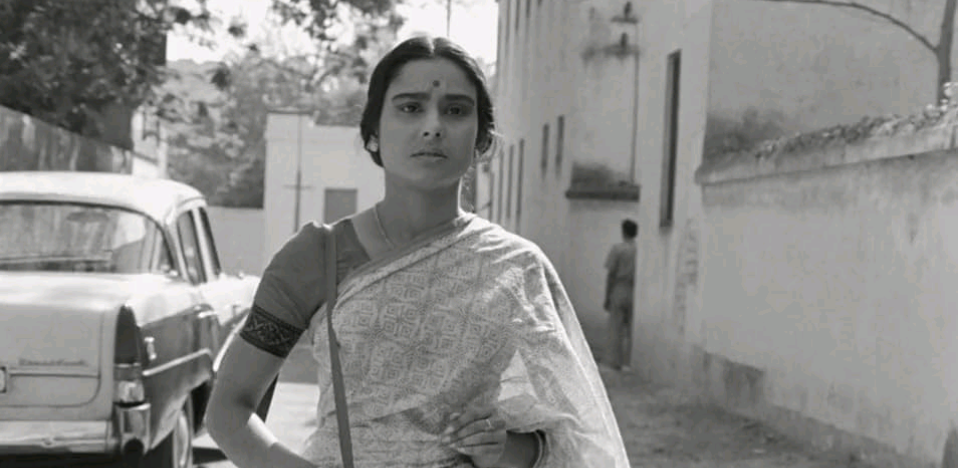
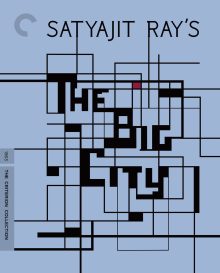
 Director: Satyajit Ray
Screenplay: Satyajit Ray
Based on: Abataranika by Narendranath Mitra
Starring: Anil Chatterjee, Madhabi Mukherjee, Haradhan Bannerjee, Haren Chatterjee, Vicky Redwood, Jaya Bhaduri, Sefalika Devi
Country: India
Running Time: 136 min
Year: 1963
BBFC Certificate: PG
Filmmaker Satyajit Ray was one of the greatest and most influential directors in world cinema. He would direct 36 films in total, including features, shorts and documentaries, starting with his first film Pather Panchali [AKA A Song of the Little Road] (1955) which was a widespread success, winning 11 awards including the first Best Human Document award at the 1956 Cannes Film Festival.
It was the first of Ray’s The Apu Trilogy, which also included Aparajito [AKA The Unvanquished] (1956) and Apur Sansar [The World of Apu] (1959), a trio of masterpieces, with him directing many other phenomenal pieces of cinema including Jalsaghar [The Music Room] (1958) Charulata [The Lonely Wife] (1964) and the subject of this review, Mahanagar [The Big City, as I will refer to it for the rest of this review] (1963).
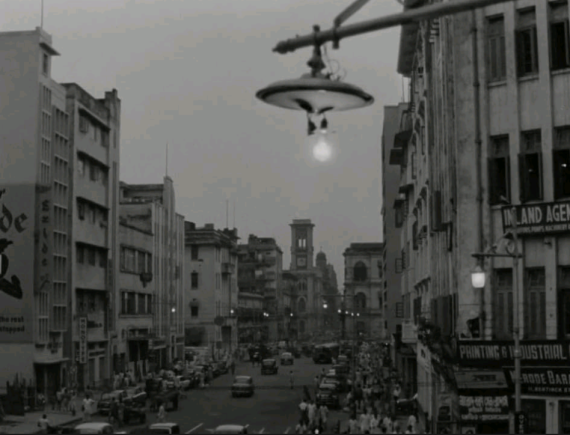
The Big City is set in Calcutta in the 1950s and follows Arati (Madhabi Mukherjee), a housewife who lives in a cramped apartment with her husband Subrata (Anil Chatterjee), their young son Pintu (Prosenjit Sarkar), Subrata’s younger sister Bani (Jaya Bhaduri), and his father Priyogopal (Haren Chatterjee) and mother Sarojini (Sefalika Devi). Money is tight and Arati decides to go out to work, initially daunted by being in the big city alone and taking on a door-to-door sales job that she prospers at, despite Subrata’s disapproving parents.
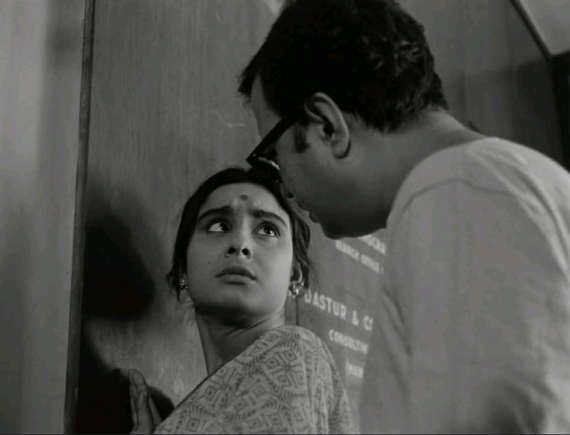
Arati becomes friends with an Anglo-Indian colleague Edith (Vicky Redwood), who introduces her to modern Western ideas like wearing lipstick, and she grows more comfortable in the city. Arati enjoys her new-found independence, but her husband and his parents don’t like her working and try to encourage her to quit.
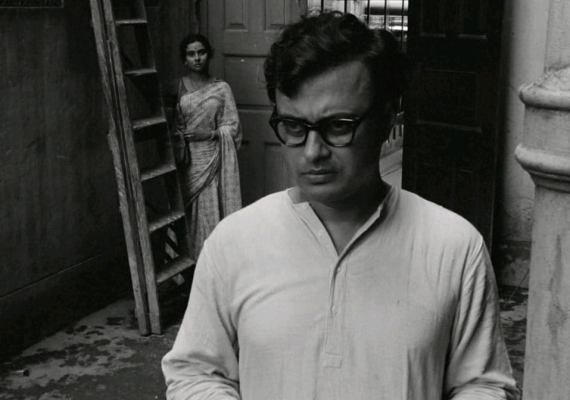
The film is full of highlights but the two that stood out for me were the perceptive script, written by Ray from a story called Abataranika by Narendranath Mitra. It’s a really strong story that is filled with plenty of conflict, but also some wonderful little character moments involving Arati’s family and some of those they encounter. It never feels melodramatic or over the top; we’re just left to observe a family trying to make ends meet and a woman who challenges the norm to make a path for herself, ultimately to help her family.
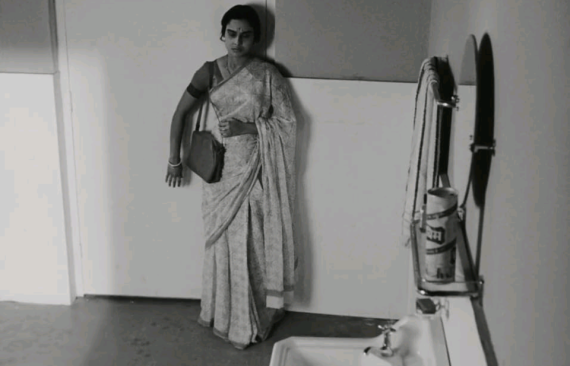
The story builds to a memorable climax that sees a conflicted Arati quit her job because of a huge injustice – her colleague Edith is fired by her boss (Haradhan Bannerjee) for feigning an illness, yet she actually was ill. I shall not spoil the rest but I found the final moments incredibly moving and filled with hope, in scenes wonderfully acted.
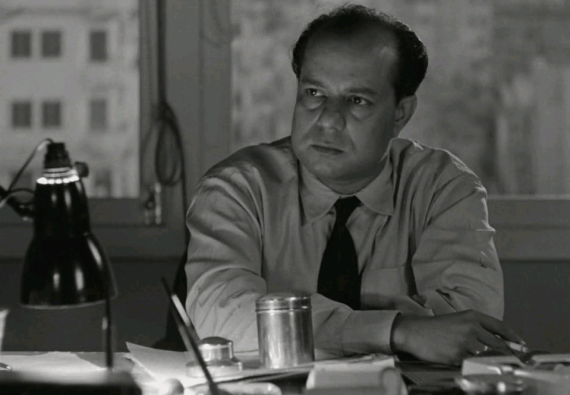
It’s the acting that is the other highlight for me. The film is filled with some incredibly natural performances that feel real, headlined by Madhabi Mukherjee as Arati, who is simply astonishing, and Anil Chatterjee as her husband Subrata. But they’re just the tip of the iceberg as I felt all played their characters well, from the young to the old and everyone in between. In that finale, Haradhan Bannerjee as Arati’s boss is also incredibly compelling and Mukherjee and Chatterjee are also excellent.

There’s a real sense of place thanks to some on location filming and excellent production design, which is all beautifully lensed by cinematographer Subrata Mitra. There are some remarkable shots and images throughout the film, with the actors shown in close-up and also beautifully framed, with window bars, mirrors and other furnishings used to help show how the characters are feeling at the time. The score is also memorable and perfect for the film, which is to be expected as it was composed by the multi-talented Ray.

The Big City is the eighth film of Ray’s I’ve seen thanks to the Criterion Collection, after The Apu Trilogy, Devi (1960), Charulata (1964), The Music Room (1958) and The Coward (1965), the latter of which is also included on this Criterion release. Each time I watch one of Ray’s films I find myself lost in his world; his movies are so captivating and evocative that it is as if time stops so I can just enjoy spending a couple of hours, give or take, with his characters and themes.

The Big City continued that trend. It is an outstanding piece of cinema that I couldn’t take my eyes off. It’s very perceptive in its look at a woman’s place in the modern world of the time, and paints a touching portrait of a family trying to make ends meet in their cramped surroundings. In Arati, the film has a really strong female protagonist who grows in confidence and empowerment as the film goes on; she makes her own way and ultimately stands up to injustice and finds her place in the modern world.
Film: 
The Big City is released on Blu-ray by the Criterion Collection on 11th May 2026. The disc was released in the US in 2013, so it’s great to see it finally make its way to the UK. The restored 2K digital transfer looks fantastic, with plenty of fine, rich detail and a very pleasing look which ensures the black and white imagery looks stunning throughout. The audio is also great.
Blu-ray special edition features:
Restored 2K digital film transfer, with uncompressed monaural soundtrack
Interview with actor Madhabi Mukherjee
Satyajit Ray and the Modern Woman, an interview with Ray scholar Suranjan Ganguly
Satyajit Ray (1974), a documentary short by B. D. Garga
The Coward (Kapurush, 1965), a short feature by Ray that also addresses modern female identity and stars Mukherjee and Soumitra Chatterjee
Plus: An essay by scholar Chandak Sengoopta. New cover by Marian Bantjes
The interview with actor Madhabi Mukherjee runs for 17 minutes and features warm and affectionate comments about Ray, why she likes his films, and also looks at her own experiences with the director. It’s a good interview.
Next we have an interview with Ray scholar Suranjan Ganguly, who takes a look at the theme of women challenged by modernity that Ray returns to in The Big City, Charulata and The Coward. The 23-minute piece is really good, putting Ray in the context of a progressive India and highlighting key scenes and themes from the trio of films.
Up next is Satyajit Ray, a documentary short by B. D. Garga which dates from 1974 and features narration by Ray and footage from the making of The Big City. It runs for 14 minutes and paints a strong portrait of Ray, as it takes us behind the scenes of the making of a masterpiece. I enjoyed this one a lot for giving a strong insight into the director’s working style.
The highlight of the extras is the aforementioned 70-minute film by Ray called The Coward, which stars Soumitra Chatterjee as an aspiring screenwriter who encounters a former lover when his car breaks down near her home. That former lover is played by Madhabi Mukherjee, one of the stars of The Big City. The Coward would be released in India as part of a double bill with The Holy Man. It looks very good in high-definition and is an intriguing look at modernity at the time it was made. It’s well acted, beautifully shot and captivating. I enjoyed this one a lot.
In closing, Criterion have provided a modest but high quality selection of extras for the Satyajit Ray masterpiece The Big City, with two strong interviews, one with actor Madhabi Mukherjee and the other with Ray scholar Suranjan Ganguly, and headlined by two brilliant additional films, a documentary short portrait on Ray and the director’s 70-minute feature The Coward, which is great in its own right.
Disc/Package: 