



 Director: Nathan Crooker, Carlos Goitia, David M. Night Maire, Mia Kate Russell, Ryan J. Thompson, Adam O’Brien
Screenplay: Taz Pereyra, Camilo Zaffora
Starring: Paula Brasca, Augustin Olcese, Valeria San Martin
Country: Argentina, New Zealand
Running Time: 79 min
Year: 2022
BBFC Certificate: TBC
Nightmare Radio: The Night Stalker (2022) starts with a captivating homage to the likes of both David Cronenberg’s Videodrome and Hideo Nakata’s Ringu. This opening scene establishes an almost surrealistic tone catapulting movie goers into a film touching upon a dreamworld from which we can only hope we awaken in time.
The portmanteau construction of NR:TNS, with story building upon story, resembles the sort of fare formerly seen in classic Amicus productions of the 1970s. Such movies as Tales from the Crypt and Vault of Horror possessed an overarching narrative interrupted by short, horrific episodes. While NR:TNS is certainly not the first modern picture to utilize this construction, its initial setup provides a plausible means of delivery with a neo-punk late night radio host, named Candy Blue, who encourages callers to phone in with their bizarre and supernatural stories — things that they have presumably personally experienced. Most genre movie fans will appreciate this filmic device of call-in confession—and many would pay money to listen to such a program.
With Charly Goitia helming the project; the conceptual brainchild of Michael Kraetzer, the various other segments deserve shout outs for their fine direction.
“Playtime” by Ryan J. Thompson
“Foxes” by Lorcan Finnegan
“Playback” by Nathan Crooker
“Insane” by Adam O’Brien
“Liz Drives” by Mia’Kate Russell
“Chateau Sauvignon” by David M. Night Maire
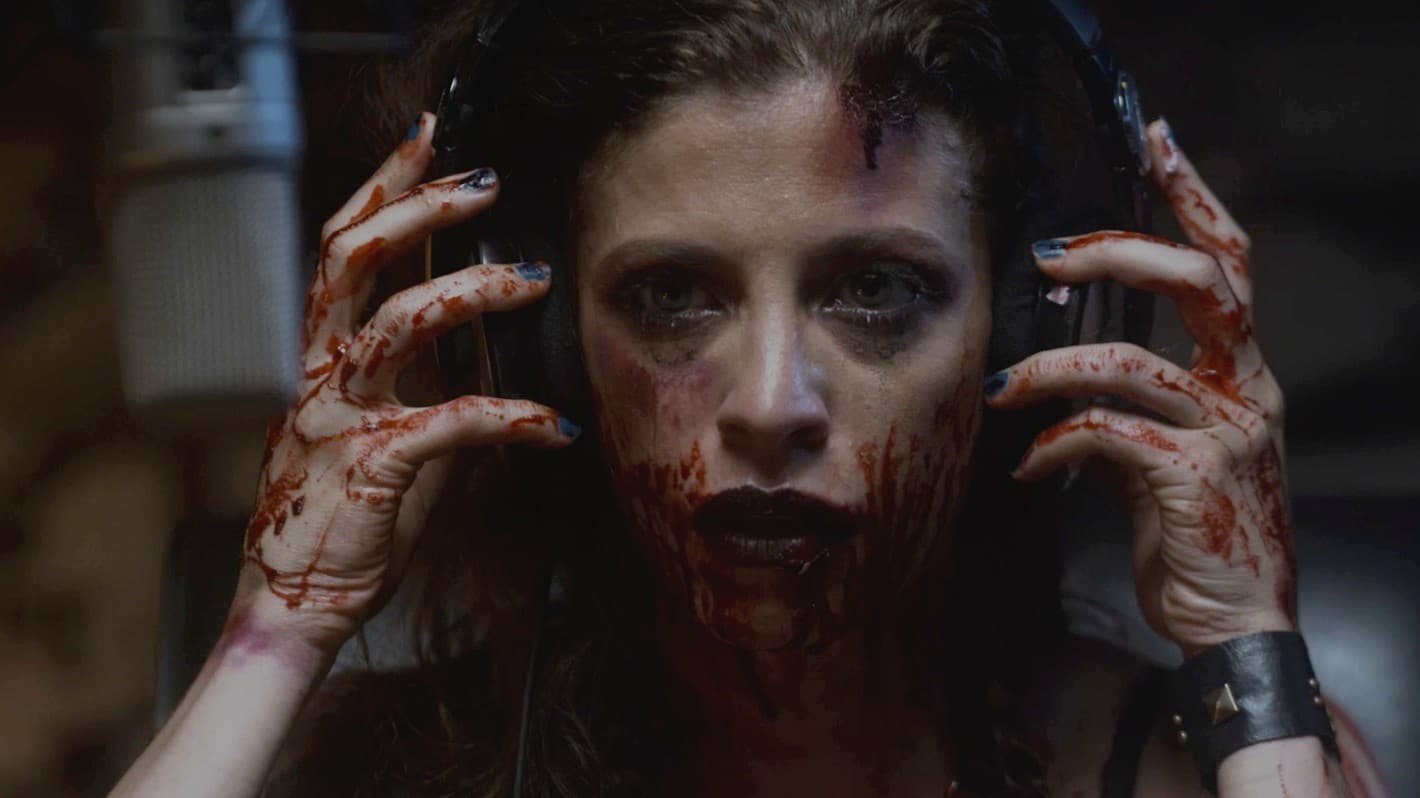
It’s unfair to these filmmakers to so tersely attempt to relate what each narrative is about with a mere line or two, but be prepared for a range of concepts—from a struggling photographer who loses herself in her subject when she follows a skulk of foxes, to a man who sees himself playing out a menacing tableau on his apartment’s CCTV. There’s two sisters on a road trip who, after a series of events separate them, come back together in a twist conclusion worthy of High Tension (yet better). There’s a seemingly stereotypical ghost in the insane asylum that’s far superior to other films it might resemble, and a team of father and son winemakers whose experimentation in the creation of their product resembles something out of Frankenstein.
Suffice to say that the sum of NR:TNS far surpasses its parts. And while one might be reminded of this or that other movie, NR:TNS sets itself above much of the competition by presenting viewers with such a mélange of intriguing ideas they will quickly understand they’ve hit upon something quite original.
Other elements that must be noted include the superb acting, the moody cinematography, and the heavy metal interludes that, instead of feeling foisted upon the soundtrack to annoy audience members, perfectly fit the theme and the sort of music we’re likely to hear on such a radio station. Additionally, the soundscaping presents a rich dynamic that feels well thought out. When compared with other cinematic ventures with typically inflated Hollywood budgets, NR:TNS squeezes every drop of sweat and blood it can get out of its meager funding.

And along with the various movies mentioned above, NR:TNS plays with so many other details derived from horror films, fiction, and even the daily news. There’s the overt reference to Jack the Ripper that, after much build up through creepy calls to Candy, ends up in a confrontation leaving us with a far more satisfying conclusion than we’re used to seeing in this style of flick. For all of this, the special effects do not impinge upon the performances in the segments, there’s but a modicum of gore gingerly salted throughout the picture, and it’s utilized in such an effective manner that we do not feel overwhelmed to the point where splash and spatter become the stupid trope observed in much of fright cinema’s collective oeuvre. With almost no jump-scares and its rather tame depictions of violence, when we actually do encounter an apparition or a bit of slice and dice, the scare factor is increased. Instead of the audience so drenched in rivers of red they can only laugh at the absurdity of it all, NR:TNS gives us just enough to remind us how very real are the many situations with which we are presented. Today’s world is full to brimming with kooks calling into radio broadcasts to spew vitriol, madmen do abduct the innocent to maim and torture them, and while the thoughts of ghosts returning from the grave in order to have their revenge might seem unsettling, more than a few of us would like to believe it can and should occur if justice is to be served rather than allow killers to get away with their crimes.
Ultimately, Nightmare Radio: The Night Stalker leaves us with the sensation that we’ve come through this series of perilous adventures by the skin of our teeth. While sitting in the dark repeating our protective mantra “It’s only a movie,” we also find ourselves easily identifying with our intrepid narrator. David Bowie once sang, “I am the DJ, I am what I play,” and, by the same token, we find ourselves occupying the same space with the movie’s titular character, trying our best to push back the darkness and the terrors it contains.
Nightmare Radio: The Night Stalker gets its UK premiere on digital this April, courtesy of Reel 2 Reel Films.