


 Directors: Alberto De Martino (The Blancheville Monster); James Warren (The Third Eye); Damiano Damiani (The Witch); Massimo Pupillo (Lady Morgan’s Vengeance)
Screenplay: Jean Grimaud & Gordon Wilson Jr (TBM); Phil Young (TTE); Ugo Liberatore & Damiano Damiani (TW); Jen Grimaud (LMV)
Cast: Gerard Tichy, Leo Anchoiz, Joan Hills, Helga Line, Iran Eory (TBM); Franco Nero, Erica Blanc, Gioia Pascal, Diana Sullivan, Olga Sunbeauty, Marina Morgan (TTE); Richard Johnson, Rosanna Schiaffino, Gian Maria Volontė, Sarah Ferrati, Ivan Rassmov (TW); Gordon Mitchell, Erika Blanc, Paul Muller, Barbara Nelly, Michel Forain (LMV)
Year: 1963 (TBM); 1966 (TTE); 1966 (TW); 1965 (LMV)
Running Time: 88 mins (TBM); 87 mins (TTE); 109 mins (TW); 86 mins (LMV)
Certificate: 15
Arrow Video’s Gothic Fantastico presents four ‘off-the-wall’ titles from the mid-Sixties, all of which demonstrate Italy’s ability to expand on the horror genre beyond the well-worn literary monsters that dominated the genre elsewhere at the time. Arrow has performed 2K restorations on all four films, all taken from the original camera negatives. I’m reviewing the films in the order I watched them, with the special features covered all together at the end.
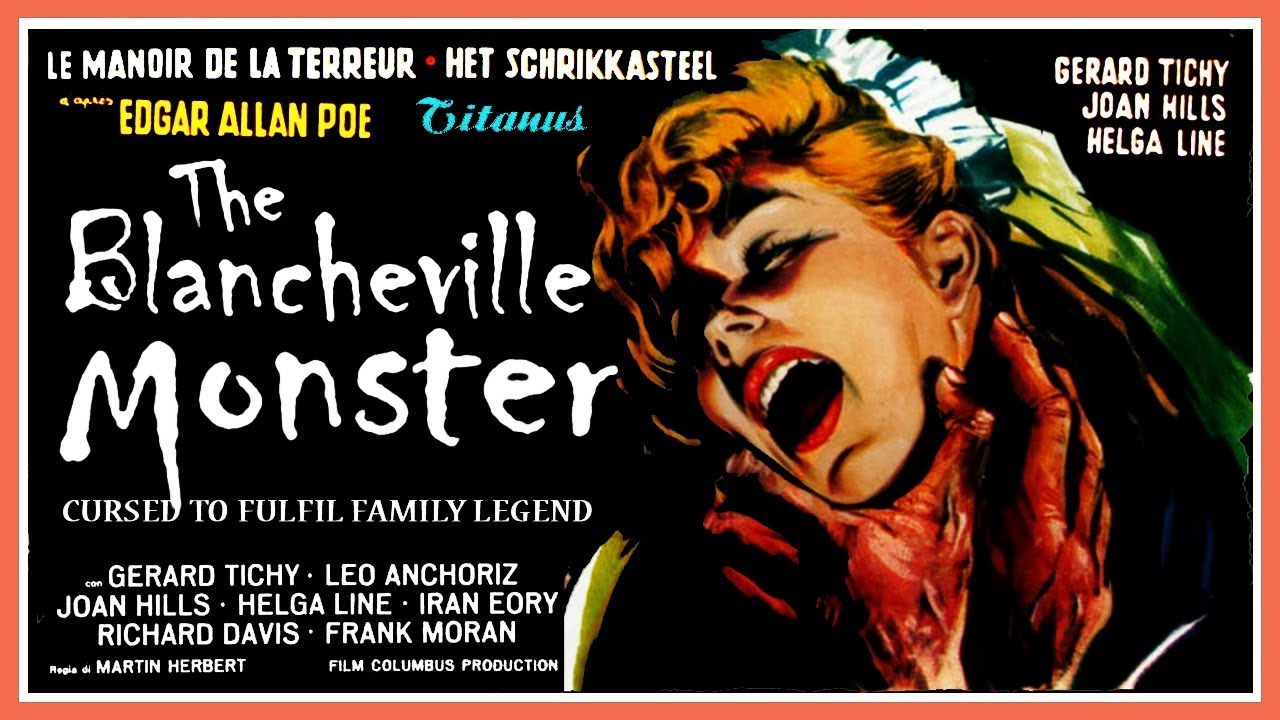
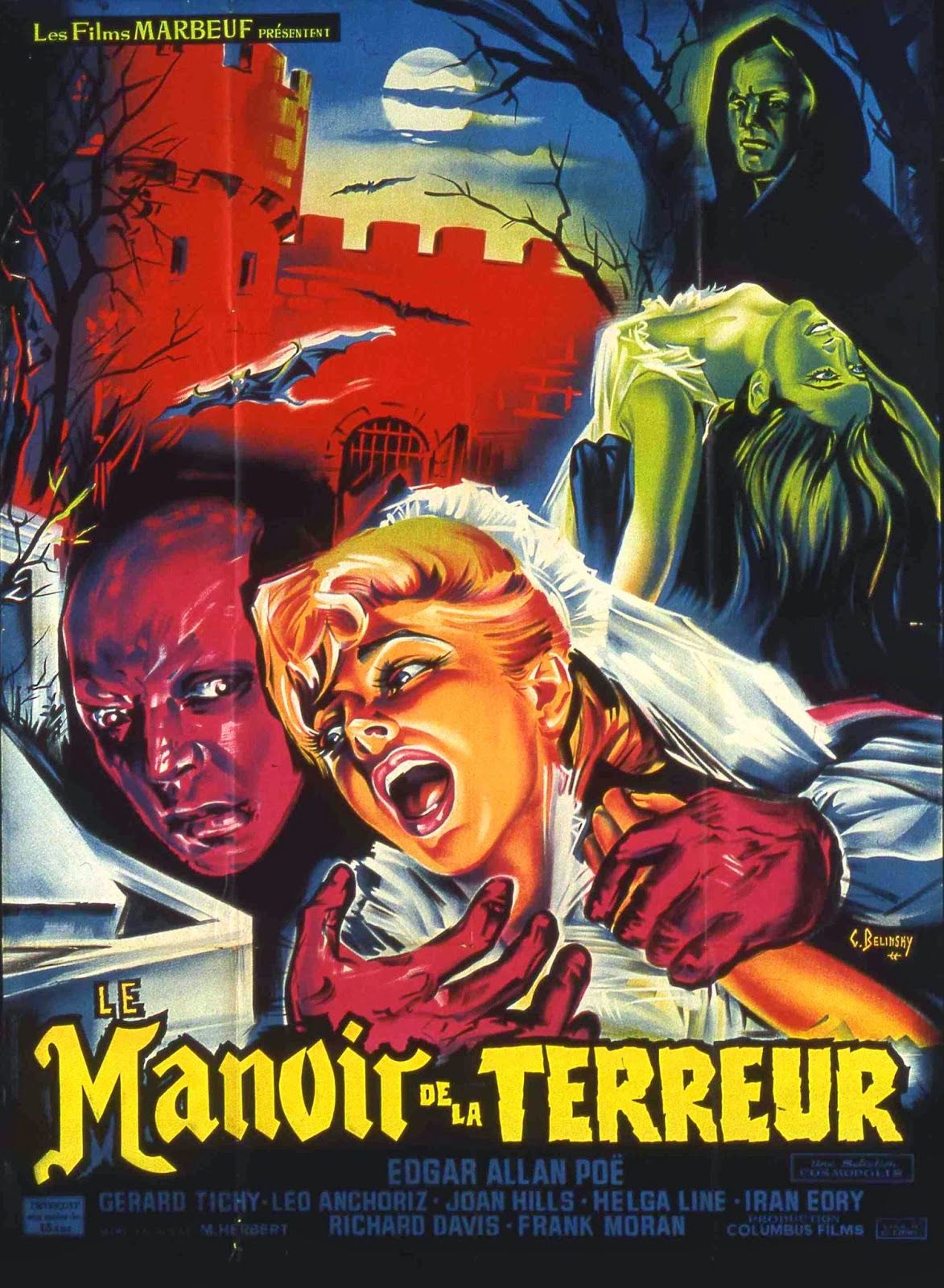
The Blancheville Monster
The perverse influence of Poe is used to great effect in Alberto De Martino’s The Blancheville Monster, replete as it is with family curses and madmen in the attic. Emilie de Blancheville (Ombretta Colli, Gladiator of Rome) returns home to her brother Roderic (Gérard Tichy, Hatchet for the Honeymoon) and discovers her own family may be out for her blood.
On arriving at the family pile, Roderic (a rather unsubtle nod to Poe there) tells his youngest sister that the family is cursed and that their bloodline will end the day the youngest turns 21, which, in her case, is just four days away. He also informs her that their father has been badly disfigured and is locked up in a tower, although it becomes quickly apparent that much of what utters forth from Roderic’s mouth are lies. And it doesn’t take a genius to work out that the older family members are after Emilie’s inheritance and want to stop her becoming eligible for it.
The Blancheville Monster features impressive costumes and sets, plenty of close-ups of staring eyes and some excellent locations. The film’s nicely shot with some excellent focus-pulling on display, all rendered more impressive through an appropriate Hammer-like score by Carlo Franci. However, while the film is impressive technically, it does nothing particularly original, story-wise, and tends to drag in places. It’s still a fun piece of gothic-tinged entertainment though.


The Third Eye
Mino Guerinni’s The Third Eye features not only a very early role for Italian cult film icon Franco Nero, but a plot that borrows several elements from Hitchcock, layered with a whiff of necrophilia. In fact, the film was later remade, sort of, as Beyond the Darkness, which is certainly more gratuitous on every level.
Mino (Franco Nero), a young count living with his domineering mother, is due to marry his fiancée, Laura (Erika Blanc), but when his mother’s jealous, lovesick servant, Martha, tampers with Laura’s car’s brakes, resulting in Laura’s death – a tragic event that is quickly followed by the maid killing off the mother too – he rapidly spirals into madness.
Nero is a bit over-the-top here, but still a lot of fun, as is Olga Solbelli playing the manipulative mother who has many of the film’s best lines, including saying to her son: “We have that special love between us…”, a statement that drips with innuendo.
We’re also very much in Hitchcock territory here, with a few Psycho references, including the fact that Mino enjoys taxidermy as a hobby, as did a certain Mr Bates back in 1960, plus some of the things he says are quite strange, such as him being convinced that he has ‘the third eye’.
Again the film is well shot, although there’s some annoying day-for-night photography and a scene set on a beach at night that is very over-lit. The soundtrack by Francesco de Massi is suitably melodramatic, matching the generally excellent, if overly dramatic performances.
Overall The Third Eye is a welcome addition to this particular gothic pile and should gain a fair few new fans off the back of this new release.

The Witch
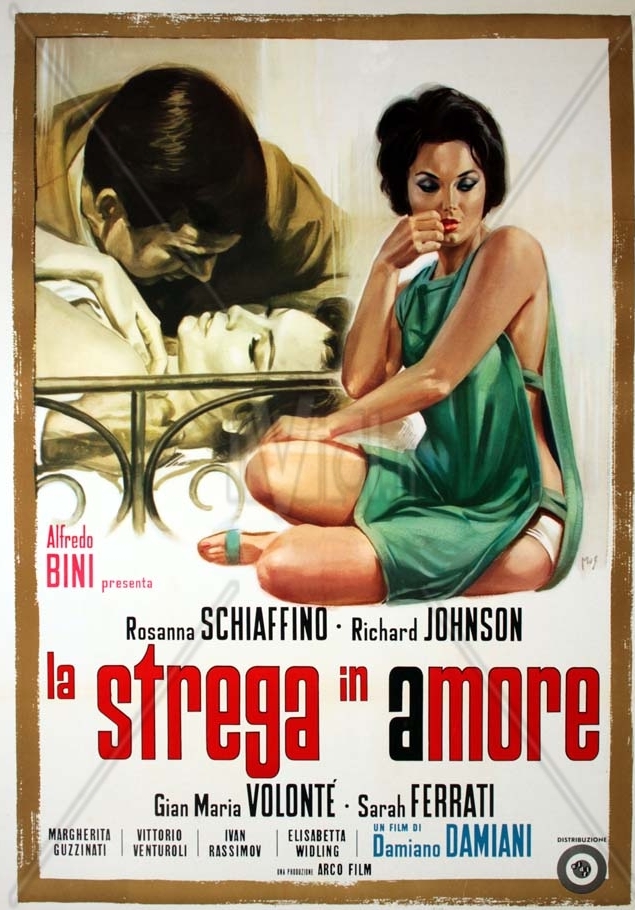
A womanizing author, Sergio (Richard Johnson), is lured to a mansion by a much older woman under the guise of having him work for her as her in-house librarian. Her daughter, Aura, appears out of nowhere and begins to seduce him. Things get stranger still when former librarian, Fabrizio (Gian Volontė), turns up and becomes quite hostile towards Sergio, even challenging him to a duel, by sword. It soon becomes apparent that not all is as it seems with both Aura and her alleged mother.
Based on a novel, Aura, by Carlos Fuetes, this is a slow-burn tale of strange obsession (the film’s alternate title), which slowly lures the viewer in, to become part of a bizarre threesome, one with an air of the supernatural about it.
The acting is top notch – if a little let down by some rather clunky and at time over-blown dialogue – and Rosanna Schiaffino mesmerises as Aura, the centre-point to the story. Unfortunately, the audience has little sympathy for the scrapes that our main protagonist gets himself into, since he’s something of a misogynistic curd that treats others badly, especially his poor fiancée. However, the film is classily shot, all nicely underpinned by a sensuous, jazzy score by Luis E. Bacalov.
The Witch is certainly worth a visit, if only for it weird and wonderful location and the rather shocking fiery ending.
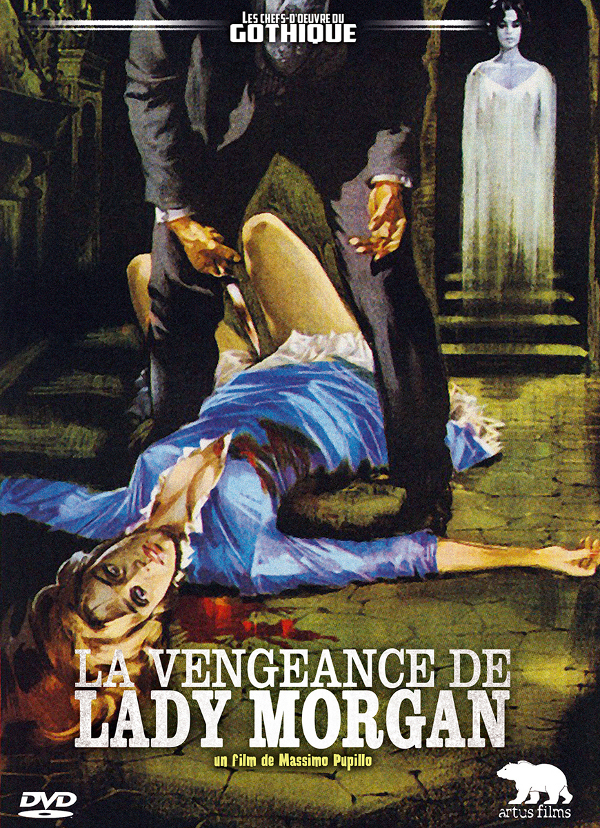
Lady Morgan’s Vengeance
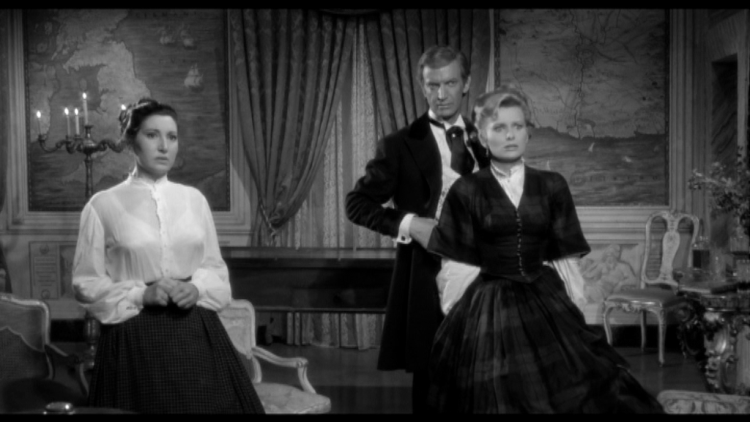
Massimo Pupillo’s Lady Morgan’s Vengeance is a tale of romance and mystery, with a sprinkling of sadism and the supernatural mixed in. When Sir Harold Morgan (Paul Muller, Nightmare Castle) is refused the hand of beautiful Lady Susan (Barbara Nelli, Double Face) he arranges for her beloved, Pierre (Michel Forain), to meet with an unfortunate accident at sea. After a while, thinking the love of her life is dead she marries Morgan who then attempts to destroy his new bride with help from his sinister maid (Erika Blanc, Kill, Baby… Kill!). Meanwhile, Pierre, who’d been found, washed up on a foreign shore with Amnesia, has now recovered and goes looking for Susan, but will he be too late?
Lady Morgan’s Vengeance is a nice example of the gaslighting subgenre, which was very popular some decades ago. It’s also nice to see the lovely Erika Blanc in a baddie role for a change and the ever reliable Gordon Mitchell, playing Sir Morgan’s murderous henchman.
The story moves along at a fair old clip towards a sometimes puzzling climax of vengeance from beyond the grave; a climax which involves vampires, dungeons and lots of running around avoiding bloodsuckers.
Overall, Lady Morgan’s Vengeance is an enjoyable watch, although those with a phobia of eels should perhaps look away during one particular bedtime scene.
As per usual with Arrow Video there are plenty of special features to accompany the films.
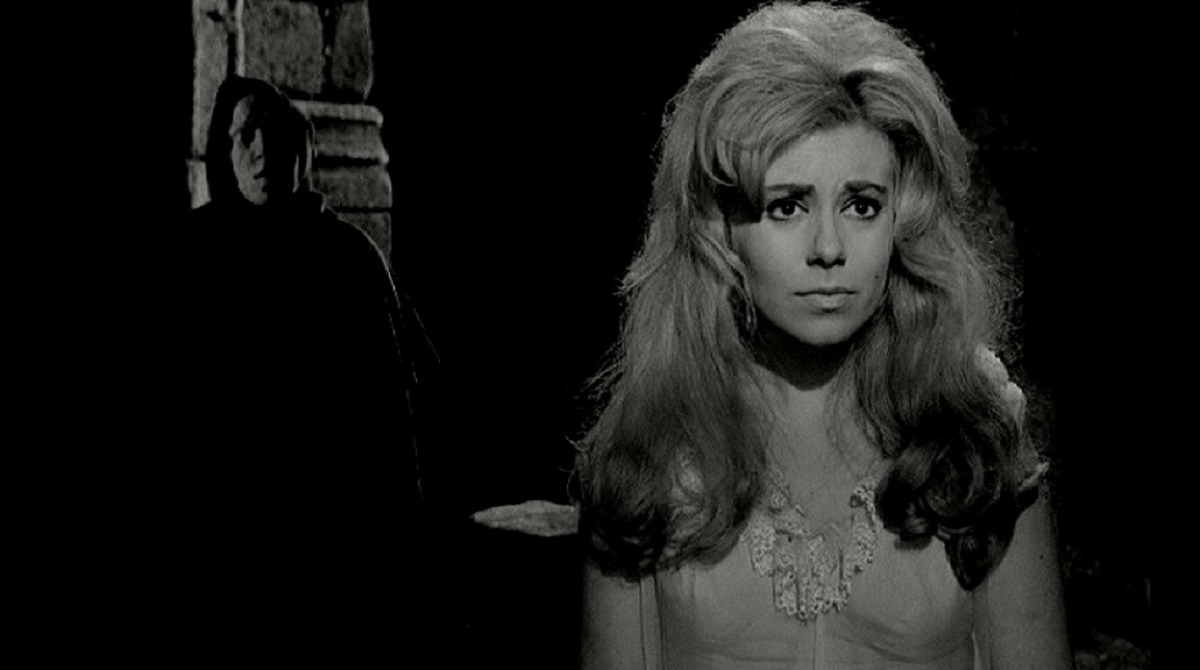
The Blancheville Monster
Audio commentary with film historian, Anthony Nelson who explains that the film was also known by the name ‘Horror’ and that it was the director’s fourth film.
Castle of Horror (6.49) – An introduction to the film by Italian film devotee Mark Thompson Ashworth who explains that the film was a French/Italian co-production made to exploit the then popular trend for Edgar Allen Poe films.
Are you sure that it wasn’t just your imagination? (20.54) – A visual essay by writer/pop culture historian Keith Alison, who describes the film as revelling in soap opera operatics, but also in atmosphere, visuals and strangeness.
Welcome to the manor (13.55) – An interview with author and filmmaker Antonio Tentori who talks about the director’s career and about the gothic trend that lasted for about a decade.
American opening title – Horror: The Blancheville Monster (3.11)
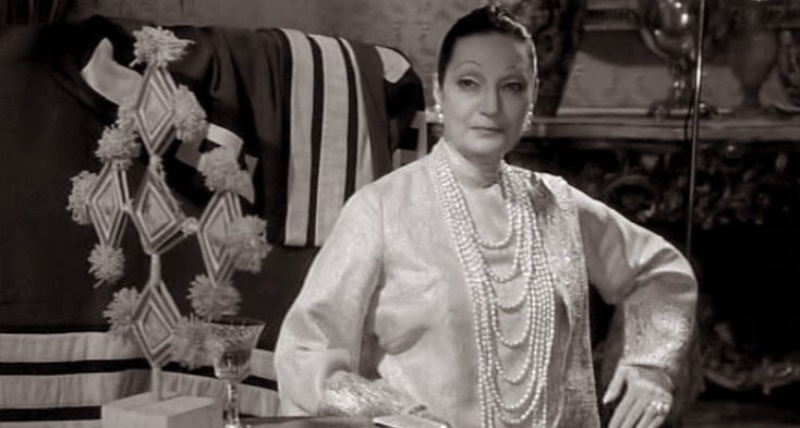
The Witch
Audio Commentary with Kat Ellinger – As always this is full of interesting facts and trivia relating to the production in question and how the film relates to other films in that subgenre.
Witchery (3.46) – Mark Thompson returns to talk about the film being made towards the end of a Golden Era in Italian horror and about some of the on-set personal politics that were happening too.
Loving the devil (24.25) – A visual essay by author Miranda Corcoran who talks about the history of witchcraft, and references the likes of The Wizard of Oz, wicca practioners and Bewitched.
The Rome within the project (18.38) – An interview with Antonio Tentoria, who talks about the origin novel the film was adapted from, and the film’s ties with the fantasy genre.
Image gallery – Seven images; mostly posters and publicity shots.
The Third Eye
Audio commentary by Rachael Nisbet, a film critic specialising in Italian cinema. She talks about the background to the film, and about the film being a mix of Hitchcock and gothic horror.
The cold kiss of death (6.15) – An introduction by Mark Thompson, who talks about the remake (Beyond the Darkness), and confirms that the film was initially known as The Cold Kiss of Death.
Nostalgia bears Necrophilia (12 mins) – A visual essay by author/filmmaker Linsay Hallam who explains that ‘The Third Eye’ referred to in the film is basically that of Mino’s mother’s after her death.
All eyes on Erika (15.40) – Interview with Erika Blanc who talks about her career, starting in photo comics. Fortunately she avoided the casting couch during her lengthy career.
Image gallery – Six poster images
Lady Morgan’s Vengeance
Audio commentary with Alexandra Heller Nicholas (film critic) – She talks about the movie tipping into the gaslighting subgenre, replete with elements from the domestic violence toolkit.
Vengeance from beyond (4.38) – An introduction to the film by Italian film devotee Mark Thompson Ashworth who talks about the director’s other horror films and about the film’s vengeance being presented in flashback as being unusual.
The Grudge (21.39) – A visual essay by author/producer Kat Ellinger who puts the film into context within the wider history of gothic horror and talks about similarities with Asian horror pictures with similar themes.
When we were vampires (24 mins) – An interview with Erika Blanc revealing that this was her first leading role, during which she was given a big glass of whiskey before her kissing scene with Gordon Mitchell; her first such scene.
Born to be a villain (20 mins) – An interview with actor Paul Muller who looks a bit like journalist Jon Snow nowadays. He’s very candid about his personal history, working as an extra to begin with and then living in hotels just so he could travel as a theatre actor.
The Pupillo tapes (20 mins) – An audio only recording from a 1993 radio show when the director was quizzed about his career. He reveals that he didn’t get on with Barbara Shelly initially and was influenced by German Expressionism.
Original Cineromazo – the cover of the origin novel, first published in Suspense magazine.
Trailer (2.24) – This emphasises the presence of Gordon Mitchell and shows way too much of the film.
Image Gallery – 10 cool posters