


 Director: Ngozi Onwurah
Screenplay: Ngozi Onwurah
Starring: Suzette Llewellyn, Saffron Burrows, Felix Joseph, Valentine Nonyela, Ben Wynter, Sian Ejiwunmi-Le Berre, Jason Traynor, Brian Bovell, Cynthia Powell, Natasha Romulus, Marcia Myrie, Olu Taiwo
Country: United Kingdom
Running Time: 95 Min
Year: 1994
BBFC Certificate: 18
Director Ngozi Onwurah was inspired to tell stories as a child growing up in Nigeria. After moving to the UK, where her mother is from, she began studying film, subsequently making an award-winning autobiographical short whilst a student at St Martin’s School of Art in London, Coffee Coloured Children (1988), which would launch a career of more than a dozen shorts and features, as well as television work.
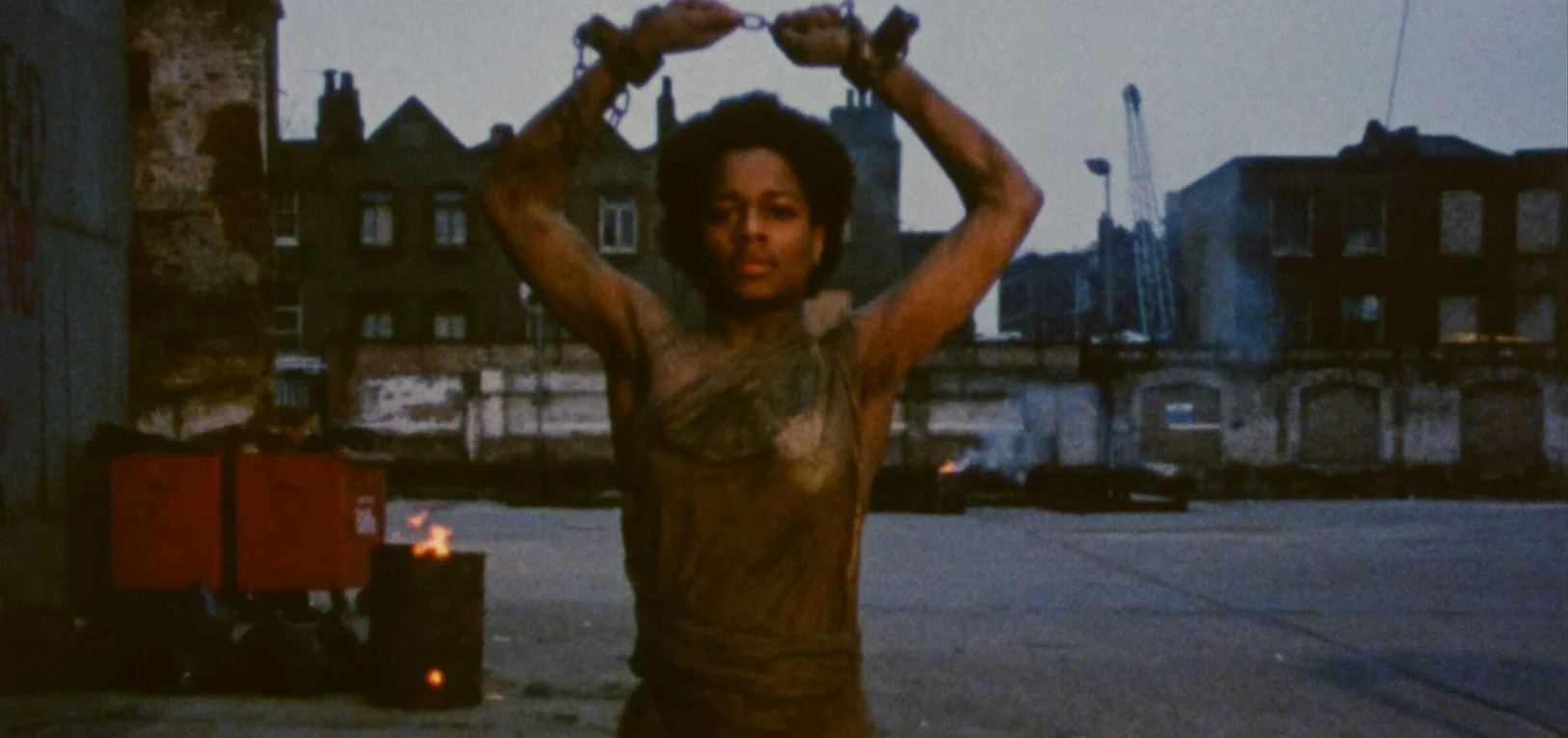
Onwurah has an important place in history as the director of the first theatrically distributed British feature by a Black woman. That film was started by Onwurah in film school, would be released in 1994 and is the subject of this review: Welcome II the Terrordome.
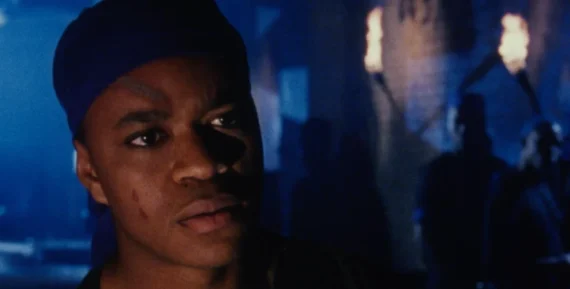
The film is a dystopian sci-fi feature that is set in a near future where Black people are segregated within a slum called the Terrordome. Here violence and anger is constantly simmering away, threatening to boil over at any moment, and Black people are treated with hatred, anger and disdain by their White neighbours.
Anjela (Suzette Llewellyn) and her brother Spike (Valentine Nonyela) live in the Terrordome. Spike’s pregnant white girlfriend Jodie (Saffron Burrows) is seen with her new lover by her ex who sets a trap for her, which kills Spike’s young nephew Hector (Ben Wynter) instead. Enraged by the murder, Anjela goes on a rampage killing police and tensions no longer simmer but boil over into widespread violence and a huge race war.
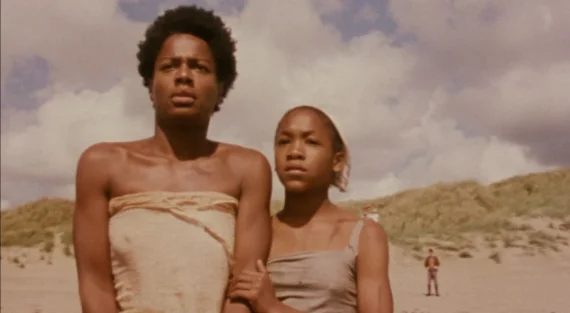
The film opens in the past, as we witness a reimagined vision of a mass suicide in 1803 by captive Igbo people in Georgia, who had taken control of a slave ship and refused to give into slavery. The same cast then portrays characters in the Terrordome in a bleak, oppressive apocalyptic future, showing how racism still exists centuries on, the human race having not learnt to become tolerant and learn from the past. It feels all to reflective of the modern day.
There are some quite terrifying and unsettling sequences, including one where a character is burned alive that’s shot like a horror film, an oppressive and sinister soundtrack played in the background of the follow-up scene. The sequence that builds up to the fateful evening is also incredibly tense, and a standout in the film that builds to a brutally violent scene and paves the way for retaliation and retribution. The ensuing violence is also shot in a matter of fact way and leads to a memorable final act. And the final shot is perfect and incredibly powerful.
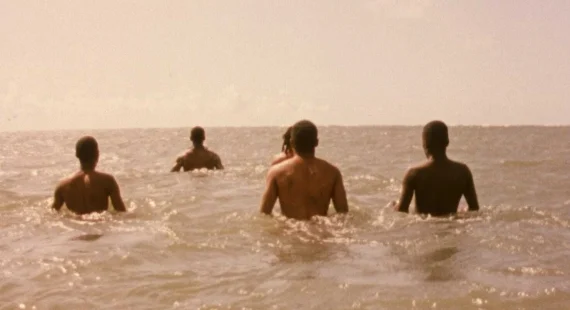
The cinematography by Onwurah’s husband Alwin H. Küchler is gorgeous. The opening Igbo landing sequence features some really striking images, filmed like paintings that are works of art in their own right. This continues into the futuristic sequences, which are more gritty and documentary-esque. The lighting is also quite something, particularly an early scene where blues and pinks shine into Spike and Jodie’s room, the pair surrounded by a blue drape as they make love.
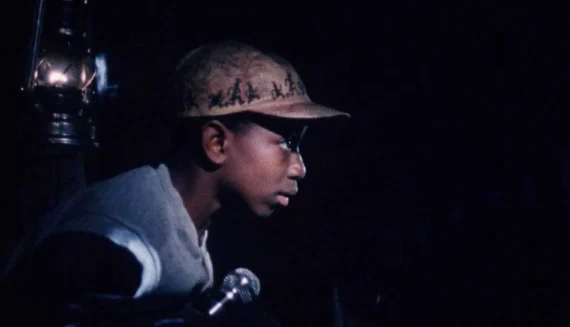
Another striking element is the use of music. The film has a predominantly lyrical and rap soundtrack which isn’t just used as background music. Some of the lyrics feel as though they are commenting on what we are seeing on screen, while others are used to drive forward the story. Some are played by Soul Sister, a radio DJ, others performed in clubs. It’s a quite striking and excellent use of music in a non-musical where the lyrics play a huge part of the narrative. We also hear and see brief snippets of TV news bulletins that help to enrich the world.
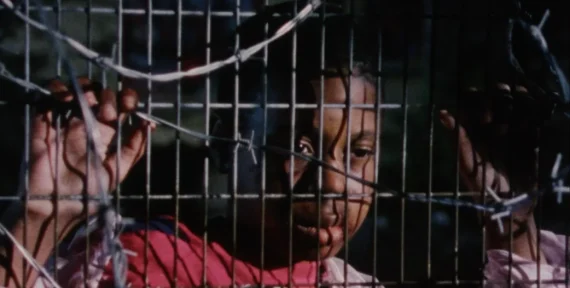
The locations and production design give the world a very lived in feel. The Terrordome where people don’t live but just try to survive, as we hear early in the film, is an oppressive, scary place that feels very real. The small budget is certainly well used to deliver Onwurah’s vision.
Performances feel very raw and theatrical. I wouldn’t say any are anything but good, but they feel more theatrical and forced than the story deserves, and at times are the weakest element for me. It shows its budget in these moments and feels a bit like a TV movie. But these elements were few and far between, and overall I found it to be a fierce, striking and unique piece of cinema that captivated me from opening moment to closing credits.
Welcome II The Terrordome is not perfect, but it wears its heart on its sleeve to deliver a powerful slice of dystopian cinema, with a message and themes that are as important now as when it was released 32 years ago. Its fusion of visuals and rap music – with lyrics that help to tell the story of what we are seeing on screen – are quite wonderful, and the film feels ahead of its time. I hope that through a modern lens it will be reevaluated, as it is a remarkable piece of cinema.
Film: 

Welcome II The Terrordome is released on Blu-ray by the Criterion Collection on 30th November 2026. The new 2K digital restoration, which was overseen by cinematographer Alwin H. Küchler is excellent, with the film looking striking throughout. There is a great filmic quality with a natural colour scheme and amount of grain. The audio sounds very good too.
Features:
New 2K digital restoration, supervised and approved by cinematographer Alwin H. Küchler, with 2.0 surround DTS-HD Master Audio soundtrack
New audio commentary featuring Küchler, director Ngozi Onwurah, and Criterion curatorial director Ashley Clark
Meet the Filmmakers: Ngozi Onwurah, a Criterion Channel original interview
Three short films by Onwurah – Coffee Coloured Children (1988), And Still I Rise (1993), and Hang Time (2001) – with a new introduction by the director
Trailer
English subtitles for the deaf and hard of hearing
PLUS: An essay by poet and critic Kadish Morris
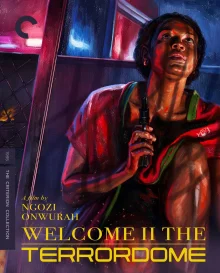
New cover by Ngabo “El’Cesart” Desire Cesar
The new commentary is a good one. It features director Ngozi Onwurah, cinematographer Alwin H. Küchler and Criterion Collection curatorial director Ashley Clark. It is really fascinating, delving into the background and inspirations for the story of the film, how it was started by the director at film school, who she brought on board for the project, filming locations for scenes (the opening was shot in Wales, for example, with some filming also having taken place in Nigeria), and much more. It’s almost like a film school in a chat track as there is so much to glean about making a film and craft.
Director Onwurah also pops up for a 16-minute interview from 2020 which is also very good. She shares the importance of storytelling in her early life growing in Nigeria, then coming to the UK and growing up in Newcastle, her mother’s hometown, where she lived on a council estate. She talks about the racism she experienced growing up and how this informed her as a filmmaker. I really enjoyed this piece.
Three short films by Onwurah – Coffee Coloured Children (1988), And Still I Rise (1993), and Hang Time (2001) – are included, with a new introduction by the director. The introduction runs for nine minutes and delves into the genesis of the shorts included. Coffee Coloured Children is a 17-minute autobiographical piece exploring the racism and trauma Onwurah and her brother experienced as the only Black children growing up in a predominantly white community Northern England. And Still I Rise, inspired by a poem by Dr Maya Angelou, explores the lives and resilience of different Black Women over 30 minutes. The 31-minute Hang Time follows an aspiring young Nigerian basketball player who cannot afford a pair of trainers so makes a pact with the devil which leads to bad things happening. I was struck by all three, very different, powerful and accomplished works. Each is very much worth watching, with the disc showing the evolution of Onwurah as director from Coffee Coloured Children, through And Still I Rise, onto the main feature Welcome II The Terrordome and ultimately to Hang Time, one of her more recent film works.
A 90-second trailer concludes the on-disc extras.
I was not provided with the essay to comment on it, but given the writer I anticipate it is this brilliant one on the Criterion website.
In closing, Criterion have provided a terrific package for their Blu-ray edition of Ngozi Onwurah’s Welcome II the Terrordome. The new 2K restoration is excellent and supplements include a fantastic commentary and interview with the director, and three of the director’s fantastic early short films, totalling more than an hour. All in all, it is a strong release of an underappreciated and underrated film, which features themes that resonate strongly today.
Disc/Package: