


 Director: Robert Aldrich
Screenplay: Nunnally Johnson, Lukas Heller
Cast: Lee Marvin, Ernest Borgnine, Charles Bronson, Jim Brown, John Cassavetes, Richard Jaeckel, George Kennedy, Trini Lopez, Ralph Meeker, Robert Ryan, Telly Savalas, Donald Sutherland, Clint Walker, Robert Webber
Country: United States, United Kingdom
Running Time: 150 mins
Year: 1967
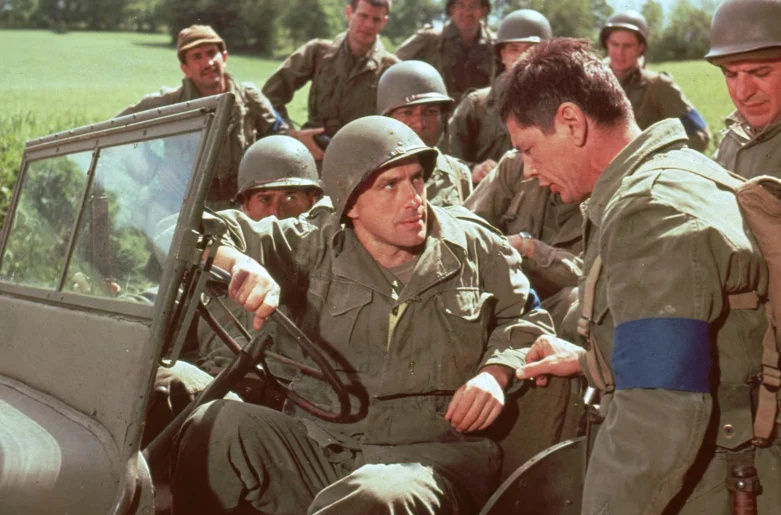
Released in an excellent 4K Limited Edition this month from Arrow, The Dirty Dozen has been often imitated, but never bettered. Made during a pivotal shift in American cinema, it’s hugely entertaining, but brutally subversive. Robert Aldrich’s film is an angry anti-war protest, but masses of fun, full of great characters played by a legendary cast spouting tough dialogue. The Magnificent Seven Go To War, maybe? Possibly, except there are 12 of them, and they’re all mean as hell.
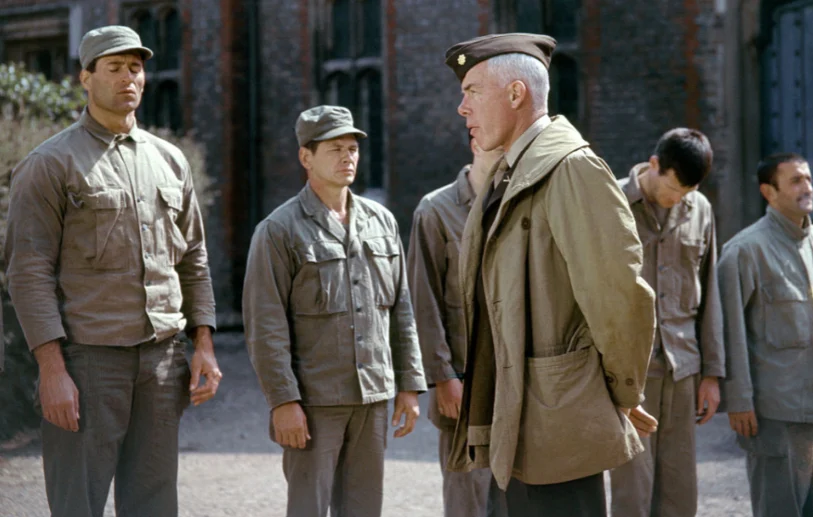
Lee Marvin leads as the undisciplined Major tasked with creating a suicide squad from a bunch of convicts on death row, destined for the gallows (of which we are left no doubt within two minutes). Charles Bronson and John Cassavetes are most prominent, but they’re all memorable and distinctive in some way, ranging from quiet, well balanced Clint Walker, through to genuinely dangerous Telly Savalas. Ernest Borgnine is amongst the top brass and Robert Ryan is an out-of-the-loop Colonel who threatens to derail the whole plan. With a cast like that, it’s the Boomer’s Expendables.
It starts with a nasty scene that sets the tone throughout before settling into three quarters of the plot for training; this is an action film from a time when there had to be a reason for that action. The Major beats and bullies the squad into his “Dirty Dozen”, so named when they lose their soap and shaving privileges. All the time there is the possibility that one of them will knife the Major and do a runner, except you kind of know that will never happen and there is a bond that forms between the beatings and growling. By the time they take on Robert Ryan’s squad in a war-games exercise (with nervy George Kennedy having fun watching from the sidelines), they’re still tough, but working together. Now they’re lethal.
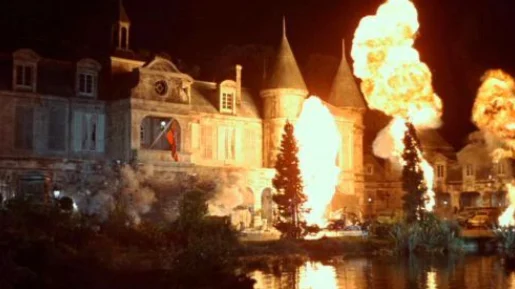
The stage is set for the finale and it’s one of the great action sequences of any war film. In retrospect, not a huge amount really happens, but what does happen is loud and ruthless. It is a huge influence on a certain kind of men-on-a-mission movie, such as the softer adventure Where Eagles Dare and The Wild Geese. And not least on Quentin Tarantino’s Inglourious Basterds. I know Tarantino gets flak for being derivative, but he’s proved since Reservoir Dogs that he understands the cost of on-screen violence.
Robert Aldrich’s film marks a pivotal fault-line in American cinema, where violence is weaponised against the viewer. Consequences should be understood. Aldrich pulls off a subversive bait-and-switch, seducing the audience with a caper, only to drop them into a slaughterhouse where the viewer is denied a clean, heroic catharsis. Instead, the audience is implicated in cold-blooded violence, revealing their own appetite for spectacle.
The moral discomfort altered Hollywood violence and directly paved the way for mainstream exploitation in Don Siegel’s Dirty Harry, and subsequently hyper-violent 1980s action. Where The Dirty Dozen left audiences regretting cheering on the brutality, Siegel went a step further: Dirty Harry would abandon plot for a right-wing dog-whistle and audience complicity became bloodlust.
Its sequel, Magnum Force, had to contrive crazy reasons for Harry to still be cross, so in come rogue death-squads and motorbike chases that were definitely ignoring due process. RoboCop directly echoed its ending (”I’m a mess, Murphy”) and bureaucratic showdowns more than a decade later. Yet while time has continued to stylize horrific body counts, Aldrich never let his audience off the hook so easily as a John Wick. The Dirty Dozen remains uniquely concise: carnage, corruption and the hollow victory we demanded. Genius has never been so messy.
VIDEO
I’ll start off by saying immediately, I love this transfer. It’s an excellent example of what 4K UHD can do to an interesting source that’s got a bit of character. But I can also see where a casual first-time viewer might be disappointed.
It’s a native 1.75:1 presentation sourced from a brand-new 4K scan of the original 35mm and a noticeable upgrade from previous editions. It has a heavy, healthy grain and any perceived lack of razor sharpness comes from the source. Wide-open apertures in drab UK weather will soften the image. But add in strong, punchy contrast and saturated colours, and earthy tones in mud and timber, and the result is satisfyingly dense and rich. The Dirty Dozen is supposed to look as dirty as its morals, in the same way Touch of Evil is supposed to look like Orson Welles ran over the print with his car and reversed for good measure.
EXTRAS
This is an excellent warts-and-all collection that Arrow have pulled together. It’s not often we get a new audio commentary, and this one with film scholars Alain Silver and James Ursini is thorough and entertaining. Also, the recently discovered archive footage from the set is an absolute gem, even going as far as an interview with Lee Marvin.
So far as I can tell, everything from previous releases is included, so loads of archive stuff, including the enthusiastic Ernest Borgnine introduction. The Dirty Dozen: Next Mission is also included, firmly in the “might as well throw it in as not” column. It does however demonstrate just how thorough this edition is.
- 2-DISC 4K ULTRA HD LIMITED EDITION CONTENTS
- Collectors’ booklet featuring new writing on the film by Sean Hogan and Paul Talbot as well as excerpts and photos from Dwayne Epstein’s Killin’ Generals: The Making of The Dirty Dozen, and Alain Silver and James Ursini’s What Ever Happened to Robert Aldrich? His Life and His Films
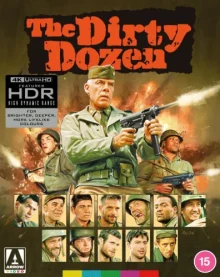
- Reversible sleeve featuring original and newly commissioned artwork by Tom Ralston
- DISC 1 – FEATURE (4K ULTRA HD BLU-RAY)
- Brand new 4K restoration from the original 35mm camera negative by Arrow Films
- 4K (2160p) Ultra HD Blu-ray presentation in Dolby Vision (HDR10 compatible)
- Original restored lossless mono, 5.1 audio, and a newly restored 6.0 (70mm mix) track
- Optional English subtitles for the deaf and hard of hearing
- Brand new audio commentary by film scholars Alain Silver and James Ursini
- Archival audio commentary with actors Jim Brown, Trini Lopez, Stuart Cooper, and Colin Maitland, producer Kenneth Hyman, novelist E.M. Nathanson, film historian David J. Schow, and veteran military advisor Capt. Dale Dye
- Archival introduction to the film by actor Ernest Borgnine
- Theatrical trailer
- Image gallery
- DISC 2 – SPECIAL FEATURES (BLU-RAY)
- The Dirty Dozen: Next Mission, a feature-length TV sequel starring Lee Marvin and Ernest Borgnine (standard definition only)
- Newly discovered on set footage and an interview with Lee Marvin from Peter Whitehead’s archive
- War Is Over, a brand new appreciation by film historian Kim Newman
- The War March, a brand new breakdown of Frank De Vol’s score by David Huckvale
- Armed and Deadly: The Making of The Dirty Dozen, an archive featurette on the making of the film
- The Filthy Thirteen: Real Stories Behind the Lines, an archive featurette on the history behind the film
- Operation Dirty Dozen, an original promotional featurette
- Combat Leadership: The Ultimate Challenge, a Navy recruitment film narrated by Lee Marvin