

Director: T.E.B. Clarke
Screenplay: T.E.B. Clarke
Starring: Stanley Holloway, George Relph, Naunton Wayne, John Gregson, Hugh Griffith, Gabrielle Brune, Sid James
Country: UK
Running Time: 84m
Year: 1953
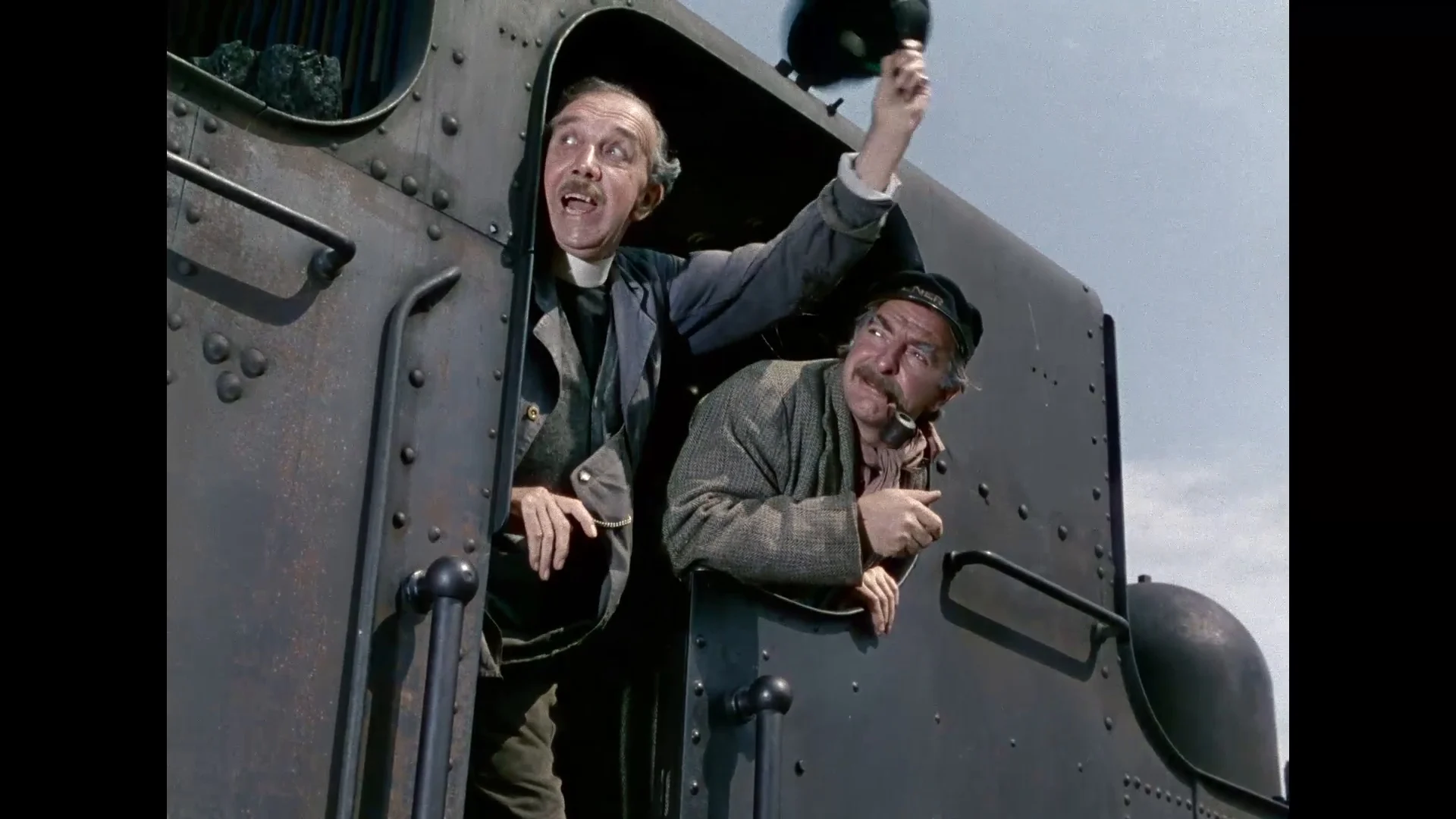
The Titfield Thunderbolt is a comical and delightful tale of community spirit, written by celebrated Ealing regular and Academy Award Winner T.E.B. Clarke (The Lavender Hill Mob, Barnacle Bill), directed by Charles Crichton (A Fish Called Wanda, The Lavender Hill Mob). When British Railways announce the closure of the Titfield to Mallingford branch line, a group of local village residents make a bid to run it themselves, backed by a monied member of the community who is attracted by the complete lack of licensing hours on trains. Unfortunately, this puts them into direct competition with the local bus company.
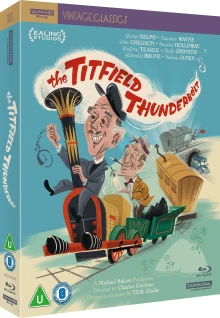
The Titfield Thunderbolt is another charming film from Ealing and their first in Technicolor. Regular writer T.E.B. Tibby Clarke once again teams up with director Charles Crichton. Together they made several Ealing films including The Lavender Hill Mob for which Clarke won the Academy Award for Best Screenplay.
I think he deserved it for this too; it so sharply lampoons British traditions (a love of trains) and problems (selling off industry, despite the loss of community). We are a small country and feel it deeply when a way of life comes to an end, which happens all too often in the name of cost cutting efficiency. Though the film good naturedly pulls the leg of traditionalists who are blinded by nostalgia, it also rallies against those who ignore it. When John Gregson calls on the villagers to support them running the railway themselves and he says the “village will die without it”, he is sadly correct. A scene at the town meeting also features a hilarious argument that exposes the absurdity of unions. And later, the vicar panics when he hears they are making a profit. “We’ll be nationalised!” he wails.
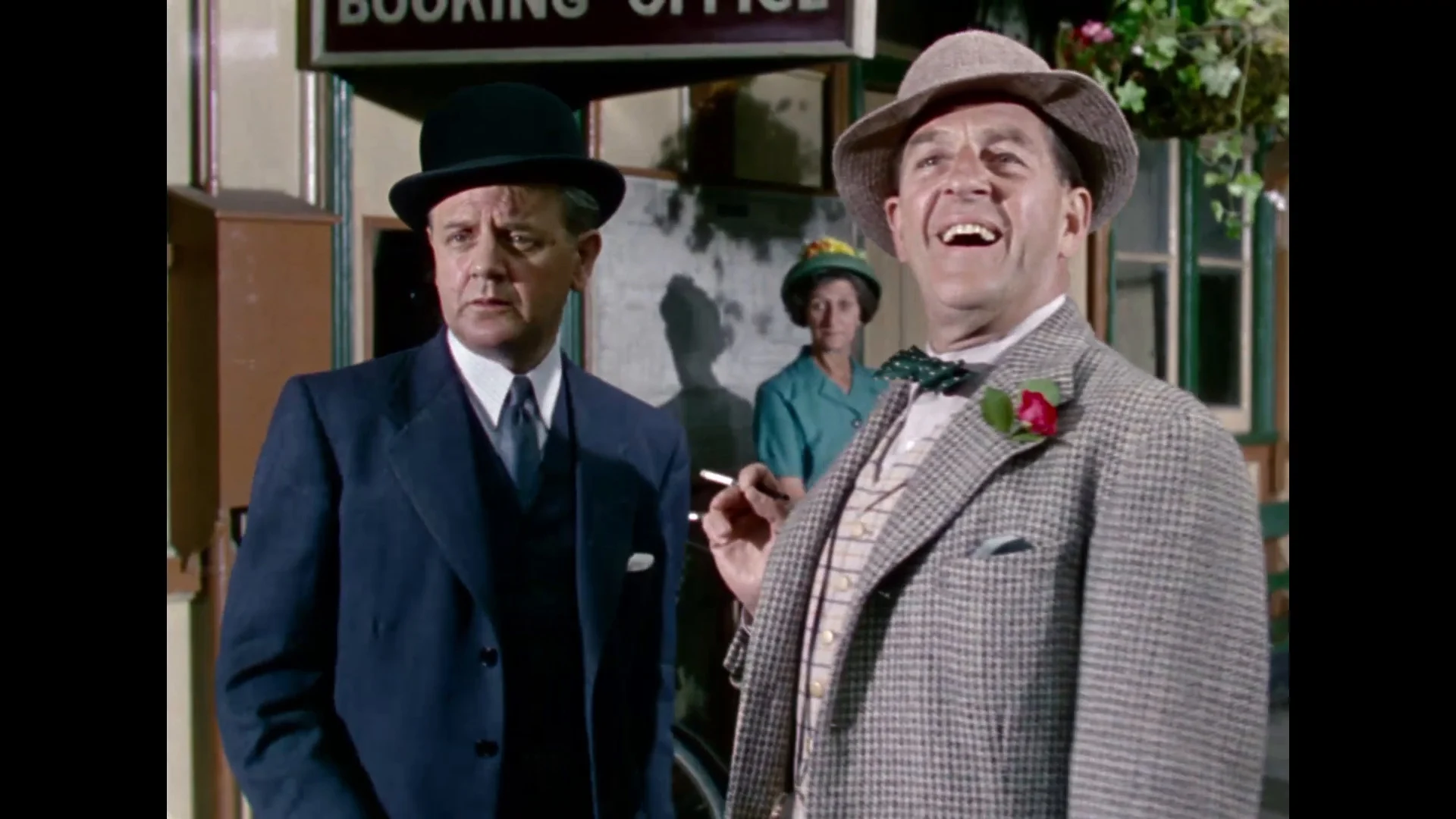
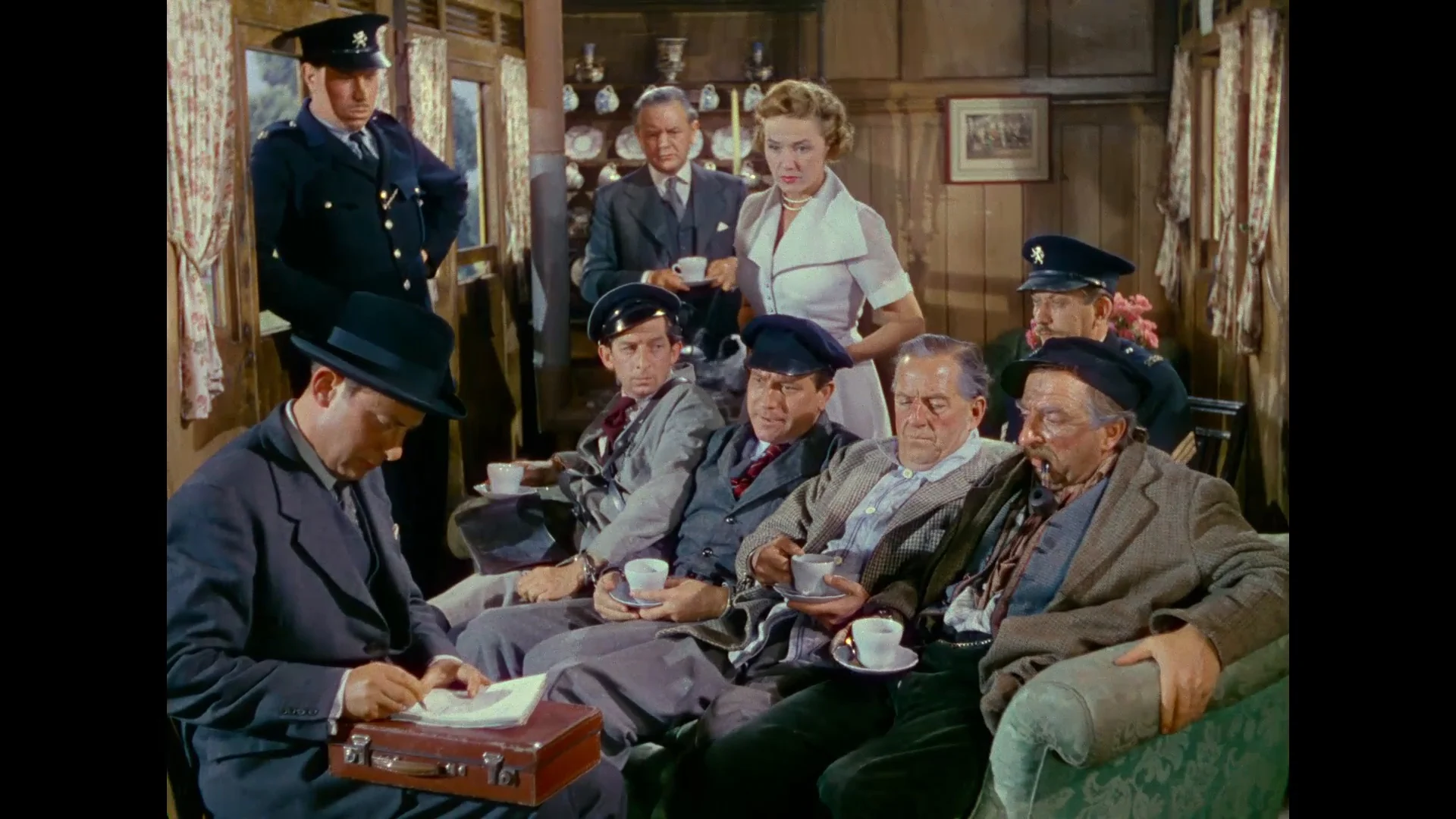
There are endless touches like that though; a civil servant arriving at the Ministry for Transport on a scooter or, my favourite, Naunton Smith saying he will not be made a fool of, while pulling his suit over his pyjamas. Stanley Holloway steals the show as Mr. Valentine, the amiable, but permanently drunk millionaire (or near enough) who agrees to fund the venture. The banter as he is persuaded to do so is wonderful.
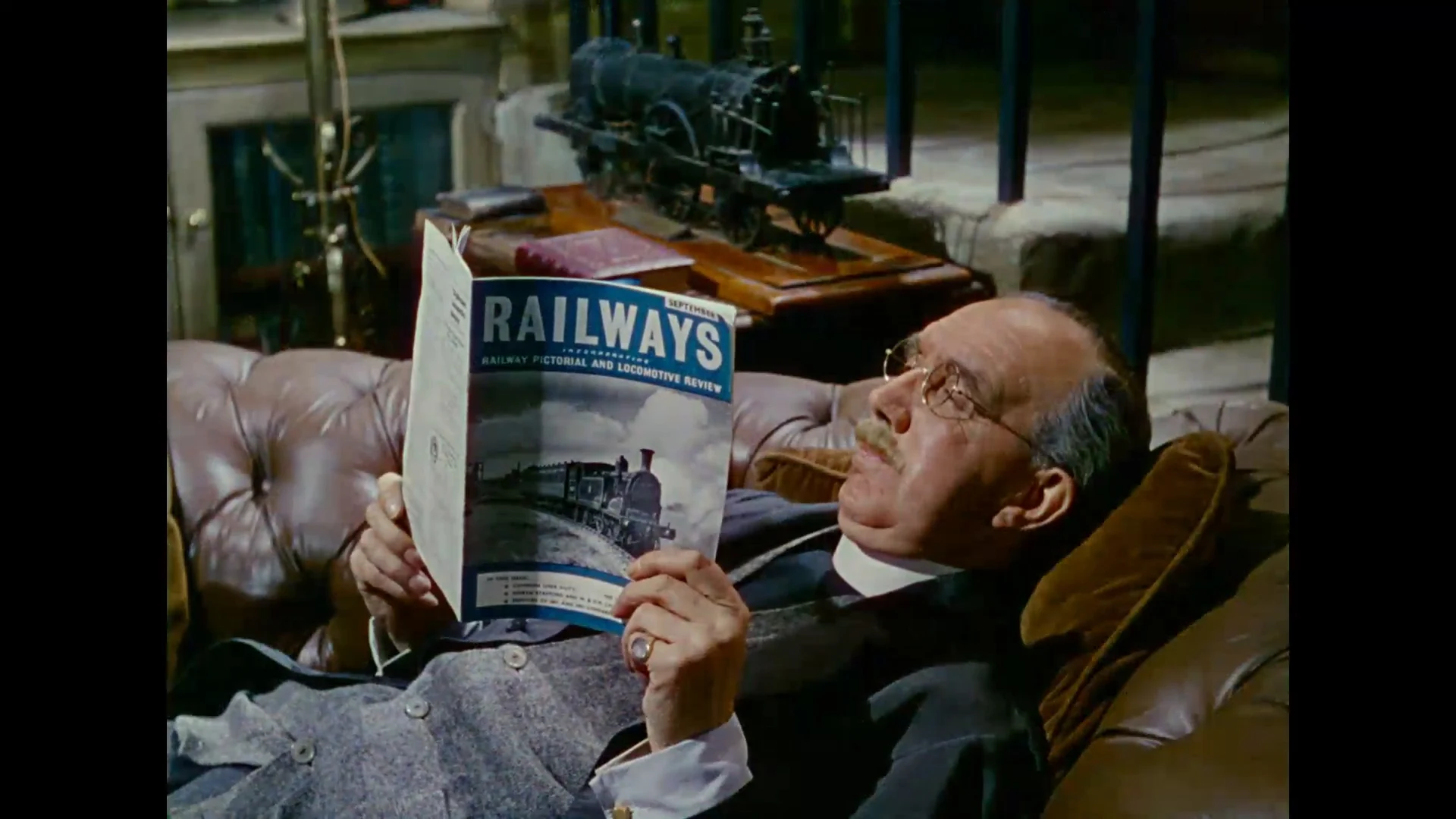
The plot boils down to the rivalry as the bus company tries to sabotage the new venture, but the motley crew of amateurs (funded by a drunk, driven by a vicar) refuse to give in. I’ve never been a train-spotter, but the gorgeous photography could turn anyone into one.
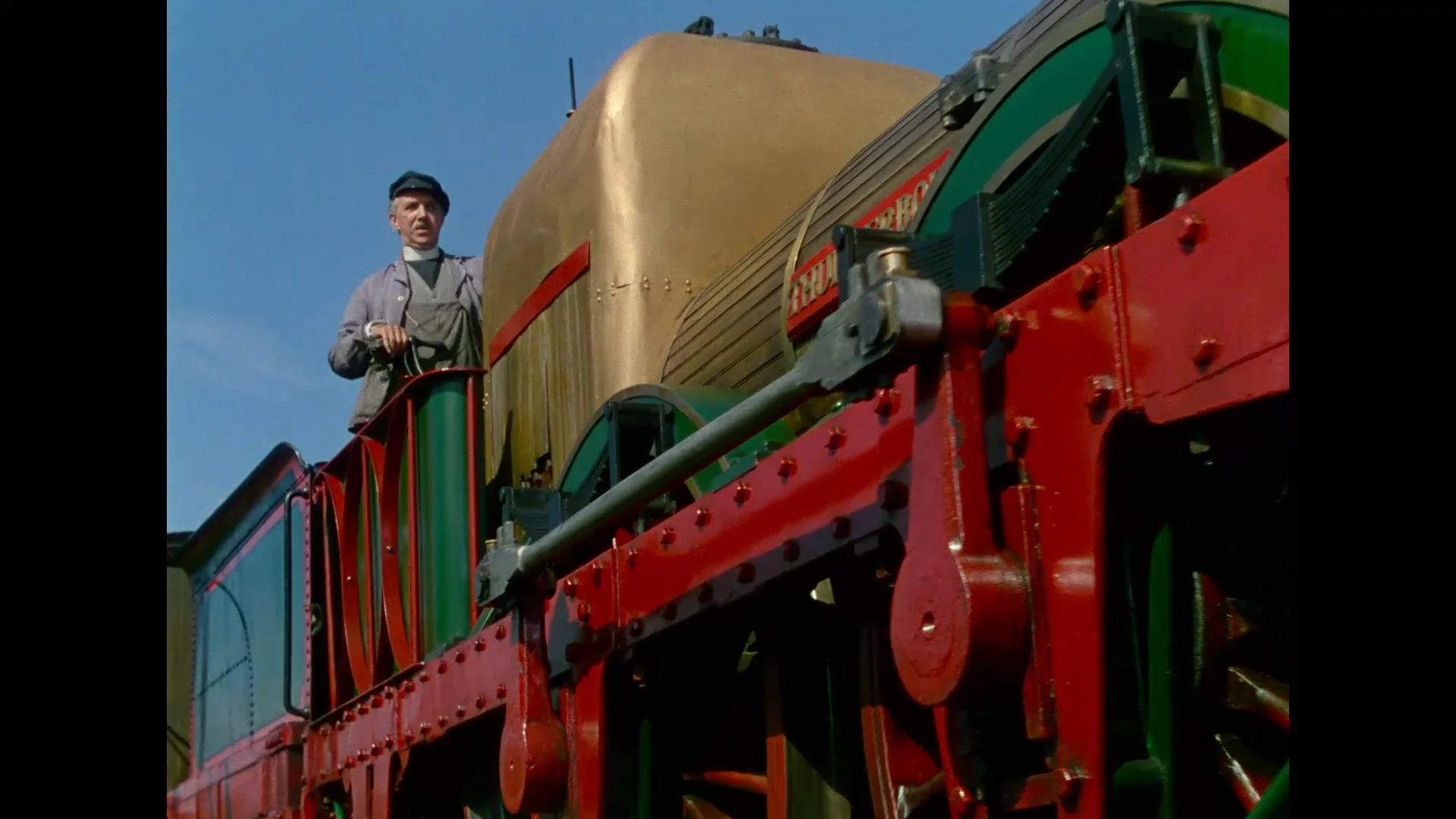
The story doesn’t call for a notable visual flair, but nobody told the great Douglas Slocombe that. And Charles Crichton is clearly in his element playing with train-sets and the sight of these engines billowing steam through the countryside is enough to inspire anyone. He also pulls off an impressive crash and the resultant sequence of Dan and Mr. Valentine drunkenly stealing another engine is fantastic. I wonder if this is the first instance of crashing through billboards with apt phrases, a staple of action films? First the engine smashes through one and then a car swerves to avoid it and hits a second sign that recommends careful driving. Crichton’s last film was A Fish Called Wanda, which also had inspired lunacy.
It’s a lot of fun with a cast of wonderful characters in an eminently infectious and watchable farce. It plays on national nostalgia while pointedly satirising the post-war policies that killed off a way of life. And yet it is never being less than utterly charming and is frequently hilarious. Somehow I think Genevieve from the same year is more well known. It also stars John Gregson and the stories bear similarity, but this is far better. Genevieve has dated very badly, so catch this train instead.
VIDEO
This UHD presentation of an early Technicolor film is frequently extraordinary, despite being sometimes warts and all. Occasionally soft focus, especially in busy internal scenes, shifting tones and dated rear projection can’t hide from a 4K magnifying glass. Even inconsistent applications of make-up can stand out. However, these imperfections add to the charm and when every scene pops with ambition. Colours are deep and rich and Douglas Slocombe’s photography outdoors is gorgeously lush. A scene at dusk ironically stands out because despite being at night, it’s sharp as a button.
EXTRA FEATURES
A good chunk of these extras are lifted from previous releases, but always welcome. Especially the Then And Now featurette. Tim Dunn’s piece on the Welsh Talyllyn Railway is excellent and the parallels with what would become Titfield is fascinating. Tim is a fabulous host because he is also the perfect audience for The Titfield Thunderbolt: a trainspotting film nerd, and I say so with genuine respect.
- Tim Dunn on the Railway That Sparked The Titfield Thunderbolt
- “The Titfield Thunderbolt” (1952): British Pathé short
- Making of The Titfield Thunderbolt
- Douglas Slocombe’s Titfield Thunderbolt 16mm Footage
- Lion locomotive Featurette *
- Then & Now Locations Featurette
- Douglas Slocombe on Charles Crichton: Interview by Matthew Sweet
- Behind the Scenes Stills Gallery
- Trailer