


 Director: Georges Franju
Screenplay: Jean-Pierre Mocky
Based on the novel by: Hervé Bazin
Starring: Jean-Pierre Mocky, Anouk Aimée, Pierre Brasseur, Paul Meurisse, Charles Aznavour, Édith Scob
Country: France
Running Time: 97 min
Year: 1959
BBFC Certificate: 12
French director Georges Franju is best known for his outstanding second movie, the unsettling and influential horror film Les Yeux sans visage (Eyes Without a Face [1960]). Yet by the time Franju made this iconic film, he’d made a number of documentaries and violent shorts over the course of more than a decade, as well as the subject of this review, his excellent debut fictional feature La Tête contre les murs (Head Against the Wall [1959]).
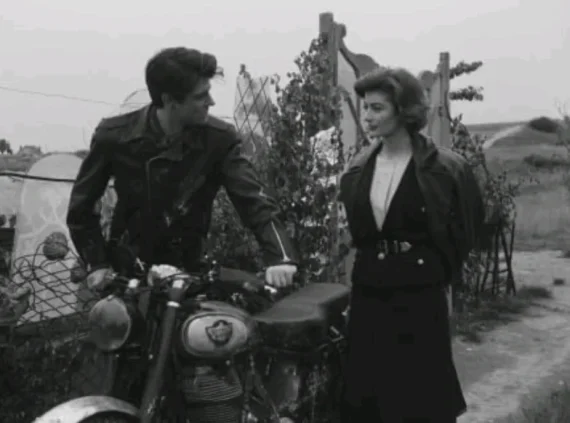
Franju was in his late 40s when he made that debut fictional feature. His star and the film’s writer, Jean-Pierre Mocky, was in his late 20s. The pair each brought different elements to the film and were, as one of the extras points out, essentially shared custodians of its authorship.
Mocky, whose real name was Jean-Paul Adam Mokiejewski, was an actor, director, novelist and raconteur, who adapted Hervé Bazin’s book of the same name for the film. Mocky has been receiving a lot of justly deserved love from the Radiance label, who previously released a boxset of three of his films, called The Agitator: Three Provocations from the Wild World of Jean-Pierre Mocky, as well as Solo (1970), which is released on the same day as La Tête contre les murs.
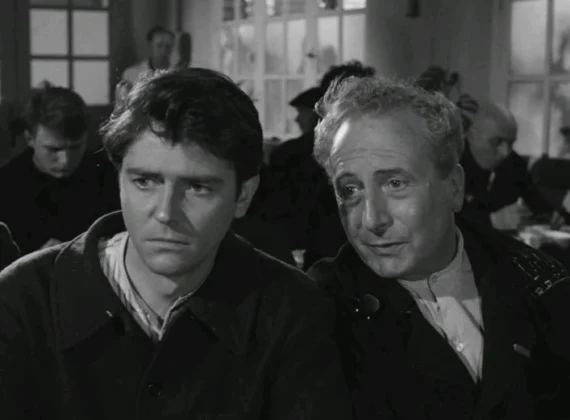
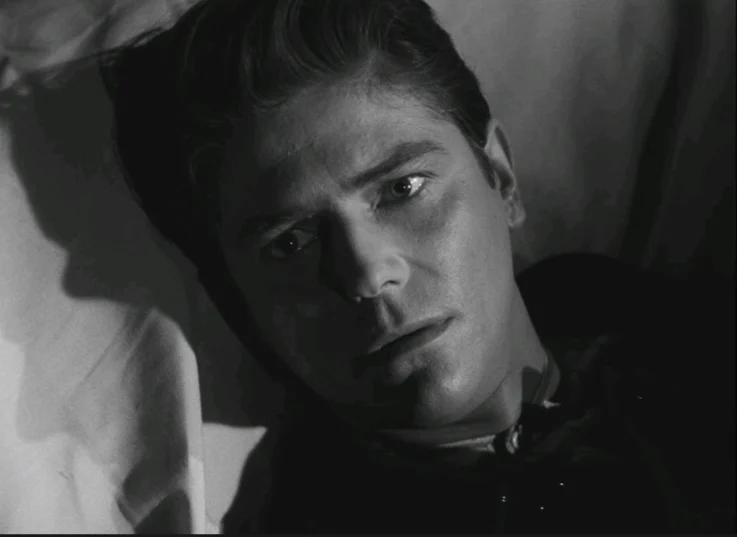
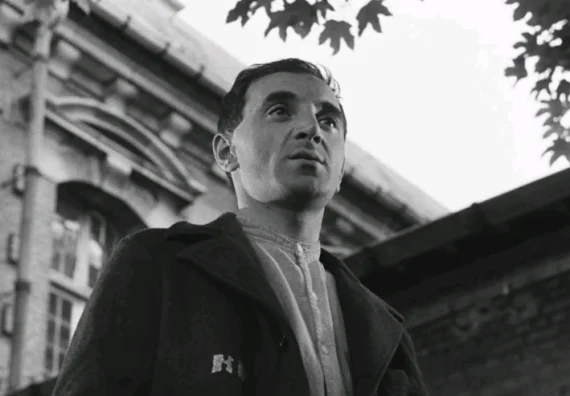
La Tête contre les murs follows the rebellious François (Mocky) who burns his father’s documents and steals money from him one too many times. As a punishment he is forcibly committed to a psychiatric institution.
Here he is labelled as a delinquent and an arsonist, and, in the words of Radiance, endures the dehumanising treatment reserved for society’s rejects, whilst attempting to thwart the archaic methods of the cruel Dr Varmont (Pierre Brasseur).
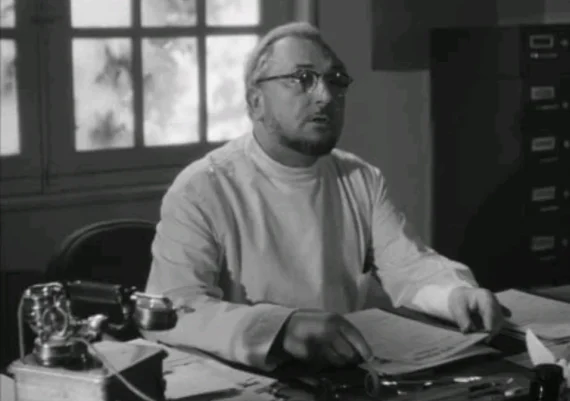
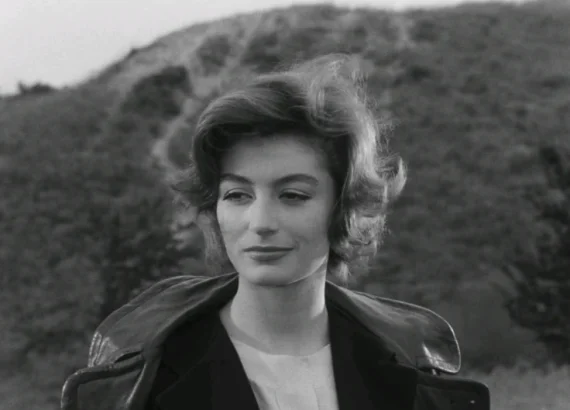
Along the way he receives just one visitor, Stéphanie (Anouk Aimée), and is joined by a colourful band of characters, including Dr Emery (Paul Meurisse), whose treatments are more modern than Vermont’s, the long-interned Heurtevent (Charles Aznavour) and a nameless woman who sings (Édith Scob).
Mocky’s script is excellent, packing in plenty of back story and incidental detail throughout, which provides a richness to the character of François and his parents. Essentially, we learn that François blames his father for his mother’s death, which gives some justification for the behaviour that lands him in the institution.
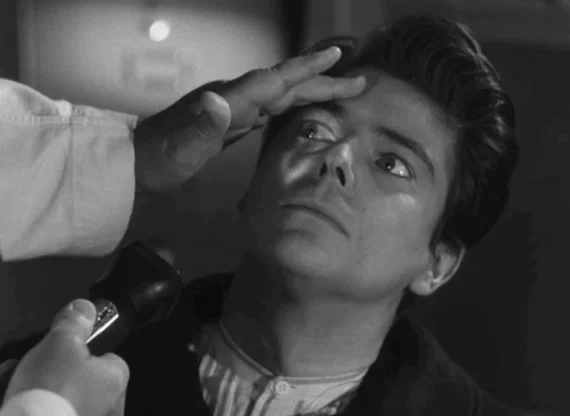
The film is well acted, particularly by Mocky and the two very different institution doctors, played by Brasseur and Meurisse. The former’s Dr Vincent treats his patients with contempt and like science experiments, while the latter’s Dr Emery provides a human side and compassion, even allowing his patients to wear their own clothes rather than the prison-like attire the others are forced to wear. It’s also great to see future French icon Aimée in a relatively brief but important role. She steals every scene she is in.
The film provides us with a sense of what was to come for Franju in his sophomore effort Les Yeux sans visage with the occasional moment of near horror – one of the fellow patients lashes out with a saw, sparking blood – and in the way some of the treatments are carried out on the patients.
There is also an unbearably tense sequence where François, accompanied by visitor Stéphanie, attempts to escape by joining a large number of other people walking towards the exit. The music ratchets up the tension for this one.
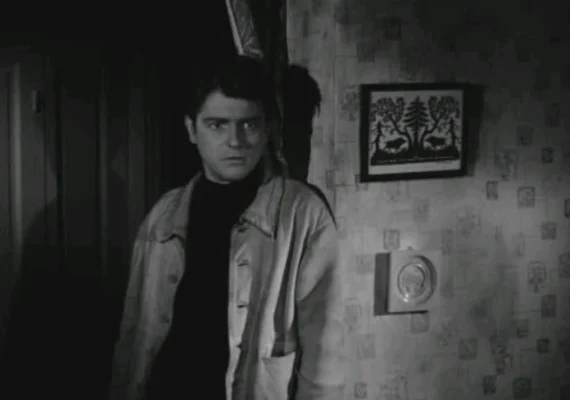
The cinematography by director of photography Eugen Schüfftan is gorgeous, showcasing the on-location scenes that bookend the main thrust of the movie beautifully, and also capturing the cramped, prison-like oppressiveness of the institution, where much of the story plays out.
Future three-time Oscar-winner Maurice Jarre crafts a frantic score that gets under the skin, providing tension and underscoring key sequences. Amongst other scores, Jarre would pen three Academy Award winners in David Lean films Lawrence of Arabia (1962), Doctor Zhivago (1965), and A Passage to India (1984) as well as the music for Franju’s second fictional feature, Les Yeux sans visage.
In summary, La Tête contre les murs (Head Against the Wall) is a blistering debut for the great Georges Franju, packing a humongous punch through a carefully crafted story written by star Jean-Pierre Mocky, who adapted it from an autobiographical novel by Hervé Bazin. The film provides a glimpse at some of the themes that would occur in Franju’s second, best known, feature Les Yeux sans visage (Eyes Without a Face). Highly recommended.
Film: 

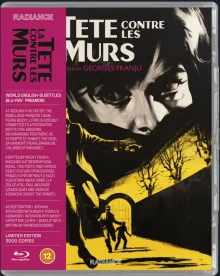
La Tête contre les murs is released on limited edition region-free Blu-ray in the UK by Radiance on 22nd June 2026. The 4K restoration of the film is excellent, with it likely looking as good as it ever has. There is a good amount of detail, a natural amount of grain and the oily black and white photography looks breathtaking. I was very pleased with the presentation of the movie, which also includes a good audio track.
Blu-ray limited edition special features:
4K restoration by Éclair Classics supervised by Mocky Delicious Products
Uncompressed mono PCM audio
Archival interview with screenwriter and star Jean-Pierre Mocky (2008, 10 mins)
Archival interview with director Georges Franju and actor Charles Aznavour (1958, 11 mins)
Interview with Jean-Pierre Mocky’s assistant and friend Eric Le Roy (2023, 25 mins)
Newly improved English subtitle translation
Reversible sleeve featuring designs based on original posters
Limited edition booklet featuring archival writing by film critic Raymond Durgnat
Limited edition of 3000 copies, presented in full-height Scanavo packaging with removable OBI strip, leaving packaging free of certificates and markings
The archival interview with screenwriter and star Jean-Pierre Mocky is from 2008 and runs for 10 minutes. The star shares the background to the film’s inception, how he got involved and its legacy. It’s a short but good interview, words that sum up all three of the on-disc extras for this release.
Next is an archival interview with director Georges Franju and actor Charles Aznavour that runs for 11 minutes and is from 1958, with the pair interviewed separately and Franju’s playing out for much of the runtime before we hear from Aznavour. The interview opens with the interviewer describing how Franju at the time was known for “extremely violent” short films. Franju bounces back in a good sparring session with the interviewer, who seemingly wants to just keep interrupting the director. This is followed by an interview with singer and actor Aznavour, who plays Heurtevent in the film. Aznavour discusses his career and stardom.
Finally for the on-disc extras is a 2023 interview with Jean-Pierre Mocky’s assistant and friend Eric Le Roy, which is 25 minutes long. Le Roy discusses the shared authorship of the film between Franju and Mocky and provides some good context to the background of the movie.
The booklet is 28 pages long and contains a chapter from British film critic’s book about the film’s director called Franju which was published in 1967. It’s an excellent piece that provides a wonderful overview and reading of the film, looking at key sequences and themes.
So, it’s a slim package of extras for a very strong film, but the 45 minutes of on-disc pieces provide good background to the making of the film and one or two key personnel, whilst the archival essay in the physical booklet does the heavy lifting, giving a fabulous overview and reading of the movie.
Disc/Package: