



 Director: Mike Leigh
Screenplay: Mike Leigh
Producers: Simon Channing Williams
Starring: Alison Steadman, Jim Broadbent, Timothy Spall, Claire Skinner, Jane Horrocks
Year: 1990
Country: UK
BBFC Certification: 15
Duration: 103 mins
Mike Leigh has stated in the past that Life is Sweet is his least favourite among his own films, though he admits he can’t put his finger on why. Many critics have disagreed over the years, with Life is Sweet proving to be a significant breakthrough. There are those who believe this was due to a greater accessibility and a sitcom-like lightness of tone. Even Leigh, in an interview about his more overtly troubling follow-up Naked, referred to Life is Sweet as “jolly.” Returning to the film (which I have always loved) after many years, I would have to disagree with this assessment also. On the surface Life is Sweet may appear to be a more palatable confection than the likes of Bleak Moments or All or Nothing, but dig a little deeper and it can begin to seem like one of Leigh’s most uncomfortable films, while still retaining its outward hilarity and quotability. That’s part of the beauty of Leigh’s unique approach to building material through dense character work and improvisation. It means there’s always deeper to dig and secrets on which we can speculate but about which only Leigh and a handful of actors will ever know the truth. That’s what makes Leigh‘s style, which combines social realism with grotesque exaggeration, so satisfying. Watching these characters feels akin to curtain-twitching.
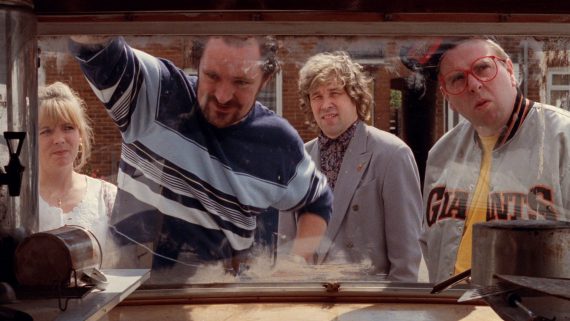
Life is Sweet focuses on a working class North London family across a few weeks of a summer. Andy (Jim Broadbent) is a head chef whose efficiency in the workplace is balanced by an inability to see through any of his numerous domestic ambitions. Although she despairs of his half-built trellises and patios, Andy’s wife Wendy (Alison Steadman) is a good-natured, nervously bubbly woman. The couple’s twenty-two year old twin daughters have very different outlooks. The serious-minded Natalie (Claire Skinner) is a hard-working plumber working towards her dream of going to America, while her sister Nicola (Jane Horrocks) is a reclusive, bitter and impotently angry person who claims to be politically engaged but limits her involvement to accusing people of being fascists and rebuffing any good-intentioned offers of help. Her outward hostility hides a deep self-hatred which manifests itself in an eating disorder. Meanwhile, oddball family friend Aubrey (Timothy Spall) mounts a disastrous attempt at opening his own restaurant, with Wendy stepping in to help as a waitress.

Life is Sweet does a fabulous job of setting up its delicately balanced tone. The initial scenes of family life focus on an endearing sitcom-like dysfunction, with Aubrey’s interjections filling the wacky neighbour requirements. Rachel Portman’s wonderful score is perfectly pitched, playing up the lightness at first before offering subtle, vaguer variations on the initial colourful ditties as the film darkens. The performances, as is common in a Leigh film, are both naturalistic and overstated. Broadbent and Steadman’s chemistry and conversational style feels immediately real, whereas Horrocks and Spall play their characters at the extreme end of their personalities. Somehow this combination works, highlighting the comedic beats and enhancing the dramatic ones when emotional cracks show through the bolder performances. A couple of climactic scenes between Steadman and Horrocks are some of the finest and most moving in the Leigh canon, filling in character details without resorting to lazy exposition and building to an emotional head which feels both devastating and cathartic.
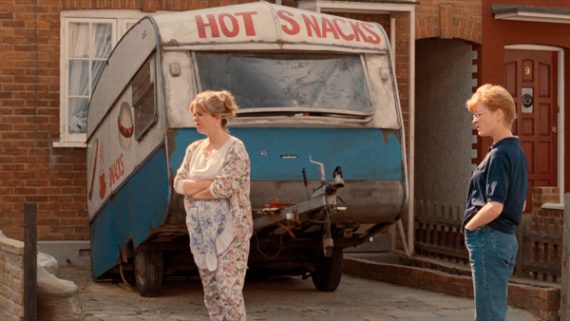
The most common complaints people level at Life is Sweet relate to Timothy Spall’s Aubrey. One of Leigh’s most unsettling grotesques, Aubrey is a pathetic clown who fails to elicit pity because of his abrasive and predatory nature. The performance choices Spall and Leigh have made for this character are extreme but Aubrey still has plenty of recognisable traits. Although the character would likely be taken as neurodivergent now, the intention feels more towards an extreme depiction of social maladjustment that makes for a less problematic, though some might say still cruel, caricature. While the subplot involving Aubrey’s catastrophic restaurant opening is often cited as superfluous comic relief, it is here that repeat viewings uncover disturbing details that may tie Aubrey into the main plot of Nicola’s mental state to a greater degree than the casual viewer may notice. Aubrey is, after all, the sort of desperate character who will force his sexual attentions on any woman from his best friend’s wife to his unreadable sous chef Paula. One key detail, highlighted by Leigh in a passing comment on the commentary track, suggests Aubrey’s exploitative actions may have figured strongly in Nicola’s sudden breakdown.
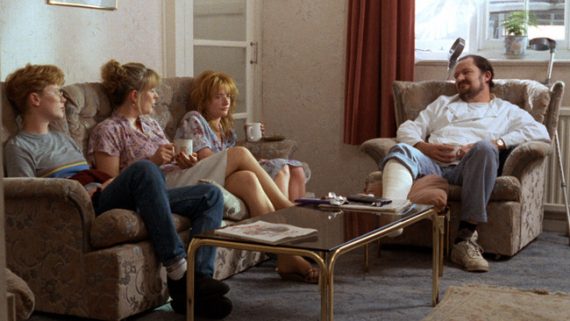
Amidst such dark material, Life is Sweet’s title may seem glibly ironic but there’s much more to it than that. For one, the relationship between the family does seem genuinely loving and warm, with offhand digs juxtaposed with implicit affection. The allusion to taste in the word Sweet also underlines the film’s interesting preoccupation with food. Characters are almost constantly seen eating, drinking or requesting food, while Nicola’s bulimia, Aubrey’s foul culinary concoctions and Andy’s work are also tied into this theme. Nicola’s sexual proclivities involving chocolate spread are directly contrasted with her disorder, while Aubrey’s ambitions could well be driven by an attempt to emulate Andy, the man who is closest to two of the women he most desires. The fact that none of these assumptions will ever be confirmed or spelled out makes them even more alluringly fascinating. Returning to Life is Sweet, I found it even more compelling, discomfiting, hilarious and unique, a cumulative incremental appreciation which I associate strongly with Leigh’s oeuvre.
Life is Sweet is released on Blu-ray by Criterion on 16 February 2026. The extras include an hour-long audio discussion with Leigh as well as a full director’s commentary. Leigh is an enigmatic and sometimes frustrating person to listen to, although he does offer some interesting insights and his elusiveness is key in the films maintaining their crucial ambiguities.
Perhaps the most attractive extras for Leigh fans will be five short films which Leigh made for a proposed BBC project in which 40-50 short pieces of this kind would build up into a bigger overall picture, with main characters in certain shorts turning up as support in others. While the project never got off the ground, these five brief pilots indicate the tone of what Leigh envisaged. They are hard to rate individually, especially since their intended role as pieces in a larger puzzle never came to fruition, but they are intriguing and enjoyable nonetheless.
The full list of special features is as follows:
* New, restored 2K digital film transfer with 2.0 surround DTS-HD Master Audio soundtrack
* New audio commentary featuring director Mike Leigh
* Audio recording of a 1991 interview with Leigh at the National Film Theatre in London
* Five short films written and directed by Leigh for the proposed television series Five-Minute Films,with a new audio introduction by Leigh
* English subtitles for the deaf and hard of hearing
* PLUS: A new essay by critic David Sterritt
* New cover by Eric Skillman
* PLUS: A new essay by critic David Sterritt
* New cover by Eric Skillman