



Seeing high-stakes action go down at a casino table in the movies is nothing new. It’s been done time and time again with the likes of the classic Casino, 21 and Casino Royale. Gambling immediately brings a sense of tension to the viewer as people await the outcome of a roulette spin, or the roll of the dice in craps, and what that means for the plot.
Of course, the way high roller gambling is portrayed in films can look different from the modern reality, where a lot of gambling activity has shifted online. Gambling sites now offer countless options for all types of players, no matter how much they stake. Those who prefer playing with bigger sums can easily find a high roller online casino. Such platforms provide slots and table games with higher betting limits, along with increased deposit and withdrawal thresholds. All a modern online high roller needs is a stable internet connection and a good device. Sure, some people still prefer the allure of land-based high stakes, and on screen, land-based casinos continue to dominate the storytelling. Movies quite often feature poker, as the intensity of the game helps drive tension and develop the plot.
Some films deliver a raw look at poker, such as the gritty realism that Rounders does with great effect. But then others may take a more creative approach to things, like the 2011 sci-fi thriller In Time. This movie actually takes poker to a much higher level because instead of gambling for money, it’s essentially for people’s lives.
The Movie’s Premise
For those who haven’t dipped into In Time before, the main character Will Salas, played by Justin Timberlake, lives in a dystopian vision of the future where people are fully aware of the time they have left to live. People are engineered to have the ageing process stop at 25, but then once that threshold is reached, people have only one more year to live, unless they can find a way to buy themselves more time.
This sets up the premise that time is the ultimate currency, as people can see their personal clock ticking down. The heavy layering of social commentary comes into play because there is a divide between the wealthy, who can carry on forever at the age of 25 by simply buying more time, while the poor have to scrape and fight their way for every second to stay alive.
Life and Death
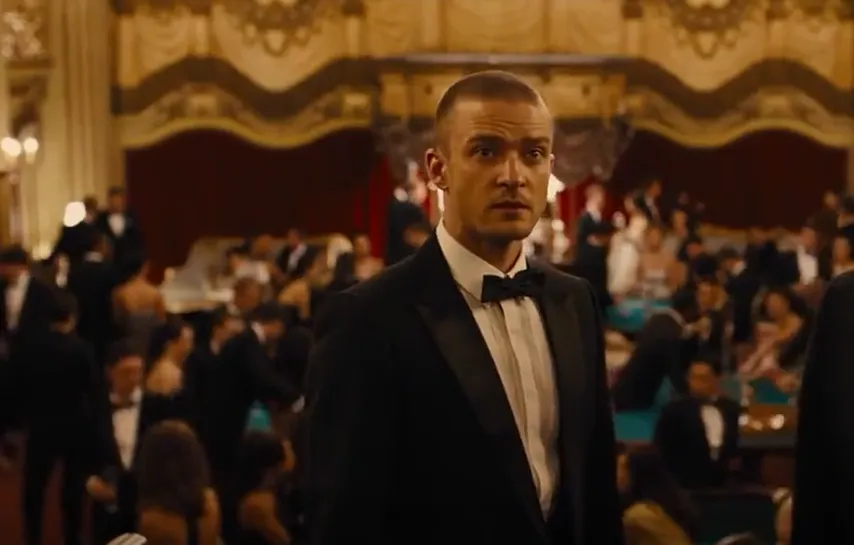
For the main poker scene in In Time, Salas takes on Philippe Weis for the precious commodity, set in a luxurious casino setting that wouldn’t look out of place in Monaco. Only instead of chips, the stakes are minutes, years and decades, which essentially equate to life.
The set-up of the game reveals a seven of clubs, a queen of hearts, a five of spades, a jack of clubs and a six of diamonds as the community cards. The initial round of betting begins with “50 years” and then immediately the tension at the table skyrockets between players as the stake just goes up to “two centuries” as Weis raises.
By calling the raise and announcing that he thinks Weis’s hand is weak, Salas is left with just 30 seconds on his clock. The time crunch ramps up the drama as there is a big pause as Weis seems to take forever to show his hand, which is a pair of queens. Had he taken a little longer to do that, Salas would have expired, and Weis wouldn’t have had to pay up, as the inevitable follows.
Salas puts on a disappointed look before revealing a four of clubs and an eight of hearts, which gives him a winning straight. At the last second before his clock is set to expire, Salas cashes in his winnings, to the tune of fifteen figures, giving him back all the time in the world.
The Unfolding Drama
It’s arguably not the most dramatic poker scene in cinematic history, and the unfolding drama comes from the stake. The scene has the trope of the overly confident, well-spoken bad guy in Weis, and the everything-feels-lost moment when Salas looks like he has been beaten.
Despite only having seconds to live, with an unnatural coolness given the situation, Salas lays his winning hand down to earn his substantial reward, and all is good. The drama is that Salas is risking the final moments of his life, and because of the fairly strong hand that Weis plays, it drives home the uncertain and risky nature of high-roller gambling.
High Roller Gambling
High-stakes play takes gambling to the next level, both in real life and on the screen. The tension rises because players are willing to risk everything, often pushing themselves to the limit with a single all-in move. Usually, that means the risk of losing all their funds, which is already enough to create a charged atmosphere around the table.
In Time, however, gives this idea a creative twist. Here, the protagonist isn’t just gambling with money – he’s wagering the very minutes of his life. Every hand could shorten his future, and that turns a standard poker scene into a moment of genuine suspense. By raising the stakes to such an extreme level, the film manages to push gambling into unfamiliar territory, making the high-roller setting even more dramatic and unforgettable.