


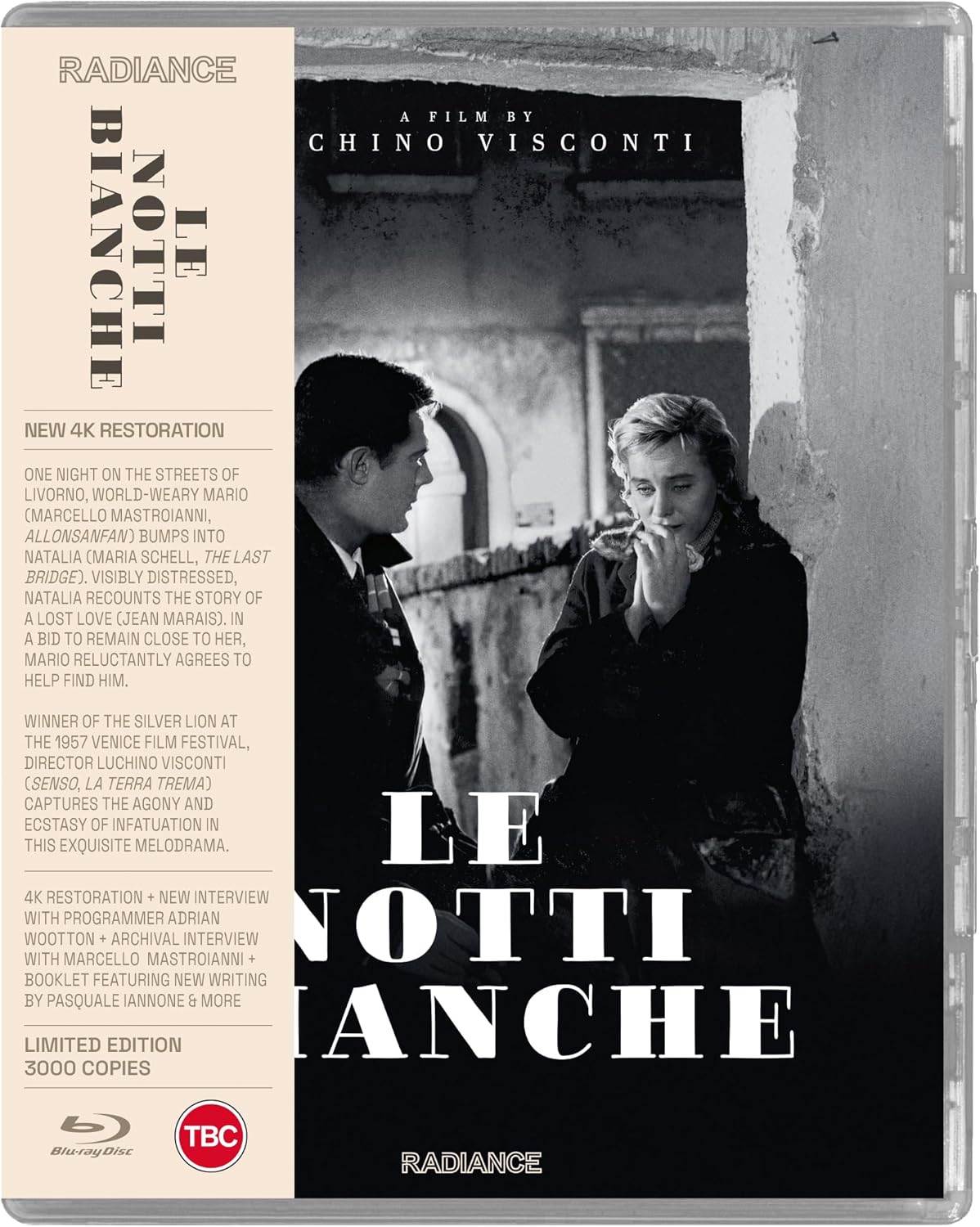
 Director: Luchino Visconti
Screenplay: Luchino Visconti, Suso Cecchi D’Amico
Based on a Novel by: Fyodor Dostoevsky
Starring: Maria Schell, Marcello Mastroianni, Jean Marais, Marcella Rovena, Maria Zanoli
Country: Italy, France
Running Time: 102 min
Year: 1957
BBFC Certificate: PG
By 1957, Luchino Visconti was at the top of his game when it came to theatre and opera, finding critical and commercial success with most of his work. However, his 1954 film Senso was not well received, and the production ran over time and over budget. As such, his cinematic career was looking unstable at the time. His follow-up, Le Notti Bianche (a.k.a. White Nights) was a chance to prove himself.
The film, which was an adaptation of Fyodor Dostoevsky’s short story ‘White Nights’, was suggested to Visconti by the father of his regular collaborator, Suso Cecchi D’Amico. Visconti had adapted Dostoevsky’s Crime and Punishment for the stage previously, so he liked the idea.
Le Notti Bianche went on to win the Silver Lion at Venice, but not everyone was won over by it. It seemed too far detached from what the director had made before, so some saw the film as a betrayal of his realist roots. Over time, however, Le Notti Bianche has become recognised as one of Visconti’s greats.
It is being released on Blu-ray by Radiance Films. Having been impressed by their release of La Terra Trema (I haven’t seen their disc of Senso), I requested a copy of Le Notti Bianche and my thoughts follow.
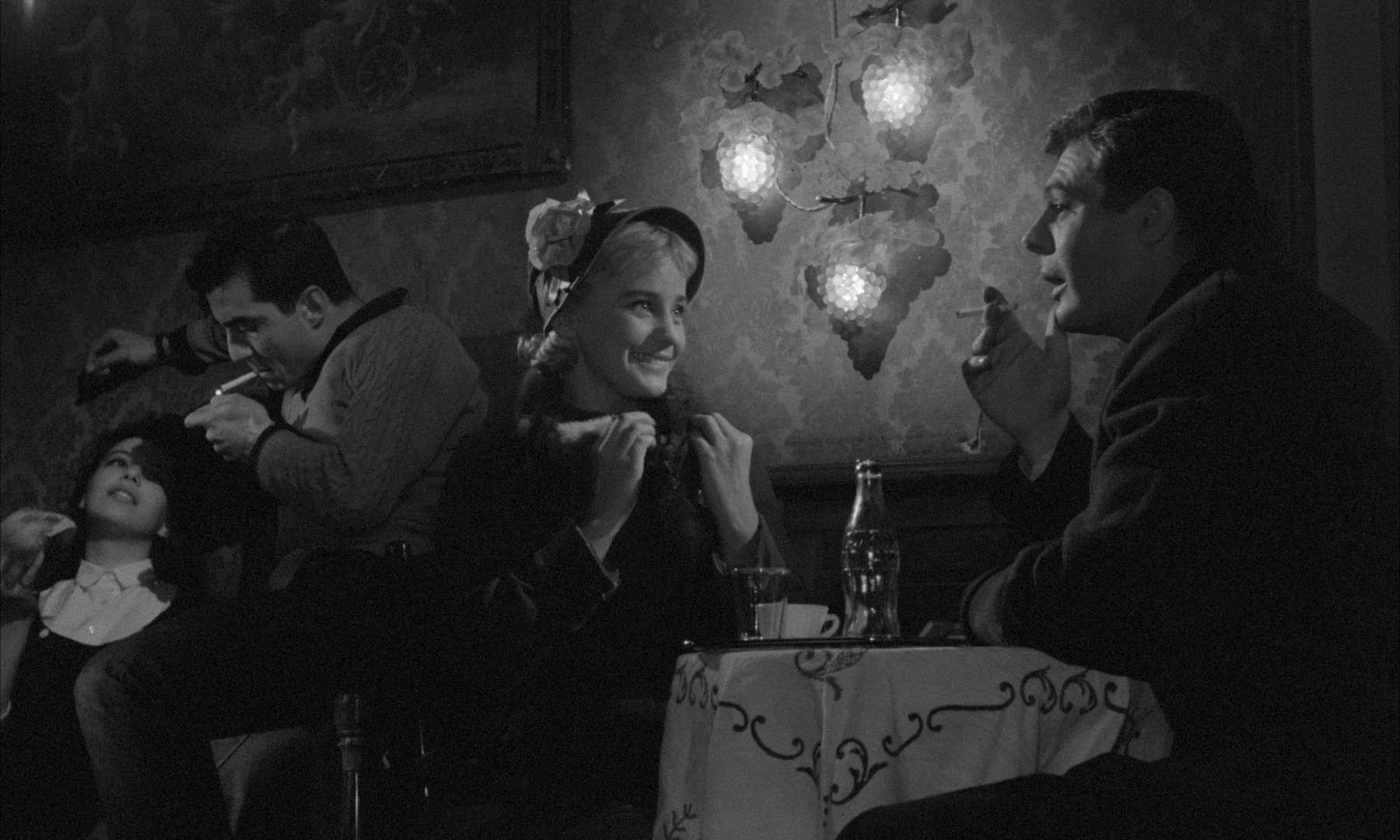
To quote Radiance’s synopsis, “one fateful night on the streets of Livorno, world-weary Mario (Marcello Mastroianni, Allonsanfan) bumps into Natalia (Maria Schell, The Last Bridge), a visibly distressed young woman. As Mario attempts to comfort her, Natalia recounts the story of a lost love (Jean Marais) who she hears is back in town. In a bid to remain close to her, Mario reluctantly agrees to help Natalia find him.”
I can see why audiences and critics at the time might have been taken aback by Le Notti Bianche. Most notably, Visconti eschewed his usual tendency to strive for realism by using locations and ‘non-actors’. Instead, the whole film was shot on a huge soundstage in Cinecitta with established performers. Visconti was working on a higher budget than he was used to, and a lot of the money went on the set. Having the film made entirely in the studio like this meant that the director had full control over everything though, helping to keep production on schedule and allowing him to work more in line with how we would in the theatre, which he loved.
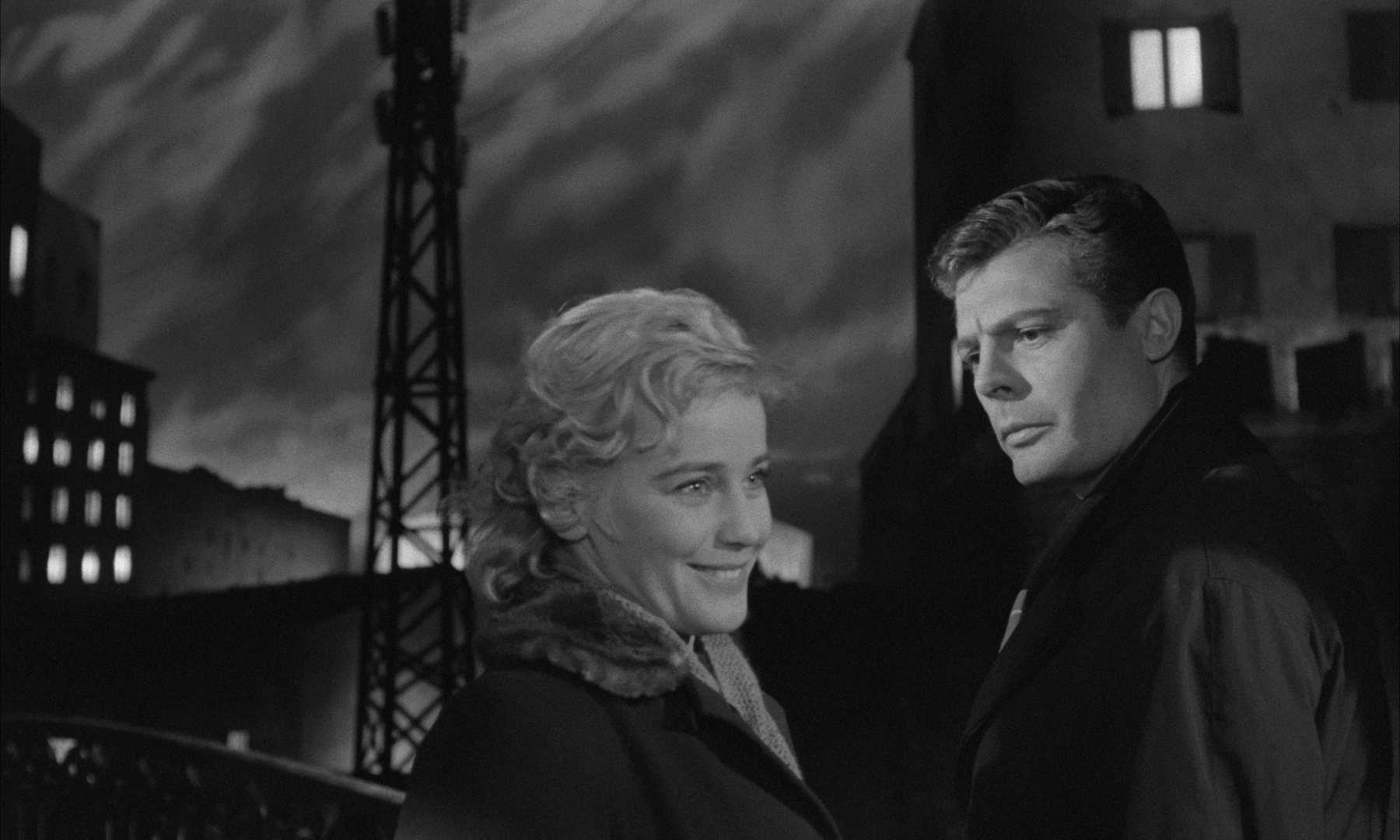
Visconti saw the film as an experiment, in a way. He wanted to make something that dipped between theatre and cinema, between artifice and ‘reality’, if you will. This reflects the way Natalia lives in what Mario sees as a rose-tinted memory.
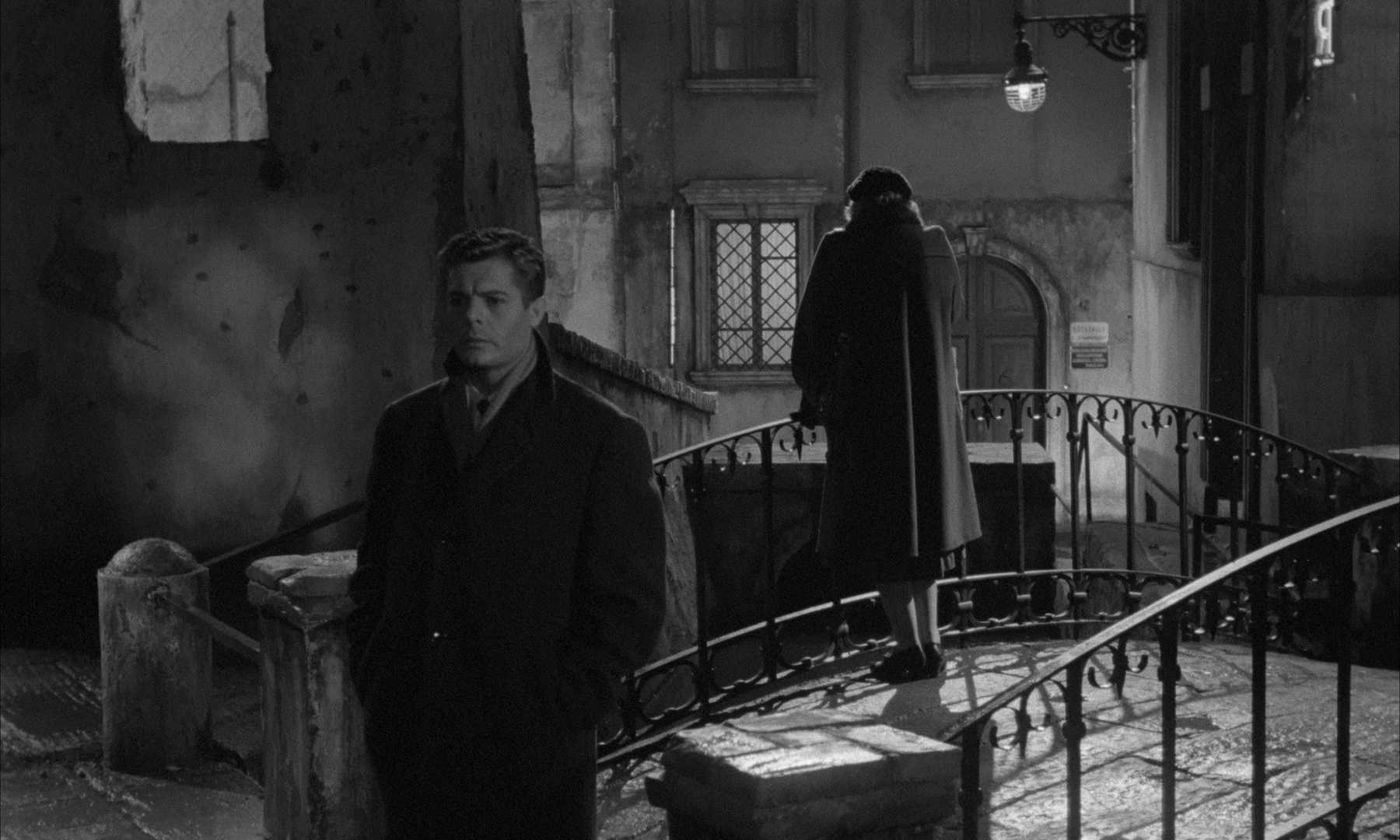
It also allows for some sumptuous visuals. Lighting and composition are handled with a painterly beauty. Visconti and his cinematographer Giuseppe Rotunno also devised a way of using thin curtains to fake the mist of early morning, and there’s a beautiful snowing scene later on. The camera is allowed to move freely at times too, making for an incredibly graceful and elegant experience.
The music, by the great Nino Rota, is beautiful too. It’s understated for the era, but it aids the achingly romantic tone, tinging it with sadness.
Being such an intimate film though, focusing largely just on two characters, it’s a real acting showcase above all else. Maria Shell was a stage and screen star in Germany, but she did not speak Italian. She had to learn how to ‘parrot’ her lines in two weeks, but did such a good job that Visconti allowed her to loop her own lines after originally believing they’d have to dub her with an Italian actress. She perfectly captures the fragility of her troubled character, whilst being utterly captivating in her beauty.
Whilst he had been working in the industry for a while, Marcello Mastroianni wasn’t yet a big star or sex symbol at this time. Knowing what he would become makes it a little surprising that Shell’s character isn’t falling instantly in love with his, but Mastroianni sells the idea very effectively. Their scenes together crackle with electricity, keeping you watching through the tense ‘will they, won’t they’ nature of the surface tale.
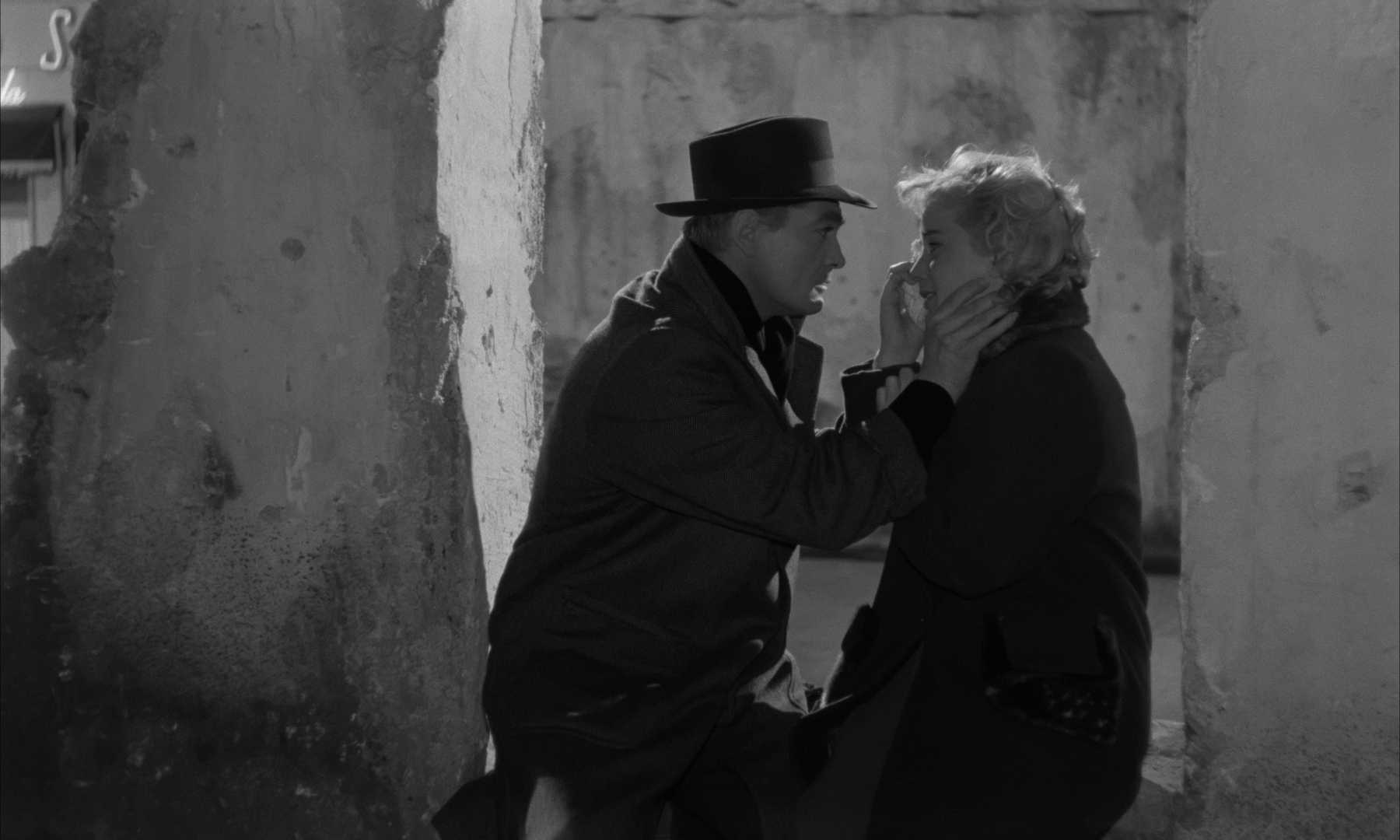
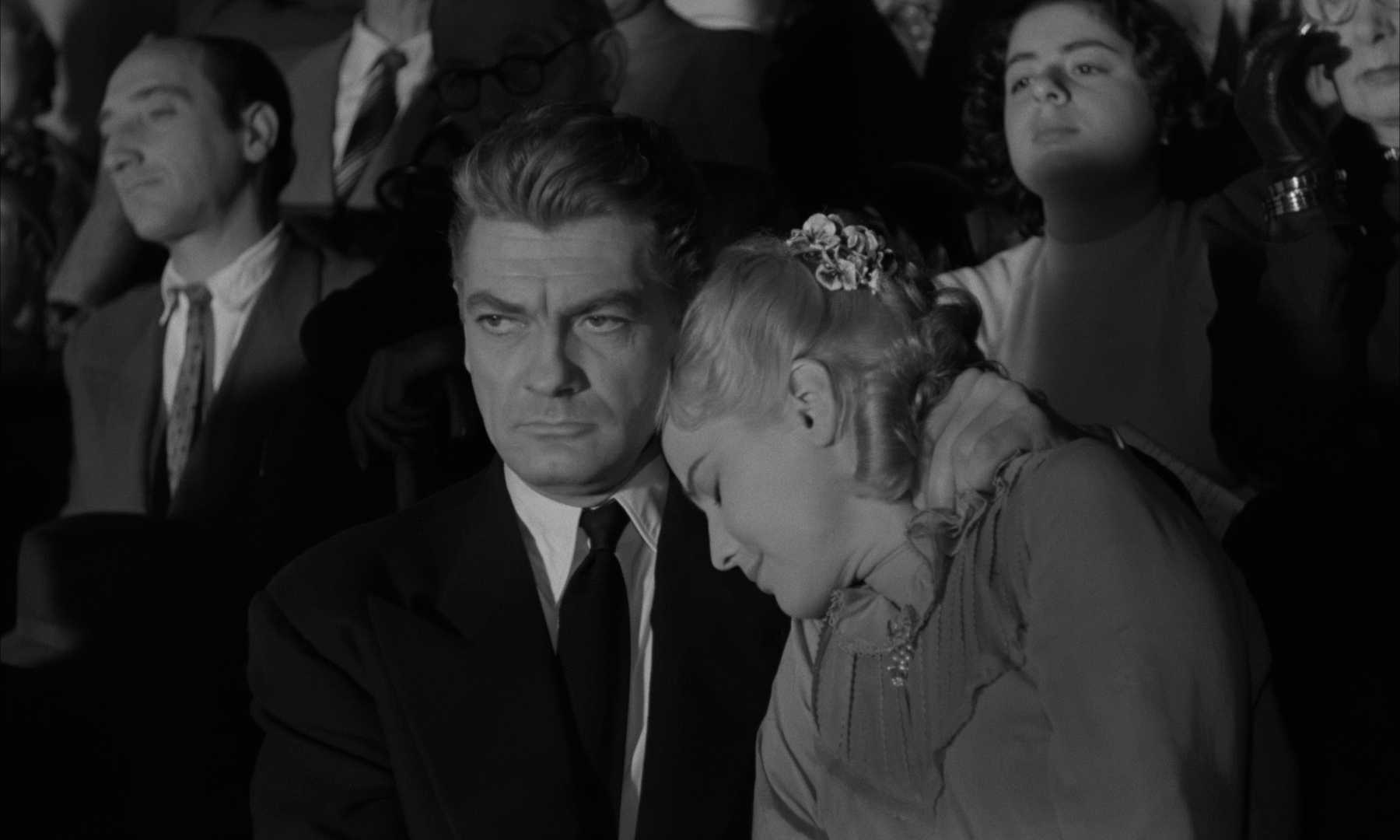
Jean Marais’s character is kept elusive and enigmatic, again working with the idea that he is almost a myth or a dream that Natalia is clinging to.
There are a few fun minor characters too, keeping the film’s world alive. The motormouthed landlady is particularly enjoyable, as are some of the glorified extras, like the guy with the hanky hat.
Romantic stories like these can become dated, but this holds up well. Mario can come across as a little too insistent and can be cruel at times, but this is acknowledged. Some of his nastier acts can be understandable too, as Natalia’s behaviour can be frustratingly erratic. I challenge anyone to put up with that and not get wound up.
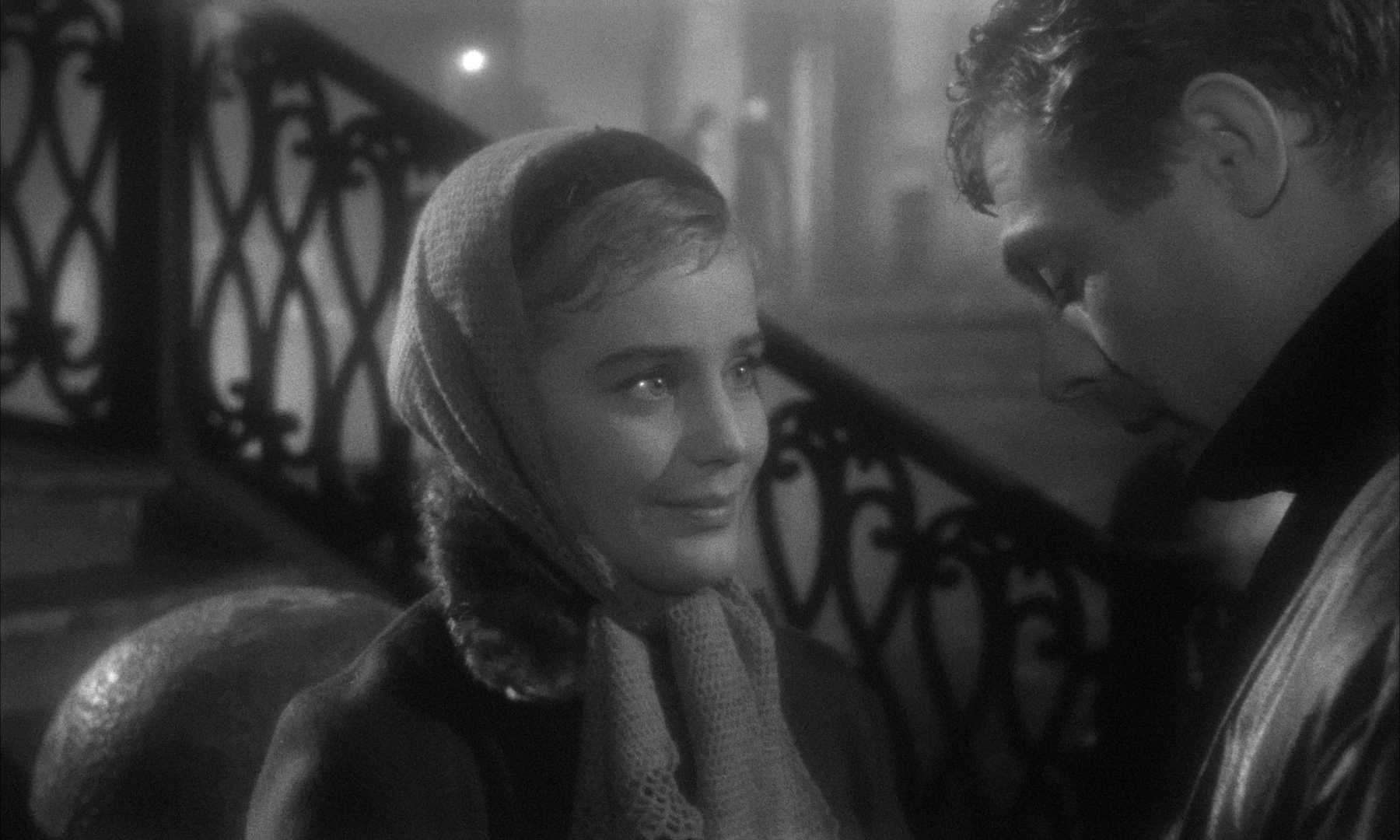
So, Le Notti Bianche is a beautifully presented, melancholic yet intensely romantic tale. With a magnetic pair of actors at its centre, it’s a finely crafted gem from one of Italy’s great directors.
Film: 

Le Notti Bianche is out now on region B Blu-Ray, released by Radiance Films. It looks stunning – sharp with crisp details, well-balanced contrast and a clean image. I’ve used screengrabs throughout this review to give you an idea of how it looks, though these have been compressed. The mono audio shows the limitations of the film’s age, with a little background hiss, but it’s still a solid soundtrack, all things considered.
LIMITED EDITION BLU-RAY FEATURES
– 4K restoration by Cinecittà
– Uncompressed mono PCM audio
– Interview with critic and programmer Adrian Wootton (2025, 23 mins)
– Letters From Rome: Luchino Visconti – archival programme featuring Visconti interviewed in Rome by André S. Labarthe (1963, 33 mins)
– Archival interview with actor Marcello Mastroianni (1977, 4 mins)
– Le notti bianche: An Appreciation – archival interviews with Visconti collaborators and Le notti bianche crew (2003, 17 mins)
– Audiobook reading of Dostoyevsky’s original short story ‘White Nights’ (2010, 108 mins)
– Trailer
– Stills gallery
– Newly improved English subtitle translation
– Reversible sleeve featuring original and newly commissioned artwork by Time Tomorrow
– Limited edition booklet featuring a new essay by Pasquale Iannone and archival writing by Geoffrey Nowell-Smith
– Limited edition of 3000 copies, presented in full-height Scanavo packaging with removable OBI strip leaving packaging free of certificates and markings
There’s a 17-minute archival appreciation featuring some critical analysis and interviews with a handful of people who worked on the film. This is very good.
Adrian Wooton discusses the film in a 23-minute interview. This provides a vital overview of the production and digs into what makes the film special. It’s an excellent piece.
There’s also an older archival interview with Visconti that runs for around 33 minutes. This looks at his work as a whole up to that time (beginning production on The Leopard), only touching on Le Notti Bianche briefly. It’s a fascinating watch nonetheless.
On top of this is a three-and-a-half-minute archival interview with Marcello Mastroianni. This is a little too short to be of great value, but it’s nice to hear from the legendary actor.
Finally, there’s an audiobook reading of Dostoevsky’s original story (translated into English, of course). I must admit I didn’t have a chance to sit and listen to this properly from start to finish, but I gave it a bit of a listen, and the quality is decent. It’s a great idea for an extra too. More releases of short story film adaptations should do this.
I didn’t receive a copy of the booklet to comment on that, unfortunately.
Overall, it’s a strong release that I’d give a firm recommendation.
Disc/package: