


 Director: Ringo Lam Ling-Tung
Screenplay: Ringo Lam, Shum Sai-Shing (as Tommy Sham)
Starring: Chow Yun-Fat, Sun Yueh, Danny Lee, Carrie Ng Ka-Lai, Roy Cheung Yiu-Yeung, Lau Kong, Fong Yau
Country: Hong Kong
Running Time: 105 min
Year: 1987
BBFC Certificate: 15
When it comes to Blu-ray and UHD releases of the classic titles made between the 70s and 90s, fans of Hong Kong cinema have been treated incredibly well over the past decade or so. However, there have been some notable omissions from the wealth of releases. Several key films by John Woo, for starters, have long been unavailable in fully legal, properly remastered HD or 4K forms.
The key factor holding back a great deal of the big ‘missing’ titles was that they were produced by the Golden Princess Film Production company. For numerous legal reasons, their international rights were held up for many years, and decent masters were also unavailable.
Hong Kong cinema fans had reason to celebrate earlier this year though, when Shout Factory announced they had acquired the worldwide rights to 156 Golden Princess titles. They’ve already started to release a number of these on Blu-ray and UHD in the States, and now Arrow Video are handling the release of the titles in the UK.
The first of Arrow’s Golden Princess releases is Ringo Lam’s classic undercover cop/heist movie, City on Fire. Needless to say, I snapped up the chance to review the disc.
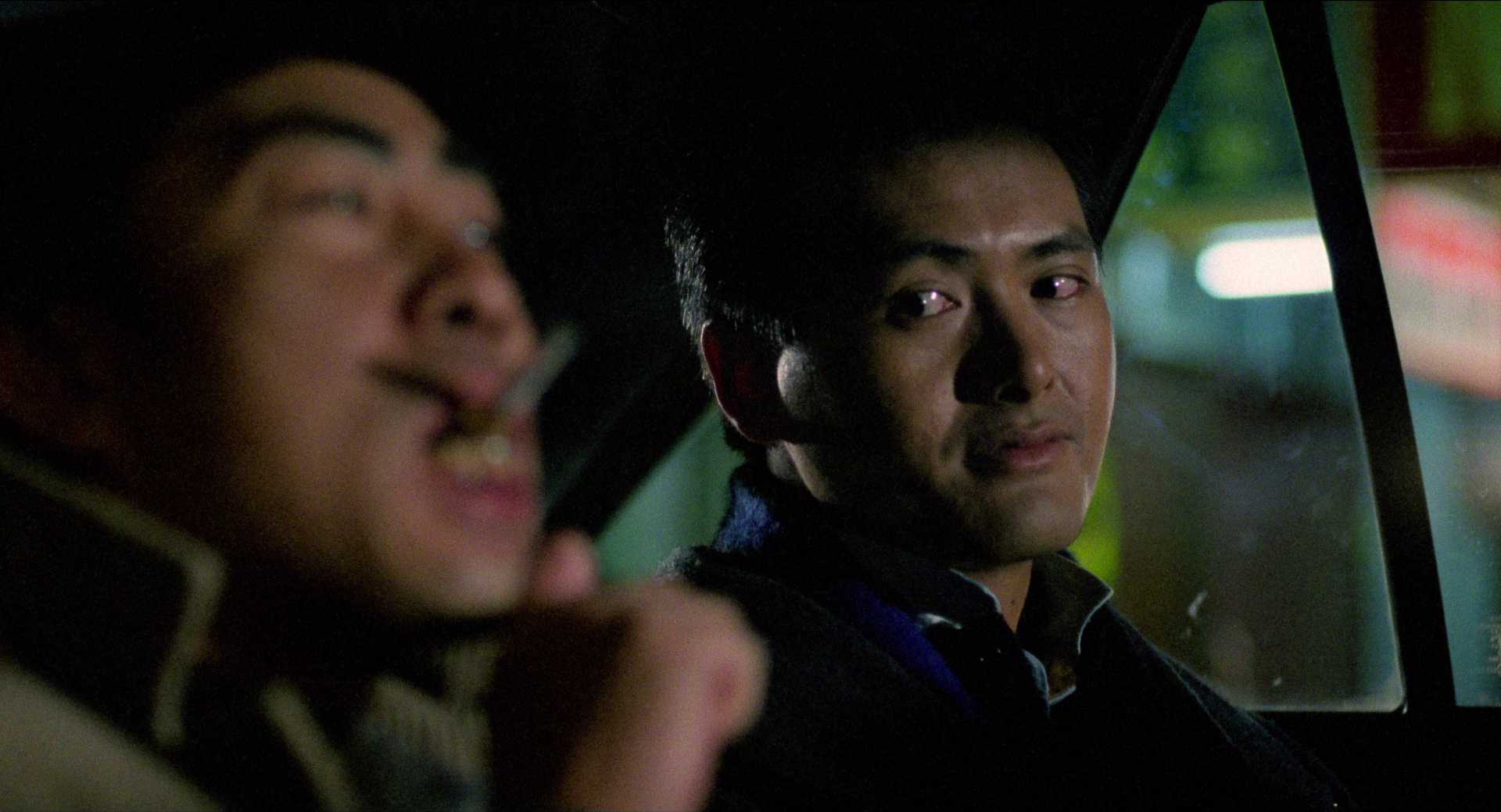
City on Fire is a crime thriller that follows Ko Chow (Chow Yun-Fat), an undercover cop who is torn between his loyalty to the police and his growing friendship with Fu (Danny Lee), a seemingly calm and controlled criminal. After being assigned by his friend Inspector Lau (Sun Yueh) to infiltrate a gang planning a major jewellery heist, Ko Chow becomes increasingly conflicted as he witnesses both the camaraderie and brutality within the criminal world.
To further muddy the waters, an aggressive young cop named Inspector John Chan (Roy Cheung Yiu-Yeung) takes over the jewellery heist case, without being aware of Ko Chow’s undercover status.
On top of this, Ko Chow’s dangerous work threatens his relationship with his girlfriend, Hung (Carrie Ng).

Like a lot of Western viewers, I first came across City on Fire in the mid-90s, when people were claiming Quentin Tarantino had ripped it off to make Reservoir Dogs. I can remember, back then, being surprised after watching City on Fire that the films are not actually that similar, and that feeling still stands. Yes, Tarantino’s film has a similar setup and a couple of visual ideas have been ‘borrowed’, but he tells his story in a markedly different way. Like with most of Tarantino’s films, Reservoir Dogs takes inspiration from a number of sources and blends them into something fresh.
City on Fire was something fresh for Ringo Lam too. The filmmaker was reportedly given 4 million HK Dollars by Cinema City producer Karl Maka and told he could make whatever he wanted with it. Lam wanted to move away from the comedies he disliked and had been forced to make previously, and direct something more akin to The French Connection. Something tough and gritty. He had heard about a violent jewel heist in the news, where the police were tipped off about it, but didn’t manage to stop people from getting hurt. He attended the trial to find out more. There, he saw that the perpetrators weren’t cool or ‘badass’. They looked like a bunch of ugly losers (according to the director in an interview). This inspired Lam to make a more realistic film about criminals and the police.

City on Fire was a big hit, helping Lam continue to make more of the films he wanted. It was nominated for a whopping 10 statuettes at the Hong Kong Film Awards, taking home wins for Best Director for Lam and Best Actor for Chow Yun-Fat. Chow was nominated for two other films that year, as he enjoyed newfound fame following the success of A Better Tomorrow in 1986.
City on Fire still stands up remarkably well now too. It doesn’t have as much of the stylised violence that John Woo’s films do. It’s perhaps a more successful thriller than most of those though. Lam’s film is gritty, taut and gripping.
Largely shot on location, sometimes without permission, City on Fire has a great sense of naturalism too. It manages to blend this ‘grit’ with a certain level of stylisation though. The cinematographer was Andrew Lau (his debut credit in this role), who went on to co-direct the Infernal Affairs trilogy, which takes inspiration from City on Fire.

Also key to the success of City on Fire is its cast. As mentioned, Chow Yun-Fat was riding high at this point in his career, after being dubbed ‘box office poison’ for a while. He certainly proves his worth here, oozing charisma without losing a sense of his character’s inner turmoil.
He’s paired up with Danny Lee, whose more buttoned-up style perfectly contrasts Chow’s playful, uninhibited nature. Yueh Sun is great too, as the inspector who’s torn up inside about sending these young men on such dangerous assignments.
Like a number of Hong Kong films made around that time, City on Fire could be taken as a metaphor for the way the local populace was feeling about the impending handover. To quote one of the contributors to the extras on the disc (I forgot which), Hong Kongers were “caught between a rock and a hard place”, like Chow’s character. The tension in the film would have spoken volumes to homegrown audiences, which might go some way to explaining its popularity.

Overall though, City on Fire is a brilliantly executed and influential crime thriller that grips from start to finish. Aided by a strong cast and shot with style and naturalism in unison, it’s every bit as good as the classics it inspired.


City on Fire is out on 1st December in the UK in separate UHD and Blu-Ray releases, courtesy of Arrow Video. I watched the Blu-ray version, and I thought the transfer looked great – clean and crisp. The grain structure looks pleasingly natural, as do the colours. I’ve used screengrabs throughout this review to give you an idea of how it looks. As for audio, you get a choice of either Cantonese or English dub mono tracks. I opted for the former and thought it sounded strong. I did notice one subtitle error though.
4K ULTRA HD BLU-RAY LIMITED EDITION CONTENTS
– 4K (2160p) Ultra HD Blu-ray presentation in Dolby Vision (HDR10 compatible)
– Original lossless Cantonese and English mono audio
– Optional English subtitles for the Cantonese soundtrack and English subtitles for the deaf and hard of hearing for the English soundtrack
– Brand new audio commentary by Hong Kong cinema experts Frank Djeng and F.J. DeSanto
– Burn It Down, a brand new interview with screenwriter Tommy Sham
– Hong Kong Confidential, a brand new appreciation by author Grady Hendrix
– Some Like It Hot, a brand new appreciation by film historian Ric Meyers
– Burning Rivalries, a brand new appreciation by critic Kim Newman
– An archival interview with director Ringo Lam
– Portrait of Anger, an archive interview with cinematographer Andrew Lau
– Long Arm of the Law, an archive interview with co-star Roy Cheung
– Theatrical trailer
– Image gallery
– Reversible sleeve featuring original and newly commissioned artwork by Tony Stella
– Illustrated collectors’ booklet featuring new writing on the film by Dylan Cheung
FJ DeSanto and Frank Djeng provide a commentary over the film. This is as loaded with interesting background and production facts as usual for the pair. They both think highly of the film, so talk with passion about the subject.
Grady Hendrix talks about City on Fire in an interview. This provides a nice overview of the film’s inception, production and legacy.
There’s also a piece by Kim Newman, specifically looking at the link between City on Fire and Reservoir Dogs. He largely dismisses the idea that Tarantino ripped off Ringo Lam, looking at the clear differences between the films and the fact that many undercover cop films existed before either title. It’s an illuminating piece.
Ric Meyers begins by talking about Chow Yun Fat in his interview. He discusses the actor’s background, suggests reasons why he is so successful and looks at why he works well with Danny Lee, who has such a different acting style. He then goes on to talk about Ringo Lam and the film more generally.

Screenwriter Tommy Sham is also interviewed, in a new piece. He discusses the inception of the film and his working process. He also bemoans the lack of respect shown to Hong Kong screenwriters.
All of the above extras were included in Shout Factory’s recent release of the film, but Arrow push things further by including a bunch of archival interviews.
There’s an audio interview with Ringo Lam that runs for around 11 minutes. This is great. He talks about the inception of the project, as well as explaining how some of his creative and casting decisions came about.
There’s also an archival interview with cinematographer Andrew Lau. He discusses his approach to shooting City on Fire, some memories of the production and also how it influenced his own crime saga, the Infernal Affairs trilogy.
Roy Cheung is interviewed too, in an archival piece. He talks about how he came to be in the film, as well as his experiences working with Lam and the rest of the team.
I didn’t get a copy of the booklet to comment on that, unfortunately.
So, Arrow have pulled out all the stops to release the definitive edition of City on Fire that fans have long waited for. I’m excited to see what else they have up their sleeves for the rest of the Golden Princess library.
Disc/Package: