



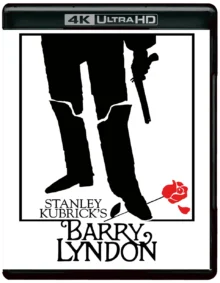
 Director: Stanley Kubrick
Based on the novel: The Luck of Barry Lyndon (AKA Memoirs of Barry Lyndon, Esq.) by William Makepeace Thackeray
Screenplay: Stanley Kubrick
Starring: Ryan O’Neal, Marisa Berenson, Patrick Magee, Hardy Krüger, Gay Hamilton, Godfrey Quigley, Steven Berkoff, Marie Kean, Murray Melvin, Frank Middlemass, Leon Vitali, Leonard Rossiter, André Morell, Michael Hordern (narrator)
Country: UK and USA
Running Time: 185 min
Year: 1975
BBFC Certificate: PG
Legendary director Stanley Kubrick directed 13 feature films during his life, from anti-war film Fear and Desire in 1952 to 1999’s Eyes Wide Shut, via the likes of 2001: A Space Odyssey (1968), A Clockwork Orange (1971), The Shining (1980) and Full Metal Jacket (1987).
One linking thread through Kubrick’s filmography is that from 1956’s The Killing until his final masterpiece Eyes Wide Shut, all of his works were based on novels or novellas, with one exception; 2001 was co-written by novelist Arthur C. Clarke and inspired by several short stories the author had optioned.
Kubrick’s talent for taking a published work and making it his own is clear to see, though not always considered successful by the author of the inspiration (Stephen King famously hated Kubrick’s adaption of The Shining, though for me it’s among the best of the numerous masterpieces the director made).

Arguably Kubrick’s most beautiful film is his sumptuous 1975 feature Barry Lyndon based on William Makepeace Thackeray’s novel The Luck of Barry Lyndon, first published as a serial in Fraser’s Magazine in 1844.
Narrated by Michael Hordern, the film is broken into two chapters which tell the life of an 18th century Irish rogue Redmond Barry (Ryan O’Neal). Following the death of his father in a duel, Barry shoots the suitor of his cousin, as he wants her for himself. He then flees the scene of the crime, and joins the army, but not before being robbed by highwaymen along the way.
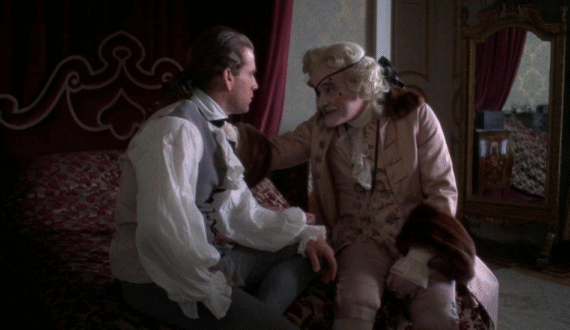
Whilst serving in Germany, Barry deserts the army, has an affair and receives a commendation for saving a captain’s life. Following the war, he is recruited into the Prussian Ministry of Police and is assigned to look into the Chevalier de Balibari (Patrick Magee), an Austrian diplomat and professional gambler suspected of being an Irish spy.
Barry and the Chevalier are kindred spirits and flee together, committing gambling scams across Europe, ultimately leading to Barry meeting the beautiful and wealthy Lady Lyndon (Marisa Berenson) whom Barry eventually marries – becoming the Barry Lyndon of the title.
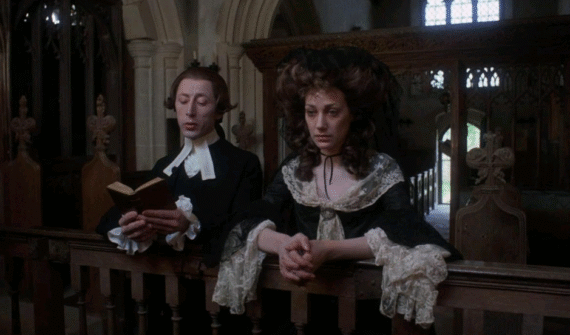
Much of what I’ve described takes place in the first half of the film and there’s plenty more that follows. It essentially tells how a poor Irish man who has no prospects climbs the social ladder to become part of 18th century English nobility before losing everything – the rise and fall of Barry Lyndon.
What’s most striking about the film is its look. Kubrick was inspired by period paintings by William Hogarth and meticulously recreated the era through costumes and sets crafted in the designs of the 18th century. Huge credit should go to Ken Adam and Roy Walker for their meticulous production and art design, Vernon Dixon for set decoration, and Milena Canonero and Ulla-Britt Söderlund for their costume design.
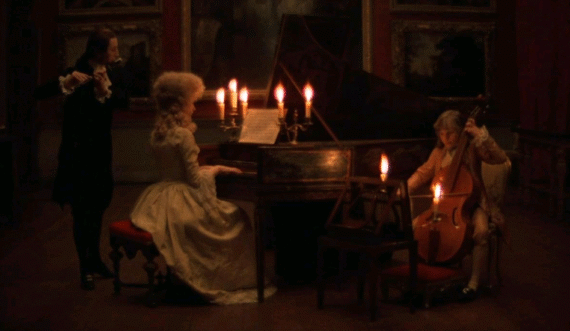
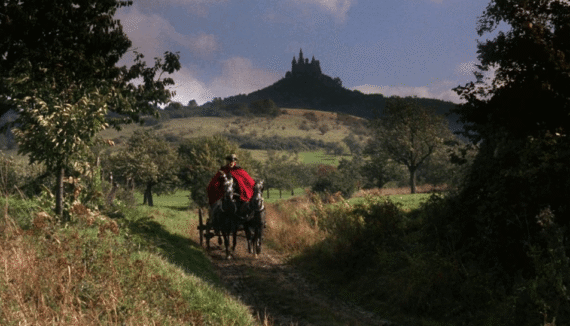
The cinematography by John Alcott was rightly lauded as being pioneering with wide angled shots framed like paintings, long shots in which the camera slowly pans backwards, and night sequences shot only by candlelight, which remain in the memory long after the film has concluded. Ultra-fast lenses were used for the filming in natural light, avoiding electric lighting wherever possible which are very striking. You could pause the movie at pretty much any moment and frame what you see on the screen, it looks that good from opening to closing moment.
Another thread through Kubrick’s filmography is the perfect choices of music, often involving classical compositions. Barry Lyndon’s score is top drawer, with Kubrick using classical musical to enhance sequences, from the dramatic main title music (Handel’s Sarabande from the Keyboard suite in D Minor [HWV 437]) through pieces by the likes of Vivaldi, Bach, Paisiello, Mozart and Schubert. It’s a fantastic and memorable score, carefully curated and befitting of the film.
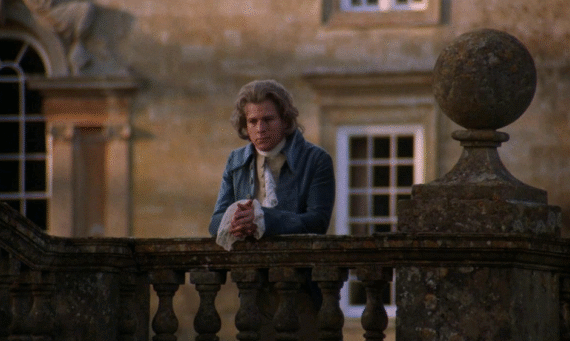
The performances are also uniformly excellent, with numerous familiar faces like Murray Melvin, Leonard Rossiter, and André Morell popping up here and there, but for me the two standouts are Ryan O’Neal as the titular character and, even more so, Marisa Berenson as Lady Lyndon, portraying her sadness, depression and despair perfectly.
The film is masterfully directed with some marvellous scenes plotting the rise and fall of our lead character. The second half of the film has soaring highs for Barry (his marriage, rise up the social ladder and the birth of his son, whom he loves dearly) and unspeakable lows (he shuns his wife, has affairs, beats his stepson, and sees his own son die days after a fall from a horse Barry had bought him for his birthday).
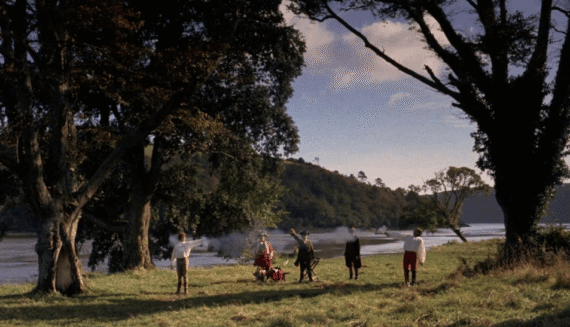
The film was not a homerun, critically or commercially speaking, at the time, criticised for its apparent coldness and detachment and pacing. I wholeheartedly disagree with that assessment, it’s an enthralling masterwork for me, wonderfully told, shot and scored. I found the pace just right to allow us to engross ourselves in the world of Barry Lyndon. I’m not alone – director Martin Scorsese has named it as his personal favourite Kubrick film (mine swings between Barry Lyndon, The Shining and Eyes Wide Shut).

Barry Lyndon would win four Academy Awards, for best art direction, best cinematography, best costume design, and best score for the curation of classical compositions by Leonard Rosenman. It lost out in the best picture, best director and best adapted screenplay categories.
In closing, Barry Lyndon is an outstanding piece of cinema, and one of the most beautiful films ever made. It is masterfully directed by Stanley Kubrick with everyone on their game, from the actors to all of the crew for vividly recreating the period setting and beautifully filming it, including the use of some technical advances in cinematography. It’s just one of Kubrick’s many masterpieces, and a film I am already looking forward to revisiting again.
Film: 
Barry Lyndon is released on 4K UHD by Warner Bros on 17th November 2025. The picture quality is absolutely astonishing. The film looks incredible; so important for any film but particularly for one that looks so stunning. Detail is rich (check out the costumes and faces in close-ups that show just how good a transfer this is), the colour scheme is natural, and there is a very filmic quality and natural grain throughout. It’s almost three dimensional in the quality of image and really showcases the costume and production design beautifully.
Unfortunately, Warner Bros have provided no extra features, which is in line with the treatment the film has previously received on DVD and Blu-ray in the UK. It’s a real shame. Criterion released the film on 4K in the United States earlier in 2025 and that edition contains around two hours of interviews and documentaries. It’s disappointing these couldn’t be ported over for the UK edition, or the film licensed for a UK Criterion release.
Ultimately, though, what has been provided is a beautiful presentation of a breathtaking masterpiece. Picture and sound quality are the most important aspects of any release, and for this edition I would award the presentation of the film five stars. My lower score represents the lack of any special features provided on this edition, but I’ve kept my overall score high because of the quality of the film and the audio-visual presentation.
Disc/Package: 