


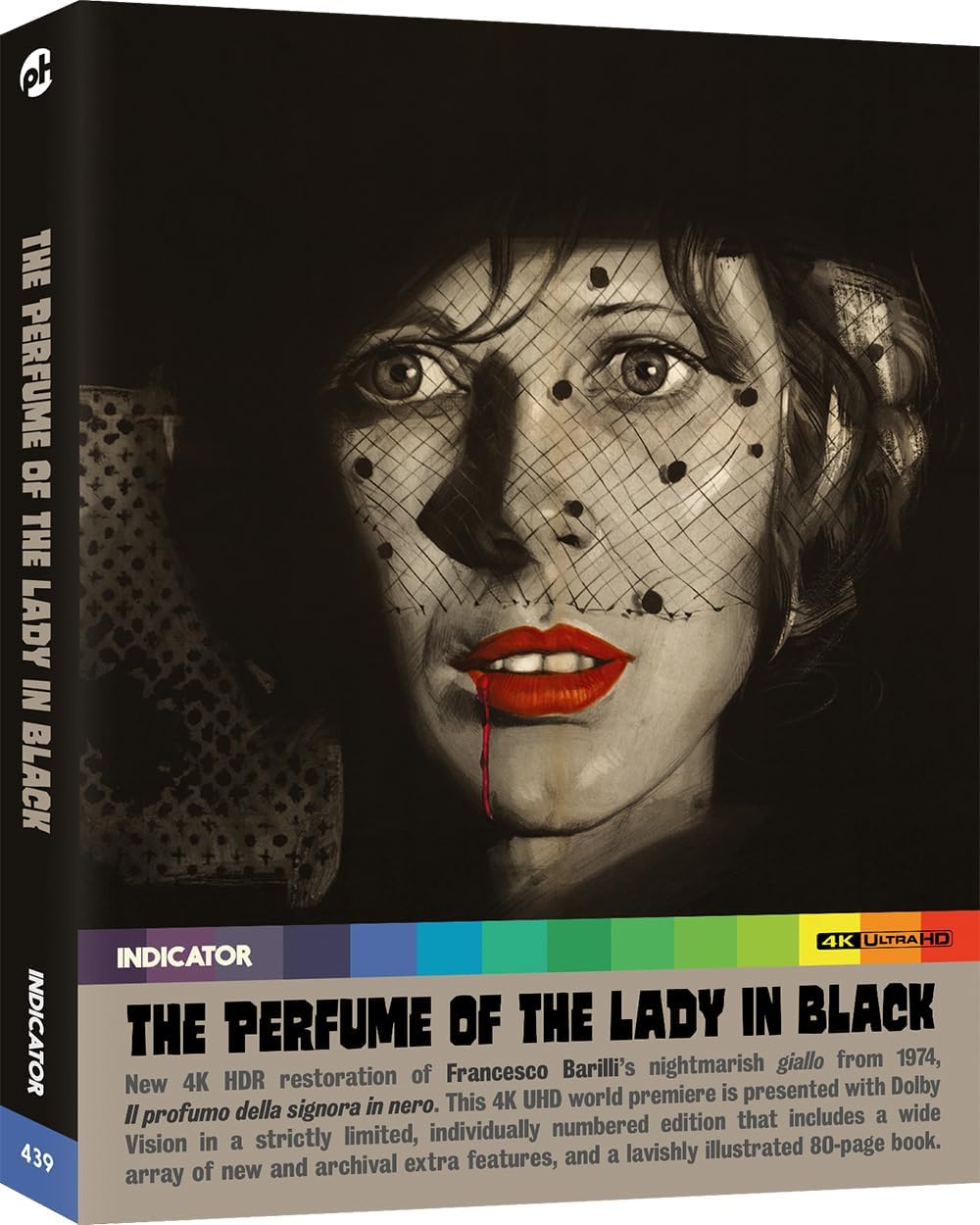
 Director: Francesco Barilli
Screenplay: Francesco Barilli, Massimo D’Avak
Starring: Mimsy Farmer, Maurizio Bonuglia, Mario Scaccia, Jho Jhenkins, Nike Arrighi, Lara Wendel, Aleka Paizi
Country: Italy
Running Time: 104 min
Year: 1974
BBFC Certificate: 18
In September, Indicator are releasing a pair of giallos or gialli, if you will, on both UHD and Blu-ray. These are Death Carries a Cane and The Perfume of the Lady in Black. George is going to cover the former at some point soon, but I couldn’t resist taking a look at one of them, so I requested a copy of The Perfume of the Lady in Black to review.
I say it’s a giallo because it’s been and continues to be marketed as such, but is it? There are some dissenting voices on the commentary included on this disc and Stephen Thrower doesn’t believe The Perfume of the Lady in Black is a giallo in his visual essay either. I’d be temped to say it’s more of a psychological thriller or horror film, but the giallo is quite a loosely defined genre anyway, a little like film noir.
Anyway, that’s by the by. The Perfume of the Lady in Black seems to take its name from a novel by Gaston Leroux. However, the title is as far as it goes in adapting the novel, as it has nothing else in common. Director Francesco Barilli came up with the film’s narrative, with assistance from Massimo D’Avak, with whom Barilli wrote the screenplay.
Barilli has dipped in and out of filmmaking over the years with only four theatrical feature films to his name (though he’s done more TV work and documentaries). He’s primarily a painter and started out in the film industry as an actor. He also had connections with Bernardo Bertolucci and Pier Paolo Pasolini, so he seems to have a certain pedigree beyond the makers of more ‘throwaway’ genre movies in Italy. Though, saying that, there was a lot of overlap between ‘artistic’ and commercial cinema in the country in the 60s and 70s, as Paul Duane discusses in the booklet that accompanies this release.
Whatever his background or intentions, Barilli eventually shot the film he’d devised in 1974. It received mixed reviews and middling box office (from what I can surmise). However, over time, its stature has grown, leading to a release like this.
The Perfume of the Lady in Black follows Sylvia (Mimsy Farmer), a successful chemist living in Rome, who begins to experience increasingly unsettling visions and hallucinations. Initially, these take the form of fleeting images and strange encounters, but they gradually intensify, bringing back repressed memories from her childhood, especially those connected to her troubled relationship with her mother and the trauma of her father’s abandonment. As Sylvia’s mental state deteriorates, she becomes haunted by the image of her younger self (played by Lara Wendel), who seems to lure her deeper into madness. The people around her, friends, neighbours and colleagues, begin to behave suspiciously, leaving her uncertain whether she is the target of a sinister conspiracy or merely the victim of her own unravelling mind.
The film shares a resemblance to a few of Roman Polanski’s films. Barilli directly cites Rosemary’s Baby and Repulsion as influences, though, interestingly, Barilli’s film also shares a number of similarities with The Tenant, which was released two years later. It might be too much to suggest that Polanski was taking notes from Barilli in return, but they’re certainly both cut from the same cloth, so to speak, when it comes to approaching such material.
I must admit, I wasn’t initially too impressed with The Perfume of the Lady in Black. It felt slightly clunky (perhaps due to the dubbing, which can always take a bit of getting used to in Italian films), and I was a little put off by the performances. I found some of the actors quite wooden, particularly Mimsy Farmer. However, after the first 15-20 minutes, I found myself warming to the film a great deal, and even found Farmer more effective as it went on.
Also, whilst I found the opening quite weak, the film has a shocking and powerful ending that I did not see coming at all. There are hints leading to it, so it doesn’t feel randomly tacked on, but I never expected it to quite take the turn it took. In fact, I was just thinking how inevitable the story felt, until I was knocked back by the twist.
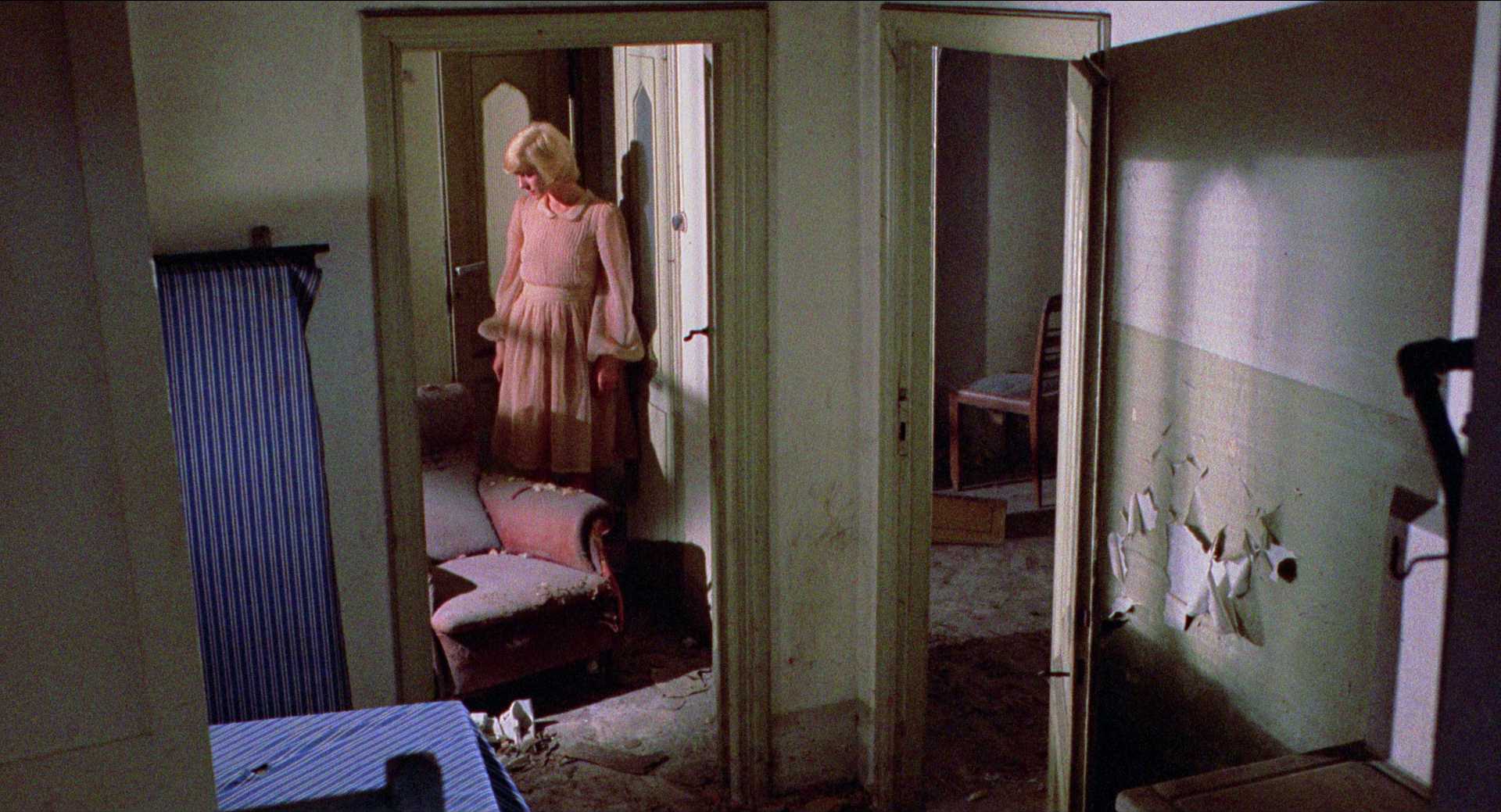
SPOILER – This finale could also be viewed as a metaphor for modern society driving people over the brink before eating them up. Looking at the film this way gives it a subtly satirical edge and makes it feel as relevant as ever. – END OF SPOILER
On a surface level, the film is striking too. Barilli’s background in painting shows through his use of production design. It’s all boldly colourful and often quite grandiose, particularly in its use of locations. There are some lovely moving shots too.
The film also boasts a beautiful soundtrack by Nicola Piovani. It was an early entry in what would become a long and illustrious career, which even led to him winning an Oscar for his score for Life is Beautiful. Piovani’s music for The Perfume of the Lady in Black has some waltz-like, almost carnivalesque cues that blend beauty and melancholy with a child-like quality, perfectly encapsulating the film’s themes and tone.
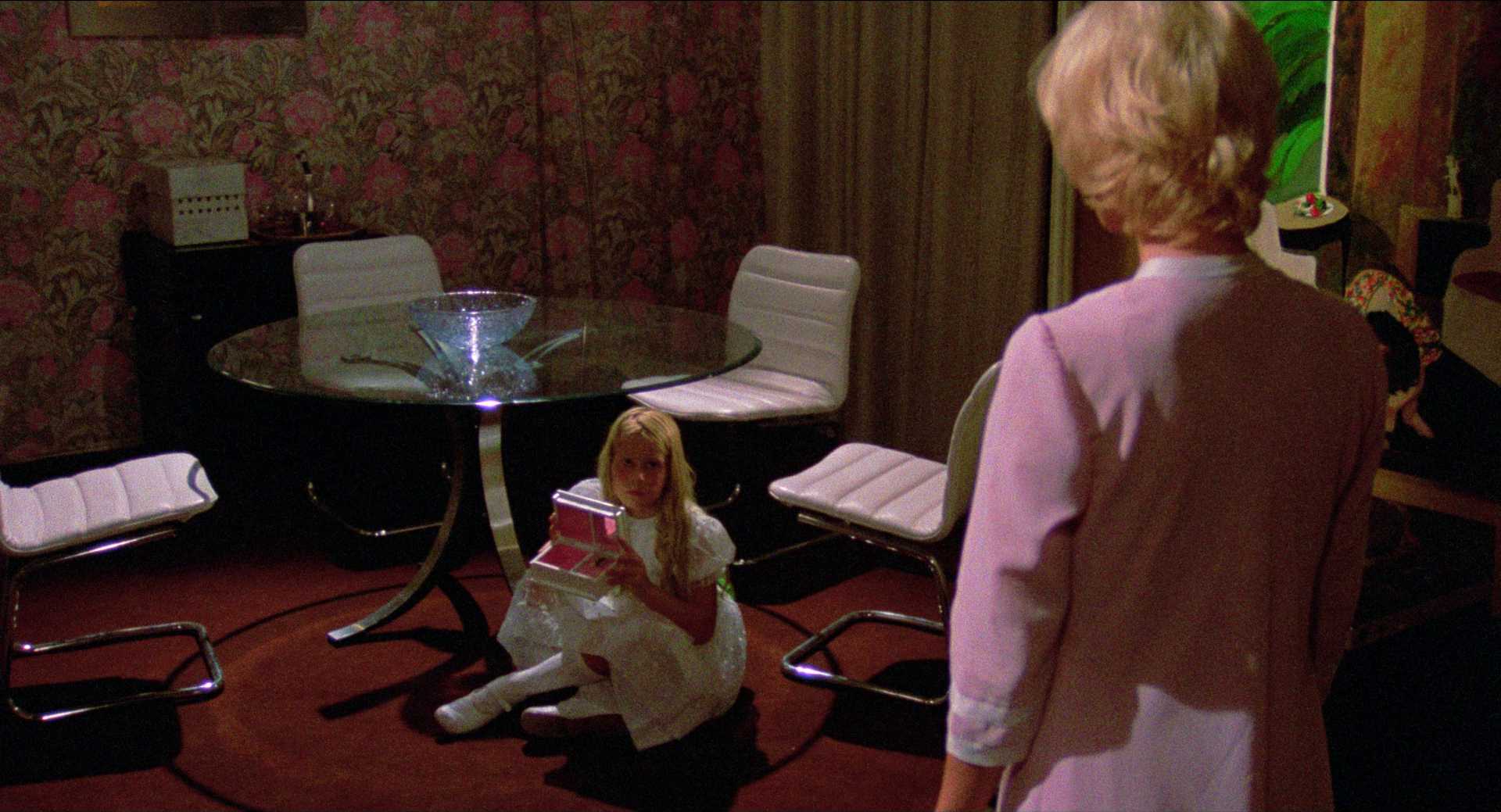
As mentioned, the film might not be considered a giallo. This is because it largely eschews the black-gloved killer, pseudo-slasher, mystery thriller tropes. Instead, it focuses on its central character’s psychological breakdown. There are some murders and hints that something’s not quite right with those around Sylvia, but these elements aren’t played in the usual fashion.
It’s more surreal and dreamlike than most gialli, and sometimes quite poignant. So, ultimately, The Perfume of the Lady in Black is an unusual, unsettling psychological thriller that slowly creeps under your skin.
Film: 

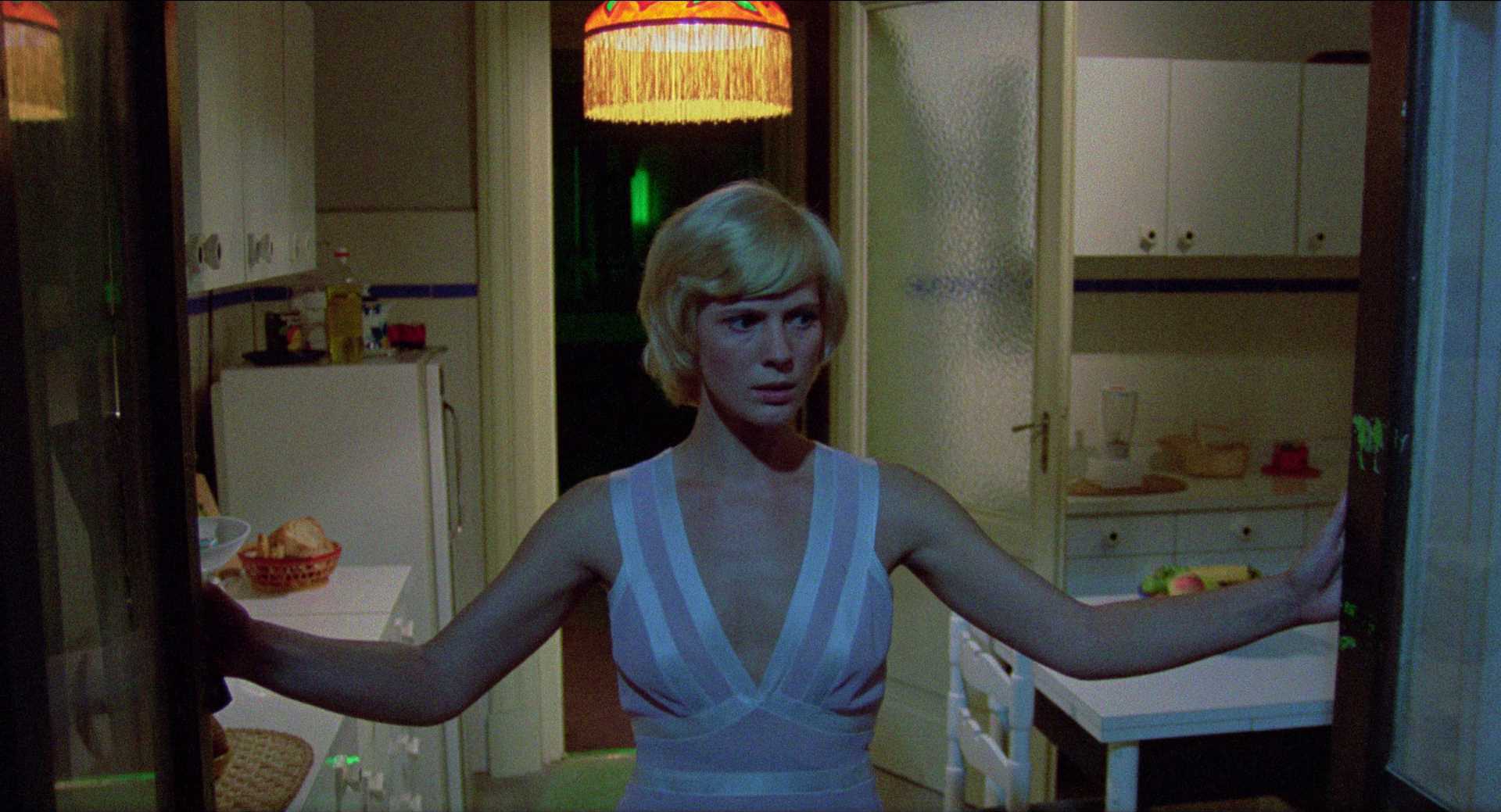
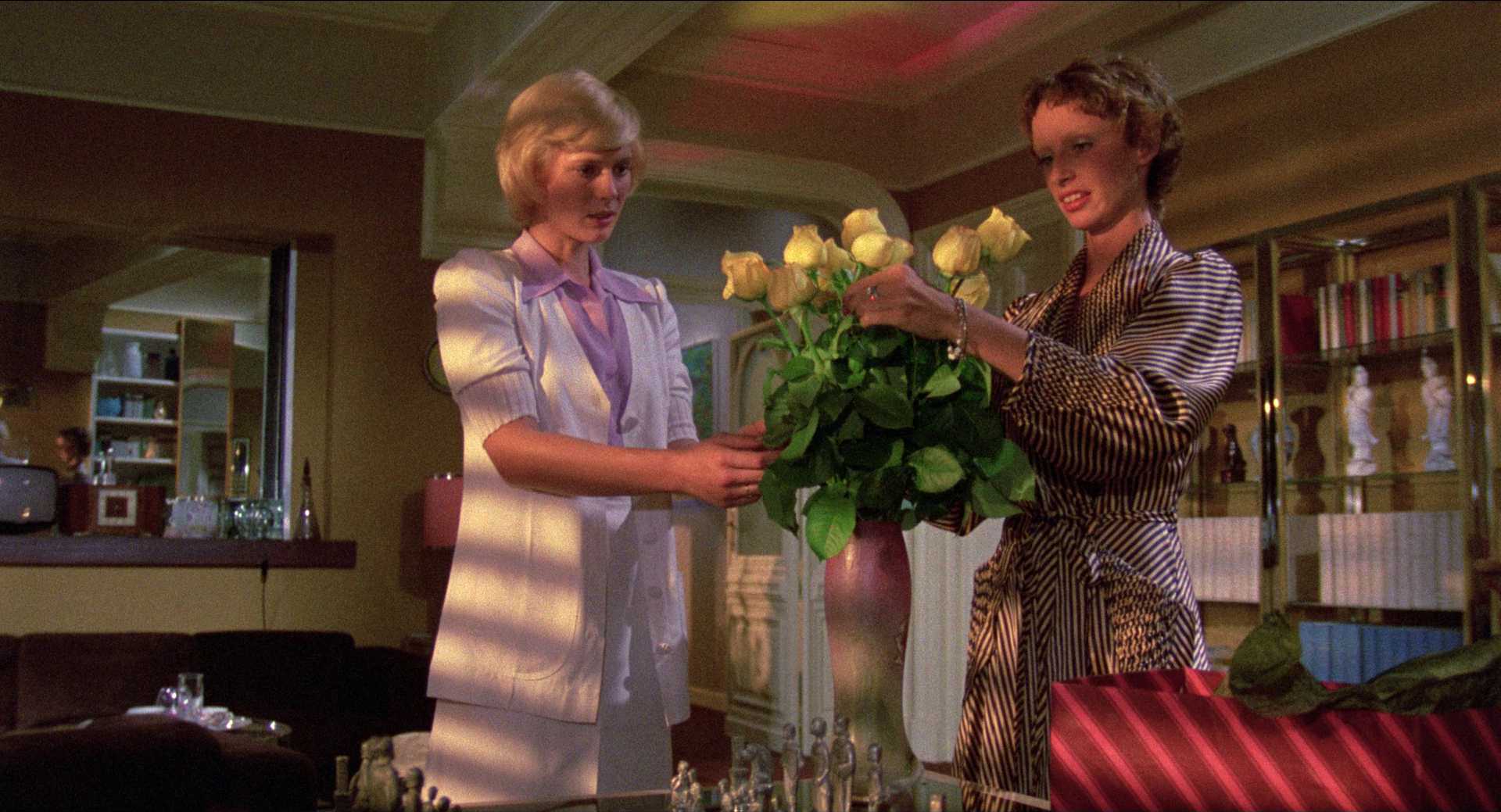
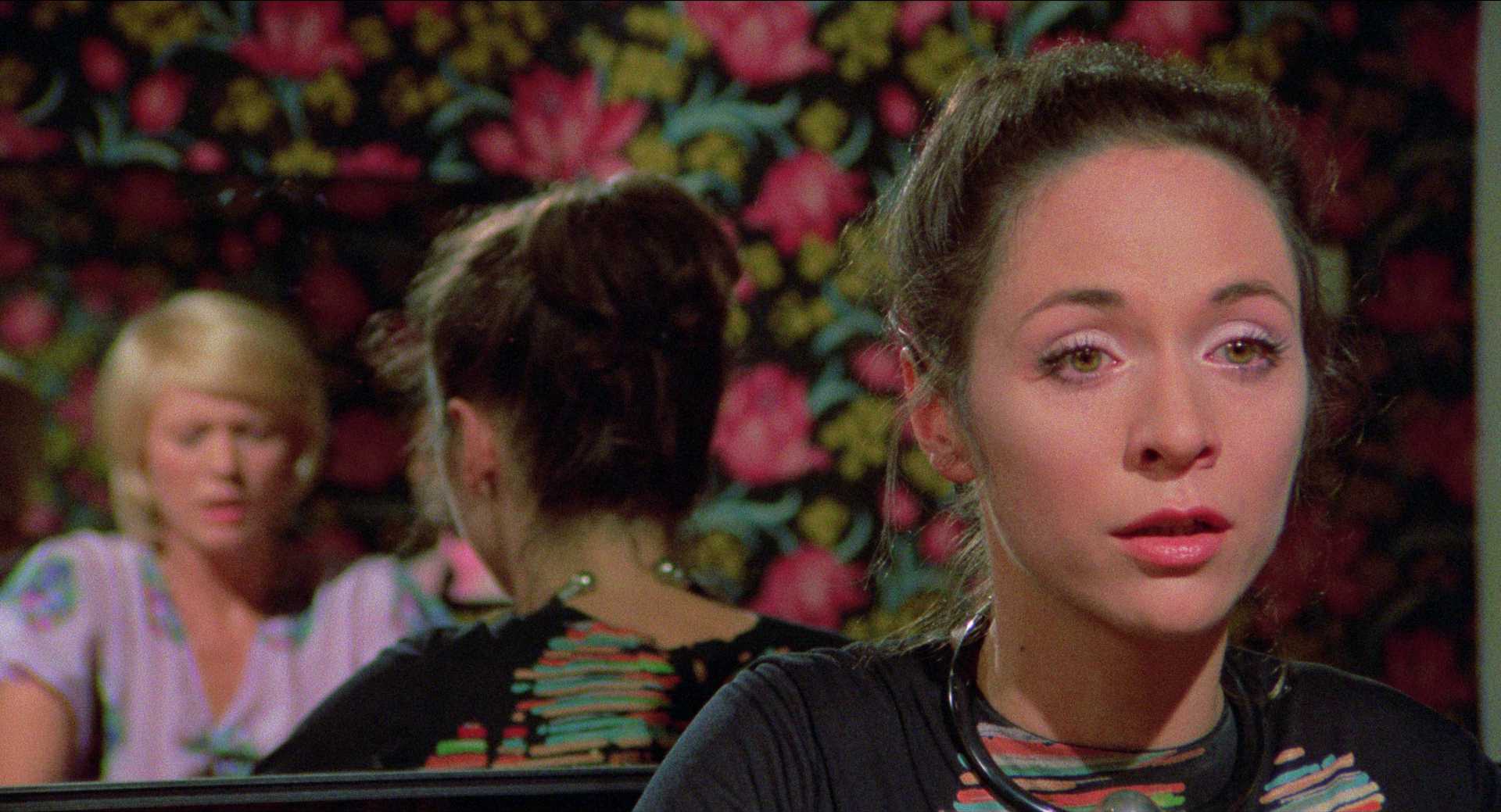
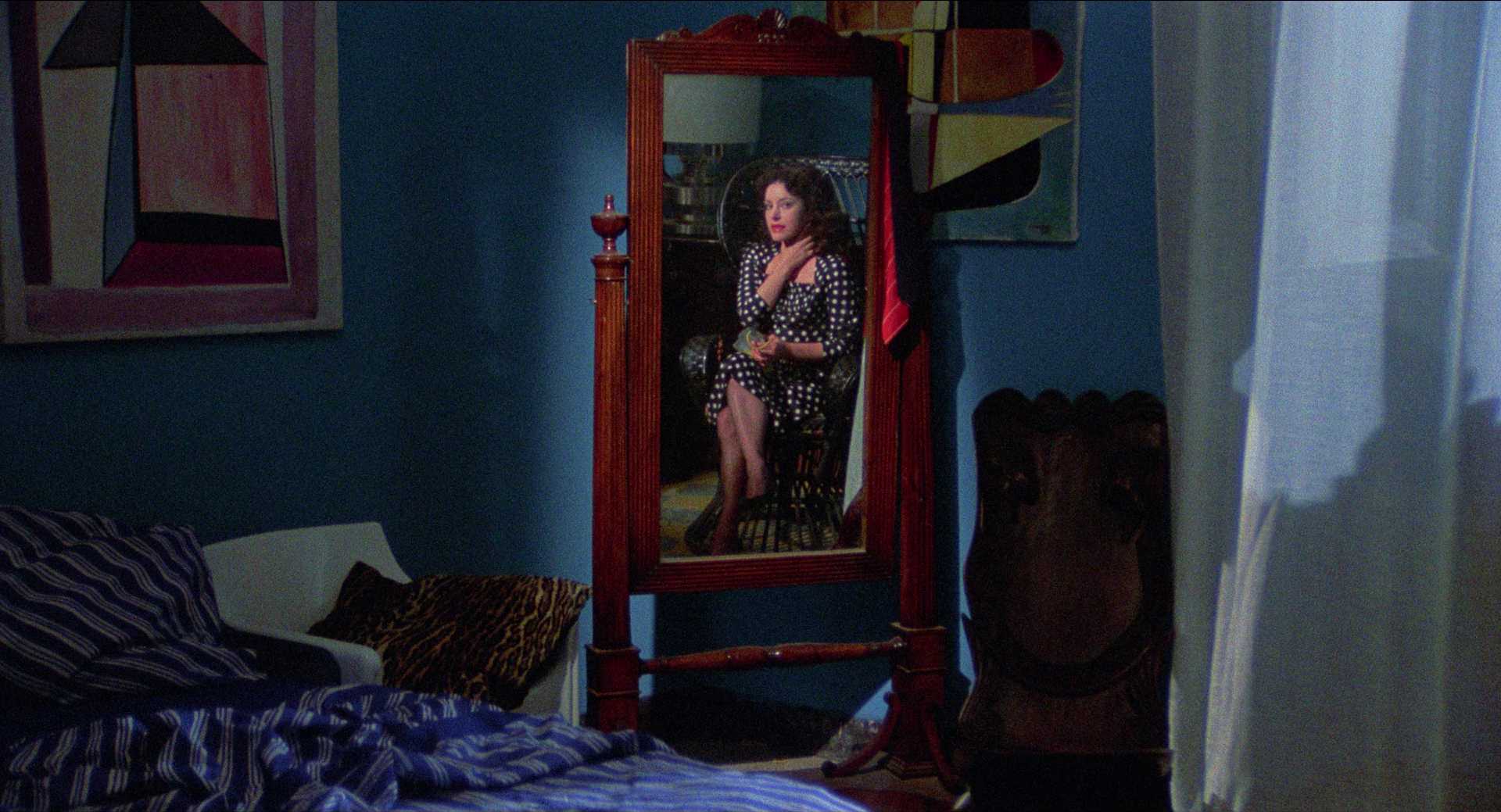
The Perfume of the Lady in Black is out on 29th September on region-free UHD and Blu-Ray, released by Indicator. I watched the Blu-ray edition, and the transfer is superb. Colours are deep and rich, the picture is sharp and clean, whilst retaining a light natural grain. I’ve used screengrabs throughout this review for reference, though these have been compressed. You get the option of the Italian or English language soundtracks. I opted for the Italian and thought it sounded clear, with no issues.
INDICATOR LIMITED EDITION 4K UHD SPECIAL FEATURES
– New 4K HDR restoration from the original negative by Powerhouse Films
– 4K (2160p) UHD presentation in Dolby Vision (HDR10 compatible)
– Two presentations of the film: Il profumo della signora in nero, the Italian-language version; and The Perfume of the Lady in Black, the English-language version
– Original mono audio
– Audio commentary with film historians Eugenio Ercolani, Troy Howarth and Nathaniel Thompson (2025)
– Francesco Barilli on Francesco Barilli (2025): in-depth interview with the director, in which he reflects on his life in art and film
– Barilli (2016): the director talks about the inspirations for The Perfume of the Lady in Black
– Portrait in Black (2008): lengthy archival interview with Barilli
– Lara Wendel on ‘The Perfume of the Lady in Black’ (2025): interview with the German Italian actor, who plays the young Sylvia
– Notes of Black (2025): DJ and soundtrack enthusiast Lovely Jon analyses Nicola Piovani’s sumptuous score
– Visual essay by Stephen Thrower on the film
– The Locations of the Lady in Black (2025): ‘then-and-now’ tour of the film’s locations
– Original English and Italian theatrical trailers
– Image gallery: promotional and publicity material
– New and improved English translation subtitles for the Italian soundtrack
– New and improved English subtitles for the deaf and hard of hearing for the English-language soundtrack
– Limited edition exclusive 80-page book with a new essay by Paul Duane, a career-spanning archival interview with director Francesco Barilli, an archival profile of actor Mimsy Farmer, and full film credits
– World premiere on 4K UHD
– Limited edition of 5,000 individually numbered units (4,000 4K UHDs and 1,000 Blu-rays) for the UK
Eugenio Ercolani, Troy Howarth and Nathaniel Thompson discuss the film in a commentary. This is excellent. The trio dig into the backgrounds of those involved in making the film, as well as offering some critical analysis.
There are three interviews with director Francesco Barilli on the disc. The older one is probably the strongest, with Barilli passionately telling stories about the making of the film. The most recent interview sees him looking rather frail, but he still has his wits about him and has a strong memory of the production. In all of the pieces, he expresses a dislike for executives, particularly those running the film industry in more recent years. There’s quite a bit of crossover between the interviews, but enough differing material to make their inclusion worthwhile.
Lovely John talks about composer Nicola Piovani and his soundtrack to Perfume of the Lady in Black in an interview. John compares Piovani to his contemporary, Ennio Morricone, whilst discussing his life and career. Later on, he dissects a scene in the film, looking at how the music enhances it. It’s a fairly lengthy interview/essay, so it digs deep.
Stephen Thrower also discusses the film in an interview. He covers quite a lot, looking at its influences and the background of its director, before offering some thoughtful analysis. It’s an excellent piece.
There’s also an interview with Lara Wendel, who plays the young Sylvia. She came from a family of actors and has some interesting stories to tell about her life and career, particularly her work on The Perfume of the Lady in Black.
There’s also a location featurette, which recreates some of the shots from the film in the present day, comparing the two. It’s nicely done for those with an interest in this sort of thing.
The booklet is a hefty one, running at 80 pages (I guess that makes it a book, rather than a booklet). It contains an essay by Paul Duane, an archival piece on Mimsy Farmer and a lengthy written interview with Barilli, as well as the usual credit and restoration details. It’s a well-compiled book that makes the limited edition release worth the extra cost.
So, Indicator have put together a very strong package for an unusual Italian genre movie that is well worth checking out.
Disc/Package: 