



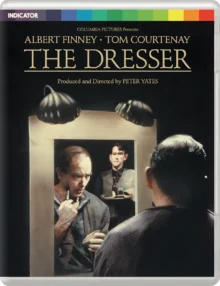
 Director: Peter Yates
Screenplay: Ronald Harwood
Based on the play by: Ronald Harwood
Producers: Peter Yates
Starring: Albert Finney, Tom Courtenay
Year: 1983
Country: UK
BBFC Certification: PG
Duration: 118 mins
The notion of “Oscar bait” can be a troublesome one. It has become a cliché, for instance, to suggest that all films about the Holocaust are made with the sole intention of taking home a wheelbarrow full of statuettes. This supposition has become prevalent to the extent that it feels disrespectful, implying that the only reason to continue examining and remembering one of the worst atrocities ever committed by humankind is that it guarantees the filmmakers a nomination (which, of course, isn’t even true). The same applies to films focused on disability, in this case risking a reduction in representation due to the minimisation of the subject matter as a mere awards-grab. Such cynicism is perhaps a little more understandable, if still tiresomely unwelcome, when it comes to the Academy’s penchant for films about so-called “high art.” While there is a wealth of interesting material to be mined from the canon of theatre, literature and art, there is an implied snobbery in being prodded by an awards body to prioritise such pursuits over more popular forms of entertainment that are often conspicuous by their absence from the ballot. I don’t want to get too bogged down in the push-and-pull of snobbery and inverse-snobbery that so frequently reduces the discussion to an alternately baleful or shrilly overenthusiastic cry of “Waaaahhh, Marvel films, waaaahhh.” But it is interesting to look at these three areas of alleged Oscar-bait in relation to the work of writer Ronald Harwood, whose two nominations and one win cover the topics of disability (The Diving Bell and the Butterfly), the Holocaust (The Pianist) and Shakespearean theatre (The Dresser), and all of which are clearly worthy of nomination, as opposed to nominated for being worthy!
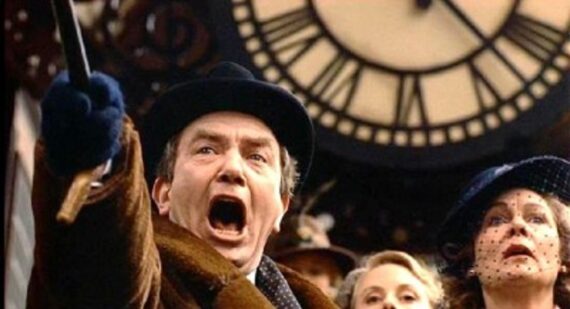
While The Dresser was widely embraced as a brilliant film at the time of its release, it has become something of a forgotten film with the passage of time. While I agree with the general critical response to its brilliance, it’s not hard to see why The Dresser hasn’t endured as an oft-screened favourite. For one, it is a dense, heavy film, packed with literary and theatrical allusions that complement and enhance its intimate-to-the-point-of-claustrophobia examination of a co-dependent but far-from-warm relationship between a revered but tyrannical actor and his ruthlessly devoted dresser. The film is filled with humour but it is of the bleakest nature, riddled with a bitterness and anxiety that is riveting but hardly commercial. Much of that humour comes from a juxtaposition of the grimly realistic subject matter and the theatricality of its central performances. This is a film about the theatre performed with a level of exaggeration that some may find taxing. But the performance style of stars Albert Finney and Tom Courtenay as the actor and his dresser are pivotal to The Dresser’s appeal. The supporting cast, replete with veterans of stage and screen including Zena Walker, Michael Gough, Edward Fox and Eileen Atkins, give deliberately more subdued performances, highlighting the unending showmanship of the two lead characters. These are men who have lived the experience of the theatre so intensely that it has seeped into their very bones, informing their everyday demeanours. Norman the dresser, however, is flamboyantly entertaining only for the one man audience to whom he has dedicated his life. When forced to address an actual audience, his facade crumbles into awkward, dithering malapropisms. By contrast, Finney’s star (known only as Sir) carries his command of the stage into the real world, demonstrated by his ability to stop a train using only his voice. The central tragedy of The Dresser comes by way of Sir’s rapidly encroaching dementia, an unstoppable force inevitably destined to destroy both men.
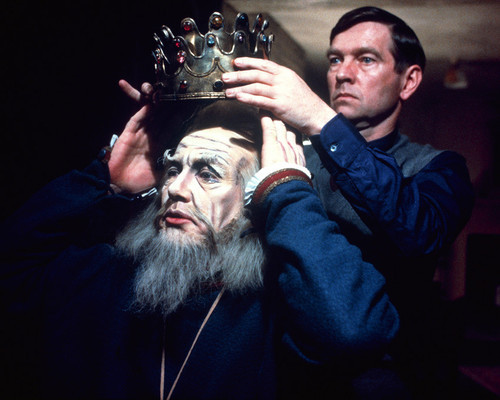
The Dresser brings together two titans of the British New Wave for the first time. Although their appearances in classic films like Saturday Night and Sunday Morning and The Loneliness of the Long Distance Runner often saw Albert Finney and Tom Courtenay mentioned in the same breath, they had never really crossed paths onscreen or off prior to this. The pair hit it off during production of The Dresser and became close friends, a fact that is reflected in their chemistry here. Although a large part of the film’s tragedy comes from how much Sir means to Norman and how little he receives in return, Finney and Courtenay are pitch perfect in their representation of a relationship built on small moments so easily taken for granted. Both men were Oscar nominated in the Best Actor category, a move that perhaps split the vote, although which performance could be relegated to the supporting category is a difficult question. The film is called The Dresser, arguably singling out Norman as its protagonist, and yet the bullish dominance of Sir is undeniable and the notion that he could muscle in on Norman’s spotlight and deny him recognition even outside of the world of the film has a deliciously meta resonance. For my money, while Finney’s force-of-nature performance is pivotal, it is Courtenay who takes top honours, his snippy, manipulative persona encapsulated in a plethora of ticks and mannerisms that add vivid layers to a character who keeps so much under wraps when it comes to his cheaply romanticised theatrical “family.”
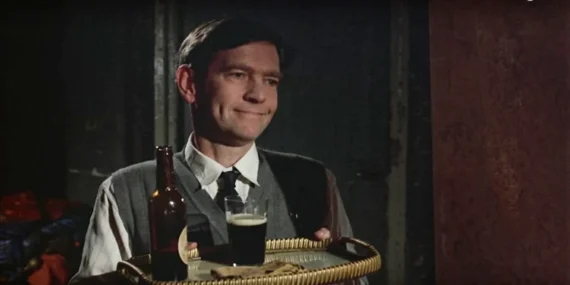
The Dresser was a rare instance of a stage play for which the film adaptation received greater acclaim. Given that it is largely set in a small, insalubrious theatre, The Dresser’s stage origins should surprise no-one and yet director Peter Yates ensures that it rises above the level of a filmed play. He explores the spaces with the surreptitious curiosity of a backstage rodent, evoking the creaky deprivation of wartime England. Yates uses the early scenes of the acting troupe travelling from York to Bradford as an opportunity to evoke both the context of the era and establish a juxtaposition with the outside world from which theatrical illusions have kept many of these characters cloistered. Harwood’s screenplay, so floridly busy when it needs to be, is also adept at casually dropping in the signifiers we require to establish place and time. In the same way as they keep these crucial details inconspicuous, Harwood and Yates ensure the supporting players remain subtly drawn yet real. Eileen Atkins in particular shines quietly as the put-upon stage manager Madge, a performance only BAFTA astutely recognised as worthy of a nomination.
The Dresser evokes its period setting in several ways, including an air raid alert and a link between the mistreatment of a Jewish character in The Merchant of Venice and the rise of antisemitism under Hitler. Perhaps the strongest evocation is through the frequent allusions to the mistreatment of the gay community, a theme that surely resonated in the shadow of the AIDS epidemic and that sadly resonates still given the detestable increase in anti-LGBTQIA+ sentiment we are witnessing at the time of writing. This theme is examined through the use of an absent character named Davenport-Scott, a former member of the company who has been arrested for public sodomy. Though Davenport-Scott is frequently discussed but never seen, allusions to his sexuality enlighten us on the preferences and attitudes of several other members of the troupe. This device is used sparingly but effectively, with Norman appearing more secretive about his alcoholism than his sexuality. It is just one more smart way in which The Dresser evokes the stresses and discomforts that hang over its characters, heightening the inherent anxiety of the piece without overt exposition.
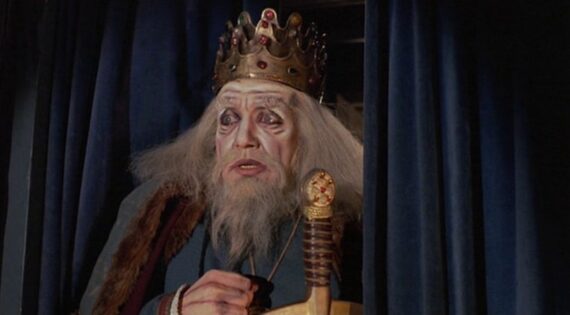
As well as being a period piece about the 1940s, The Dresser now feels like a period piece of 1980s Britain, a time when TV plays were ubiquitous and writers were revered. I don’t think that standards have necessarily slipped overall, there’s just been a change in the mainstream which wouldn’t allow a film this esoteric to gain the widespread coverage it once enjoyed. It’s fascinating to find this small, cerebral film amongst the Best Picture nominees of its year and for those who aren’t cynical enough to denounce it based purely on its highbrow subject matter, there’s a little gem to discover. Of course, it was beaten to Best Picture by Terms of Endearment, with its tear-jerking cancer storyline. Pure Oscar bait!
The Dresser was released by Indicator on limited edition Blu-ray on 21 July 2025. The special features include a small handful of interviews with cast and crew members, including a brand new rumination from Tom Courtenay about his experiences working with Albert Finney, which is brief but touching. The full list of special features is as follows:
* High Definition remaster
* Original mono audio
* Hitting It Off (2025, 8 mins): actor Tom Courtenay recalls playing the film’s title role on the stage and for the big screen
* A Good Adventure (2017, 4 mins): archival interview with the actor Cathryn Harrison
* Behind the Curtain (2022, 14 mins): collected archival interviews with a selection of The Dresser’s crew members, including director of photography Kelvin Pike, camera operator Dewi Humphreys, sound mixer John Hayward, property master John Chisholm and property buyer Jill Quertier
* Original theatrical trailer
* Image gallery: promotional and publicity material
* New English subtitles for the deaf and hard of hearing
* Limited edition exclusive 32-page booklet with a new essay by Thirza Wakefield, a selection of interviews with director Peter Yates and actors Albert Finney and Tom Courtenay charting the film’s production, an overview of critical responses, and film credits
* UK premiere on Blu-ray
* Limited edition of 3,000 copies for the UK