



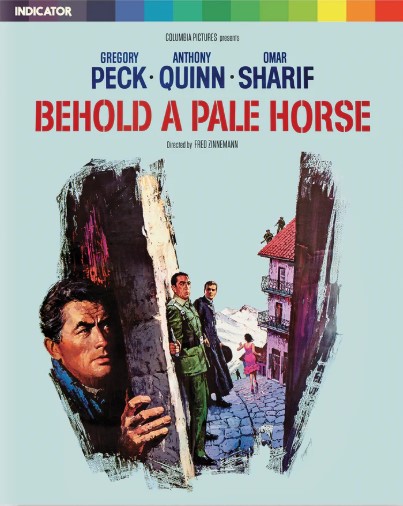
 Director: Fred Zinnemann
Screenplay: JP Miller
Starring: Gregory Peck, Anthony Quinn, Omar Sharif
Country: US
Running Time: 121m
Year: 1964
Twenty years after the Spanish Civil War, Republican guerilla Manuel (Peck) lives in exile in France. Francoist Captain Viñolas (Quinn) is tasked with capturing him, and senses an opportunity when Manuel’s mother (Mildred Dunnock) falls ill, but hasn’t counted on the involvement of priest Father Francisco (Sharif), who tries to protect Manuel and guide him away from his path to violence.
Sometimes you don’t need a trailer when the cast and crew is a list of Hollywood royalty. From High Noon director Fred Zinnemann… starring Gregory Peck… Anthony Quinn… Omar Sharif! And a plot that puts them all at odds, with plenty of scenery to chew.

Unfortunately, it’s a damp squib. Overlong, melodramatic and oddly sentimental, it drifts considerably when it should be building tension. The basic plot is ripe with rarely exploited potential and action scenes far too few to note. The three leads give full-blooded performances, keeping the film going, but it just feels undercooked.
The film wouldn’t be worth seeing but for that cast. A grizzled Gregory Peck as the legendary guerilla leader is fantastic. It’s a lot like Unforgiven; retired, trying to live a quiet life and put his dark past behind him, but an underused Quinn’s sadistic captain is using Peck’s dying mother to tempt him into a trap. Sharif gives a delicate performance as the priest trying to navigate the moral complexity of helping a terrorist or a fascist.
But none of that is really delivered. The film spends too long with Peck being grizzled but wringing his hands. Quinn might be sadistic, but the narrative can’t commit. The heart of what’s clearly a laboured play on the High Noon format (also melodramatic, low on action, but it works by never leaving the town) is found in Sharif’s plot. Priests wrestling with faith within a thriller is often an effective hook (see also Hitchcock’s I Confess). Still, the pieces don’t quite slot into place for Behold A Pale Horse and any message is lost.
It’s a shame, because an alternative reading of the film could see it as misunderstood. With that cast list, it’s easy to see why it was greeted with indifference; it’s no Guns of Navarone, but then it’s not trying to be. I’m convinced it needed some oomph, but there was still room for the thoughtful and introspective film it was trying to be.
VIDEO
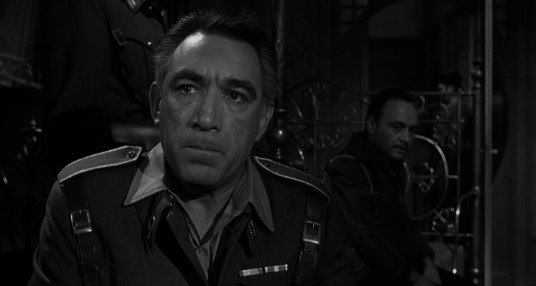
The transfer is clean, sharp and consistent, though overly dark in many indoor scenes. I know I’m down on the film, but the muddy direction isn’t helped by the murky contrast. However, daylight scenes bloom beautifully with sharp details. The concluding scenes are nicely balanced as the film finally gives in to being the High Noon clone we were expecting all along.
EXTRA FEATURES
Indicator has done an excellent job with the extras. Aside from the archival interviews, there is a thread to follow looking at the influence of Emeric Pressburger. In retrospect, it’s easy to see this film could have flourished with Powell and Pressburger’s lighter touch.
- The Pain of Exile (2025, 16 mins): academic and film historian Caitlin McDonald discusses the film’s production and the involvement of filmmaker-turned-novelist Emeric Pressburger
- The Guardian Interview with Omar Sharif (1984, 77 mins): archival audio recording of the great actor in conversation with Quentin Falk at the National Film Theatre, London
- Original theatrical trailer
- Image gallery: promotional and publicity material
- New and improved English subtitles for the deaf and hard of hearing
- Limited edition exclusive 44-page booklet with a new essay by Michael Pattison, an in-depth look at Emeric Pressburger’s source novel and its transition to the big screen, a collection of anecdotes from Fred Zinnemann on the film’s production and reception, an overview of contemporary critical responses, and film credits