


 Director: Kevin Jerome Everson
Country: USA
Running Time: 480 min
Year: 2015
BBFC Certificate: NA
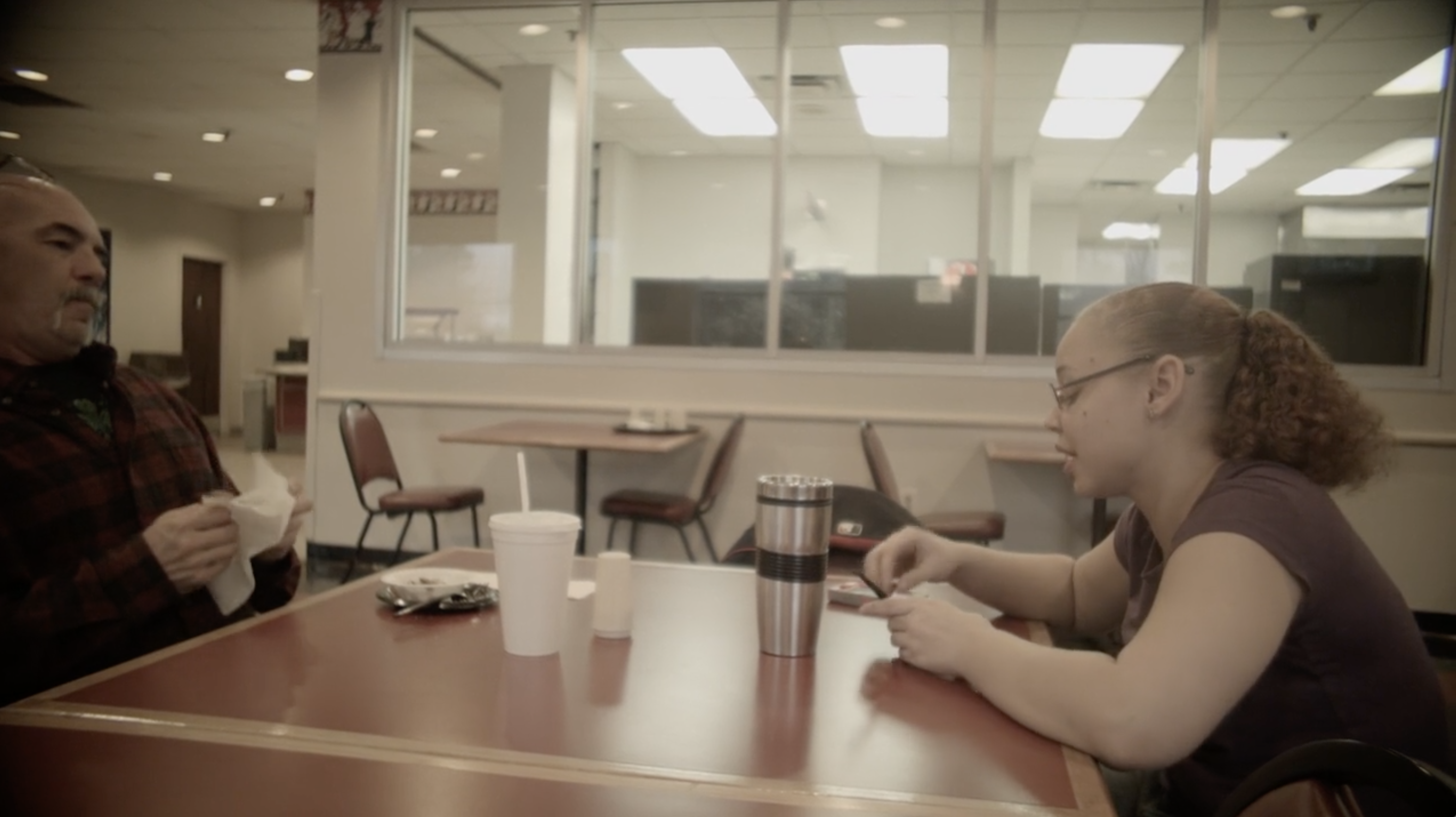
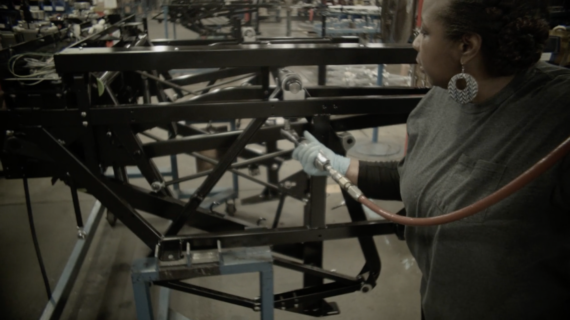
On the surface, Park Lanes asks nothing more of the viewer than it does of the workers onscreen. It’s a durational work, offering an eight hour – we clock in, we clock out – working day in a factory that produces bowling lane equipment. We stroll in, do our time (taking our breaks as and when allowed) then stroll out again. For the workers, this is every day, it’s nothing worth pointing a camera at. Challenging that assumption can be what great filmmaking is all about.
Speaking as someone with ADHD (and Autism, oh the merry fights my brain is capable of) you might think Park Lanes would prove an endurance beyond my ability. I have to make an effort not to walk off in the middle of a conversation, let alone an eight-hour film about factory work.
 And yet… there’s something about slow cinema (Everson, in the liner notes, name checks Lav Diaz as a point of comparison) that sidesteps my natural, raging impatience. I have marched through the rain and mud and rain of Sátántangó many times…
The comedian, Stewart Lee, plays a trick on his audiences. He repeats a structural game, a loop of meaning, extending it to the point that it stretches, threatens monotony – indeed goes there, letting our mind wander and try and see something else, anything else – before we somehow click into a different frame of mind and the structure becomes fresh again, reveals something new. It’s a common trick of slow cinema, forcing the audience to change its step, shift rhythm, breathing, processing… Find a new beat. Brain re-programming.
You’re the person who fast-forwarded as a man swept the Roadhouse floor in Twin Peaks: The Return or you’re the person who sighed contentedly and felt every brush stroke.
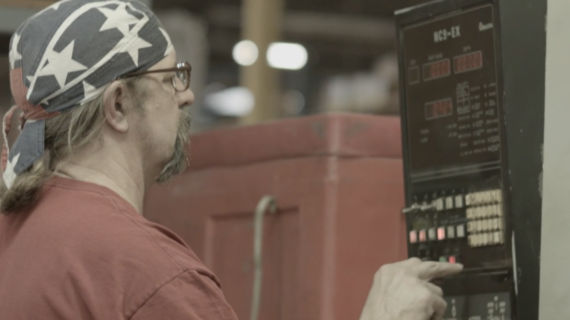 Everson is all about sculpture. Shape; physical structure; time. He and his camera know at a bone-level how long each moment should last, like a repeated melody, how long we want to linger on that hook, that plume of steam, that trickle of water. We start off intellectualising what we’re seeing, analysing the processes, understanding what locks into what, screws where, bolts how. Then we start to feel the rhythm of it, then the beauty. Then, yes, the monotony.
None of which is to suggest that Park Lanes is simply a mediative act, a slowing down, hyper-focusing on the grit and grain of it all – though it is that – it’s also a discussion about these objects, about the sheer effort that everything around you takes to exist. Everson is a filmmaker who has always venerated labour (or maybe just tried to match its effort in capturing it) here he shares with us his stare, his textural and physical appreciation and above all, he shares time. Park Lanes is certainly worth yours.
The two-disc blu-ray from Second Run splits the film over both discs and comes with an excellent booklet featuring featuring new essays by writer/curator Matthew Barrington, author and programmer Elena Gorfinkel, and an interview with Kevin Jerome Everson by Michael Boyce Gillespie.