


Director: Lewis Allen
Writers: Frank Partos, Dodie Smith/Hagar Wilde, Raymond Chandler
Starring: Gail Russell, Ray Miland, Ruth Hussey, Joel McCrea, Herbert Marshell
Year: 1944/45
Duration: 99 mins/80mins
BBFC Certification: N/A
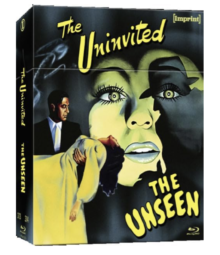
Imprint’s new boxset is certainly one of two halves. Literally in the sense that it contains two gothic/suspense Hollywood films from the 1940s – one of which, The Uninvited, is an undeniable classic, the other, The Unseen, a lesser known and less accomplished B picture. Yet the boxset also offers two further strands of connectivity, shining a spotlight on two very different careers. The first belongs to Lewis Allen, a talented journeyman director who launched his career with the The Uninvited, a supernatural melodrama from 1944 that turned out to be a critical and commercial hit. Lewis went on to sustain a prolific career in both film and television, where he continued to direct well into his seventies. The other connection between these two films is the actress Gail Russell. Arguably it is her presence that casts a larger shadow over these two works, partly because of her work on camera and partly because of her tragic life behind it.
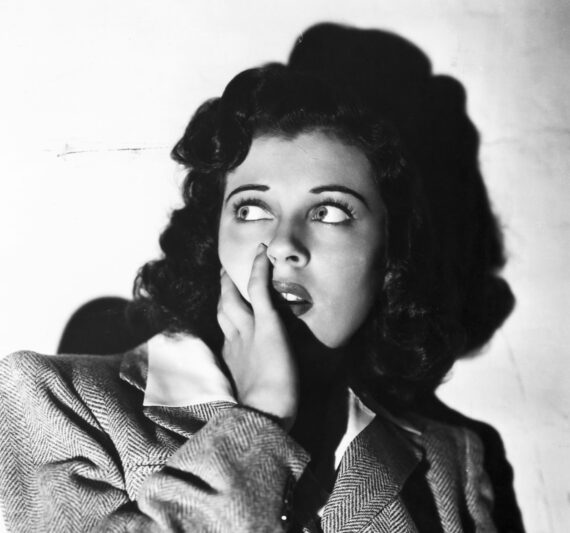
Literally plucked out of high school by a talent scout, Russell was shoved into the movies despite having absolutely no acting experience. This, coupled with a natural and crippling shyness, forced Russell to turn to alcohol as a means of coping. This crutch swiftly turned into a devastating addiction. As she grew older, Russell was unable to maintain a successful career as her alcoholism took over, resulting in a string of drink driving accidents and law suits. She died alone in her house, surrounded by empty vodka bottles, in 1961. She was only 36 years old.
The Uninvited stands, as it does with Allen, as Russell’s feature debut. The Unseen, which came a few years later, suffers slightly in comparison, yet both films offer an illuminating look at the start of two Hollywood careers, one eminently successful, the other unbearably tragic. Together, they provide evocative, and at times brilliant, examples of gothic Hollywood suspense and melodrama.
THE UNINVITED
What makes a good ghost story? The quality of the ghost itself and the terror it evokes or the mystery that surrounds it? While terror and unease are fundamental aspects of any supernatural story, often a ghost is only as good as the mystery that supports it. That mystery is vital for a decent narrative as well – if a story is just made out of scares and nothing else, then any initial impact would be swiftly diminished.
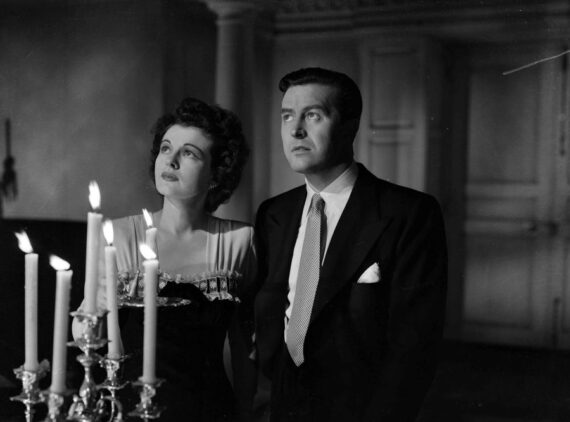
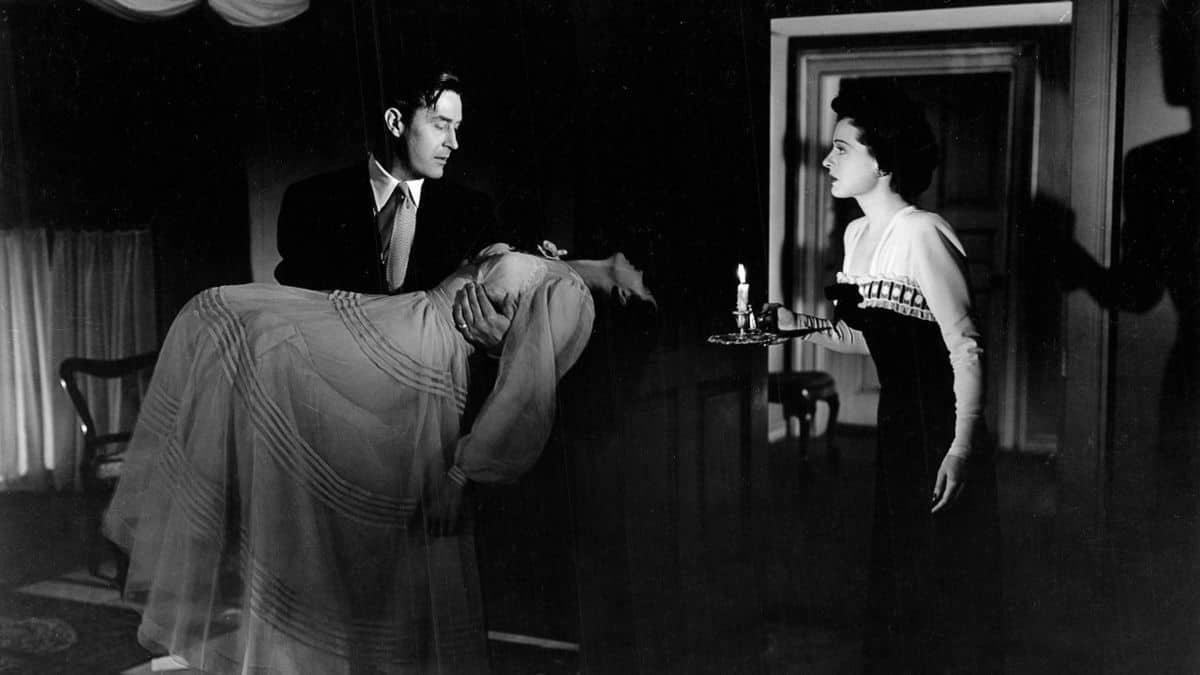
The Uninvited is a ghost story that firmly places the mystery first and the scares second. Despite a set up that echoes classic haunted house narratives such as The Changeling or The Amityville Horror, Lewis Allen’s directional debut is very much concerned with melodrama and suspense as opposed to making the audience’s skin crawl. It begins, like so many of these stories do, with a couple moving into a new home (the slight twist here being that the couple are actually brother and sister rather than lovers). Roderick (Ray Milland) and his sister Ruth (Pamela Hussey) fall in love with a dilapidated old house on the Cornish coast. Tracking down the owner, the stern Commander Beech (Donald Crisp) they manage to buy the house for a very cheap price (surprise surprise) and excitedly move in. Yet their happiness is soon tempered by mysterious goings on…a room that is permanently cold, strange nosies in the night etc… Roderick soon realises that the key to the house’s dark past lies with Commander Beech’s beautiful granddaughter Stella (Gail Russell), with whom he has begun to fall in love…
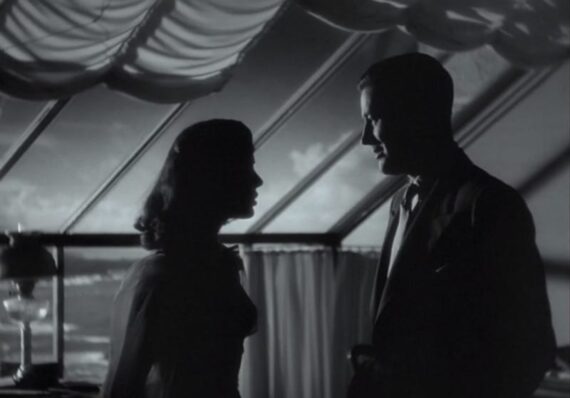
Based on a novel by notable Irish horror writer Dorothy Macardle and partly adapted by the novelist Dodie Smith (famous for writing I Capture the Castle), it is perhaps unsurprising that The Uninvited is a beautifully paced story that grips from the first frame to the last. Surprisingly for a ghost story, it offers up a wonderfully comforting atmosphere, akin to sitting around a warm fire on a cold night. Partly this is due to the film’s age and partly to how characters react to the supernatural events that occur. Ray Milland, in particular, is guilty of destroying some of the tension by offering laughs and humour as a response to potentially chilling encounters, a performance that is backed up by an at times jarringly jaunty score. Yet this, surprisingly, does little to ruin the film, as the mystery that surrounds the ghost is so expertly and enjoyably told.
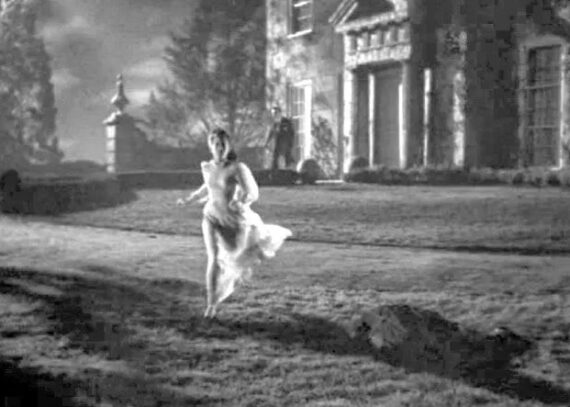
It is this mystery (and the melodrama that stems from it) that makes up the heart of the film. In fact, for anyone used to more modern ghost narratives, it feels almost refreshing to have a film place character and story at the forefront at the expense of scares and chills. As the narrative develops, helped along by Milland’s easy charisma and Russell’s delicate, slightly hesitant performance (that, rumour has it, almost had to be coaxed out of her line by line) it is impossible not to be swept along by the film’s classic Hollywood charm and innocence.
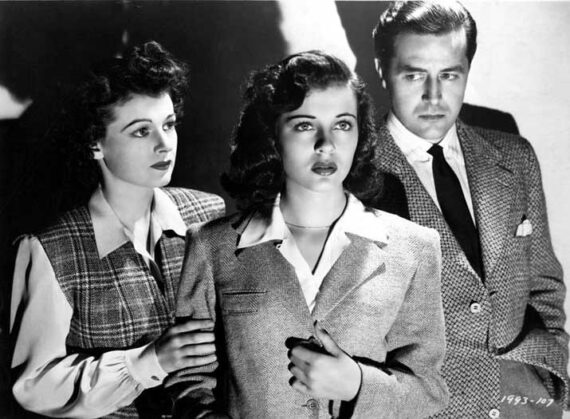
This is not to suggest that The Uninvited is completely devoid of anything scary or uneasy. Moments towards the end certainly do make the skin crawl and there is no doubt that the supernatural entity has a malevolent and sinister presence. There is also a particular delight in seeing genre tropes created in front of our eyes. While it might seem rather tame today, the film was one of the first ‘horror’ films made in Hollywood that felt geared towards an adult rather than a teenage audience, where in aiming for subtly rather than outlandishness, it created moments (the cold room, the crying voice in the night) that became staples of almost all haunted house films going forward.
A critical and commercial success at the time of its release in 1944, The Uninvited’s power to scare may have diminished throughout the decades but its ability to charm and entertain certainly has not. A classic ghost story in the best sense, this is Golden Age Hollywood and, to a certain extent, horror cinema at its best.
Film:

THE UNSEEN
Following the success of The Uninvited, Paramount were keen to get director Lewis Allen and star Gail Russell back for another film as quickly as possible. The result was The Unseen, which, while billed as an unofficial sequel of sorts to The Uninvited, really has no connection at all beyond having the same director and star. It doesn’t even have a ghost, yet does carry through The Uninvited’s sense of dark, gothic mystery.
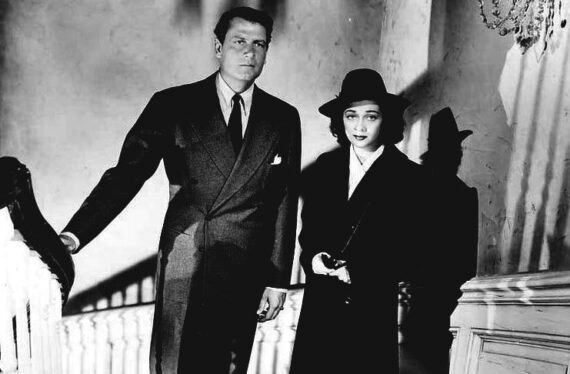
This time, Russell plays Elizabeth Howard, a young governess who is hired to look after the two children of a stern, emotionally distant father (Joel McCrea). Upon arriving at the house, Elizabeth finds that the two children don’t take kindly to her presence and are obsessed with their former nanny, to whom it is clear that Elizabeth can never compare. As she gets slowly drawn into the family and it’s history, Elizabeth soon begins to realise that the strange occurrences that happen throughout the house, not to mention the children’s odd behaviour, might be connected to the dark, abandoned house next door…
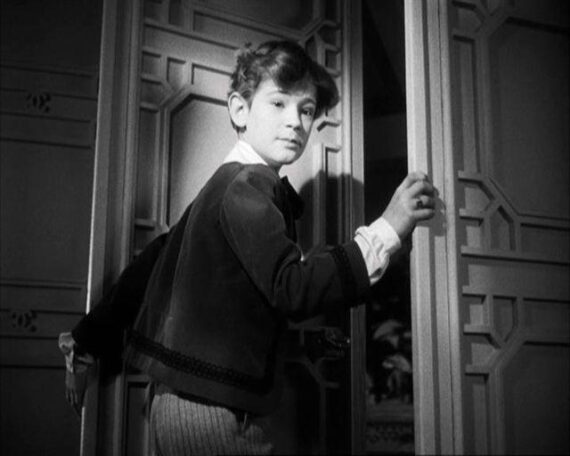
Despite echos of Henry James’ classic ghost story The Turn of the Screw, The Unseen is devoid of anything approaching ghosts or the supernatural. Yet this doesn’t necessarily act as a detriment. For the most part, The Unseen offers a thoroughly entertaining mystery story, helped by Allen’s firm direction and Russell’s more confident performance. Yet, regrettably, the wheels do start to come off in the final moments. As the full details of the mystery reveal themselves, plot holes abound and there is no doubt that everything ends on a sudden, deeply anti-climatic note. Even the presence of one Raymond Chandler sharing script duties can’t stop The Unseen from feeling very much like the lesser B picture to the The Uninvited’s stalwart A.
Film:


Both films are being released via Australian label Imprint Films. The Uninvited has already been released in the UK via Criterion, but unfortunately I don’t have a copy to compare to Imprint’s version. The good news is that The Uninvited looks and sounds fantastic in Imprint’s new edition. Purporting to come from a 2K digital transfer from a 35mm duplicate negative, the film boasts a wonderfully authentic, filmic look. There is some slight picture instability and print damage evident in occasional darker scenes but overall this is a brilliant and pleasing presentation. Unfortunately the same cannot be said for The Unseen. Despite coming from a 2K scan of the original camera negative, some further restoration work possibly needed to be performed, as the film offers a less pristine and refined image compared to The Uninvited. There were also a few instances of macro blocking in some of the darker scenes. Yet more surprisingly and shockingly are the audio errors that occur throughout. There are several moments during the film where the reel change from the original print is accompanied by very loud, crackling distortion. This goes way beyond the crackling you might expect to hear from a film of this age – this bad audio is loud enough to make you jump out of your seat and proves to shatter the immersion and enjoyment of the film every time it occurs. It’s not quite bad enough to write the disc off entirely, but it certainly makes watching The Unseen less enjoyable than it should be.
Technical issues aside, Imprint stack this release with a host of interesting and worthwhile extras. Alan K. Rode provides a commentary for each film. As ever, his commentaries here are impeccably researched and thoroughly entertaining, providing a wealth of information not only on the film’s actors and crew, but also offering a veritable goldmine of production information. Both of these are essential listens.
The Uninvited also boasts some other very worthwhile extra content. First up is a video essay by Kat Ellinger entitled ‘The Uninvited’ and the Female Gothic. This offers a 13 minute exploration of how the film fits into the Gothic tradition, specifically how it stands in contrast to the male dominated gothic and horror films of the 1940s and how The Uninvited actually has a lot more in common with the Japanese ghost story then you might expect. Gail Russell: The Flame That Burned Twice as Bright sees critic Imogen Sara Smith discusses the life and work of Gail Russell, as well as offering some insight into The Uninvited, The Unseen and the director Lewis Allen. Yet mainly this is focused on Russell, exploring her other key works, her relationship with John Wayne and exactly what made her a unique and rememberable actress, one who always exhibited a melancholy talent that went beyond mere good looks.
The disc also contains two radio adaptions staring Ray Milland and an original trailer.
The only other extra on The Unseen is Gothic Noir: The Unseen Touch of Henry James, an interesting ten minute look at the similarities between The Unseen and Henry James’ The Turn of the Screw. It also explores how James’ famous novel has influenced other cinematic works and how The Unseen compares to them.
Disc/Extras:
Boasting one of Hollywood’s classic ghost stories as well as a very entertaining accompanying picture, this is a fantastic release for fans of the period. It also serves to highlight the notable work of director Lewis Allen and star Gail Russell, the latter of whom, as this boxset proves, deserves to be remembered for more than just her tragic life outside of the movies. With both films housed in a very stylish box, the only thing that taints the release are the technical issues on The Unseen. Yet the quality of the films (The Uninvited especially) and the extra content ensure that this is still a very worthwhile buy for those with an interest in classic Hollywood horror and melodrama.