



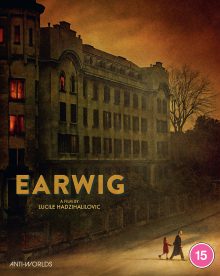
Director: Lucile Hadzihalilovic
Writers: Lucile Hadzihalilovic, Geoff Cox (script) Brian Catling (novel)
Starring: Paul Hilton, Romane Hemelaers, Romola Garai, Alex Lawther
Year: 2022
Duration: 114 mins
BBFC Certification: 15
The first twenty five minutes of Earwig unfold without a single line of dialogue. The score is hushed and subtle. Indeed, it feels like the only sounds we hear emerge from the world director Lucile Hadzihalilovic has meticulously begun to construct. The clump of footsteps, the creaking of doors, the scrape of cutlery on a plate…the sound of saliva being poured into moulds, the rattle and clack as ice teeth are placed by a caretaker into a young girl’s mouth…
The pace is slow, austere. Hadzihalilovic takes her time, allowing both herself and her audience to settle into the location, a dingy apartment block in what feels like post war Eastern Europe. The two characters we meet feel desperately lonely. Albert (Paul Hilton) keeps the young Mia (Romane Hemelaers) at a physical and emotional distance. She spends her days in a room, lit by cold winter light, playing with toys constructed out of scrunched up newspaper.
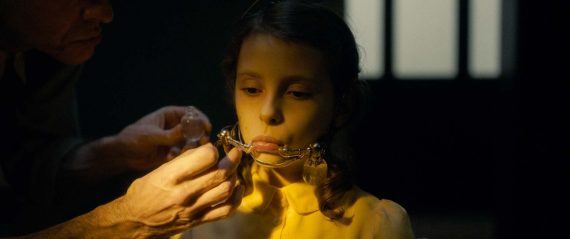
Plot details are thin on the ground. Albert seems hypnotised when he stares deeply into the sparkling shards of crystalline glasses; there is a painting of a strange building that draws Mia’s fascination. Yet why is Albert looking after this young girl? Why must he make her dentures out of ice? And when the phone call comes, who is speaking on the other end of the line?
Earwig is a film that suggests far more often than it informs. Even when the narrative flickers into something more tangible, it doesn’t take Hadzihalilovic long before she destabilises us with an unexpected turn or elliptical shift, keeping clear cohesion and understanding always at arm’s length. For some, this almost Lynchian opaqueness is what will drawn them in; yet there is no doubt that Earwig is a divisive film, where the very attributes that make it unique will be the key reasons why many others will not have the patience nor stomach for Hadzihalilovic’s stark, meditative storytelling.
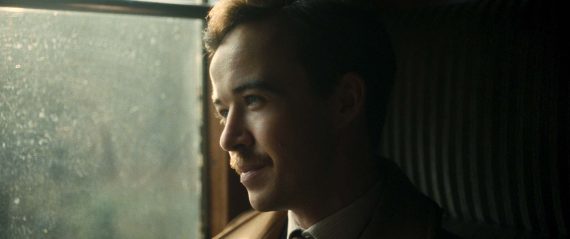
Earwig is the third feature film from Hadzihalilovic, who launched her career with the haunting, critically acclaimed Innocence (2004). Based on performance artist, sculptor and author Brain Catling’s 2020 novel of the same name, Earwig’s adaptation finds Hadzihalilovic, along with co-writer Geoff Cox, stripping away the finer details of Catling’s original narrative in order to create something far more open to interpretation. The story begins, as mentioned above, with Albert looking after the young Mia in a dark apartment block, changing her dentures several times a day. Eventually the call comes through that Albert’s care of Mia is coming to an end. He has just seventeen days to get her prepared for the real world, a challenge that will break down both the physical and psychological barriers that have held them in place for so long.
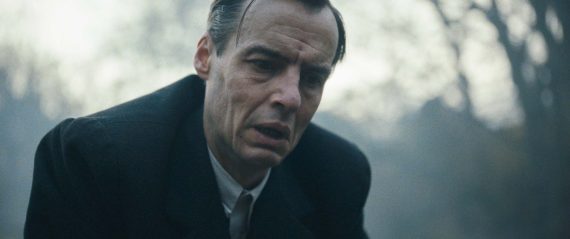
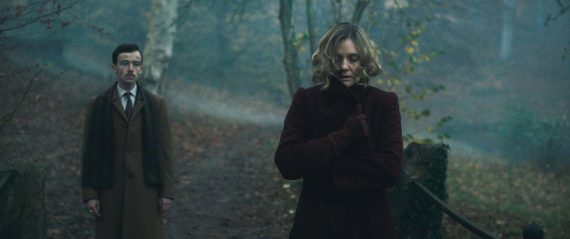
Despite some shocking moments and hints at literary horror (M.R. James’ classic short story The Mezzotint springs to mind at points) Earwig is less a horror story and more a dark, urban fairy tale, concerned with loss and longing. While the opening of the film suggests that these themes might be explored solely through the characters of Albert and Mia, Hadzihalilovic introduces new protagonists around half way through that allows the narrative to fork in two different directions. Luckily, actors Romola Garai and Alex Lawther imbue these new characters with enough depth, pathos and hints of creepy malevolence to ensure that their story grips and intrigues just as much as Albert and Mia’s. As the two narratives begin to merge and intwine, Hadzihalilovic balances deliberate opaqueness with enough mystery and atmosphere to ensure that Earwig continues to grip as easily as it confounds.
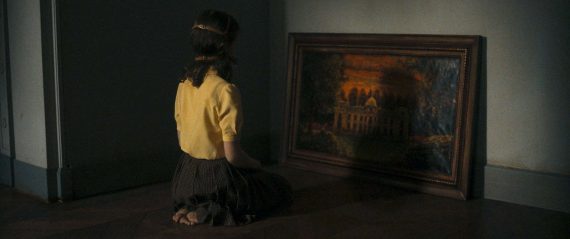
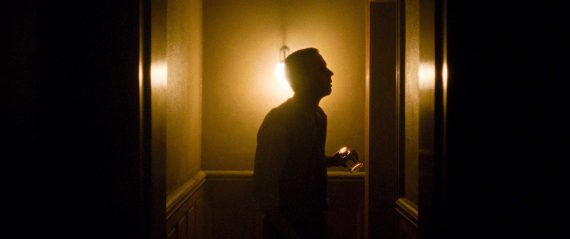
And it is through the atmosphere and visuals that Earwig truly stuns. Using only natural light, cinematographer Jonathan Ricquebourg captures some truly spellbinding chiaroscuro imagery that practically oozes off the screen in hushed, velveteen tones. Single lights struggle to illuminate long, dark hallways; train tracks emerge out of thick, almost suffocating fog; light glitters and sparkles off the splintered red contours of a wine glass. The compositions themselves often feel like paintings, as if Caravaggio has decided to ape Edward Hopper. Taken together, Earwig’s visuals help to create a beautifully crafted world that, assisted by incredibly effective sound and production design, slowly delights in sucking you into its somber, melancholy maw.
While Earwig may reveal some of its cards by the end, we are still left without anything truly definitive to hold onto. Yet Hadzihalilovic has stated that the film was deliberately designed for the audience to fill in some of the narrative gaps themselves. Whether that creates a satisfactory film will ultimately be completely subjective. The film’s refusal to offer easy answers, in conjunction with a glacial pace, ensure that Earwig is a challenging film to watch. Yet if you allow yourself to become victim to its meticulously crafted, melancholy beauty, you’ll find a lot to admire.
What Hadzihalilovic has created here is a sombre, beguiling mystery that strips away the conformity of a closed narrative for something ultimately more ambitious. Just as many would argue that she has failed create a compelling film as those who will cry out that she has done the very opposite. Yet there is no denying the dark, dream like atmosphere she conjures over us while we struggle to decide which side of the fence to sit on.
Film:


Earwig is out now on Blu Ray via Anti-Worlds. The picture quality on the disc looks fantastic. With so much darkness in the visuals, this could have ended up being a disaster, but thankfully Fidelity in Motion were behind the encoding, which is faultless. With no black crushing or pixellation, this release does full justice to Jonathan Ricquebourg’s gorgeously dark and moody cinematography. Sound is likewise as impressive, with a 5.1 mix providing an involving, atmospheric soundtrack.
There are a handful of extras on the disc. The easy standout is a feature length documentary on Brain Catling, the author of the book upon which Earwig is based. Utilising a wealth of footage from exhibits and Catling’s art performances, along with narration from what sounds like an interview from Catling himself, this proves to be both a great introduction and exploration of Catling’s work across sculpture, performance art and novel writing. Featuring interviews with fellow artists and admirers (including Alan Moore) this is a very well produced look at Catling’s surreal and uncanny art – the highlight of which is a very creepy ghost story told directly to the camera by none ofter than Ray Winston.
The disc also contains a 20 minute interview with Hadzihalilovic, in which she discusses, among other things, the writing process on the film, working with the three adult actors, how she worked with the film crew to achieve a shared vision, as well as the film’s sound design and music. An interesting interview that covers a lot of ground in its short 20 minute running time.
Anti-worlds round out the disc with a short French 60s documentary about the bizarre looking Cristal baschet (one of the key instruments used for Earwig’s soundtrack) and an original trailer.
Anti-worlds also include a beautiful 54 page booklet with this limited edition release. This contains an essay on the film by critic Anton Bitel, a long text interview with Hadzihalilovic, along with short pieces from co-writer and producer Geoff Cox and cinematographer Jonathan Ricquebourg.
Overall, this is a superb package for a unique and memorable film.
Disc/Extras