



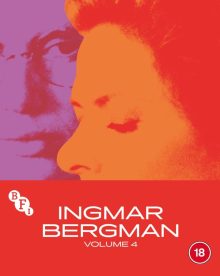
 Across the course of the BFI Bergman boxsets I’ve established that Ingmar Bergman is undoubtedly one of my favourite directors. But a favourite director is not necessarily one who provokes a positive response in the viewer every time. Certainly, there have been almost as many Bergman films that I have failed to connect with as those I have adored. The fourth and final boxset in this series illustrates that bumpy road more vividly than ever but it also shows why that is a good thing. Contrary to his lazy depiction as a one-note Swedish miserablist, Bergman was always trying new things and the failures were part of what drove the towering successes. Here we have family drama and experimental psychological horror, personal documentary and epic magical realist saga, all offering something different and succeeding or failing to varying degrees. While this final set is not the best starting point for newcomers (go directly to Ingmar Bergman Volume 2 for that), it continues the fascinating journey for the initiated perfectly-imperfectly.
CRIES AND WHISPERS
Director: Ingmar Bergman
Screenplay: Ingmar Bergman
Producers: Lars-Owe Carlberg
Starring: Harriet Andersson, Liv Ullmann, Ingrid Thulin, Kari Sylwan
Year: 1972
Country: Sweden
BBFC Certification: 15
Duration: 91 mins
Cries and Whispers was a big deal when it came out in 1972. Though the film wasn’t submitted as Sweden’s selection for the Best International Film Oscar, it ended up being nominated in five other categories including Best Picture, a rare feat for a film not in the English language. Perhaps the wider viewership afforded by this acclaim is what led to Cries and Whispers erroneously becoming the image of the quintessential Bergman film in the minds of so many. Very close approximations of this style creeping into the films of Bergman worshippers like Woody Allen only helped cement the idea that all Bergman’s films followed this blueprint. In fact, Cries and Whispers ploughs its own unique furrow, to the extent that even superficially similar films by Bergman have a very different overall feel from it. It is often lumped together with Persona, for instance, but I found those two films extremely different, not only because I think Persona is one of Bergman’s best and I only feel a partial admiration for Cries and Whispers.
This was a deeply personal film for Bergman, its story, of two sisters and a servant struggling to care for a third sister who has terminal cancer, featuring characters that Bergman based on attributes of his own mother’s personality. The often visceral, though quietly rendered, emotional turbulence is symbolised by the vibrant Oscar-winning cinematography of Sven Nykvist, who’s crimson rooms were a cause of great disquiet long before David Lynch used similar decor for his Twin Peaks Red Room. But throughout the film Bergman periodically floods the frame with this garish colour, punctuating important moments with an entirely scarlet screen. This pushes the symbolism too forcefully in the viewers’ face and it happens enough for it to become distracting at best and inappropriately comic at worst.
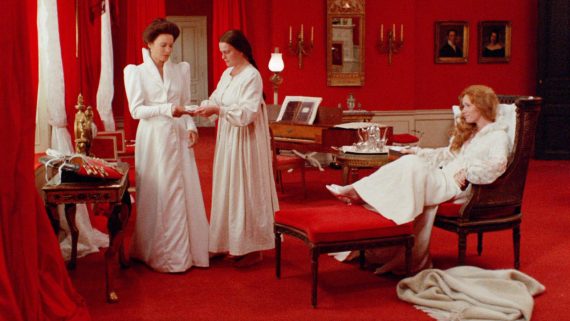
These Microsoft Paint Fill Tool moments aren’t the only times the whispers accelerate a little too rapidly into cries. Bergman’s best dramas have always seethed with repressed pain but Cries and Whispers too frequently lets it out in concentrated bursts of shrieking, sobbing, moaning and gulping that can play as slightly ludicrous. If Bergman had been to the edges of such moments before, he’d always ensured that his films never spilled over into melodrama. There’s nothing wrong with melodrama. Done well, I adore it, but here it seems to happen almost accidentally. Bergman isn’t Douglas Sirk, aware and in control of the overwrought interludes. Rather he seems like he is struggling to put across the dramatic peaks in his story without undermining the deceptive quietude of that which surrounds it.
It’s easy to pick at Cries and Whispers’ faults but it has its pluses too. Though the trappings of the chamber style could’ve risked insularity, it instead creates a claustrophobic but paradoxically expansive psychological palette that is further enhanced by that sumptuous use of colour. Bergman’s regular actresses Harriet Andersson, Liv Ullmann and Ingrid Thulin are all memorably and delicately human, which only makes the moments they are asked to over-emote all the more frustrating. The against-type Ullmann, so often asked to play haunted, intense characters, particularly shines as the coquettish, tactile Maria, while Thulin gets what must stand as the film’s most shocking moment in an act of violent sexual rebellion that surely played a big part in Cries and Whispers’ word-of-mouth reputation.
Though its self-aware intensity and sometimes stagey mise-en-scene have unfortunately implanted themselves in the minds of Bergman virgins as a reductive example of what to expect from the whole filmography, Cries and Whispers has perhaps faded a little in levels of acclaim when compared to more famous films like The Seventh Seal, Wild Strawberries and Persona. But as the introductory film in this boxset, it nicely illustrates Bergman’s desire to keep pushing the creative envelope as he entered a new decade. If the pot sometimes boils over, this would seem to be because Bergman, in wanting to explore more raw and personal themes, deliberately turned up the heat.


SCENES FROM A MARRIAGE
Director: Ingmar Bergman
Screenplay: Ingmar Bergman
Producers: Lars-Owe Carlberg
Starring: Liv Ullmann, Erland Josephson, Bibi Andersson
Year: 1974
Country: Sweden
BBFC Certification: 15
Duration: 167 mins
Scenes from a Marriage began life as a TV miniseries, made up of six episodes. By the time it reached international audiences it had been cut down into a 167 minute film, condensing each episode into about 25 minutes and losing nearly two hours of material in the process. I confess that I have still not as yet seen the full version of Scenes from a Marriage, which most critics contend is even better than the theatrical cut. But the reduction of content did not hurt the film’s reputation and it was widely lauded as another Bergman masterpiece.
While I’m very keen to see the miniseries, I do wonder if there is something to be said for the way the theatrical cut of Scenes from a Marriage strings together the story as a continuous experience rather than an episodic weekly event. Certainly, spending ten years with the characters of Marianne and Johan without the respite of commercial breaks or seven day rest breaks makes for an intense and absorbing experience and while the removal of two hours of footage doubtless changes Bergman’s original vision, you’d never suspect there was anything missing from the nearly three hour cut that remains. Working with a TV budget a third the size of that available on Cries and Whispers, Bergman and his cinematographer Sven Nykvist turn the reduced resources to their advantage by trapping their characters in confined spaces and shooting them in close-up. The visceral intimacy of the material means that staying focused on the actors faces greatly enhances the impact, especially when you have an actor as incredibly expressive as Liv Ullmann at your disposal. While Erland Josephson is excellent as the more guarded, brusque Johan, Ullmann’s unpredictable but thoroughly real performance is on the level of Renée Jeanne Falconetti’s legendary turn as Joan of Arc for Carl Theodor Dreyer. She registers hurt, anger, devastation, denial and joy with a complexity that inspires the viewer to feel the same emotions vicariously. Given that Bergman’s screenplay was partially inspired by his relationship with Ullmann, her acting was perhaps informed by a deeper-than-usual understanding of the character, a troubling notion that makes Scenes from a Marriage all the more disquietingly compelling.

Throughout the theatrical cut of Scenes from a Marriage, Bergman retains the original episode titles as dividers between his abridged vignettes. This helps give the film greater structure and makes its runtime more palatable, but there are other things that make Scenes from a Marriage a more pleasurable viewing experience than a three-hour crumbling of a relationship may sound. Bergman’s writing here, and the central performances, create far more recognisably human characters than in several of the director’s more bleakly stylised works. What’s more, there is a thin strand of black humour that runs through Scenes from a Marriage that many often miss. Perhaps it is clearer in retrospect, following the prominence of the comedy of social embarrassment in the 90s and early 21st century, but scenes like the breakdown of Marianne and Johan’s friends’ marriage at an intimate dinner party have a poisonously amusing streak. I laughed out loud a couple of times during an opening interview scene, which nicely establishes the high opinion that Johan has of himself and which his ego apparently cannot afford to relinquish at any cost. There is also a funny routine in which Marianne tries to get her family out of a Sunday dinner engagement with her mother, which involves numerous barefaced manipulations. Whether you find humour in this material will very much depend on individual taste and certainly these moments dry up as the film progresses, but the residue they leave behind helps to give the characters an extra dimension and staves off the risk of melodrama when the interactions grow more intense.
The cast list for Scenes from a Marriage shows nearly a dozen names but after the first two vignettes, the script becomes as tightly focused on Marianne and Johan as the camera is on their faces. As circumstances contrive to push them apart, they seem to somehow grow closer, and though other people enter their lives the film sees all other presences drop away. A climactic acknowledgement of an “imperfect love” seems both thematically appropriate and naively romanticised by the self-absorbed Johan. Though we come to understand his motivations and psychological flaws, Johan remains something of a monster but the convincing way in which Josephson humanises him makes Bergman’s examination of Marianne’s bond to him, even after an unforgivable physical assault, even more disturbingly real.
Scenes from a Marriage is a refreshingly realistic and richly absorbing masterpiece which transitioned Bergman away from the more overwhelmingly bleak experiments of his late 60s and early 70s work towards something more emotionally resonant, a route which would culminate in another layered classic in Autumn Sonata five years later. By placing them side by side on this boxset, the BFI beautifully draw out the connection between those two films, while their juxtaposition with the more stylised and melodramatic Cries and Whispers demonstrates how Bergman could examine various familial relationships – sibling, spousal and parent/child – without ever feeling like he was repeating himself.
AUTUMN SONATA
Director: Ingmar Bergman
Screenplay: Ingmar Bergman
Producers: ITC Entertainment
Starring: Liv Ullmann, Ingrid Bergman
Year: 1978
Country: Sweden
BBFC Certification: 15
Duration: 99 mins
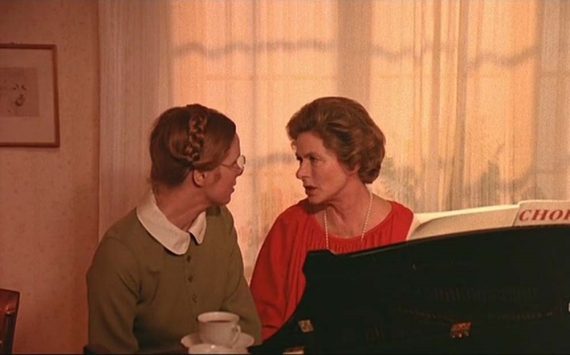
Even the biggest Ingmar Bergman fans have probably at some stage, perhaps while tipsy, accidentally referred to the director as Ingrid Bergman. As someone who regularly has to stop and think about the difference between Kirk Douglas and Kurt Russell, this has inevitably happened to me too, but there was an even greater inevitability that the two Bergmans (Bergmen?!), titans of the Swedish film industry, would eventually work together. It took until 1978 for this to come about but it was worth the wait because Ingmar created the perfect role for Ingrid, which turned out to be both her theatrical swan song and her final Oscar nomination. Still strikingly beautiful at 60 and fresh off the back of a late career Oscar win for Murder on the Orient Express, Ingrid adapted to Ingmar’s style with the naturalism of the seasoned professional she was, providing a deeply effective counterpoint to the jittery neurosis of Bergman regular Liv Ullmann’s performance as her daughter.
Autumn Sonata, the tale of an attempted reconciliation between an estranged mother and daughter which leads to a painfully candid confrontation, was made during a difficult time for Ingmar Bergman, who had placed himself in self-imposed exile from Sweden after accusations of tax evasion. Though he was ultimately found to be innocent, the embarrassment of the situation drove him into a deep depression and he later described the exile as having robbed him of eight years of his professional life. Despite this assertion, Bergman made some of his best films during these eight years, including Autumn Sonata which, though bafflingly considered a minor work by many, is a subtle, delicate masterpiece that vastly improves upon the more acclaimed Cries and Whispers by presenting a superficially similar chamber piece but imbuing it with a great deal more subtlety and ambiguity. The result is far more emotionally resonant, its quiet autumnal cinematography (again by Sven Nykvist) not feeling the need to knock our eyes out with visceral crimson assaults.
You could read all sorts of significance into the links between Bergman’s perceived betrayal by his motherland and Autumn Sonata‘s troubled mother/daughter relationship but whether you choose to view it this way or not, Autumn Sonata has the power to tap into a rich emotional vein that makes it effective even for viewers who have never experienced anything approaching the level of familial upheaval onscreen, in a metaphorical sense or otherwise. The characters are so deeply but understandably flawed, and Bergman’s layered, Oscar-nominated script presents these flaws with such sympathy and staunch refusal to prod the viewer towards specific judgements, that Autumn Sonata becomes the epitome of Roger Ebert’s assertion that “Movies are a machine that generates empathy.”
Although some of his future projects would be shown in cinemas, Autumn Sonata was technically Ingmar Bergman’s final theatrically produced film, with everything that followed being produced for TV. Ingrid Bergman also gave one final award-winning TV performance in the biopic A Woman Called Golda. But while neither Bergman’s career ended with Autumn Sonata, there is a poignant sense of finality baked into the film nonetheless. Even the ambiguity of the final moments cannot alter the great sense of climactic significance felt at the end of this story. Ingmar in particular had decades of his career to go and further masterpieces to share but that doesn’t prevent Autumn Sonata from feeling like an ending of sorts. Had it been Bergman’s final film, I can’t help but wonder if it would’ve been more roundly reappraised and recognised as the treasure it is. For now, it languishes in comparative obscurity in the Bergman canon, and we can only hope that its welcome appearance in this boxset triggers even a small renaissance for a remarkable gem.
FÅRÖ DOCUMENT 1979
Director: Ingmar Bergman
Screenplay: Ingmar Bergman
Producers: Lars-Owe Carlberg
Year: 1979
Country: Sweden
Duration: 103 mins
The island of Fårö will be familiar to Bergman fans as the backdrop of films including Through a Glass Darkly, Persona and Shame. Bergman himself had a lengthy love affair with the island, living and ultimately dying there, and Fårö has become synonymous with the director, with an annual Bergman week held by locals to this day. Bergman’s love of Fårö ultimately led him to make two documentaries about the island. The first, Fårö Document, was made in 1970 and focused on the island’s small number of inhabitants and their perceived mistreatment in comparison with those living in urban centres. The film was less than an hour long and ran on Swedish television, though its distribution outside of Sweden was minimal. Ten years later, Bergman made the sequel Fårö Document 1979, which explored the island’s fortunes a decade on and caught up with some of the interviewees from the first film.
Fårö Document 1979 is the most niche film in this boxset and its limited appeal will depend on the individual’s level of interest in the subject matter. Though obviously close to Bergman’s heart, Fårö‘s unchanging environment hardly makes for riveting content and the fact that none of Bergman’s gloomy predictions about the island came true just illustrates how unsuitable a subject that makes it for a continuing documentary series. Nevertheless, Bergman doubled down with a sequel that is nearly twice the length of the first film, which closes with the stated intention to make a third film in 1989. The third film, presumably set to be a three hour mediation on how everyone had got a decade older and continued farming, mercifully never happened.
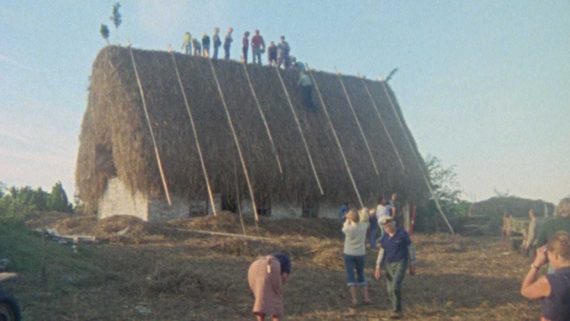
After the intensity of the first three films in this boxset, Fårö Document 1979 was fairly pleasant for a little while, with its leisurely images of the island across various seasons. But the longer it went on, the more interminable it became. Bergman’s interviews are banal and long-winded and he is hardly a naturally charismatic narrator either. The best moments, in which Bergman catches up with the children he interviewed in the first, seem derivative of Michael Apsted’s Up series and are too fleeting to really boost the film’s entertainment value. The moment that tipped me over the edge was a nightmare deja vu experience. Many years ago, after viewing the wonderful Etre et avoir, I set about seeking out other films by director Nicolas Philibert and came across a cheap DVD of his film Back to Normandy. While watching that film happily enough, I was suddenly confronted with the most brutal scene of the slaughtering of a pig, from the moment it was bashed on the head through its subsequent convulsions and then its carving up. I immediately switched off the documentary. I couldn’t take it any more after that. Years later and now a committed vegan (perhaps partially because of this scene), I was dismayed to find it happening all over again in Fårö Document 1979, in such a similar way that I wondered if the Back to Normandy scene was some kind of sick homage. In this case, I finished the film in order to be able to submit a review but as my boredom turned to distress I knew there was no way back. Sources reliably inform me that the earlier Fårö film contains a very similar scene with a sheep. I understand Bergman’s inclusion of these scenes as a documentarian focusing on a farming community but this evening-ruining moment ensured I was personally done with the Fårö documentaries, if bum-numbing tedium hadn’t already sealed that deal.
FROM THE LIFE OF THE MARIONETTES
Director: Ingmar Bergman
Screenplay: Ingmar Bergman
Producers: Konrad Wendlandt, Horst Wendlandt, Ingmar Bergman
Starring: Robert Atzorn, Heinz Bennent, Martin Benrath
Year: 1980
Country: West Germany/ Sweden
BBFC Certification: 18
Duration: 101 mins
The first narrative film of Bergman’s post-theatrical period, From the Life of the Marionettes is has never had a very strong reputation. Written while Bergman was still struggling to transfer the pain of his legal problems and exile into his art, this is clearly an angry film made by an anguished artist. But its psychological mystery feels desperately shallow and its nasty tone badly misjudged. Featuring two main characters based on the supporting roles of Peter and Katarina, the unhappy friends from Scenes from a Marriage, From the Life of the Marionettes stops short of being a sequel by changing the nationality of the couple to German rather than Swedish and recasting the roles with different actors. The narrative is built around Peter’s murder of a prostitute, who’s corpse he then anally rapes, and we see numerous friends and relations interviewed in an attempt to establish motive. The solution that is eventually offered feels rushed and inconsequential, when a film with such a deliberately unpleasant centre demands a much more astute conclusion in order to justify its choices.
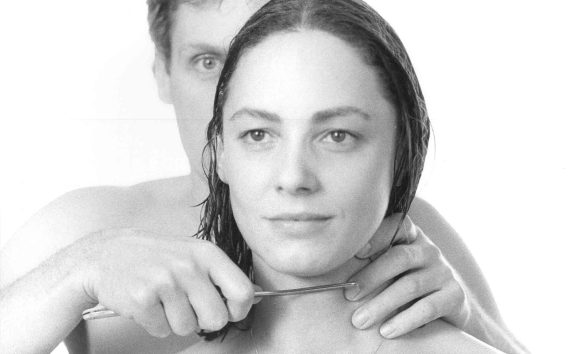
From the Life of the Marionettes aims for a certain tone, with prolonged nudity, graphic dialogue and violence all playing a prominent part. It’s the sort of approach that can work if supported by an intelligent screenplay and strong direction that justify the content but, unusually for a Bergman film, From the Life of the Marionettes has neither. Its lengthy, wordy exchanges feel bereft of substance and its characters as stiff as the metaphorical manipulatees of its title. Though Sven Nykvist’s cinematography is crisp and attractive, the decision to bookend the black and white film with colour sequences feels perfunctory. Worst of all though is Bergman’s ham-fisted attempt to tackle themes of homosexuality. The character of Tim is a gay man clearly written by a heterosexual writer, and Bergman stumbles through numerous stereotypes before casually equating homosexuality with perversion and violence. I don’t think Bergman was homophobic but I think his admirable desire to tackle what was still a surprisingly taboo subject in 1980 ultimately exposed his ignorance, exacerbated by an unenlightened era. From the Life of the Marionettes emerges as an attractively crafted figure who’s usually-reliable puppeteer this time managed to get the strings all tangled round his fingers.
FANNY AND ALEXANDER
Director: Ingmar Bergman
Screenplay: Ingmar Bergman
Producers: Jörn Donner
Starring: Ewa Fröling, Bertil Guve, Jan Malmsjö, Gunn Wållgren
Year: 1982/1984
Country: Sweden/ France/ West Germany
BBFC Certification: 15
Duration: 188 mins (theatrical version)/ 312 mins (TV version)
By the early 80s, Bergman was describing himself as psychologically and physically exhausted and had decided to retire. But he obviously wanted to go out with a bang and devised a five hour TV miniseries which would act as a culmination of many of the themes he had explored throughout his career but presented in a very different package. Fanny and Alexander is an epic family saga and its sumptuous, accessible style is filled with as much warmth and humour as it is with anguish and despair. Fusing the ambitious influences of Shakespeare and Dickens, the film taps into a wonderfully novelistic atmosphere, with a magical realism that also draws on the dark recesses of fairy tales as an inspiration. With a large cast of characters, evocative sets, fantastic costumes, a multi-layered screenplay and glorious colour cinematography, Fanny and Alexander is a triumph. Though Bergman ultimately didn’t stop there, there remains a fetching finality to this extraordinary film.
Though envisaged as a TV miniseries, Fanny and Alexander was also cut down into a three hour theatrical version and it was this that was released first, garnering widespread acclaim and six Oscar nominations (although frustratingly none of them were for Best Picture, despite a particularly weak showing for the category that year). It was also this version that I first saw, immediately recognising it as a five star classic. The full length version was later released both in cinemas and on television, and I resolved that I must see it one day but hadn’t, until now, been able to obtain a copy. Both versions of the film are included in this boxset and, while the three hour cut is handy for when you don’t have as much time to spare, I now feel that the five hour cut has ruined me for any other version.
Bergman himself regretted the two hours plus of material lost by the theatrical cut and when you watch the TV version it is hard to imagine what you’d lose. It’s fair to say that the film takes its time in introducing the large Ekdahl family and their partners, friends and servants but in doing so it captures that powerfully immersive Dickensian flavour almost perfectly. The first episode, which runs to over 90 minutes, is like a standalone film itself. Set at Christmas, it focuses on an opulent party at the family home in which Bergman introduces the main players through a series of vignettes. Though there is a sense of foreboding to some moments, the tone of this episode is infectiously merry and an absolute pleasure to watch. Particularly ingenious is a long scene at the dinner table, in which editor Sylvia Ingemarsson’s rapid cutting between conversations creates a sketch-like effect with little punchlines that surreptitiously increase the likelihood of remembering each character in the large cast. There are even some fart jokes!

Although it begins by leisurely laying out its stall, Fanny and Alexander’s plot kicks in in earnest with the arrival of the manipulative and abusive Bishop played in astonishingly oleaginous fashion by a superb Jan Malmsjö. A wicked stepfather straight out of a fairy tale, the Bishop’s hold over the titular children and his attempts to tear apart their family form the core of the story. Bergman is careful not to make this a straight good vs. evil affair, embroidering the edges of the plot with subplots that confirm the imperfections of the Ekdahls as well. But the core of the plot centres around the young Alexander’s ongoing battle of wills with the Bishop, with the shifts in power leading to some extremely interesting revelations. Throughout, the sense of dread is heightened by the supernatural visions experienced by Alexander, most of which are regrettably missing from the shorter cut, including one genuinely frightening moment that borders on Horror.
If five hours plus sounds like a long haul, rest assured that Fanny and Alexander is so absorbing that it flies by. I watched it in three settings, spending the stretches between viewings longing to get back to it and only surrendering to further intervals through the demands of sleep. It is perhaps Bergman’s most accessible film, although it may appear his most daunting from the outside. Begin watching though and you’re soon welcomed in by that upbeat first episode, after which the spell should be sufficiently cast. I can’t wait to watch it again.
AFTER THE REHEARSAL
Director: Ingmar Bergman
Screenplay: Ingmar Bergman
Producers: Jörn Donner
Starring: Erland Josephson, Ingrid Thulin, Lena Olin
Year: 1984
Country: Sweden
BBFC Certification: 15
Duration: 70 mins
Although Autumn Sonata was technically Bergman’s last theatrical work, Fanny and Alexander was certainly a more cinematic production than the average television film of the era. As a semi-official ending to the Bergman filmography, it is a hard act to follow and this boxset recognises that fact by placing the film as the final one in the set. However, anal cineaste that I am, I insisted on watching the films in order of release and so I ended on the anticlimactic After the Rehearsal, which is tucked away on disc 4.
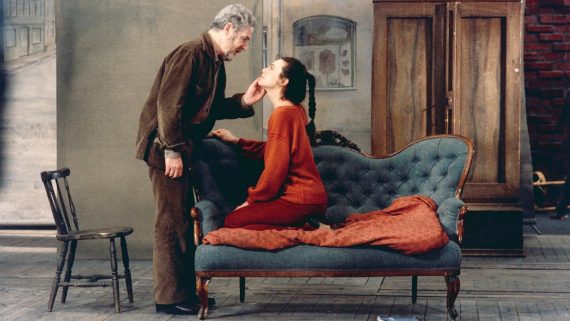
Another TV film, After the Rehearsal received strongly positive critical notices on release but I must admit to finding it a bit of a drag, even at a slim 70 minutes. As an epilogue, it makes some sense, continuing the references to Stringberg’s A Dream Play with which Fanny and Alexander closed. But ultimately After the Rehearsal is a very stagey affair, perhaps appropriately given its themes of theatre, but that doesn’t stop the uninspired presentation from resulting in oddly stiff performances by the usually reliable Erland Josephson and Ingrid Thulin. Matters were not helped by the inescapable and unfair comparisons I made in the aftermath of watching Fanny and Alexander, nor by the fact that the only available version of After the Rehearsal is a very grainy, lo-res one. Sadly this was a disappointing way to end my mini Bergman season.
This final Bergman set from the BFI is a tough one to give an overall rating. Of the seven films included, I rated three a measly two stars. But then, of the remaining four I gave three the full five stars, and any set that features the complete Fanny and Alexander alone feels like it deserves full marks, before you ever consider Scenes from a Marriage or Autumn Sonata. Ultimately, I’ve averaged it out at four stars but I would recommend any budding Bergman enthusiasts seize the chance to own the handful of films here that are truly remarkable.
Ingmar Bergman Volume 4 is released on limited edition Blu-Ray by the BFI on 30 January 2023. It includes a 100 page book featuring new essays by Geoff Andrew, Catherine Wheatley, Leigh Singer, Andrew Graves, Philip Kemp and Ellen Cheshire.