



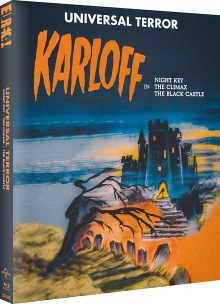
 Universal Terror
Directors: Lloyd Corrigan (Night Key); George Waggner (The Climax); Nathan H. Juran (The Black Castle)
Screenplay: Tristram Tupper (NK); Curt Siodmak & Lena Starling (TC); Jerry Sackheim(TBC);
Cast: Boris Karloff, J. Warren Hull, Jean Rogers, Alan Baxter (NK); Boris Karloff, Susanna Foster, Turham Bey, Gale Sondergaard, Thomas Gomez, June Vincent (TC); Richard Greene, Boris Karloff, Stephen McNally, Pada Cordey, Lon Chaney Jnr, John Hoyt, Nancy Valentine (TBC);
Year: 1937 (NK); 1944 (TC); 1952 (TBC);
Running Time: 67 mins (NK); 86 mins (TC); 81.5 mins (TBC)
Certificate: PG
The first of Eureka Entertainment’s Boris Karloff boxed sets, showcasing some of Boris’s lesser known works from the Universal archive, Universal Terror provides three horror / thriller titles on Blu-ray for the first time. All three films are making their UK disc debuts, and in the case of The Climax we get a 2K scan from the interpositive; basically an orange-based motion picture film with a positive image made from the edited camera negative. In the case of the other two films both are presented from 2K scans of fine grain film elements.
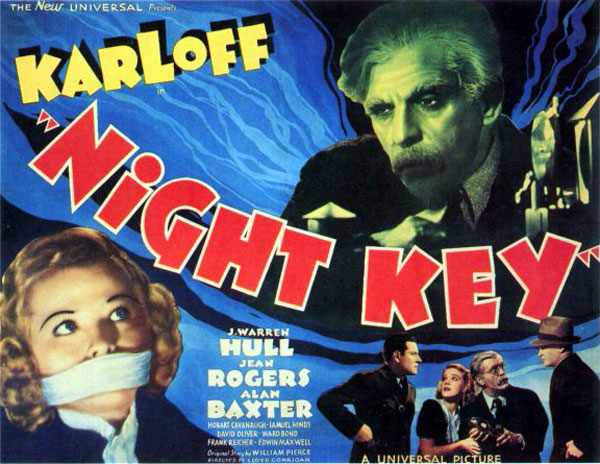
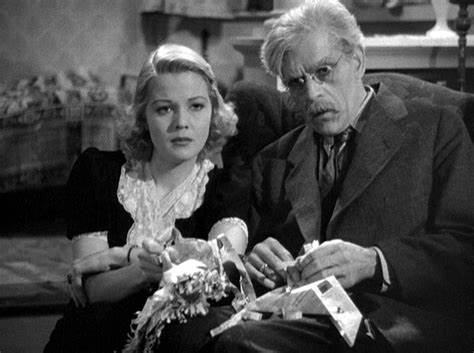
Night Key
Not really a horror film, but more of a crime thriller, Night Key sees our horror icon (Karloff) playing an eccentric, nearly blind inventor, David Mallory, who is swindled out of his revolutionary security system by his ex-business partner, Steve Ranger (Samuel Hinds). Fearing for his daughter’s future Boris takes his revenge by rendering Hinds’ own security system harmless thus ruining his rival’s reputation. The irony being it was the system that he originally built himself before Hinds stole that from him too. Things become even more complicated when Mallory is kidnapped by a criminal gang who force him to help them commit a series of robberies by threatening his daughter, who they also kidnap, which subsequently puts him in trouble with the law.
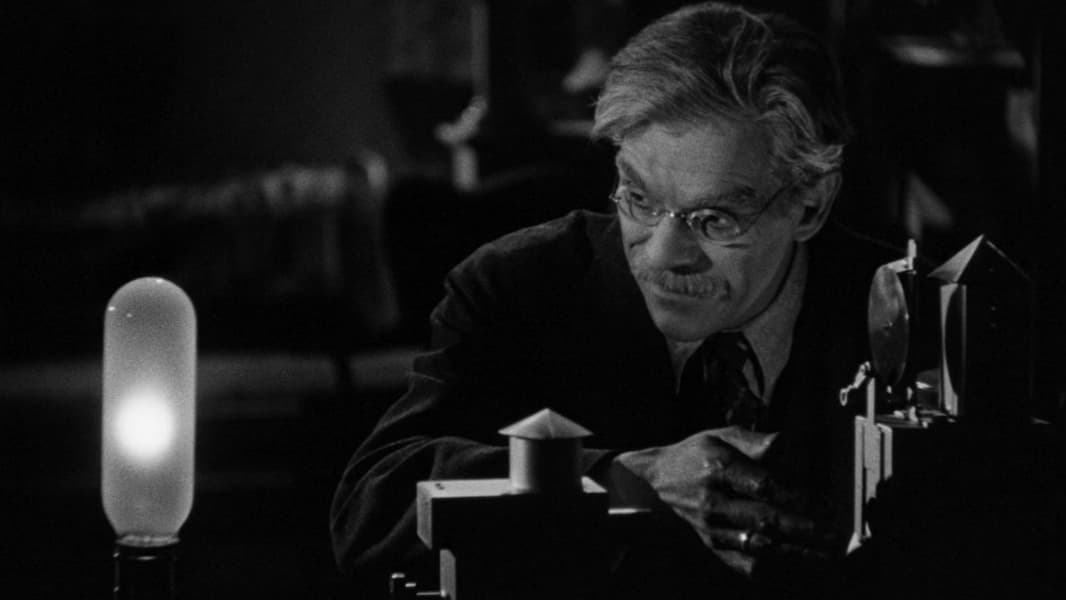
Boris Karloff gives an excellent three dimensional performance here as the smart but put-upon Mallory and he’s ably supported by the rest of the cast who do a good job too. The film is shot in a fairly stagey way, for the most part, but the picture and sound quality are good for a film of this age and it’s nice to see some of the old cars from the 1930s; although it’s not so nice to see the leading lady wearing a fur stole at one point.
The central premise of having a gadget that can nullify any electrical security system is a novel one (well, it probably was at the time) and it’s great to see old Boris playing a ‘good’ character for once. This is certainly entertaining stuff and doesn’t outstay its welcome due to its short running time.


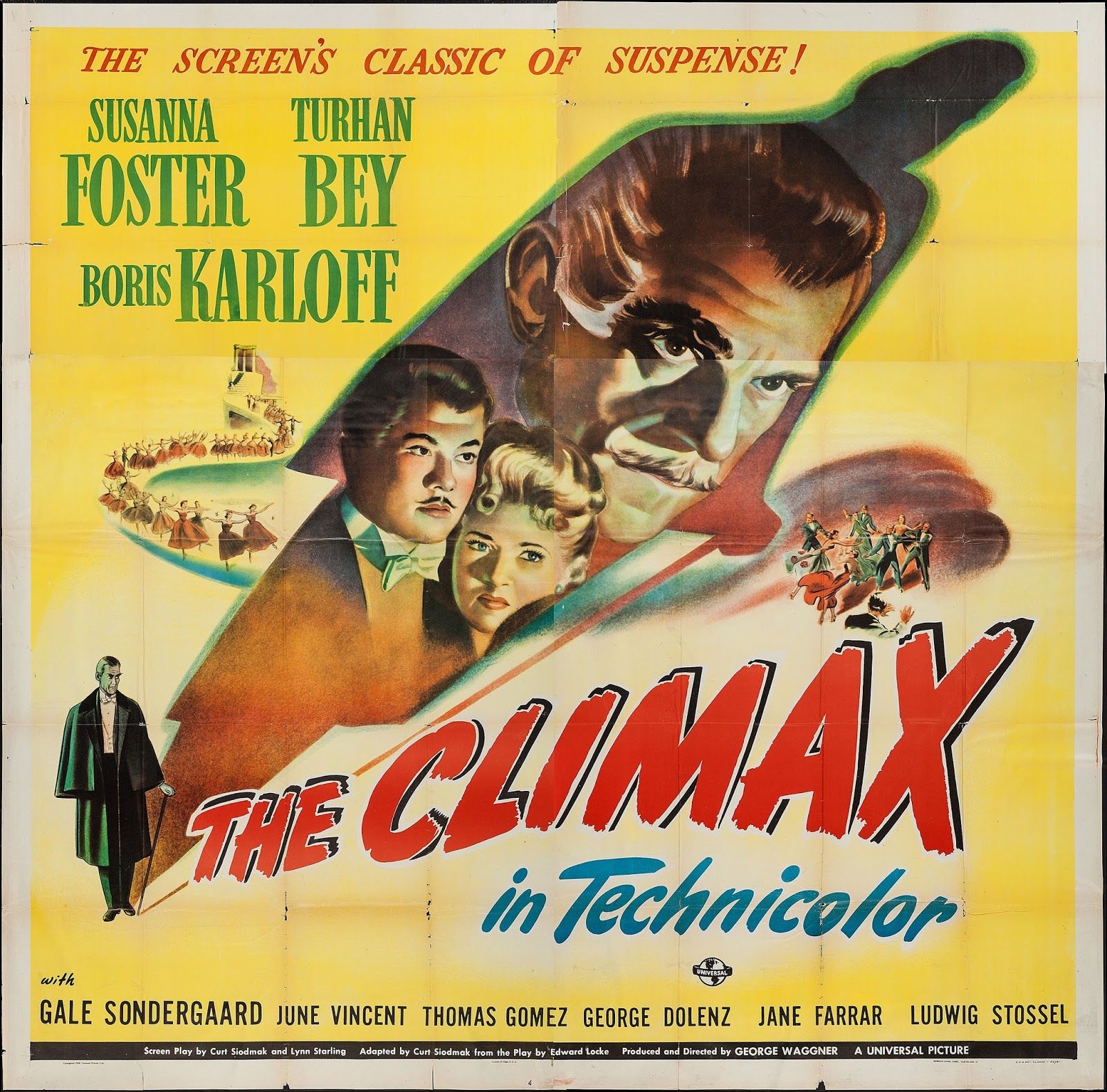
The Climax
Certainly the most sumptuous film production in this boxed set, The Climax was obviously a prestige production for Universal, what with it being shot in colour and it utilising impressive sets and large scale operatic musical numbers. In fact, the musical numbers, while impressive in their own right, tend to dominate the film and hence slow the pacing down, making this probably the least satisfying film of the three, at least by my humble reckoning.
Beginning with Dr Hohmer (Karloff) sitting in a disused dressing room and remembering the murder, at his own hands, of opera diva and Hohmer’s wife, Marcelina, due to his jealousy of her sharing her singing gift with the world, the film then introduces two new arrivals to the Opera house, namely music student Angela Clarke (Foster) and her fiancée, Franz (Turham Bey). It turns out that Angela’s voice is very similar to Marcelina’s and consequently this sets Karloff off on a mission to prevent her singing in public, especially singing the opera ‘The Magic Voice’, which had been his wife’s speciality.
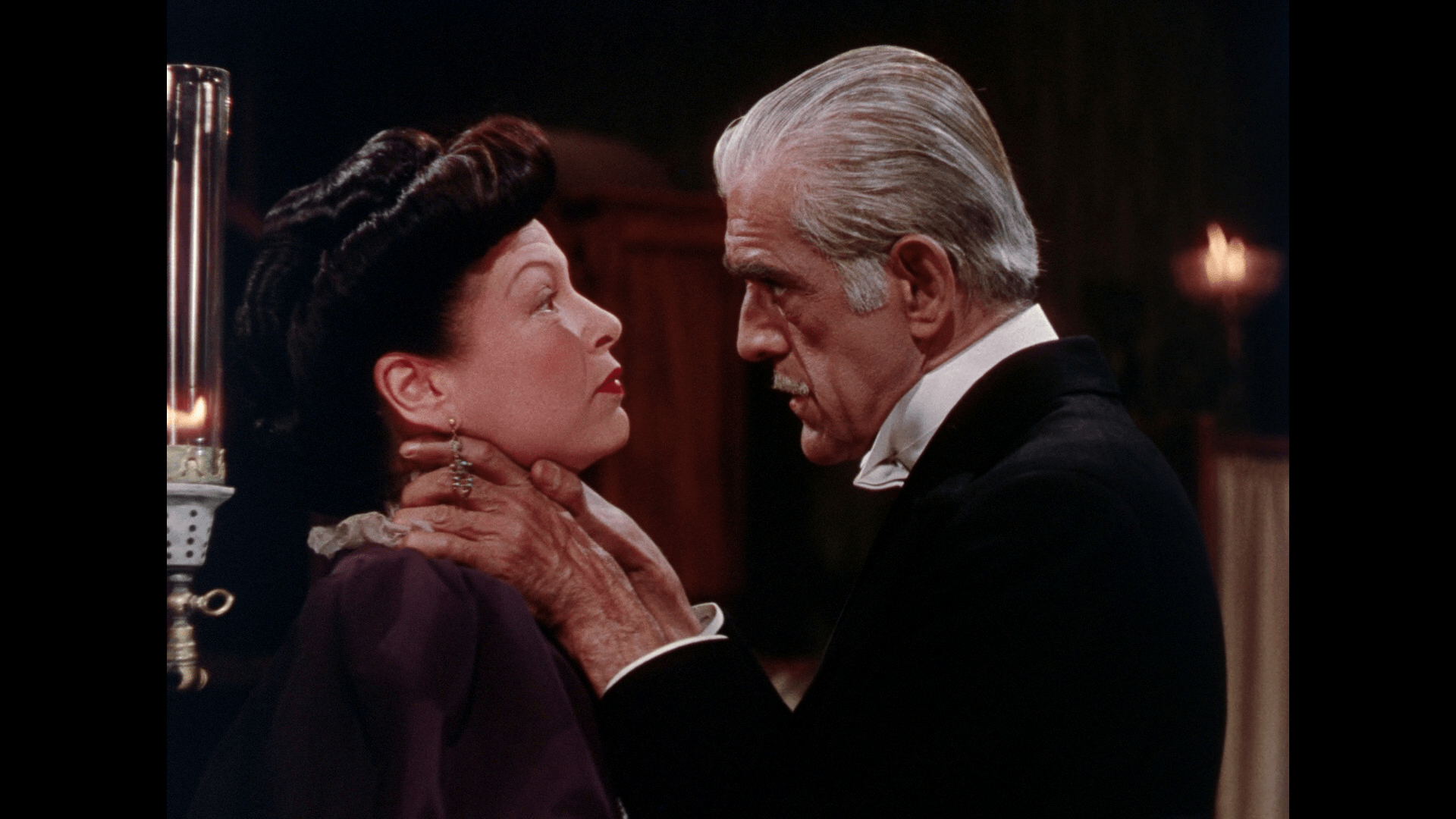
Karloff pulls Ms Clarke to one side under the pretext of giving her a throat examination, but instead hypnotises the poor woman to prevent her having the desire to ever sing again, which obviously causes issues at the opera house who have already propelled her into the limelight on account of her outstanding voice. Her ambitious fiancé suspects something is up, and, with the help of the not so good doctor’s housekeeper, he exposes Karloff for the disturbed individual that he really is.
The Climax is a very talky/singy (is that even a word?) film, which is saved by Boris’s outstanding performance as a lonely sociopath who’s infatuated with Angela because of her similarity to his deceased wife. In fact, the film reemphasises how good an actor Karloff was, and one who definitely shouldn’t only be remembered for a few key roles that he played during the 1930s and 1940s. I also couldn’t help but notice what big hands he had; either that or his co-stars had tiny heads!
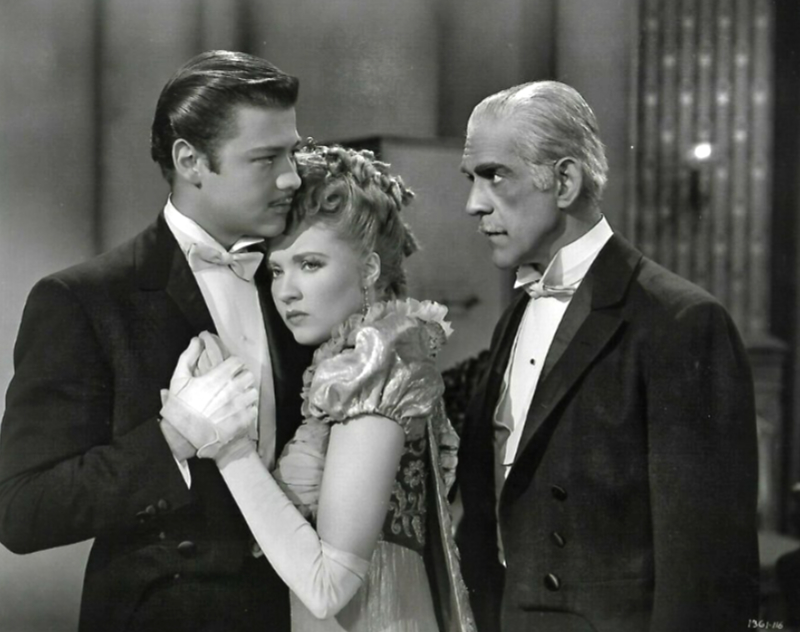
The Black Castle
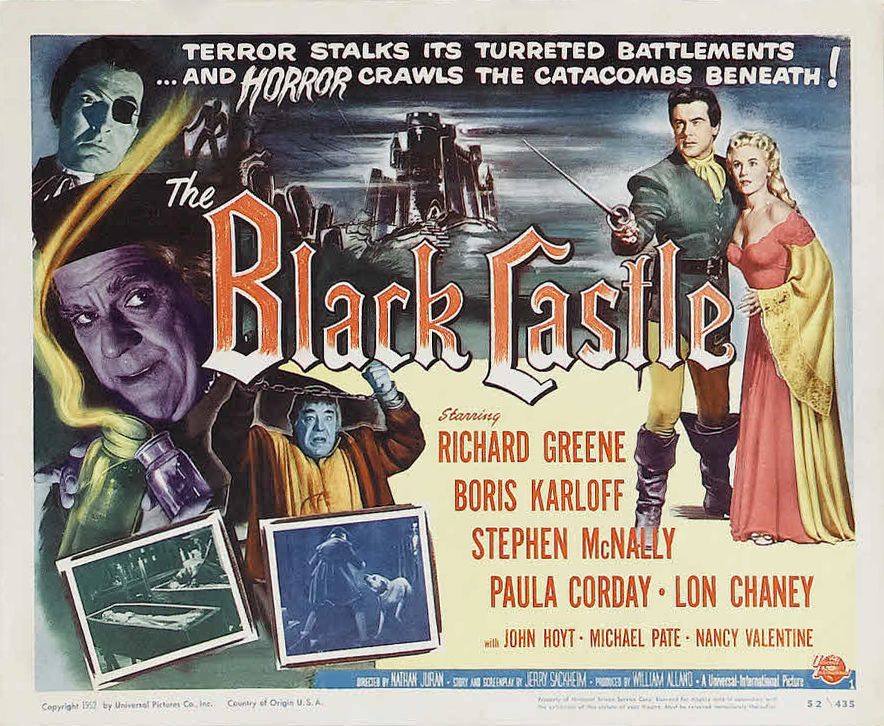
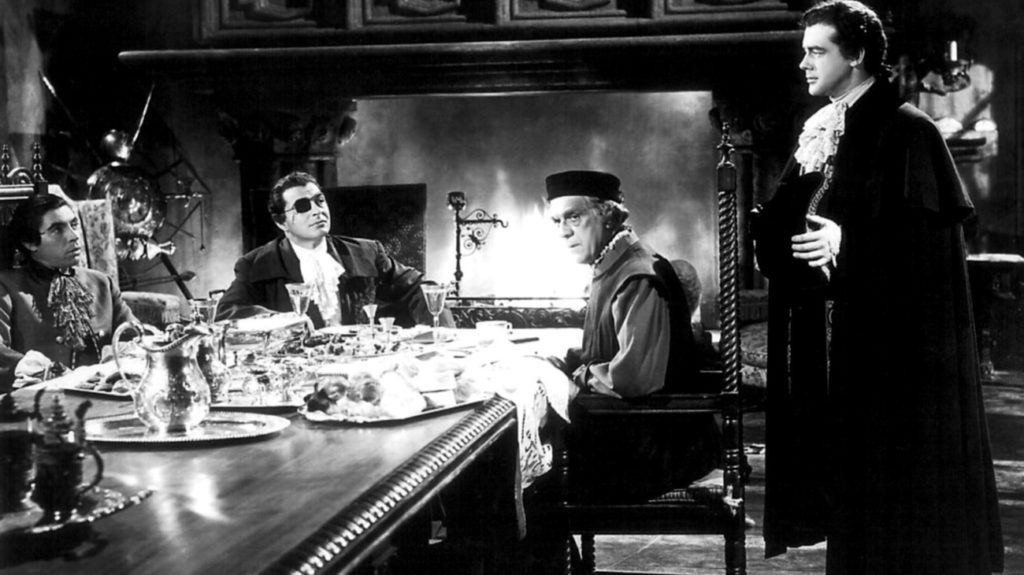
Again, we see Karloff in a ‘good guy’ role here, playing a doctor who risks his own life to save the captives of mad eye-patch wearing Count von Bruno (Stephen McNally). His main co-star, Richard – Robin Hood – Greene, arrives at the count’s castle to find out what happened to two army friends of his. After some snooping, and seeing a particular ring on the necklace of the Baron’s wife, he realises that the Baron has probably murdered his mates. He sets off to inform the authorities, but hears that the Baron is going to kill his wife for flirting with himself, so he returns to the castle to rescue her, but things don’t go according to plan…
The Black Castle is more a gothic swashbuckler than outright horror film but it does share some horror tropes, namely a creepy castle, an inn called The Green Man, a dungeon filled with crocodiles and a hulking manservant, Gargon, played by the always fun Lon Chaney Jr.
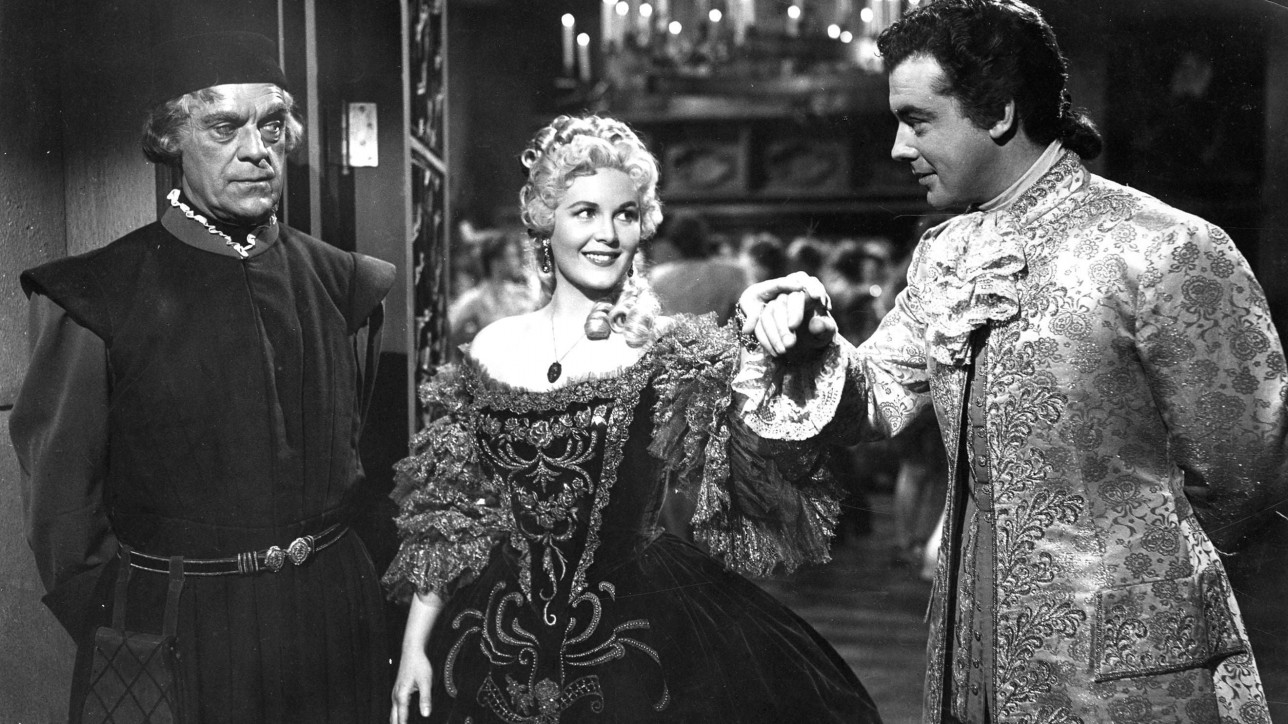
Karloff is good in a fairly small, if pivotal, role and even manages to make a fairly innocuous line like: “I’m sorry you’re not dancing my dear” sound sinister. McNally plays a fun evil foil to Greene’s square-jawed hero, and seems to be enjoying his character’s pantomime level of evilness!
The sets are nicely done, the costumes look authentic and the black and white photography really enhances the shadowy sets and concerned facial expressions. Perhaps a bit too talky at times for its own good, The Black Castle still manages to fit in some cool sequences such as sword fight in the Green Man inn and a narrow escape from a pit full of pitiless crocs.
As per usual with Eureka there are plenty of special features to accompany the films.
Night Key
Audio commentary with Kevin Lyons (editor of the website The Encyclopaedia of Fantastic Film and Television) and author Jonathan Rigby – These two experts discuss the somewhat clichéd Italian humour in the film, note that the corporation’s boss’s secretary is a man, for a change, and that this film came at the end of Universal’s horror cycle, during a period when Karloff was still under contract hence the compromise idea of Night Key.
Stills Galleries – 37 production stills, which mostly focus on Karloff and 10 posters.
The Climax
Audio commentary with Kevin Lyons (editor of the website The Encyclopaedia of Fantastic Film and Television) and author Jonathan Rigby – Here the experts inform us that the film is meant to be set in Vienna, Austria, despite there being no mention of such in the movie itself, and talk about this being the unofficial follow-up to The Phantom of the Opera, which means that Boris is effectively playing the Eric role. We also learn that Karloff’s character’s wife in the film is played by the same actress who later became the leading lady in The Creeper.
Theatrical trailer (2.07 mins) – Emphasises the connection to The Phantom of the Opera
Image Gallery – 68 production B & W stills and 11 poster designs
The Black Castle
Audio commentary with Stephen Jones and Kim Newman – These two experts are good value for money and share their theory that the film is a companion piece/ follow-up to the earlier film, The Strange Door. They also talk about the unusual framing device involving a premature burial (very Poe) and the film borrowing ideas from other movies such as The Most Dangerous Game.
Image Gallery – 68 production stills and a collection of posters
There’s also a collector’s booklet featuring new writing by Karloff expert Stephen Jacobs, the author of Boris Karloff: More than a Monster. I can’t comment on this since I wasn’t sent it to review.
