



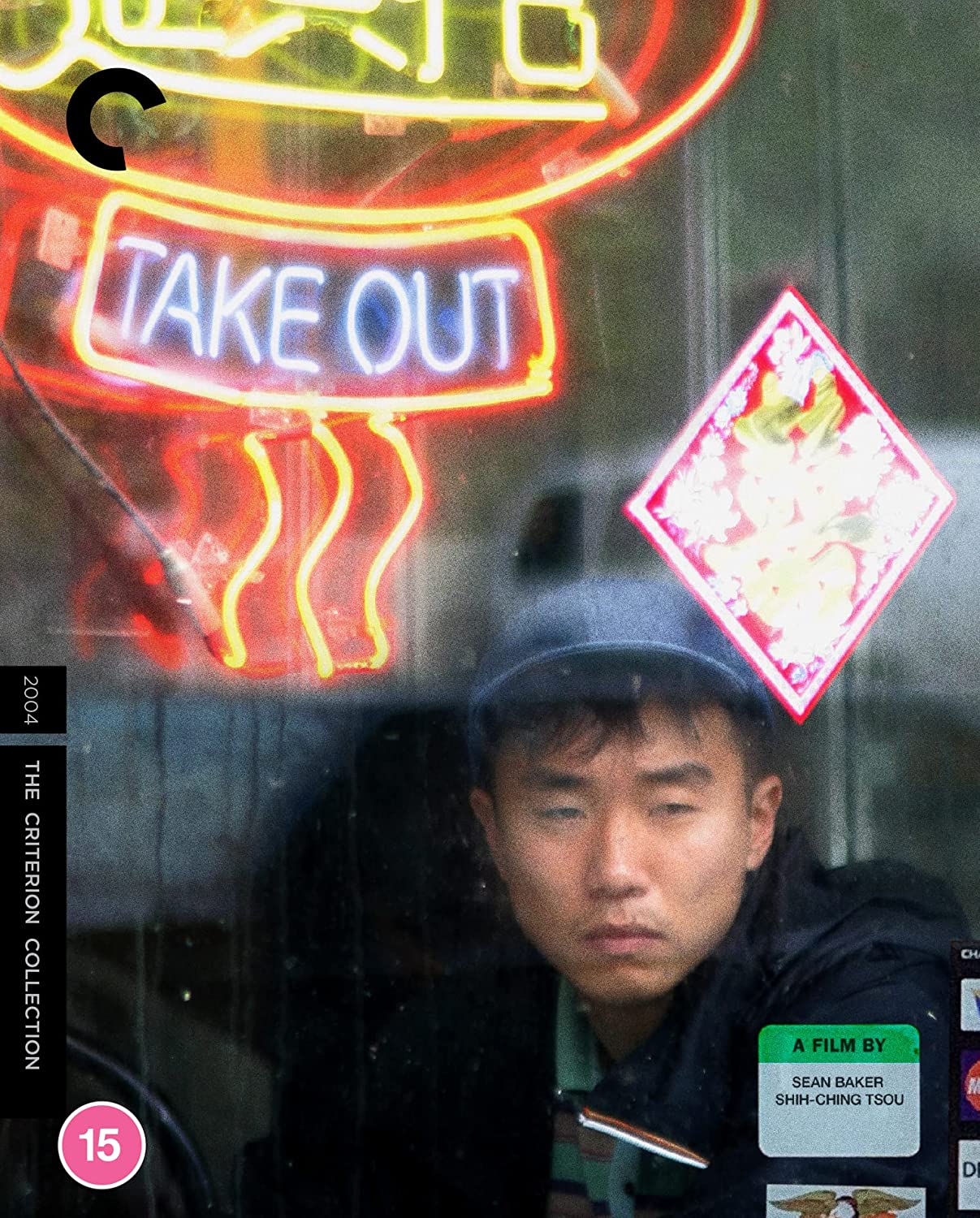
 Director: Sean Baker, Shih-Ching Tsou
Screenplay: Sean Baker, Shih-Ching Tsou
Starring: Charles Jang, Jeng-Hua Yu, Wang-Thye Lee, Justin Wan
Country: USA
Running Time: 88 min
Year: 2004
BBFC Certificate: 15
Sean Baker has gradually been making a name for himself as an indie writer and director (among other various roles he takes on). He turned heads with his shot-on-an-iPhone feature Tangerine in 2015, then picked up a host of awards and nominations for his follow-up, The Florida Project, in 2017. Baker had been making films since the turn of the century though and The Criterion Collection are looking back to his second film, Take Out, which saw him get his first notable awards attention with an Independent Spirit nomination.
Baker and his co-director Shih-Ching Tsou claim they were influenced by the Dogme movement and the work of the Dardennes brothers at the time. They originally wanted to make a film that “showed the colourful community of New York City” through the activity of a takeaway delivery person over the course of a busy day. However, as they did more research they felt the story of the Chinese immigrants they met along the way would make a strong focal point.
So, Take Out follows Ming Ding (Charles Jang), a young Chinese man who has illegally entered the US to work and raise money to send back to his family. However, he’s badly in debt with some loansharks after borrowing money to pay off his massive smuggling payment.
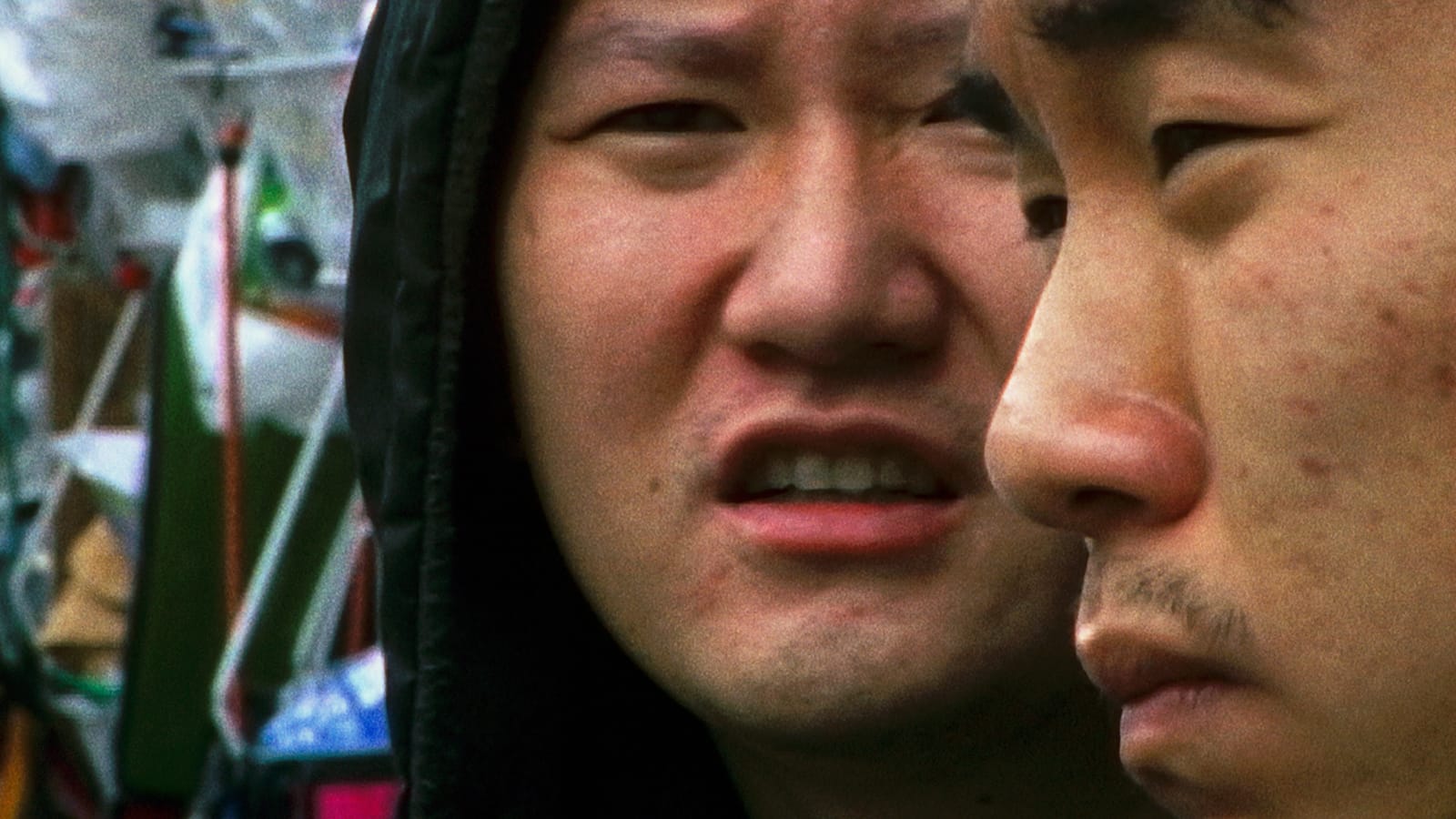
The loansharks pay him a visit, hitting him with a hammer as they warn him he only has one day to find them what he owes so far. Ming borrows some of this from a friend but can’t cover it all. Another friend, Young (Jeng-Hua Yu), offers him a little more help though. As the pair arrive at the Chinese takeaway in which they work, Young lets Ming take all of the deliveries for the day, so that he can stack up on tips.
It becomes a race against time then, as Ming works as hard as he can to earn the money he needs to keep the loansharks off his back for another month.
This last paragraph makes the film sound a little like a fast-paced thriller but, in essence, it’s simply a film that follows a guy doing his job, going back and forth between the takeaway and customers’ doors.
This might not sound very appealing, but I found Take Out strangely spellbinding. This is largely due to how full of life it feels. It’s a form of hybrid film that treads a delicate line between documentary and narrative filmmaking.
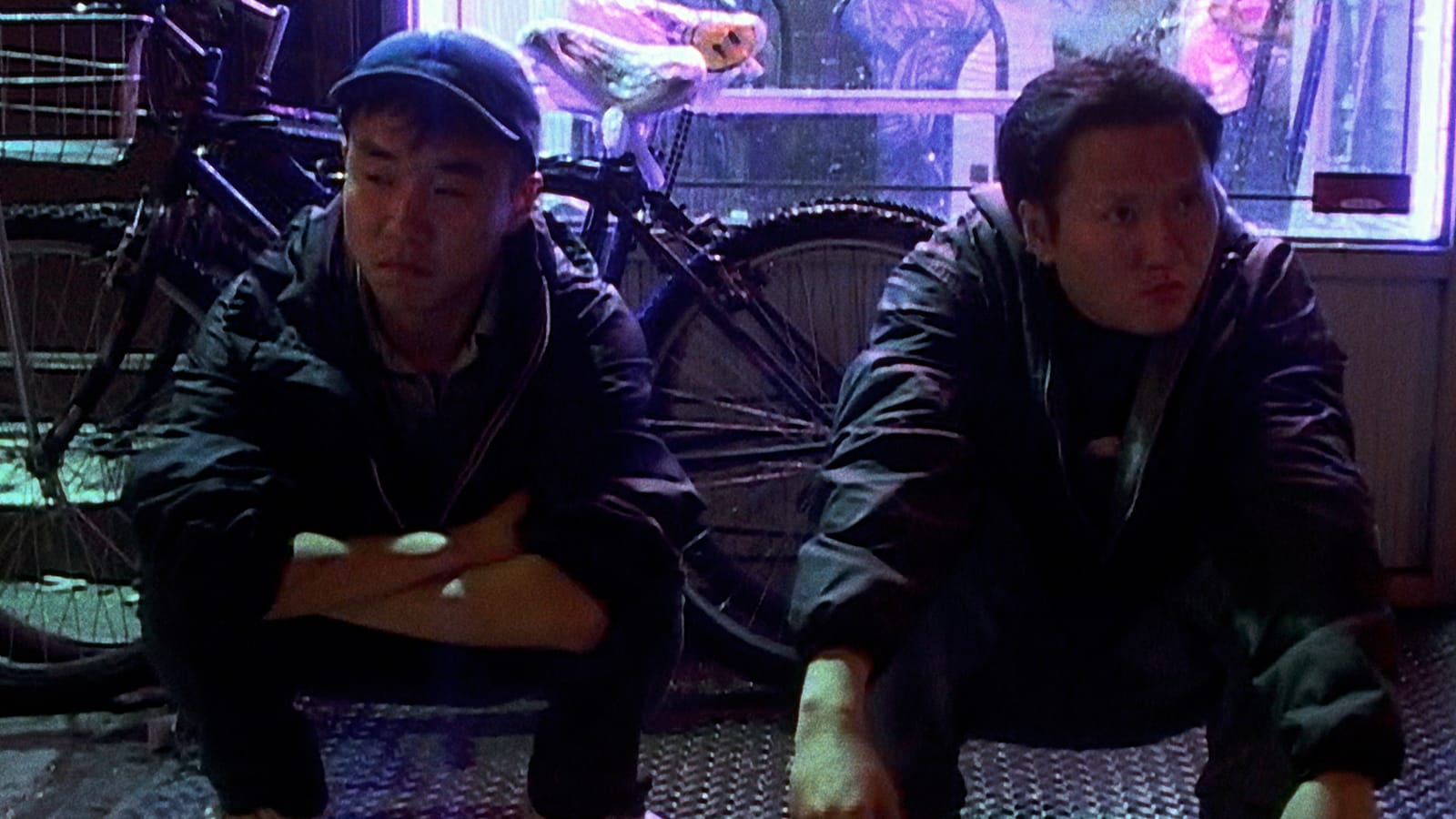
The dialogue is pretty much all scripted. It’s not as improvised as it seems. However, due to the way it was made, a lot of the customers’ dialogue is natural, as are the surroundings.
You see, it was shot in an actual restaurant whilst it was running, with Baker, Tsou and their team jumping in and out whenever they could around the staff taking and fulfilling orders. With a minuscule budget ($3,000 before later festival costs and such) the team couldn’t afford to pay the restaurant to shut whilst they made the film. They took advantage of this by putting the actors in the same outfits as the staff, so they could shoot closeups of the talented chefs’ hands at work that could be cut with footage of the actors delivering dialogue in the kitchen. They didn’t even bother getting an actor to stand in for Wang-Thye Lee, who was front-of-house for the restaurant. She had the personality to be herself and remain eminently watchable on camera.
The customer locations are real too. They just sent out Craigslist ads, asking if people wanted to be in a film and would be willing to let the crew shoot at their apartment door. Baker and Tsou had come up with some different lines and scenarios to include and decided which would fit best when they arrived at the apartments. The customers coming into the restaurant to order whilst the crew were there, were simply asked whether they’d be happy to be on camera and got paid $5 for their time.
This extra layer of authenticity is what makes the film special. It plays out like Baker and Tsou originally intended, offering a vibrant love letter to New York, bristling with the energy of the city and the wide variety of its inhabitants.
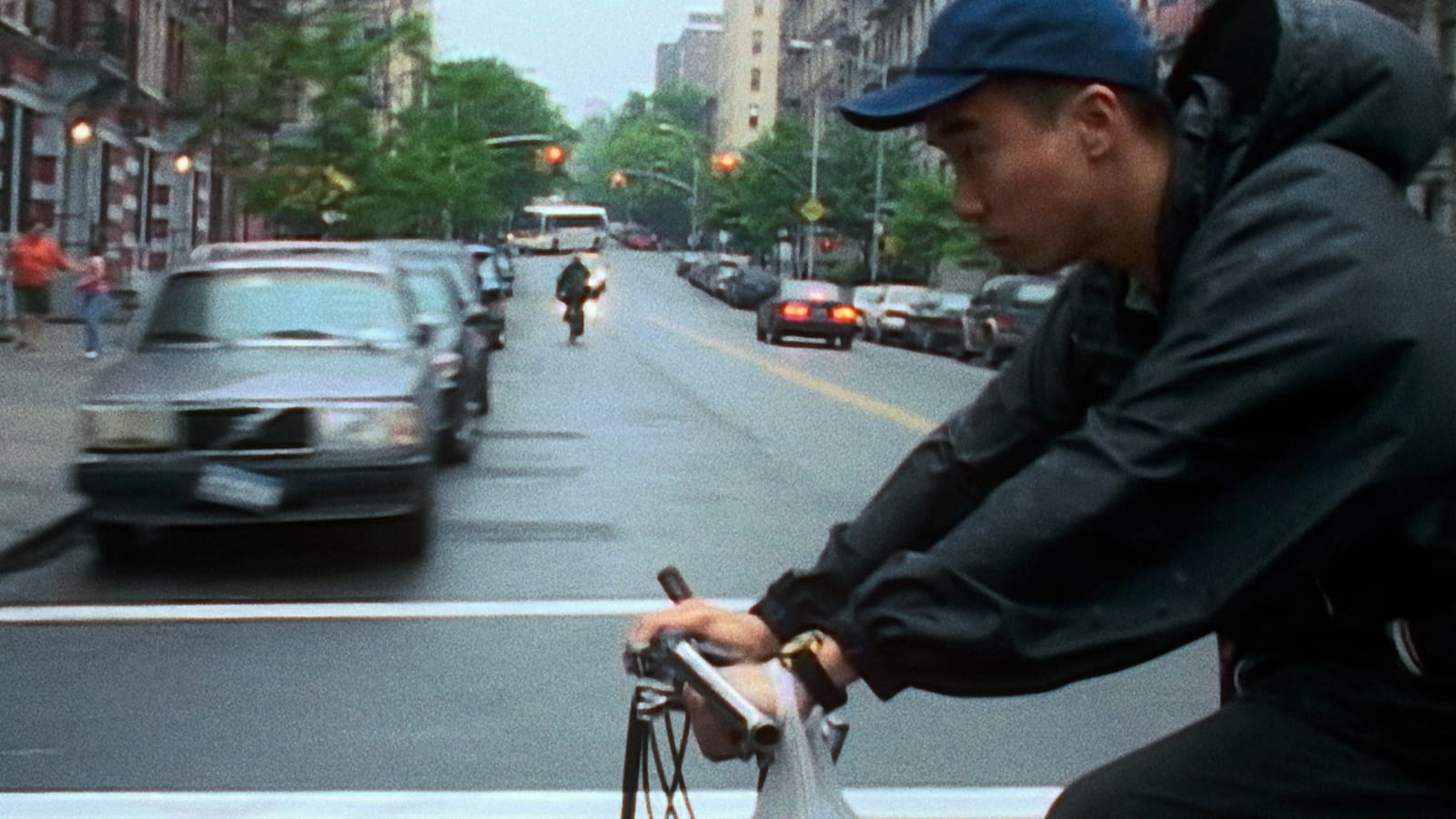
Take Out also presents the darker side of the city and country though, through the issues faced by Ming and other illegal immigrants. Their lives are shown to be very difficult, working long days, living in squalor, saddled with debt and facing a lot of racism. This and a form of classism are most clear in how customers treat Ming. Some are polite but many either don’t acknowledge him at all or are outright rude or racist to his face. They know nothing about what he’s going through and never try to find out.
Ming’s story, which frames the film, seems a little cliched perhaps. We’ve seen debt-ridden guys struggling to appease loansharks on screen many times before, but it’s the naturalistic approach and focus on the environment in which our protagonist lives that appeals.
* SPOILER * Keeping on the narrative, the denouement initially felt like a cop-out happy ending and, indeed, originally it was going to be much darker and stop straight after the mugging. However, when considering things more carefully, Ming is not necessarily in a better place after he pays off the loan sharks. He’s still in a lot of debt, now owing his friend money, and their final conversation also describes how Ming’s problem is shared with most illegal immigrants who have come to America, ending the film on a damning political note. * SPOILER *
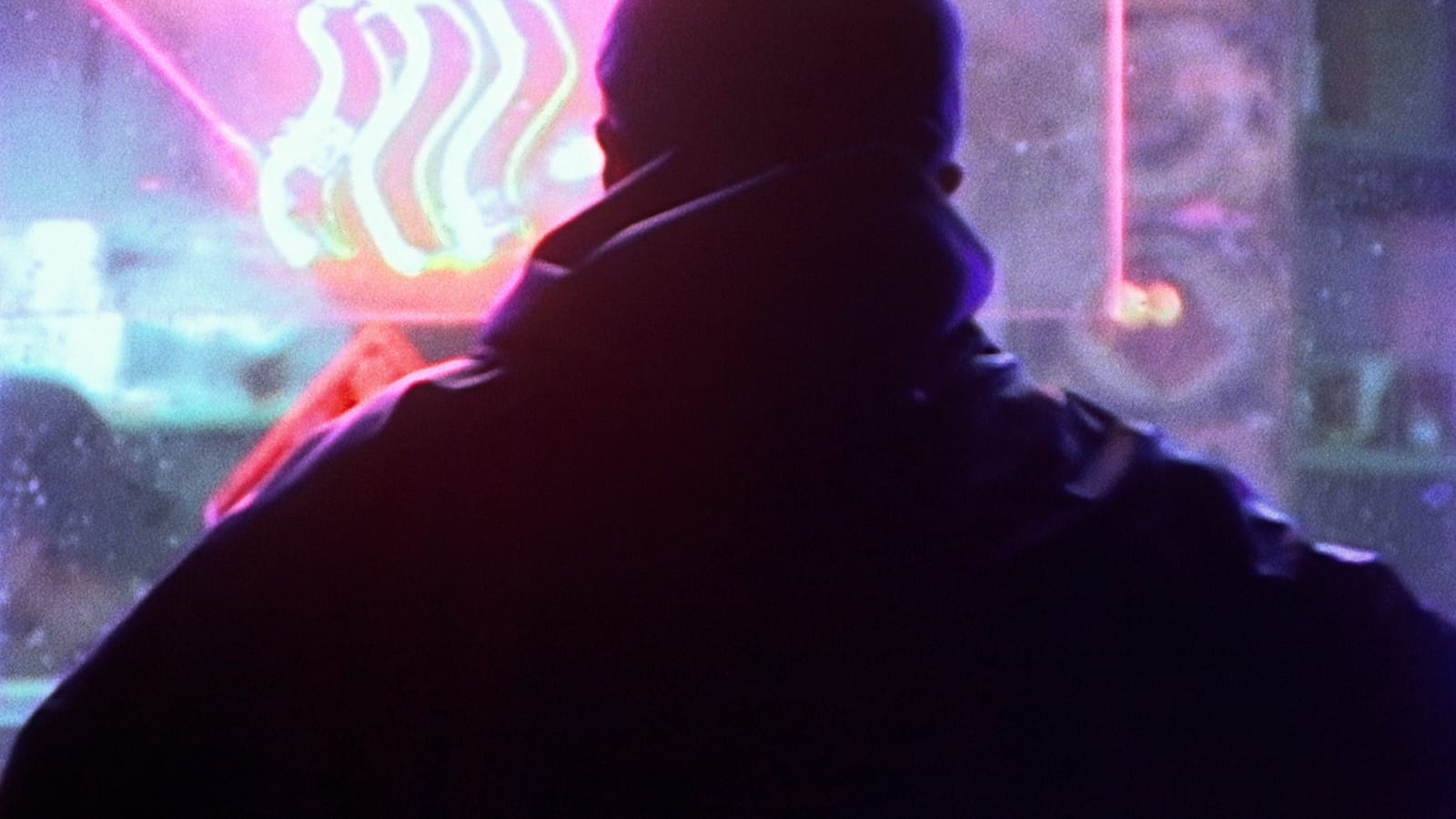
So, Take Out may tell a simple story that we’ve heard before but that’s kind of the point. It’s all in the delivery anyway (pun intended). Boasting a raw style that brings the city to vivid life, warts and all, Baker and Tsou make watching people working hard utterly mesmerising.
Film: 

Take Out is out on 17th October on Blu-Ray, released by The Criterion Collection. The film looks far better than I expected as reportedly the film was shot on a Sony PD150, a Mini-DV camera from the early days of digital videography. I’ve shot with those cameras before and they’re only SD and don’t look good at all but the film looks great here. It turns out, with this new Criterion release, Baker and his team were able to go back and upscale the footage, transfer it onto film and then digitise it again. Some purists may miss the original digital low-tech look but I was very happy with the polished transfer we have here. Standard definition Mini-DV footage is very ugly so might have been distracting.
DIRECTOR-APPROVED BLU-RAY SPECIAL EDITION FEATURES
– New 4K digital restoration, supervised and approved by directors Sean Baker and Shih-Ching Tsou, with uncompressed stereo soundtrack
– Audio commentary featuring Baker, Tsou, and actor Charles Jang
– New interviews with Baker, Tsou, Jang, and actors Wang-Thye Lee and Jeng-Hua Yu
– Program about the making of the film
– Deleted scenes
– Screen test
– Trailer
– New English subtitle translation and English subtitles for the deaf and hard of hearing
– PLUS: An essay by filmmaker and author J. J. Murphy
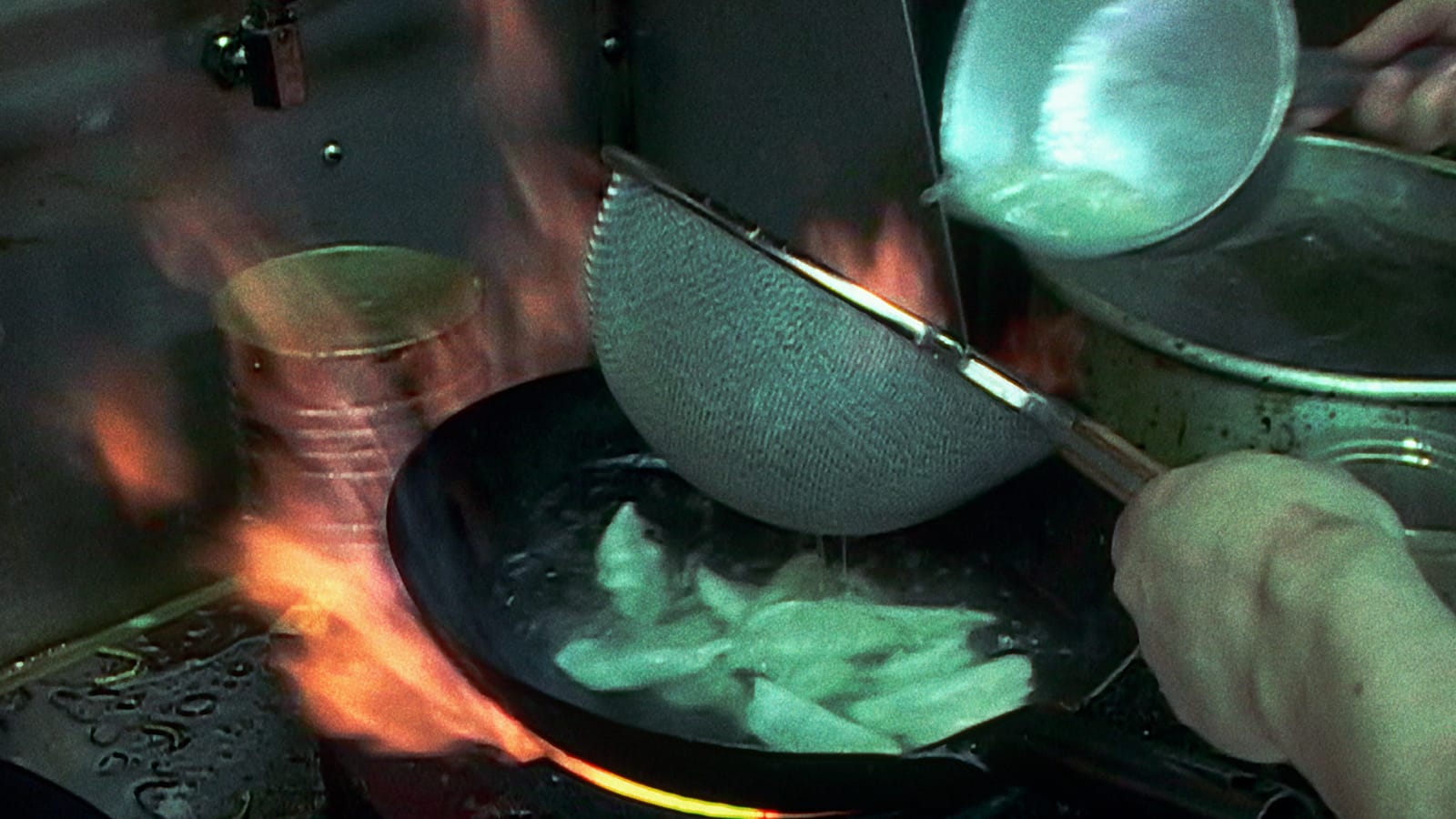
I enjoyed the commentary a lot. Baker, Tsou and Jang have a lot of illuminating stories to tell from the production. I always enjoy filmmaker tracks on ultra-low-budget films like this, as it’s inspiring to hear how it was all cobbled together on a wing and a prayer.
The new interview and archival making-of pieces repeat a fair bit of information but it’s nice to see accounts from the time and almost twenty years later, allowing for slightly different perspectives.
I didn’t think much to the deleted scenes, one of which is a weak alternative opening that puts too much attention on minor characters and another which features a cheeky cameo from Baker. You can see why they were cut out, but it’s nice to have them included here. They also serve to show what the film looked like originally, before it was remastered.
The screen test is a welcome addition too.
I didn’t receive a copy of the booklet, unfortunately.
It’s a strong all-around package then, for a film that deserves more attention. Highly recommended.
Disc/package: