


 Director: Kaizō Hayashi
Screenplay: Kaizō Hayashi
Starring: Masahiro Takashima, Narumi Yasuda, Mikijirô Hira, Jian Xiu (as Shu Ken), Haruko Wanibuchi, Yukio Yamato
Country: Japan
Running Time: 119 min
Year: 1990
BBFC Certificate: 18
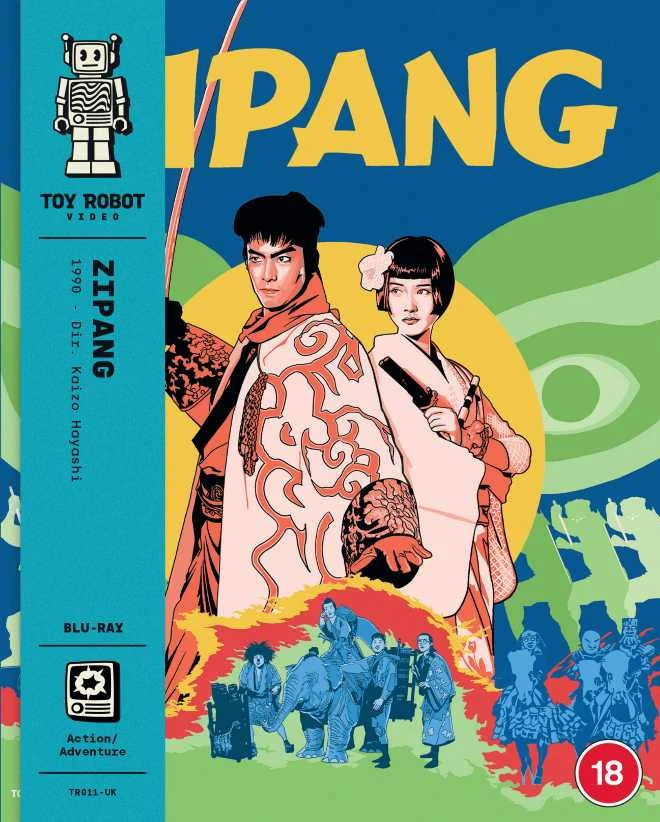
After previously being limited to film festival screenings, the work of Japanese writer-director Kaizō Hayashi is slowly being given the respect it deserves thanks to Blu-ray releases of To Sleep So As To Dream, the Maiku Hama trilogy and now Zipang (a.k.a. Jipangu or The Legend of Zipang). Surprisingly, these releases have all come from different labels, with Arrow and Third Window putting the former titles on disc, whilst new kids on the block Toy Robot are releasing Zipang in November.
Having loved To Sleep So As To Dream and the Maiku Hama films, I couldn’t resist breaking my reviewing sabbatical (which has been broken a few too many times these past few months) to check out Zipang.
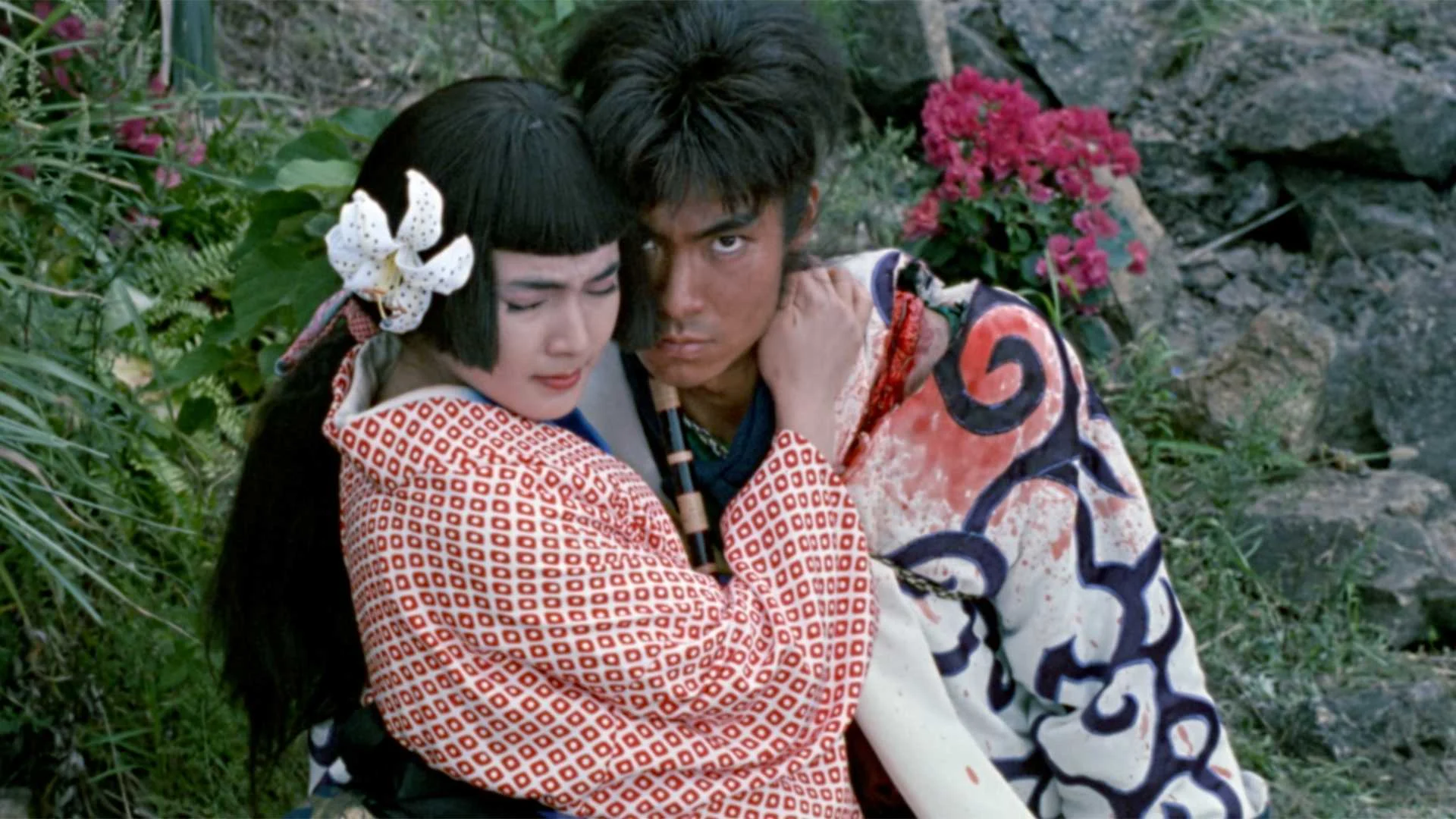
To roughly sum up the plot, please allow me to quote from the press blurb: “Set in an alternate Japan, where modern technology meets an ancient legend, samurai outlaw Jigoku (Masahiro Takashima – Godzilla vs. Mechagodzilla II) and his motley band of renegades discover the keys to a mythical kingdom of gold. Unfortunately for them, they also attract the attention of a beautiful female bounty hunter, Yuri the Pistol (Narumi Yasuda – Peacock King), an ace gunslinger who soon gets hot on their tail.”

This relatively straightforward synopsis doesn’t prepare you for the sheer madness that is Zipang. Like To Sleep and The Most Terrible Time in My Life, Zipang is an extremely playful film that pays homage to a range of titles from the past whilst simultaneously feeling wildly original. It takes ideas from chanbara, Hong Kong martial arts, Western swashbucklers, classic adventure movies and tokusatsu (practical special effects movies), then throws these in a blender and plays it all out at an often blistering pace. I dread to think how confusing the 90-minute cut of the film originally released in the UK in the 1990s must have been.
Zipang’s references and influences are not solely from cinema, either. The film plays on Japanese theatrical traditions and even RPG video games like The Legend of Zelda, Phantasy Star and Final Fantasy, which were big in Japan at the time.
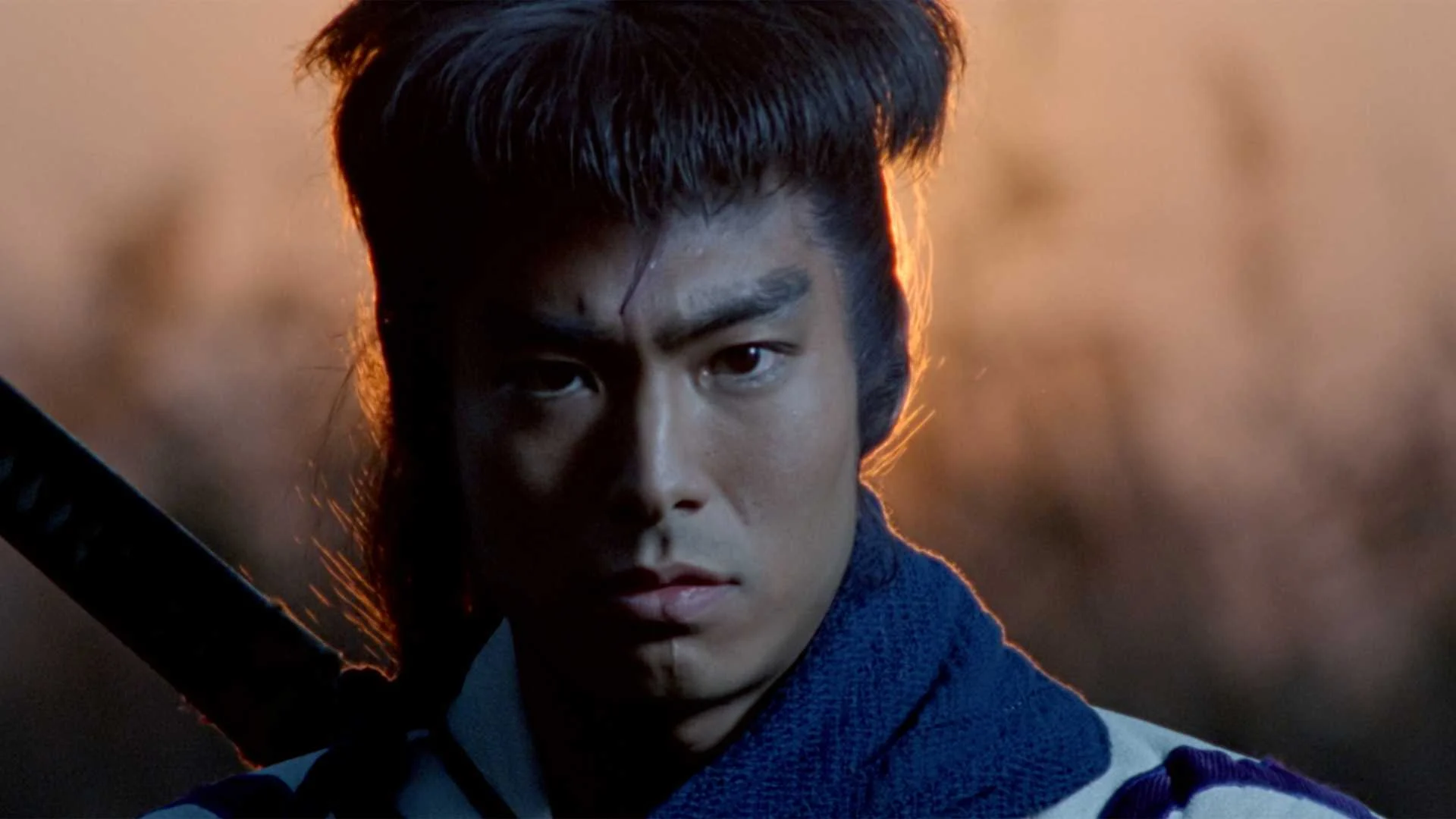
There’s more to the film than its celebration of films and culture, however. Stylistically, it’s a marvel that revels in its heightened presentation. The camerawork and editing can be quite exhilarating, particularly in the action scenes, and there are some ingenious touches among the more bizarre ones. I particularly enjoyed the Hattori Hanzo character’s surprisingly hi-tech binoculars/camera, which ‘printed’ its images onto a little ninja star that could be sent long distance via a larger drone-like ninja star to his employer!
Special mention must also go to the great Takeo Kimura, a regular collaborator of both Kaizō Hayashi and Seijun Suzuki. His art direction on Zipang is superb, crafting a boldly colourful, theatrical world.

Whilst action-packed and hilariously off-the-wall, the film does find time to slow down, particularly in the latter sections, when you come to realise that, at its core, Zipang is about the power of love. I’m not sure it’s as emotionally affecting as it perhaps strives to be, as the chaos elsewhere makes it hard to take seriously. However, the film does become charmingly sweet as it moves on.
Overall, Zipang is a wild yet warm-hearted adventure that pays homage to a host of genres and art forms, whilst carving its own unique path. It’s an absolute treat that I can’t recommend enough.
Film: 


Zipang is out on 16th November on Blu-Ray, released by Toy Robot. The transfer is decent. It’s a clean picture and the colours come through nicely – they look a touch strange in places, but I think that may be intentional. I found the image a little soft, too. Audio is solid, though.
SPECIAL FEATURES
– NEW Audio Commentary by Jasper Sharp and Joe Hickinbottom
– Theatrical trailers
– Stills Gallery
Jasper Sharp and Joe Hickinbottom provide a commentary over the film. It’s an enjoyable and informative listen, with both contributors on good form and in high spirits.
So, whilst not overflowing with extras, what is here is of great value, and Toy Robot must be praised for bringing a gem like this to a new audience.
Disc/Package: 