


 Director: Ernst Lubitsch
Screenplay: Samson Raphaelson
Based on the play by: Aladár László
Producers: Ernst Lubitsch
Starring: Miriam Hopkins, Kay Francis, Herbert Marshall, Charlie Ruggles, Edward Everett Horton
Year: 1932
Country: USA
BBFC Certification: U
Duration: 83 mins
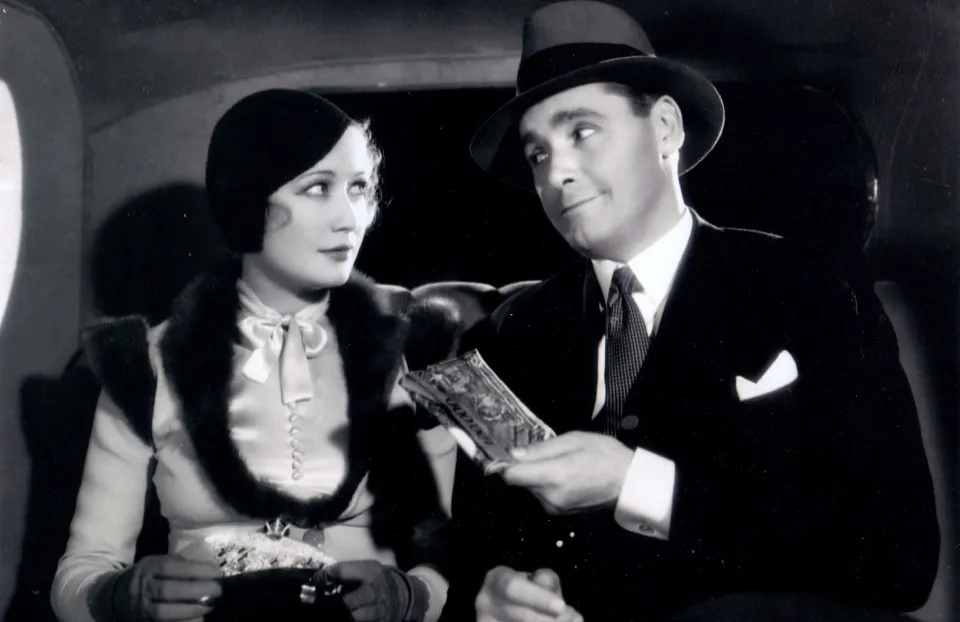
When we talk of pre-Code cinema, a certain kind of film comes to mind: one free from the puritanical restrictions of the imminent Production Code but often hamstrung by the limitations of the era’s primitive technologies. Suggestive dialogue buried under layers of crackle or the hint of an unfettered breast swathed in the fog of degraded film stock. But there were certain artists who were ahead of the game, their talents sufficient to have marked out their creations as noteworthy beyond the allure of titillation. Ernst Lubitsch is one of the most prominent names in relation to quality early sound pictures, having made the transition from silent to sound films more smoothly than many of his contemporaries. Beginning his tenure in sound cinema with several acclaimed dramas and musicals, with Trouble in Paradise Lubitsch pivoted into a career mostly defined by sophisticated, eloquent and subversive comedies, becoming a hero to the likes of Billy Wilder and Preston Sturges in the process. The film’s screenwriter, Samuel Raphaelson, worked on several successful pictures with Lubitsch, including perhaps his most retrospectively admired film, The Shop Around the Corner. But Trouble in Paradise remains as brilliant as anything that followed, perhaps THE jewel of pre-Code comedy, wearing its bawdy amorality on its impeccably-pressed sleeve.

In Venice, notorious international thief Gaston Monescu meets small-time pickpocket Lily and, despite both of them posing as nobility, they see through each other’s disguises when each foils the other’s attempt to rob them. Falling deeply and instantly in love, Gaston and Lily head to Paris where their theft of a diamond-encrusted purse inadvertently leads them into the employ of Mariette Colet, the millionaire owner of a perfume manufacturer. With their eyes on an even bigger prize, Gaston and Lily must deal with a corrupt board of directors, Mariette’s two buffoonish suitors and Mariette’s own attraction to Gaston.
Trouble in Paradise could not have been made even a few years later. In fact, once the Production Code was in force it was banned from reissue for three decades, with a proposed musical remake by Paramount in 1943 also being rejected outright. This was probably for the best, given that any version of Trouble in Paradise made in line with the Code would surely have ended up so compromised as to be unrecognisable. Although it is now deemed harmless enough to have a U certificate, Trouble in Paradise drips with amoral glee and barely suppressed sexuality. Characters undress each other with their eyes and words, and criminality is seen as a major aphrodisiac. Two lovers lay back together on a couch, then the picture dissolves into an image of that same couch but now empty. A Do Not Disturb sign is hung on the door and the implication is clear. Paradise indeed! The fact that there was at this stage no necessity to show all criminal acts being punished gives Trouble in Paradise a gloriously unpredictable edge. We don’t know who will emerge triumphant or for whom we should be rooting, if anyone. All we know is that these characters are tremendous fun to watch and listen to.

The cast of Trouble in Paradise, though no longer household names, will be instantly recognisable to fans of classic cinema. Kay Francis was one of Hollywood’s biggest stars of the 30s and she is excitingly glamorous and playful as the rich mark, relishing some of the film’s best and naughtiest lines. One exchange about spanking particularly stands out as still surprisingly kinky to this day, and Francis delivers it with a perfect combination of sexuality and comedic flair. Herbert Marshall, a regular in romantic melodramas, turns those same skills to the comedic context of Gaston’s eloquent speeches, that sound equally seductive whether he is pitching woo or delivering a barbed put-down. Perhaps the standout though is Miriam Hopkins, a famously versatile actress whose turn as Lily the pickpocket takes the sexuality and comedy of Francis’s performance and pitches just to the left field of that, creating a brilliantly observed counterpart to the traditions of the Hollywood leading lady. The supporting cast live up to their leads, with Charlie Ruggles and Edward Everett Horton proving to be ideal casting as the frustrated suitors, their broader comedic style creating a perfect juxtaposition with the sexy sophistication of the central triangle. C. Aubrey Smith is convincingly stuffy and shady as the chairman of the board of directors, while Robert Greig uses his immense physical girth to great effect as the grumbling butler Jacques.

But while all the players are superb, it is the script and direction that are the true stars of Trouble in Paradise. Raphaelson has penned an endless stream of classic lines here, managing to parody the romantic dialogue of the time without sacrificing the pleasure of its seductive appeal:
“It must be the most marvelous supper. We may not eat it, but it must be marvelous.”
“The wallet of the gentleman in 253, 5, 7 and 9 is in your possession. I knew it very well when you took it out of my pocket. In fact, you tickled me. But your embrace was so sweet.”
“I came here to rob you, but unfortunately I fell in love with you.”
Elsewhere, the put-downs and verbal jousting have a slippery sort of anti-logic to them that results in punchlines that land like hilarious brain-teasers:
“Marriage is a beautiful mistake which two people make together. But with you, Francois, I think it would be a mistake.”
“See here, my good man. You’ve been saying good-bye for the last half hour and staying on. I wish you’d say “How do you do” and go.”
“Well, I’ll leave you alone with that lady. But if you behave like a gentleman, I’ll break your neck.”
It’s one of the most perfect screenplays ever written and to have placed it in the hands of a lesser director than Lubitsch would have been a tragic error. Many a strong screenplay has been trampled by poor direction and the notion of any of these lines getting lost in the cluttered, rough-edged melee of early sound cinema is a notion more criminal than any act perpetrated in the film itself. Fortunately, Lubitsch’s famous “touch” is much in evidence throughout. Trouble in Paradise is one of the most attractively shot films of the era, combining its crisply captured dialogue with numerous brilliantly deployed cuts, visual tricks and sight gags to sweeten the pot even more. The final scene, which I won’t spoil here, plays out silently and is executed to perfection, the most satisfying full stop imaginable on a film that has dazzled us with verbal wit for most of its runtime. While recognised as a landmark classic by many, Trouble in Paradise still doesn’t get the wide recognition it deserves, not only as one of the great comedies but as one of the finest films ever made. Hopefully this handsome new Criterion release will go some way to putting that right.
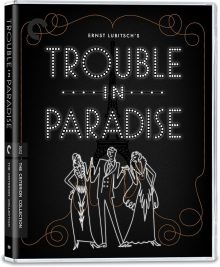
Trouble in Paradise is released on dual format Blu-ray and 4K Ultra HD by Criterion on 20 April 2026. In keeping with the films verbose manner, most of the extras are talk-heavy, with an informative commentary by Lubitsch biographer Scott Eyman and an enthusiastic introduction by Peter Bogdanovich. The most interesting of the special features though is a video essay by David Cairns which, across 25 minutes, breaks down ten directorial touches in Trouble in Paradise that characterise it as a Lubitsch film. Special features in full are as follows:
* Audio commentary featuring Scott Eyman, biographer of director Ernst Lubitsch
* Introduction by filmmaker Peter Bogdanovich
* New video essay by critic David Cairns
* English subtitles for the deaf and hard of hearing
* PLUS: An essay by critic Farran Smith Nehme
* New cover by Simone Massoni