


 Director: Johnnie To
Screenplay: Wai Ka-Fai, Yau Nai-Hoi, Ryker Chan, Jevons Au
Starring: Louis Koo, Sammi Cheng
Country: Hong Kong, China
Running Time: 1 hour and 51 minutes
Year: 2012
BBFC Certificate: PG
Romancing in Thin Air (2012) is a romantic Hong Kong and Chinese movie that focuses on the double-edged nature of love. It delves into loss and heartbreak while exploring a blossoming romance – and a delightful one at that.
It’s mostly set at a guesthouse within the snowy mountains of Shangri-La in China. A beautiful landscape, named after a mythical land in the 1933 novel Lost Horizon which was later adapted into a Frank Capra movie. This gives the film an extra unworldly magical edge.
Shangri-La creates a grandiose setting for our protagonists Michael and Sue to navigate through and is symbolic of their journey. Plus, it makes for some stunning visuals, accentuated in Radiance’s high-definition digital transfer.

The film was helmed by legendary director Johnnie To (Election, Drug War), and stars Louis Koo (Throw Down) as Michael and Sammi Cheng (Infernal Affairs) as Sue. They are the film’s romantic leads who are each recovering from heartbreak and find themselves working to heal one another.
The love story has real depth because of its dual nature. It’s not a typical story of boy meets girl and they fall in love. The romance feels earned as the characters have to grow and develop, fostering a maturity to deal with their issues and move on from lost love while learning how to support eachother.
There’s also a dual nature to the storytelling with a distinct present main plot line and an in-the-past subplot. We learn much of the story though character recollections and movie clips, and this culminates in an awesome meta-scene towards the end of the movie tying all the plot strands together.
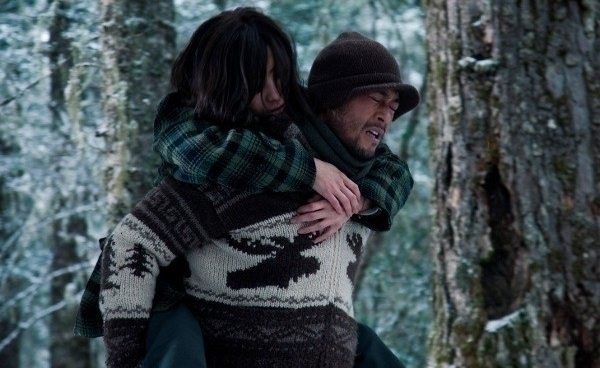
Cheng delivers a powerful performance. She looked emotionally drained in parts of the movie and cries on demand. You really felt for her character. She anchors the story with a commanding presence. Koo communicated a lot without speaking. He was very expressive with an equally striking presence.
It begins in a confusing manner with a lot of spinning plates. There’s some very dark comedy showing Michael’s sudden spiral. As the story unravelled and things became more clear, I got swept away within the charming narrative. Swept away in the snow and the sweet romance.
The HDR is in full effect with the striking contrast the white snowy terrain offers with the darker objects and textures. The plunging sweeping shots of ‘the sea of trees,’ a forest where people are known to get lost and die of starvation, were visceral and scary at times. Fantastic sound design with effective use of HDR, a wide mix of environmental noises and a lovely piano sequence.
Film:


Special Features:
- High-definition digital transfer
- 5.1 DTS-HD Master Audio and 2.0 stereo audio options
- Newly recorded interview with screenwriter Ryker Chan (2025, 15 mins)
- New audio commentary by Hong Kong cinema expert Dylan Cheung
- Another side of Johnnie To – New visual essay on Johnnie To’s romantic melodramas by Sean Gilman (2025, 28 mins)
- Extended behind-the-scenes footage (2012, 25 mins)
- Making-of featurette (2012, 9 mins)
- Theatrical trailer
- Newly translated English subtitles by Dylan Cheung
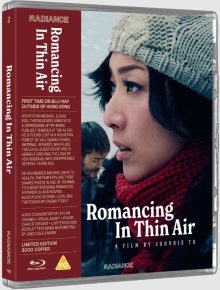
- Reversible sleeve featuring original and newly commissioned artwork by Time Tomorrow
- Limited edition booklet featuring new writing by Jake Cole and archival writing by David Bordwell
- Limited edition of 3000 copies, presented in full-height Scanavo packaging with removable OBI strip leaving packaging free of certificates and markings
Audio commentary with film expert Dylan Cheung – Much of the commentary focuses on the dual symbolism going on in the movie. Cheung discusses To’s dual output with action and romantic movies. And, the themes of love and loss in the movie, their duality, and how they feed into each other. He speaks about the self-artifice of the film from the very start with Hong Kong Awards opening montage alluding to the later meta elements of the movie. He also speaks about how the storytelling is very economical but very immediate. He goes into background of the actors, the creatives and the context within which the movie was made.
Cheung details how the movie reflects how people live in “different worlds” with the movie star/city ‘world’ coming at completes odds with Shangri-La which is idyllic but requires hard work, and how Michael is switching between these two worlds throughout the movie. He also mentions, while it’s predominantly a Hong Kong movie, but much of it takes place in China and is performed in Mandarin. Funnily enough, he says there’s been a Romancing in Thin Air guest house built where the film was made.
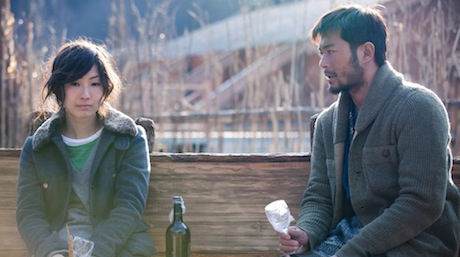
He talks about how demanding the shoot could have been for Sammy Cheng due to her asthma but she got into great shape ahead of the shoot. He also speaks about To’s improvisational approach to filmmaking with the script forever changing to match the actor’s talents and the environment. He also mentions how one of the writers’, Wai Ka-fai, Christian views influenced the movie’s elements of dual symbolism. He also spoke about the film industry in Hong Kong, and how since It’s very small, the filmmakers must follow a studio system. He also talks about tension between To and one of the actors.
Interview with screenwriter Ryker Chan (15 mins) – Chan speaks about how To gave him his first real job in the industry, bringing him into his studio Milky Way Image on the strength of a short competition winning script. He speaks about the process of developing a project purely as a star vehicle for the co-leads and coming up with the interesting setting.
He says the film was original set in Japan on Mount Fuji next to suicide forest but there was some issue which prevented this. They found Shangri-Laband became a story about high altitudes.
He says he didn’t want to write just a straight romance. Wanted something different – characters healing eachother. He says high altitude symbolises love lost and found, as “the high altitude will make you unable to breathe, make your heart stop”. He also speaks about destiny and fatlism, how the character mirror their good deeds of caring for eachother.
Speaks about using images to convey how that someone is missing someone and can’t let go. “Milkway’s romance is a very painful romance. You just suffer a lot of things. Then, in this suffering, you find a spark,” he said. While he admits it can feel like a heavy story, he says “it’s both a literary and heavy discussion of longing, more than a love story.”
Another Side of Johnnie To (28 mins visual essay) – Film critic Sean Gilman discusses the duality of To’s output. How the romance genre is perceived as the lesser than actions and more serious dramas, as they are more feminine. Gilman likens To to Ford who also had an eclectic output. It then delves into To’s history with romance and melodramatic films with a nod to his love of motorcycles in his movies. He goes into great detail about each film, dissecting the themes of each movie. A good feature especially if you’re deciding which To movies to watch next.
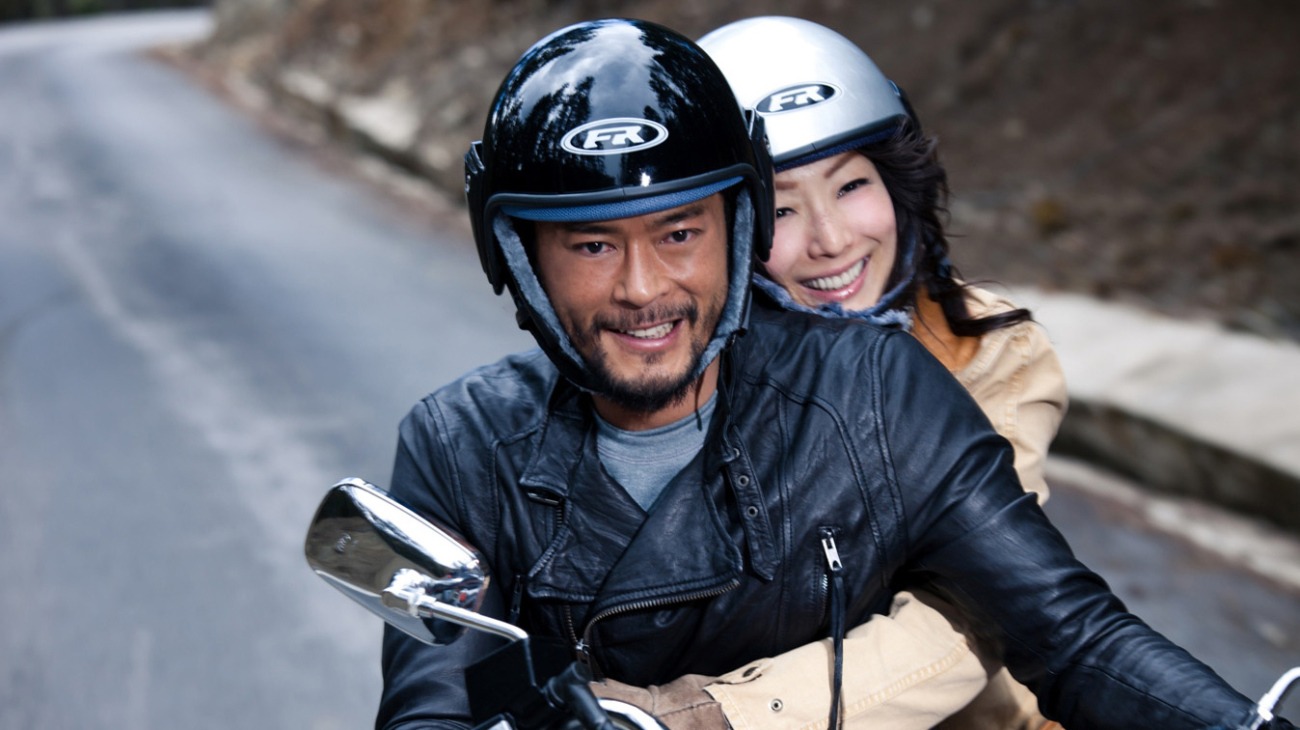
Extended behind-the-scenes footage (25 mins) – This is a fairly dry feature showing us snippets of BTW footage, however there are some great moments. It shows the extremity of the tough weather conditions on location and To co-ordinating the shoot, who looks very animated. We get to see how certain stunts and shots with the bikes and vehicles were pulled off. It’s especially delightful seeing how they shot the couple riding the motorbike with To directing from the rigging. Then we see various shots were set up in the forest and a great clip of To performing how he wants the actor to executing a scene of him in despair, punching the ground.
Making-of featurette (9 mins) – This featurette contains a number of mini-features looking at different aspects of the shoot. Lovely shots of Shangri-La national park and its yak farming. The actors and crew spoke about how the thin air affected them with difficulties adapting to the climate. They mention how the weather conditions were constantly changin every three hours, making the shoot particularly challenging. With the vast amounts of snow falling so fast and melting at such a fast rate, they would regularly have to switch between scenes they were shooting, in line with the weather conditions. They then went on to speak about the piece, with comments on the nature of love in the movie and how the setting was relevant to carrying this message.
Disc/package:
Radiance releases Romancing in Thin Air on Bluray on April 20, 2026.