


Director: Howard Hawks
Screenplay: Leigh Brackett and Burton Wohl (from a story by Burton Wohl)
Starring: John Wayne, Jorge Rivero, Jennifer O’Neill, Jack Elam, Chris Mitchum
Country: United States
Running Time: 114 minutes
Year: 1970
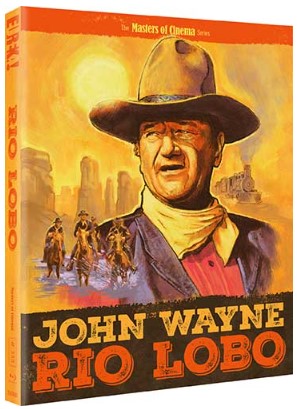
Rio Lobo has annoyed me a bit. It’s not Eureka!’s fault; this is another dependably fine and sympathetic release. The film itself isn’t worth getting in a knot over; it’s also fine for what it is. A late entry for all involved, it passes the time and has a smidgeon of bravado. So if you’re looking for a decent release, be assured, this is a good transfer and a cracking bit of new art on the cover. But there is an elephant in the room and the contributors to the extra features appear as tone deaf as the film itself.
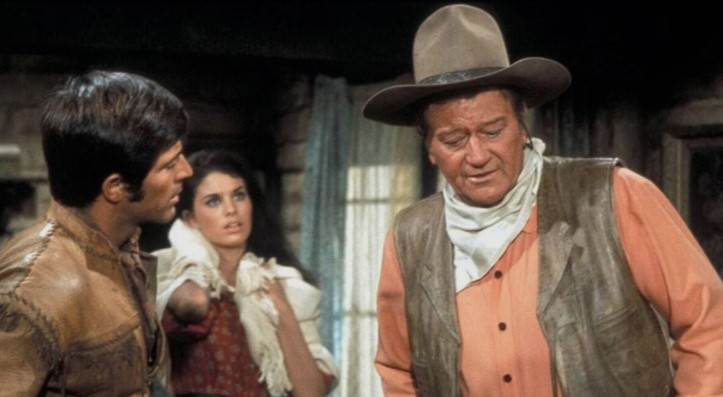
Wayne stars as Colonel Cord McNally of the Union army, who loses a close friend during a raid on a Union payroll train carried out by a group of Confederates under the leadership of Captain Pierre Cordana (Jorge Rivero) and Sergeant Tuscarora Phillips (Christopher Mitchum). McNally suspects that he and his men were betrayed by traitors within the Union, setting in motion a quest for revenge that will continue even after the Civil War is over – and which will bring McNally into a bitter conflict with ruthless landowner Ketcham (Victor French) and “Blue Tom” Hendricks (Mike Henry), the corrupt sheriff of Rio Lobo, Texas.
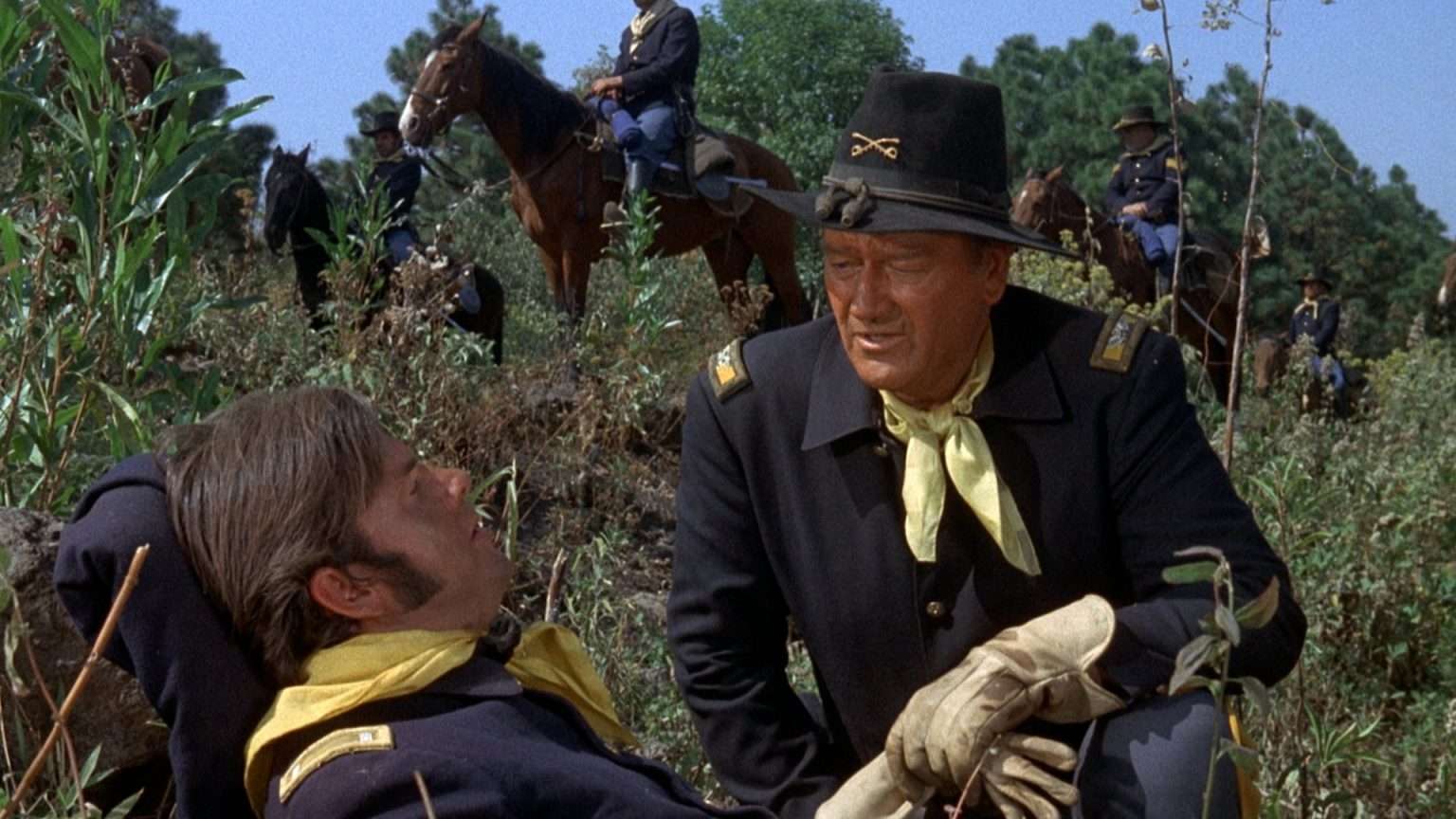
Rio Lobo is no lost masterpiece. Released in 1970, Sergio Leone’s Spaghetti trilogy is a tough act to follow, not to mention the ballsy Bonnie and Clyde. It was released just a year after Sam Peckinpah’s The Wild Bunch, for goodness sake. The Western genre, as John Wayne and Howard Hawks knew it, was dead. Perhaps they were trying to press an advantage from True Grit, also 1969. That was a lot of fun, starring Wayne in more of a caricature of a role. In Rio Lobo, he defaults to, well… John Wayne.
Some would have you consider Rio Lobo as another political itch Hawks needed to scratch. That argument might work if he hadn’t already made the film twice before. The peerless Rio Bravo was an incredible riposte to High Noon, and Eldorado was almost equally brazen. Trotting out the High Noon comparisons in respect of the third visit to a very dry well though feels laboured. Apparently, when Wayne was offered the Rio Lobo script to read, he asked why. He knew this character and was already planning to phone it in. If he still had an axe to grind, he left it in his shed with Rooster Cogburn.
Wayne could be a great actor, when he was engaged and his director was able to actually direct him. I’ll die on that hill. Even before John Ford wrangled The Searchers from him, one of cinema’s truly great archetype roles, Howard Hawks had stretched the big man with the marvellous Red River. In 1976, facing his own mortality, Wayne did beautiful work on The Shootist. Rio Lobo, however, found John Wayne bemused and disengaged. And I’m not sure Howard Hawks could be arsed either. Perhaps it’s telling this was his final film.
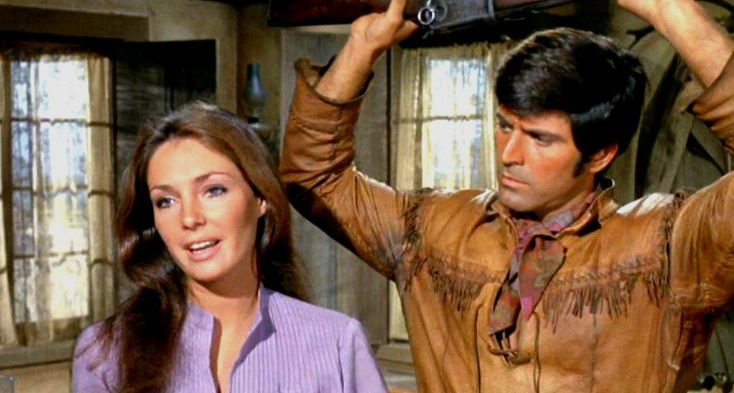
None of this would matter if Rio Lobo was better than it is. The first half at least is slow and dated. The second is much better and Wayne settles into bickering with an on-form Jack Elam and repeatedly punching Victor French. Unfortunately, the film finds its groove only after weirdly side-lining Jennifer O’Neill. She already had an underwritten role, but literally using her in a bait and switch to another character is just weird.
VIDEO
The story isn’t bad in Rio Lobo by any means, but it rarely feels like it finds a third gear. That goes visually too. Hawks was a great director, but a workman-like one. The cinematography is largely adequate and rather flat. The train robbery in the first act is great, as is the final shootout. In between and especially on the road to the titular town, it’s not very inspiring. Still, the transfer finds detail and a lovely balance of colour where it can.
EXTRA FEATURES
The interview with Sheldon Hall stands out because of his general overview of Howard Hawks. And I always appreciate a spirited defence of a film I’m not so engaged with. I would have been interested to see more discussion of where the film sits historically though. It’s just taken as read that Hawks still wanted to explore the politics that drove Rio Bravo. I don’t think that’s the case.
- Limited Edition [2000 copies]
- Limited edition O-card slipcase featuring new artwork Colin Murdoch
- Limited edition booklet featuring new writing on Rio Lobo by film writer and critic Richard Combs
- 1080p HD presentation from a restoration by Paramount Pictures
- Original English mono audio
- Optional DTS HD-MA 5.1 audio
- Optional English subtitles for the deaf and hard of hearing
- Back to the Old West – new interview on Rio Lobo with Western scholar Austin Fisher, author of Radical Frontiers in the Spaghetti Western
- Directed and Produced by Howard Hawks – new interview with film historian Sheldon Hall on Rio Lobo and Hawksian cinema
- Original theatrical trailer