



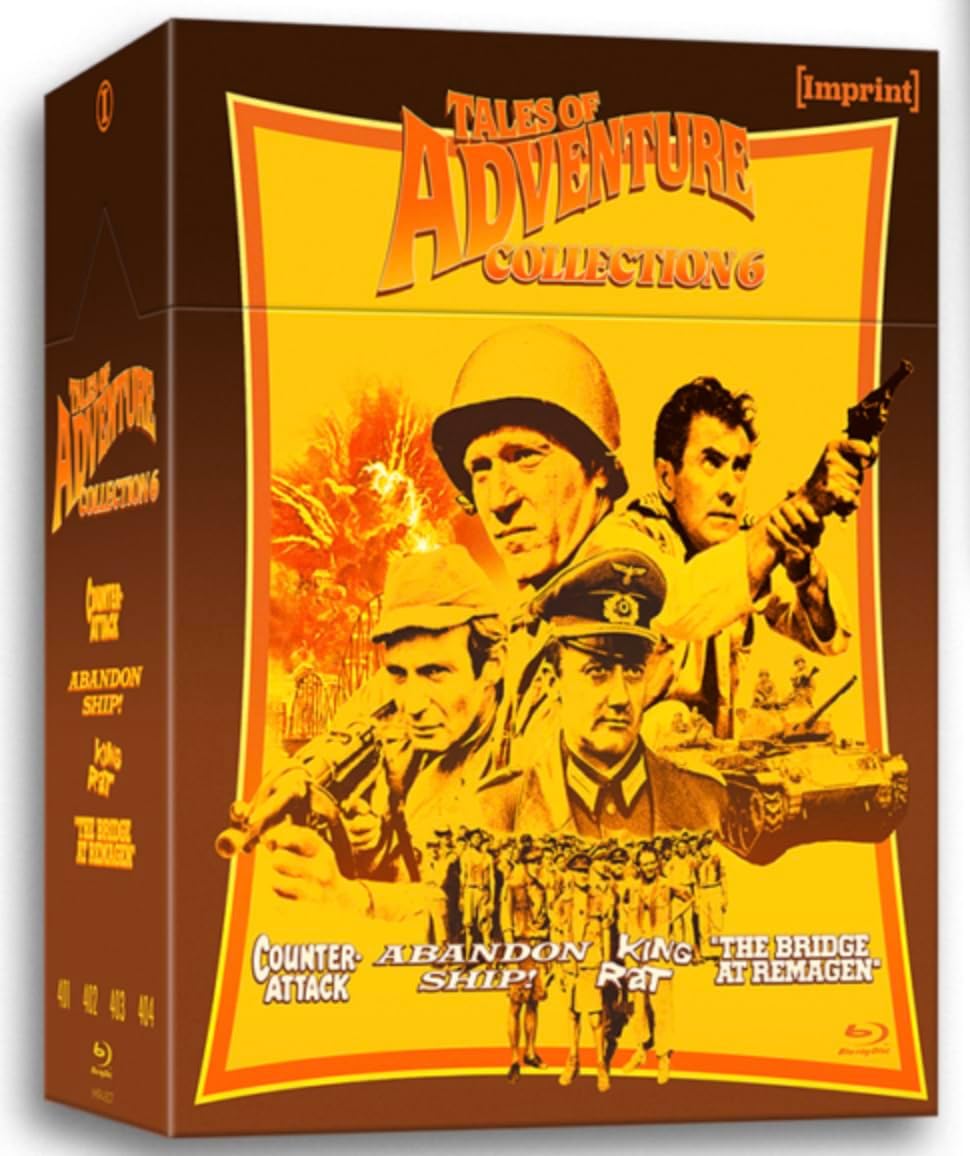
 I’ve long been interested in reviewing one of Imprint Films’ Tales of Adventure sets, but whenever they’ve come up, I’ve been too busy to cover them or I haven’t been lucky enough to be sent a copy. Andy has covered a couple of them, so there are write-ups on the site, but I haven’t had a chance myself. Well, finally, despite being swamped with screeners, I took the plunge and my request was granted.
Imprint actually brought two Tales of Adventure volumes out in April but I went for Tales of Adventure 6 (1945-1969). Going by the cover and my minimal knowledge of some of the titles included, I thought it was a set of war movies, but the theme of the collection is actually survival (though most of the films are set during wartime).
The films included in the handsomely presented box set are:
Counter-Attack (1945)
Abandon Ship! (1957)
King Rat (1965)
The Bridge at Remagen (1969)
Below are my thoughts on the films and the set as a whole.
Counter-Attack
Director: Zoltan Korda
Screenplay: John Howard Lawson
Based on Plays by: Janet Stevenson, Philip Stevenson, Ilya Vershinin, Mikhail Ruderman
Starring: Paul Muni, Marguerite Chapman, George Macready, Larry Parks, Erik Rolf, Ludwig Donath, Harro Meller, Roman Bohnen
Country: USA
Running Time: 90 min
Year: 1945
Set during World War II on the Eastern Front, Counter-Attack opens with a group of Russian soldiers/officers planning an audacious attack through enemy lines. They believe they can cross a heavily defended river between the two sides by secretly constructing a bridge that will lie 18 inches underwater, allowing tanks and other machinery to drive across.
First, however, they need to know exactly what lies on the other side and where. So, a small paratrooper unit is dropped over the river to gather intelligence.
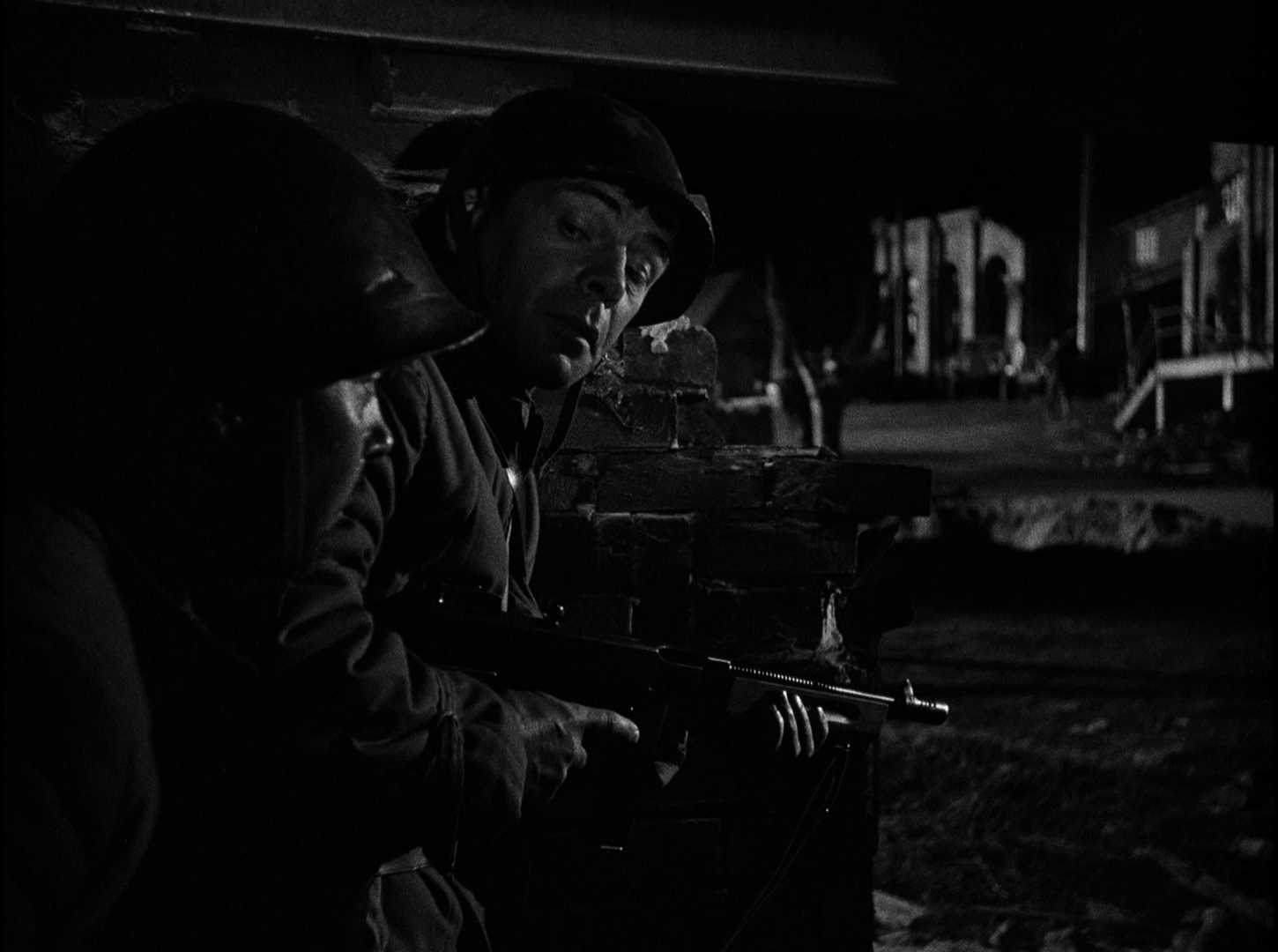
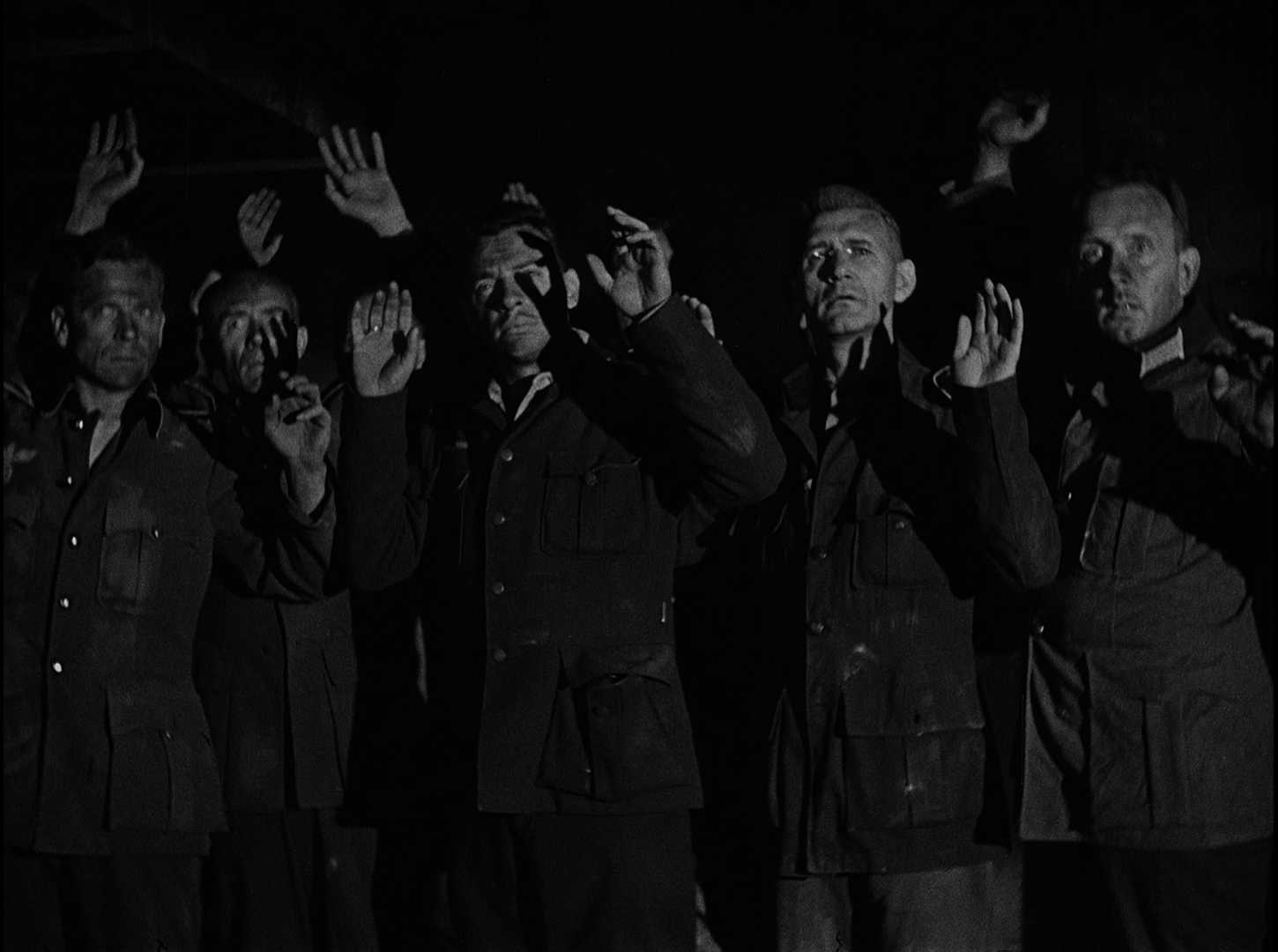
Their operation gets into serious trouble, however, when they meet resistance at a factory. Here, two Russian soldiers, Alexei Kulkov (Paul Muni) and Lisa Elenko (Marguerite Chapman), find themselves trapped with seven Germans. The film cleverly uses this confined setting to create a gripping chamber piece, primarily focusing on the psychological battle between Kulkov and a German officer hiding among the enlisted men. As they await rescue from either the Russians or the Germans (more likely the latter), a game of cat-and-mouse unfolds, with both sides desperately trying to extract crucial intelligence from the other.
The film was adapted from the 1943 Broadway play ‘Counterattack’ by Janet and Philip Stevenson, which was in turn based on the play ‘Pobyeda’ by Ilya Vershinin and Mikhail Ruderman. The screen adaptation maintains the claustrophobic intensity of the play, but adds some highly cinematic visuals.
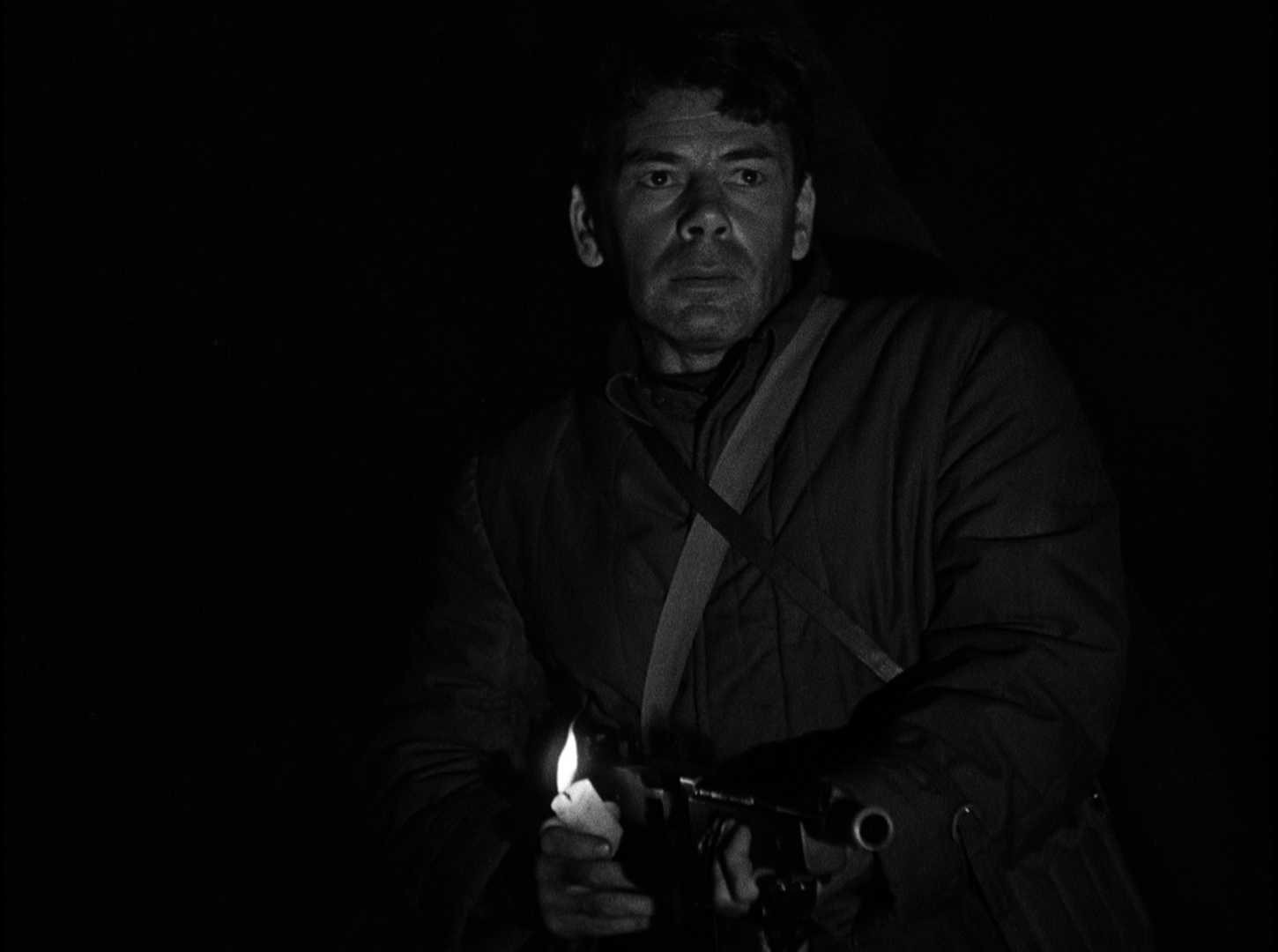
Director Zoltan Korda and DOP James Wong Howe (who lensed classics such as The Thin Man and Seconds) utilise atmospheric, low-key, high-contrast lighting. This is particularly effective in depicting the tense moments where a flashlight becomes a crucial tool for keeping the Germans from turning the tables on Kulkov and Elenko, who are only holding power due to the former’s machine gun.
Paul Muni delivers a magnetic performance as Kulkov and does a convincing job of selling his extreme tiredness as the film goes on, further adding to the tension. Marguerite Chapman’s portrayal of Elenko is also strong, and her character is shown to be equal to the male soldiers, though she is unfortunately sidelined by an injury partway through.
Counter-Attack is a gripping war drama that distinguishes itself from more conventional battle narratives through its confined setting. It demonstrates how much can be achieved on a small scale. There’s a slightly corny note towards the end with a heroic dog, but the film gets away with it, and the denouement is satisfying.
Film: 

Abandon Ship! (a.k.a. Seven Days from Now)
Director: Richard Sale
Screenplay: Richard Sale
Starring: Tyrone Power, Mai Zetterling, Lloyd Nolan, Stephen Boyd, Moira Lister, James Hayter, Marie Lohr, Finlay Currie
Country: UK, USA
Running Time: 97 min
Year: 1957
Richard Sale’s 1957 film Abandon Ship! (a.k.a. Seven Days From Now or Seven Waves Away) is a harrowing and thought-provoking drama that thrusts its audience into an impossible moral dilemma. The film opens with a luxury liner, the SS Crescent Star, striking a derelict mine and sinking within a mere seven minutes. Of the more than one thousand people on board, only twenty-seven survive, with most managing to cram themselves into a single shore boat designed for a maximum of nine.
The core of the narrative centres on Executive Officer Alec Holmes (Tyrone Power), who inherits command after the captain’s death. Faced with dwindling supplies, the vast expanse of the open ocean, and the knowledge that no SOS signal went out, Holmes is forced to make increasingly brutal decisions.
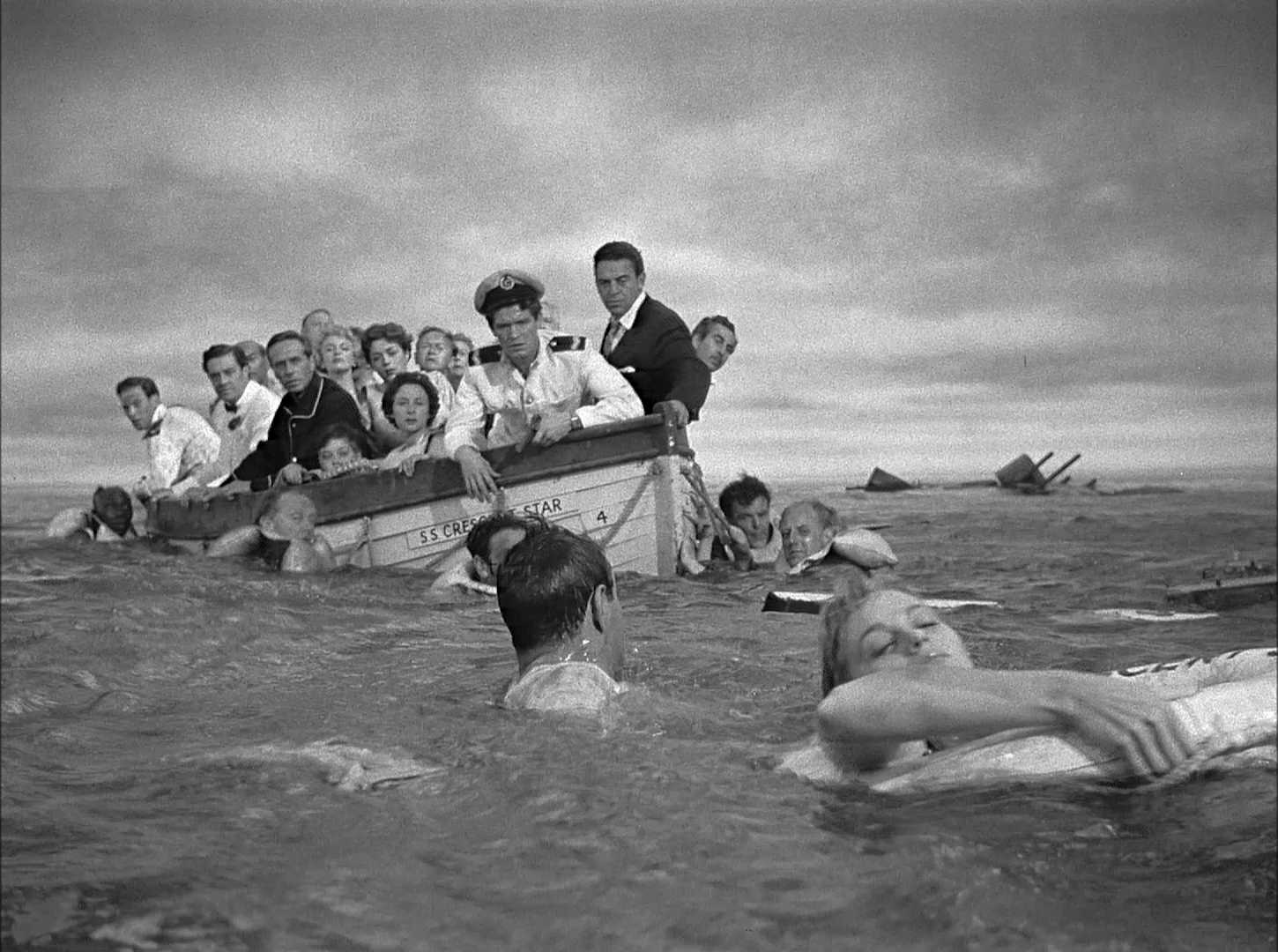
The film explores the grim reality of survival at any cost, as the boat’s inhabitants, including a dog (which seems ridiculous at first, but its inclusion is disturbingly justified at one point), grapple with the terrifying prospect of impending doom and the ethical nightmare of who lives and who dies.
Despite being confined to a single set – the lifeboat itself – the film remains remarkably tense and compelling. Whilst a couple of the performances are a little overbaked, Power’s strong turn as Holmes helps ground things. It was his first and only film made by his own production company, Copa Productions, Ltd.
Other than some clear stock footage used for the encircling sharks, the film feels convincingly set at sea. Costumes are suitably distressed too, adding to the realism of our protagonists’ plight.
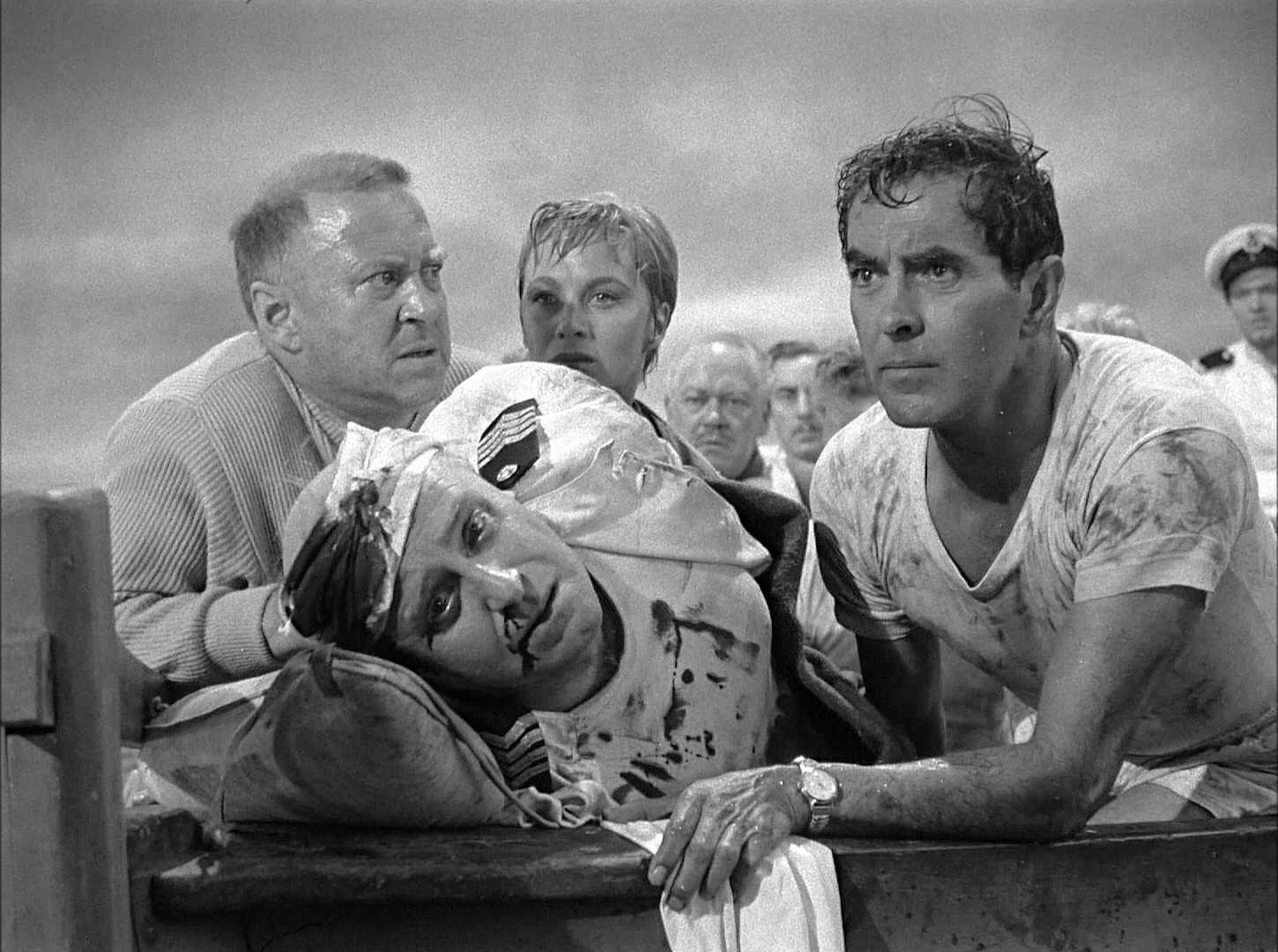
The dialogue, while occasionally a little clunky, keeps the moral complexity of the situation at the forefront, and this is where the film shines. The film doesn’t shy away from the harsh realities of the situation either. We clearly see the dead being dumped off the side and other more shocking acts later on. There’s no pussyfooting around by merely suggesting the grim acts that are to be done. It’s all discussed and shown right in the open.
While Hitchcock’s Lifeboat must have been a clear touchpoint for the film, Abandon Ship! carves its own distinctly disturbing path. Whilst the earlier film perhaps makes better visual use of the constricted location, Abandon Ship! still contains some striking visuals. Most notably, there’s a powerful moment where a flare is shot off and a crane shot shows the cast staring in faint hope before the subtle but chilling moment when the light goes out as Holmes makes a dark comment about their chances of survival.
Overall though, Abandon Ship! is a powerful examination of the human condition under extreme duress, raising profound questions about sacrifice, morality, and the lengths to which individuals will go to preserve life, even if it means taking others.
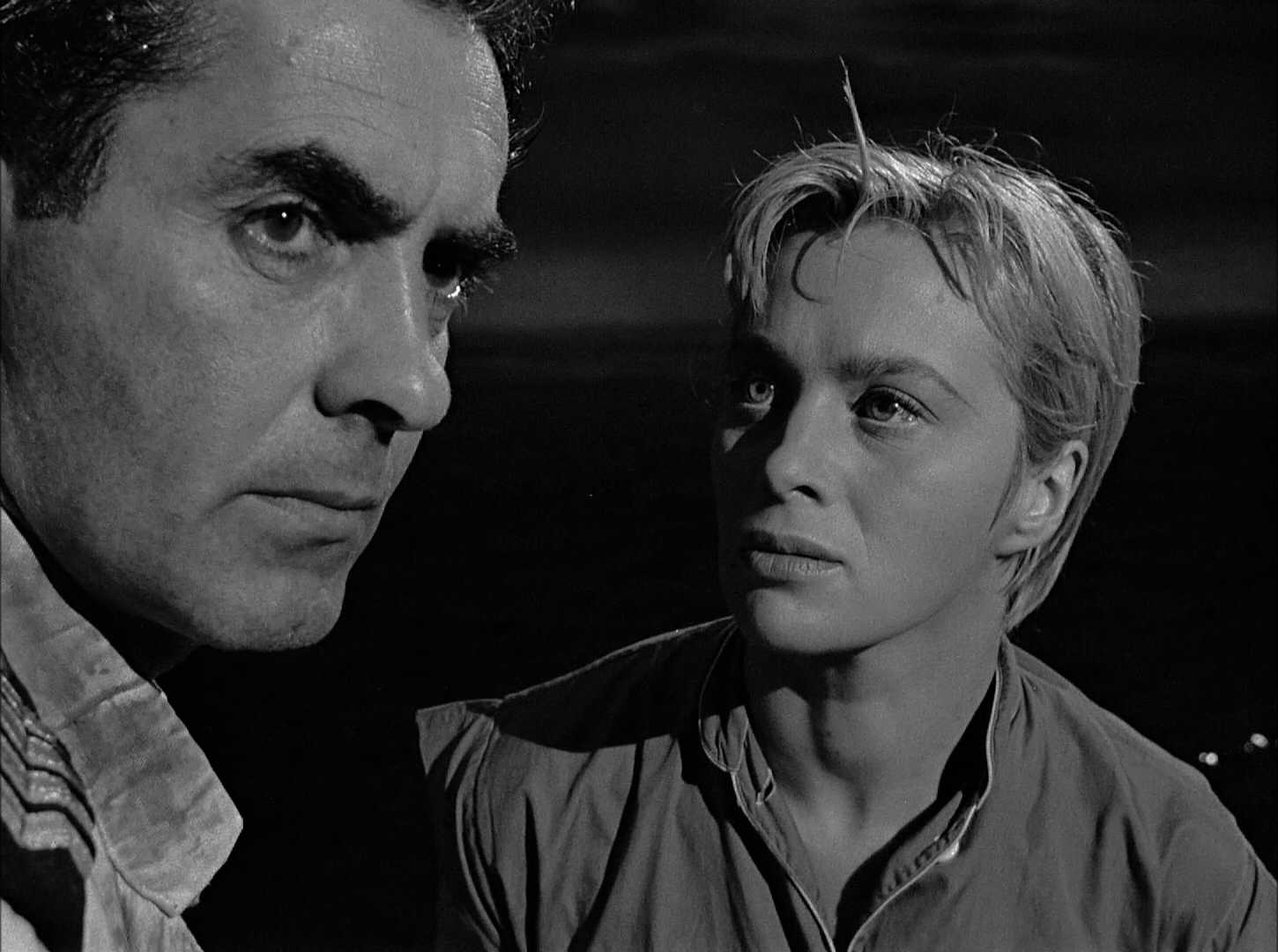
The film’s ending, which reveals the true-life inspiration for the story and the subsequent legal repercussions, adds another layer of grim reality to this unflinching look at a desperate struggle for survival. Though it must be noted that writer-director Richard Sale only very loosely based the film on the real-life sinking of the American ship William Brown in 1841.
Film:
King Rat
Director: Bryan Forbes
Screenplay: Bryan Forbes
Based on a Novel by: James Clavell
Starring: George Segal, Tom Courtenay, James Fox, Patrick O’Neal, Denholm Elliott, James Donald, Todd Armstrong, John Mills, Leonard Rossiter
Country: USA
Running Time: 134 min
Year: 1965
Writer-director Bryan Forbes’ 1965 film King Rat, based on a novel by James Clavell, offers a stark and unvarnished look at life in Changi Prison, a Japanese prisoner-of-war camp during World War II, based in Singapore. The film revolves around Corporal King (George Segal), an American POW who thrives in the corrupt environment by engaging in black market dealings. His charisma and cunning allow him to manipulate both his fellow prisoners and, to a lesser extent, his Japanese captors, creating a perverse sense of comfort and privilege within the brutal confines of the camp.
The film meticulously captures the harsh realities of captivity, from personal tensions to the risk of death through disease or punishment, to the constant hunger, sweat, and dirt.
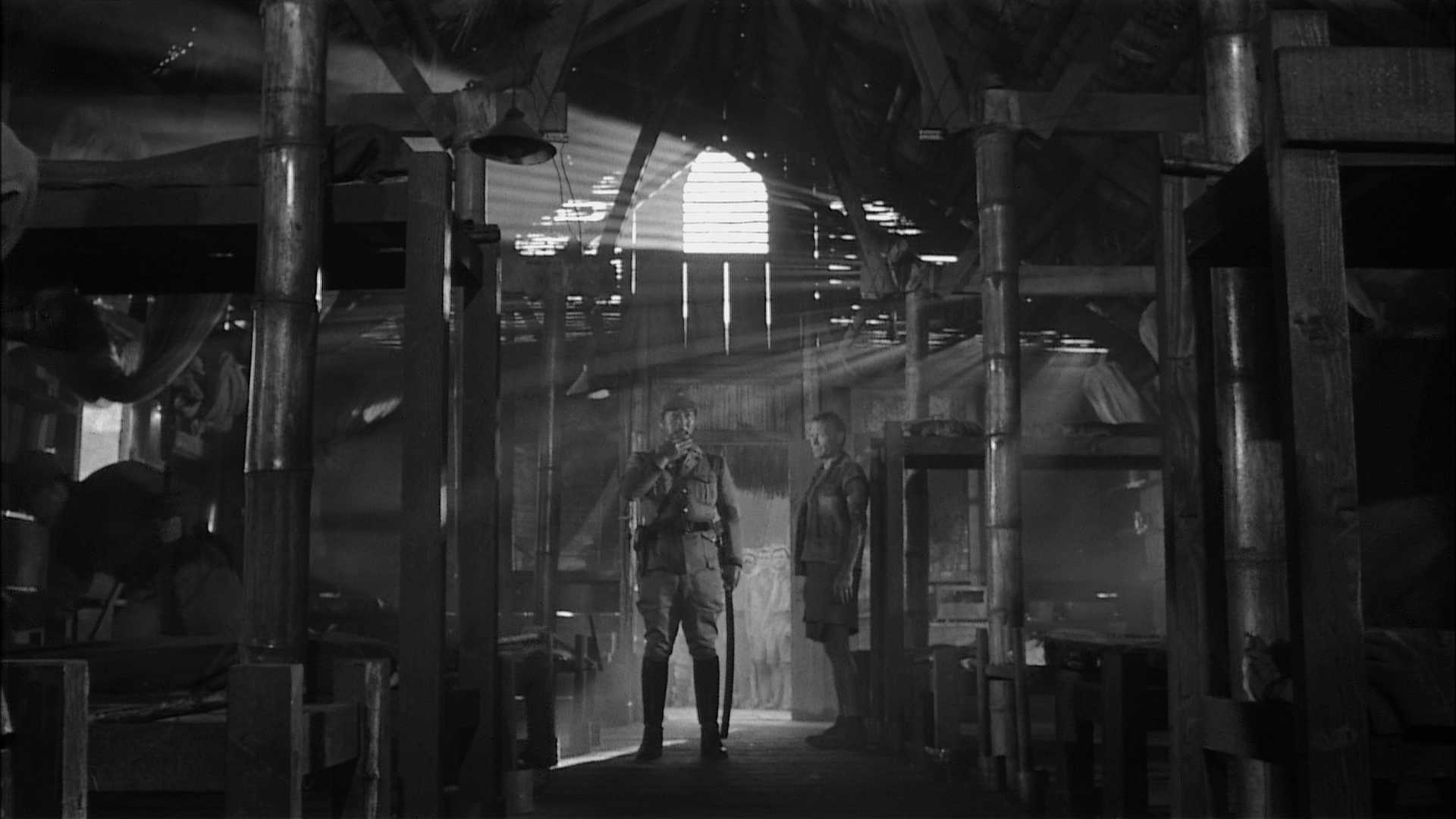
It also smartly explores the various approaches to survival adopted by different characters, highlighting the almost universal corruption necessary to navigate such an inhumane system.
King is an unusual and morally ambiguous protagonist, which further adds to the thought-provoking nature of the film. While he is selfish and exploits the desperation of others, he also forms a strong bond of friendship with Pete Marlowe, a British officer (played by James Fox), who is slightly effeminate (quietly suggesting a homosexual relationship) and possesses a sharp wit, intelligence and sensitivity.
It’s a beautifully shot film, lensed in black and white by the great Burnett Guffey (Bonnie and Clyde, In a Lonely Place, From Here to Eternity etc.), with the lighting particularly effective in conveying the oppressive heat and the general squalor. The costumes, sets, and makeup all contribute to this powerful sense of authenticity.
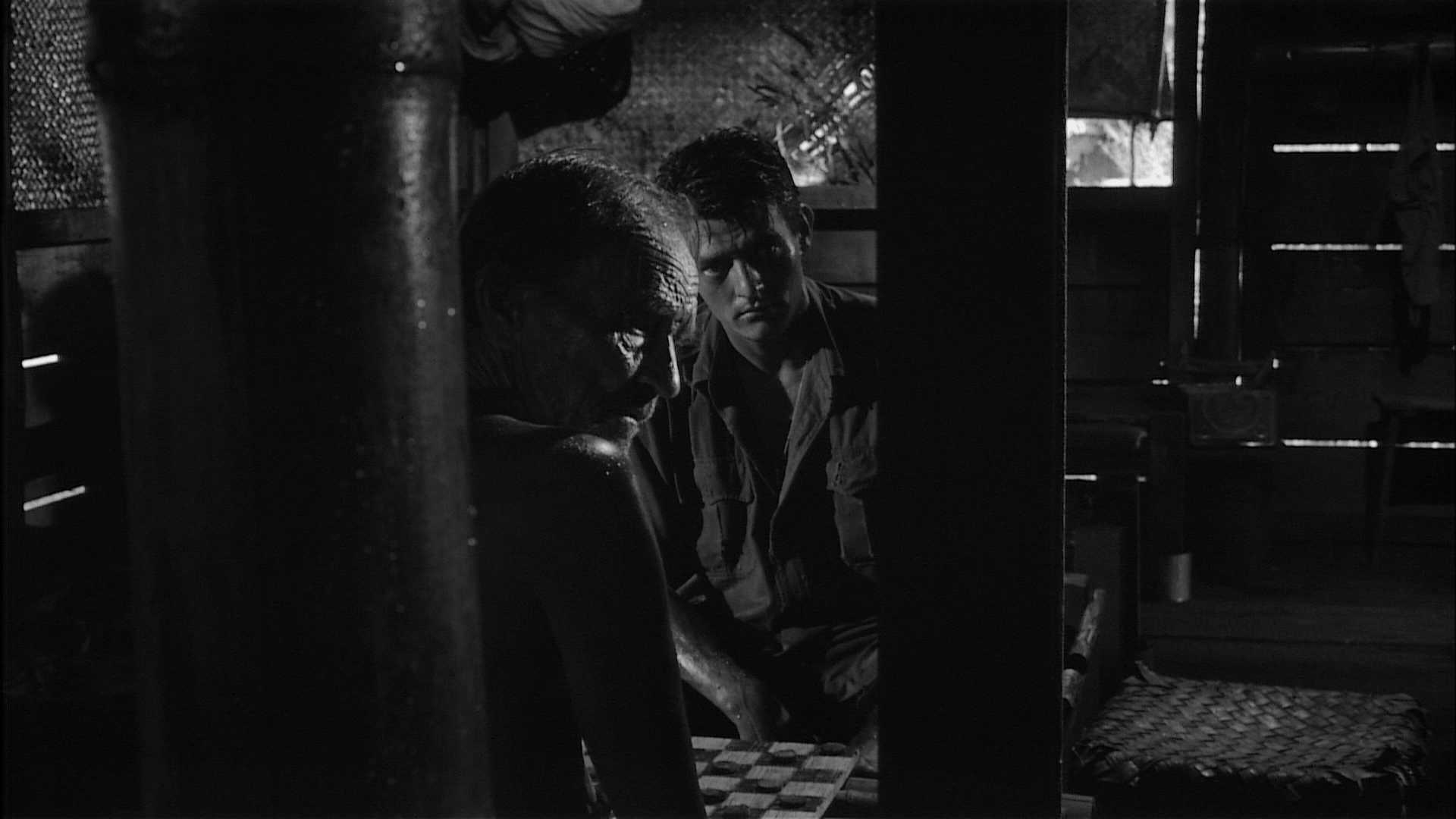
Forbes also employs unusual editing techniques in places, such as freeze frames and a strikingly offbeat introduction to King at the start.
John Barry’s score is gorgeous and quite unusual, used sparingly to add a strangely plaintive air, rather than to overtly manipulate emotion.
The cast is excellent, delivering sharply written performances that bring to life the complex dynamics within the camp. The film excels at subtly showing the reactions and desires of the prisoners. One notable example is when King cooks eggs, and a series of close-ups of the men smelling it nearby show the stark difference in King’s life in the camp compared to those who suffer daily.
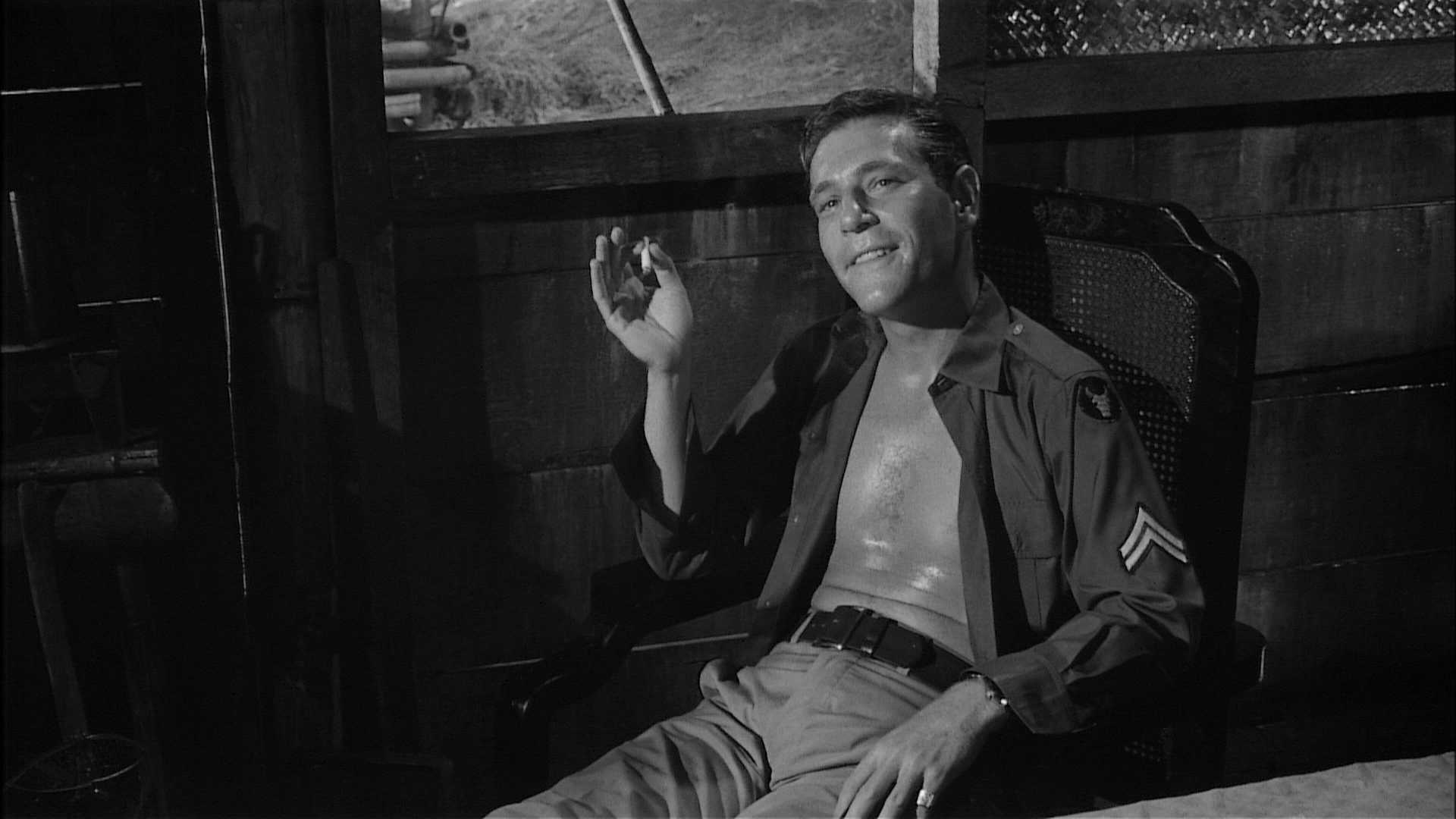
King Rat reaches a surprising, extended conclusion that sensibly avoids a simple “war is over, hooray” ending. Instead, it grapples with the concept of institutionalisation and the profound impact of prolonged captivity. The arrival of Allied soldiers to liberate the camp presents new challenges, as the prisoners, particularly King, must confront a world that has moved on, and left them behind.
Ultimately, King Rat is a richly textured, beautifully made look at life in captivity. It’s a remarkable film and my favourite of the set.
Film: 
The Bridge at Remagen
Director: John Guillermin
Screenplay: Richard Yates, William Roberts
Based on a Story by: Roger O. Hirson
Starring: George Segal, Robert Vaughn, Ben Gazzara, Bradford Dillman, E.G. Marshall, Peter van Eyck, Hans Christian Blech, Heinz Reincke
Country: USA, Czechoslovakia, West Germany
Running Time: 116 min
Year: 1969
The final film in the set is John Guillermin’s The Bridge at Remagen. This is the most traditional war movie in the set.
The film is set in the latter stages of World War II, when the promoted and weary US Army Lieutenant Hartman (George Segal) is tasked with securing the Remagen bridge, promising his men a much-needed respite once their mission is complete. Simultaneously, German Major Paul Kreuger (Robert Vaughn) is ordered to destroy the bridge, even as General von Brock (Peter van Eyck) subtly commands him to defend it, so as to protect the retreating 15th Army, of whom von Brock’s superiors show little sympathy.
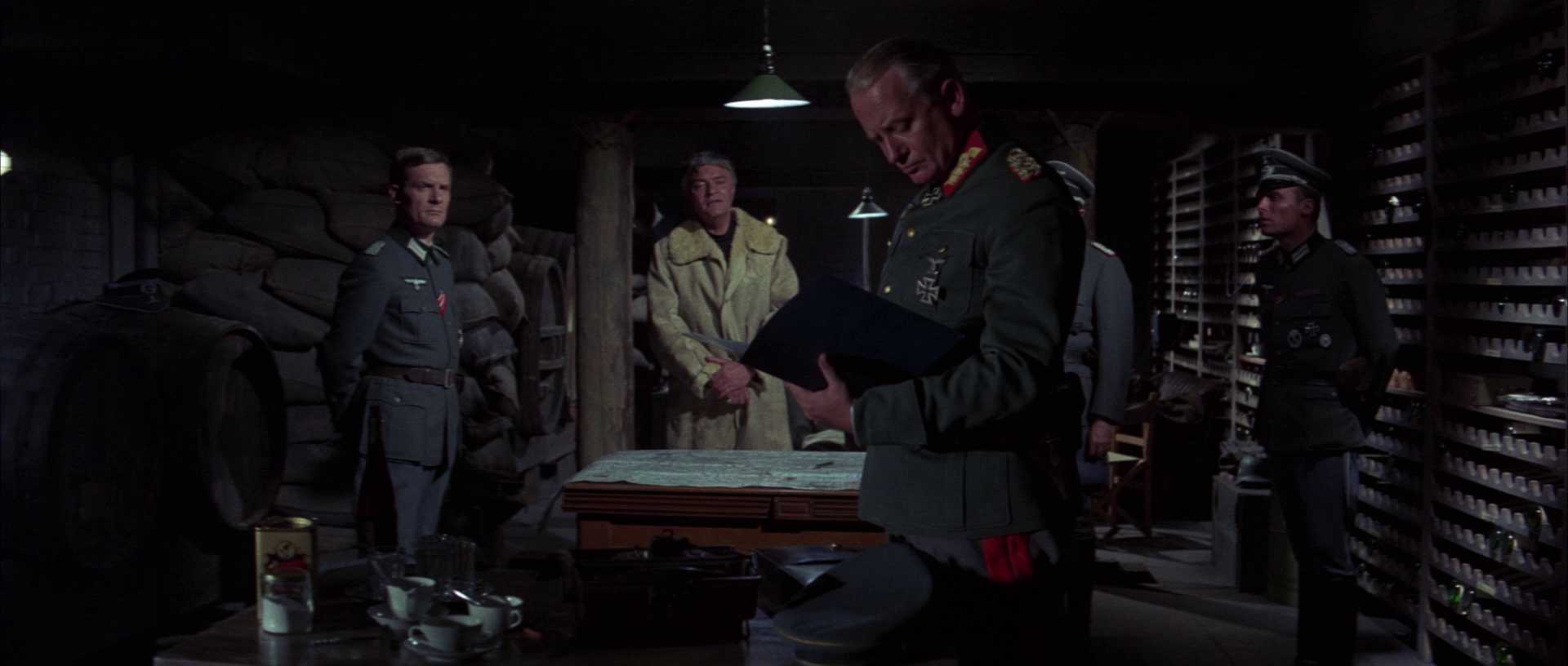
Hartman’s company quickly captures Meckenheim and pushes toward Remagen. Kreuger, realising von Brock’s promise of reinforcements was hollow, is unable to stop the American advance. When the bridge is found intact, General Shinner (E. G. Marshall) changes his tune, ordering Hartman’s company to assault it – a risky move that could save thousands of lives.
The Bridge at Remagen was a big war epic released at a time when such films were not in vogue. The Vietnam War was in full swing and people didn’t want to see more conflict on screen. As such, it was somewhat of a flop and received mixed reviews. Over time, however, aided by repeated TV screenings, the film is considered a fine example of a 60s war movie. I’d agree with this sentiment.
One gripe I used to have with war movies is that they feel as though they’re glorifying conflicts that claimed countless lives, particularly when it comes to the two World Wars. The Bridge at Remagen threatens to fall into this trap, as the action scenes are certainly the biggest sellers here. However, I found myself mightily impressed by these. With CGI reigning over war and action movies these days, it’s exhilarating to see things done for real on such a large scale as they are in this film. Hal Needham, who would later go on to direct films himself, was the stunt supervisor, and he helped orchestrate some truly stunning sequences.

Perhaps due to me being a couple of years into my 40s and developing a taste for ‘dad movies’, I seemed to have lost some of that ‘war movies shouldn’t be exciting’ sensibility I had in my youth and enjoyed myself a great deal.
Though, to be fair on The Bridge at Remagen, it’s not actually glorifying war in the same way some of the more propagandist titles did in the 40s. Away from the spectacular battle scenes, we get a more intimate examination of the impact the lengthy conflict had on soldiers in the latter days of WWII. This is strengthened by some excellent performances. George Segal and Ben Gazzara are particularly good and share some emotionally complex scenes.
It sounds like the shoot itself was quite complex. It was the first Hollywood film to be shot in Czechoslovakia. Many films have been shot there since. However, part way through production, Russia invaded the country and the filmmakers were forced to rethink. They ended up shooting bits and pieces in a few countries. It’s a testament to their skill that the film holds together so well. With one of cinema’s greatest cinematographers, Stanley Cortez, behind the camera, and strong direction from the reliable John Guillermin (The Towering Inferno, Death on the Nile etc.), it’s perhaps not that much of a surprise.
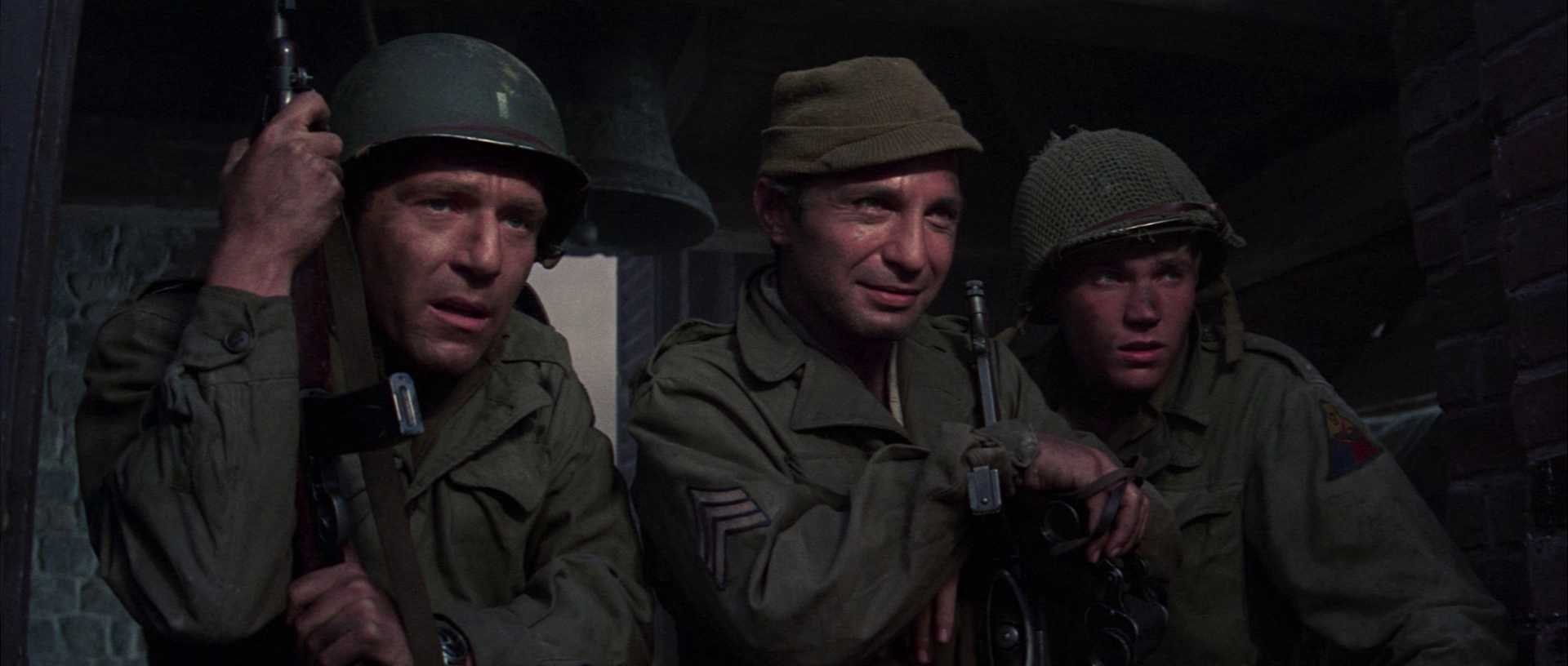
Overall, it’s a solid war movie that blends grand-scale spectacle with enough of a human element to engage and remain relevant and respectful.
Film:
Tales of Adventure 6 (1945-1969) is out now on Blu-Ray, released by Imprint Films. The transfers are decent, with crisp pictures and well-balanced tones throughout, though there’s visible dirt or light scratches on all the black and white films. I’ve used screengrabs throughout this review to give you an idea of how they look, though these images have been compressed. Audio is solid all around.
Special Features & Technical Specs:
All titles:
– 1080p High-definition presentation on Blu-ray
– Audio English LPCM 2.0 Mono
– Presented in their original aspect ratios (from what I can gather, at least)
– Optional English HOH Subtitles
The Bridge at Remagen:
– NEW Audio Commentary by filmmaker/historians Steve Mitchell & Steven Jay Rubin (2025)
– NEW To Cast a Skyward Gaze: Making the Case for John Guillermin – Video Essay by film historian Daniel Kremer (2025)
– Archival interview with actor Ben Gazzara
– Archival interview with actor George Segal
– Isolated Music Track
– Theatrical Trailer
Sadly, only The Bridge at Remagen gets any extra features of note. It’s a pretty well-stocked disc though.
Steve Mitchell and Steven Jay Rubin provide a commentary over The Bridge at Remagen. It’s a detailed and engaging track, discussing the troubled production and giving a little historical context to the events being depicted.
Also included is a video essay by Daniel Kremer who discusses why he thinks John Guillermin is an auteur director of note rather than simply a journeyman, as he’d often been considered in the past.
There are also a couple of playful archival interviews with George Segal and Ben Gazzara. These are short and fluffy but enjoyable.
It’s a shame that the rest of the films didn’t get such treatment, but I would still heartily recommend the set, due to the high standard of titles included in it and the wonderful extras contained on the Bridge at Remagen disc.
Disc/package: