



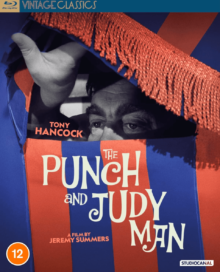
 Director: Jeremy Summers
Screenplay: Tony Hancock and Philip Oakes
Starring: Tony Hancock, Sylvia Sims, Ronald Fraser, Barbara Murray, John Le Mesurier, Hugh Lloyd, Norman Bird, Kevin Brennan, Eddie Byrne
Country: United Kingdom
Running Time: 96 min
Year: 1963
BBFC Certificate: 12
For hit radio and TV series Hancock’s Half Hour and his feature film debut The Rebel, actor and comedian Tony Hancock worked with the dream team of screenwriters Ray Galton and Alan Simpson.
The trio seemingly worked effortlessly together and delivered some of the funniest comedies of the 1950s and 1960s. But for his next and final feature in which he starred, Hancock decided against working with the duo and instead came up with his own story idea and penned the script himself with Philip Oakes. The end result is The Punch and Judy Man, a film that has its fair share of moments but isn’t as strong as The Rebel or Hancock’s earlier radio and TV shows.
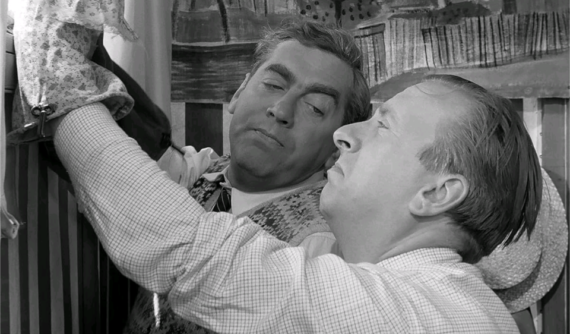
The film follows Wally Pinner (Hancock) a Punch and Judy man (a traditional British puppet show often performed at the British seaside once upon a time, featuring Mr. Punch and his wife Judy, for those who don’t know the pair), who works in the fictional seaside town of Piltdown.
Pinner is part of a wonderful community of independent business owners on the beach (these lovingly played characters are a highlight of the film), who aren’t welcomed by those in charge of the town, the Mayor (Ronald Fraser) and Council, as they think they’re bringing the place down.
Lady Jane Caterham (Barbara Murray) is a socialite who is invited to turn on annual illuminations to mark the 60th anniversary of the town, and Pinner’s ambitious wife Delia (Sylvia Syms) makes efforts to have her husband be part of the official welcoming reception. From this basic plot follows a series of sketches, jokes and melancholic scenes.
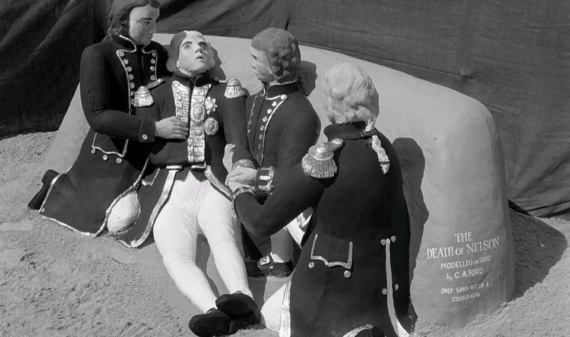
One of the most striking elements of the film is the down-at-the-heel seaside town in which it’s set. The film was shot on location in Bognor Regis and it’s used to great effect. It is very much a seaside town which has seen better days; shops are closed, the beach and streets are mostly empty, and its inhabitants, outside of the upper classes, are struggling to make ends meet.
The scenery is like a character in itself and adds to the melancholy tone. Whilst at times a very funny comedy, ultimately this is a film filled with sadness, and feels very sombre. It is at times more of a drama and, as a result, often feels like it has an identity crisis. If you go in expecting a comedy you may be disappointed, but if you go in expecting a drama with some comical moments then you may be pleasantly surprised.
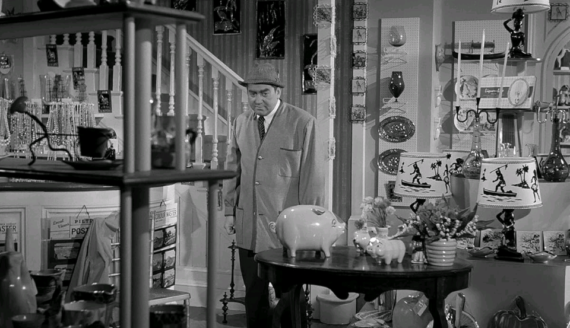
That being said, there are amusing moments, mostly low key or character-based, but also some inspired moments of physical humour. For example, there is a very funny sequence which sees Hancock’s character wandering through the town and lamenting to himself, ending up in a lingerie shop and not really knowing what to make of it, then nearly getting run over and finally reaching the beach where he acts like a dog. It borders on slapstick and lower brow humour, but raises more than a few laughs.
Another entertaining sequence sees Pinner having a shave that shorts the lights as the town illuminations are turned on, and parts of some of the illuminated words fail, leading to some funny wordplay and an angry crowd. That lighting of the illuminations sequence is the gateway to a very amusing finale that sees the upper echelons of the town meet the more down to earth humour of a Punch and Judy Show, with hilarious results.
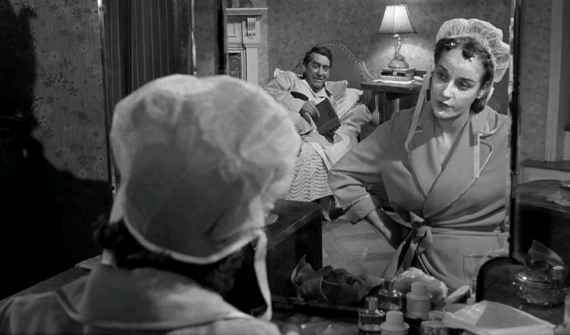
Hancock is marvellous as the central character, playing the role more as high drama than comedy but raising a fair few laughs when the jokes appear. Syms is excellent as Pinner’s wife, who wants better for the couple and the pair play well off each other in some of the best scenes in the film, while Hancock regular Le Mesurier gets a decent part as a sand sculptor. There are also small roles for the likes of Carry On star Hattie Jacques and that familiar face from Hammer films, Michael Ripper.
The sound design is used to interesting effect; for example, the opening sequence where Pinner and his wife have breakfast, every sound of the food is exaggerated as the pair annoy each other. Indeed, food plays a decent role in the comedic elements of the plot, with several culinary sequences played for laughs.
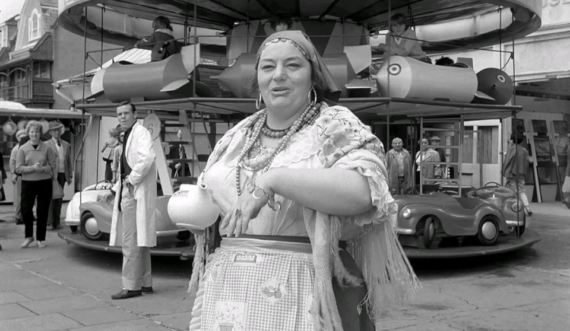
The Punch and Judy Man is a curious beast. It’s incredibly watchable, and at times very funny, but is often more bleak or melancholy in tone. At its best it is a drama about a down-at-the-heel seaside town and the memorable characters trying to make ends meet or looking for a way to improve their lot in life. The final act is hilarious, though, and a fitting end to an interesting and rewarding vehicle for Tony Hancock.
Film: 


The Punch and Judy Man is released on Blu-Ray on 3rd March 2025 by StudioCanal as part of its Vintage Classics range. The picture is fantastic; the blacks, greys and whites of the black and white cinematography all looking sharp and striking. It looks excellent throughout with a natural filmic quality. The audio is also very solid.
Network previously released the film on Blu-ray with just a theatrical trailer and image gallery. StudioCanal provide the trailer and their own image gallery but also add further worthwhile and interesting extras.
Hard Knocks: Paul Merton on The Punch and Judy Man
Excerpt from ABC Series Hancock’s
BEHP audio interview extract with Jeremy Summers
Blackpool Show: Season 1 Episode 7 (1966)
Behind the Scenes Stills Gallery
Theatrical trailer
Hard Knocks: Paul Merton on The Punch and Judy Man runs for ten minutes with the comedian sharing a view of the film that I also have: that it works better if you don’t think of it as a comedy. Merton shares his first experience of seeing the film and the moment in it in which he feels Hancock first started to lose his audience, where his comedy went more low brow. Merton describes the movie as a valuable social record, likely inspired by Hancock’s youth growing up in Bournemouth. It’s a fabulous overview and appreciation of the film.
The interview excerpts with director Jeremy Summers are an archival audio recording from the British Entertainment History Project. Running for six minutes, the interview plays over a colourful poster of The Punch and Judy Man and some stills. Summers shares how he came across the project, and how Hancock had artistic approval of the film. It’s a warm anecdote. We also hear the director’s views on why the film wasn’t successful, and his recollections of the early passing of Hancock, who died aged 44.
The excerpt from Hancock’s is the complete audio of the second episode of his ABC TV series which was broadcast live on 23rd June 1967. It opens with text outlining that it plays as audio only until a VHS insert allows us to see the visuals for the final two minutes. As such, for the most part, the audio plays over photos of Hancock, until the VHS section at the end. Despite the lack of visuals it’s pretty funny, as a lot of the jokes are sound-based. Though it’s not top tier Hancock and clearly the sum of its source parts, it’s a really welcome addition.
The inclusion of the seventh episode of the first series of the Blackpool Show is fantastic. It is a really evocative experience, showcasing what a TV variety show of old was like. Filmed in front of a live audience in Blackpool, the 53 minute episode dates from 1966 and is presented in black and white. It features a variety of dance, music, song and comedy acts, with Tony Hancock acting as the compere for the episode, providing jokes in between the other performances. As such, whilst Hancock has a key role he’s only in a small portion of the episode. To add to the atmosphere, a couple of vintage adverts are included in the ad breaks. The episode is from a dated source meaning the picture quality is not the strongest, but it doesn’t detract from the experience. I really enjoyed the episode and would welcome seeing other episodes on future releases.
The behind the scenes gallery runs for just under two minutes and includes 20 fascinating behind the scenes stills.
The three minute trailer plays up the comedic elements of the film and feels like a Carry On promo at times.
In conclusion, StudioCanal have provided a worthwhile package for an underappreciated and equally worthwhile film. The audio and visual presentation is brilliant, there’s a great new appreciation of the movie, and over 90 minutes of archival extras, including a strong brief interview with the director and two supplements that show other sides of Hancock, the performer. Highly recommended for fans of the film or Hancock.
Disc/Package: