


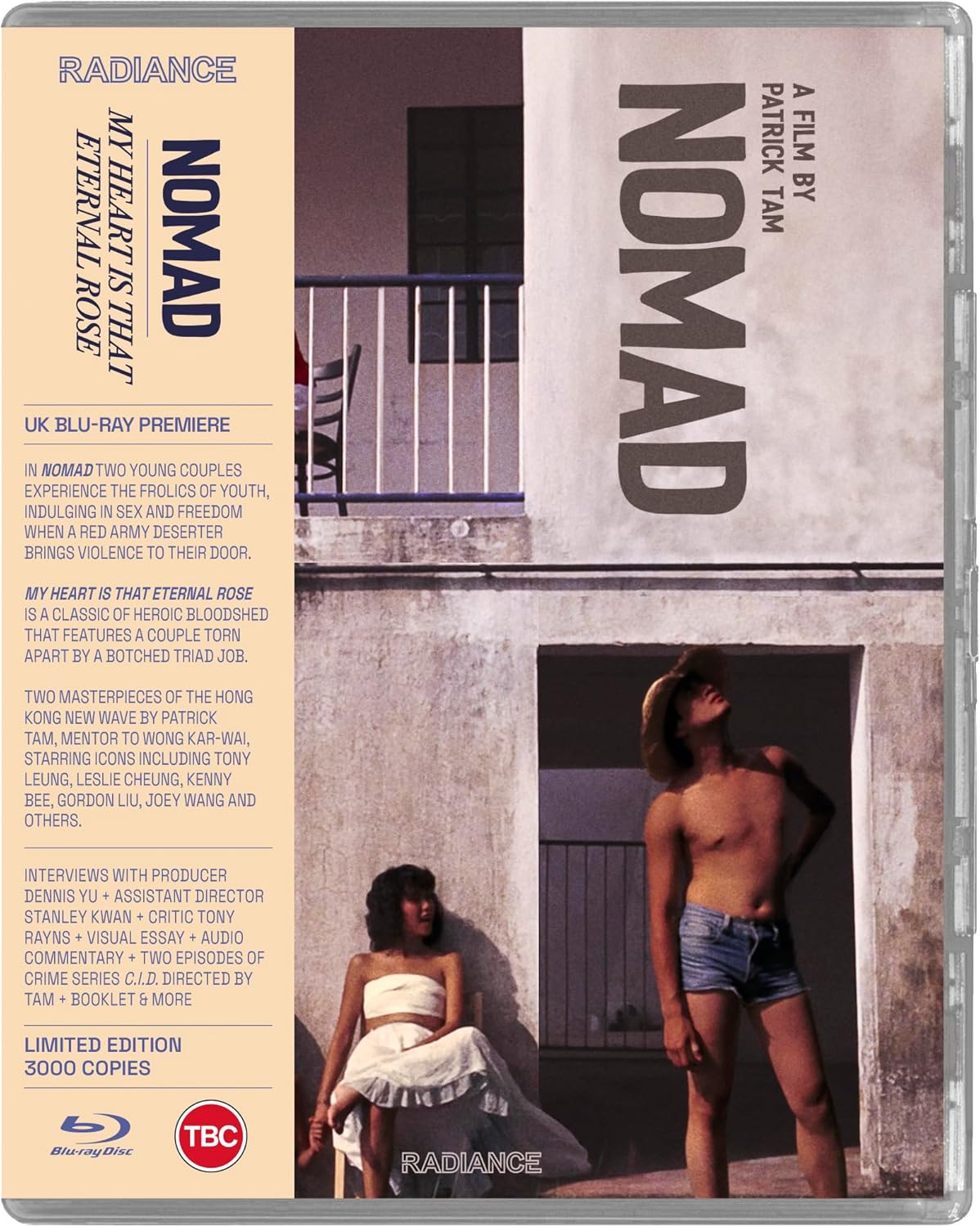
 After largely focusing on Hong Kong’s martial arts and action output, I’ve been pleased to see several boutique Blu-ray labels branching out and turning their attention to the diverse films of the Hong Kong New Wave. Radiance Films are among the labels taking the plunge, with a double-bill of films directed by one of the key figures of the first wave, Patrick Tam. These titles are Nomad (1982) and My Heart is That Eternal Rose (1989). After thoroughly enjoying Tam’s debut feature, The Sword, which Eureka released a few months ago, I got my hands on this new set and my thoughts follow.
Nomad
Director: Patrick Tam Kar-Ming
Screenplay: Gam Bing-Hing, Joyce Chan, Eddie Fong, John Chan, Chiu Kang-Chien, Patrick Tam Kar-Ming
Starring: Leslie Cheung Kwok-Wing, Cecilia Yip Tung, Pat Ha Man-Jik, Kent Tong Chun-Yip, Stuart Yung Sai-Kit, Cheng Mang-Ha
Country: Hong Kong
Running Time: 96 min
Year: 1982
Nomad centres around four young friends living in Hong Kong. Louis (Leslie Cheung), grieving the loss of his mother, finds solace in his close relationship with his cousin Kathy (Pat Ha). Their lives intertwine with Tomato (Cecilia Yip), who becomes Louis’s girlfriend, and Pong (Kent Tong), Kathy’s boyfriend. The four drift through life, their days a mix of idle socialising and shared dreams and anxieties, often escaping to Hong Kong’s outlying islands.
However, Kathy’s past catches up with her. Her former lover, Shinsuke Takeda (Yung Sai-kit), a disillusioned member of the Japanese Red Army, seeks refuge with her, fleeing the organization’s wrath. Their sanctuary comes under threat as Red Army assassins close in on Shinsuke.
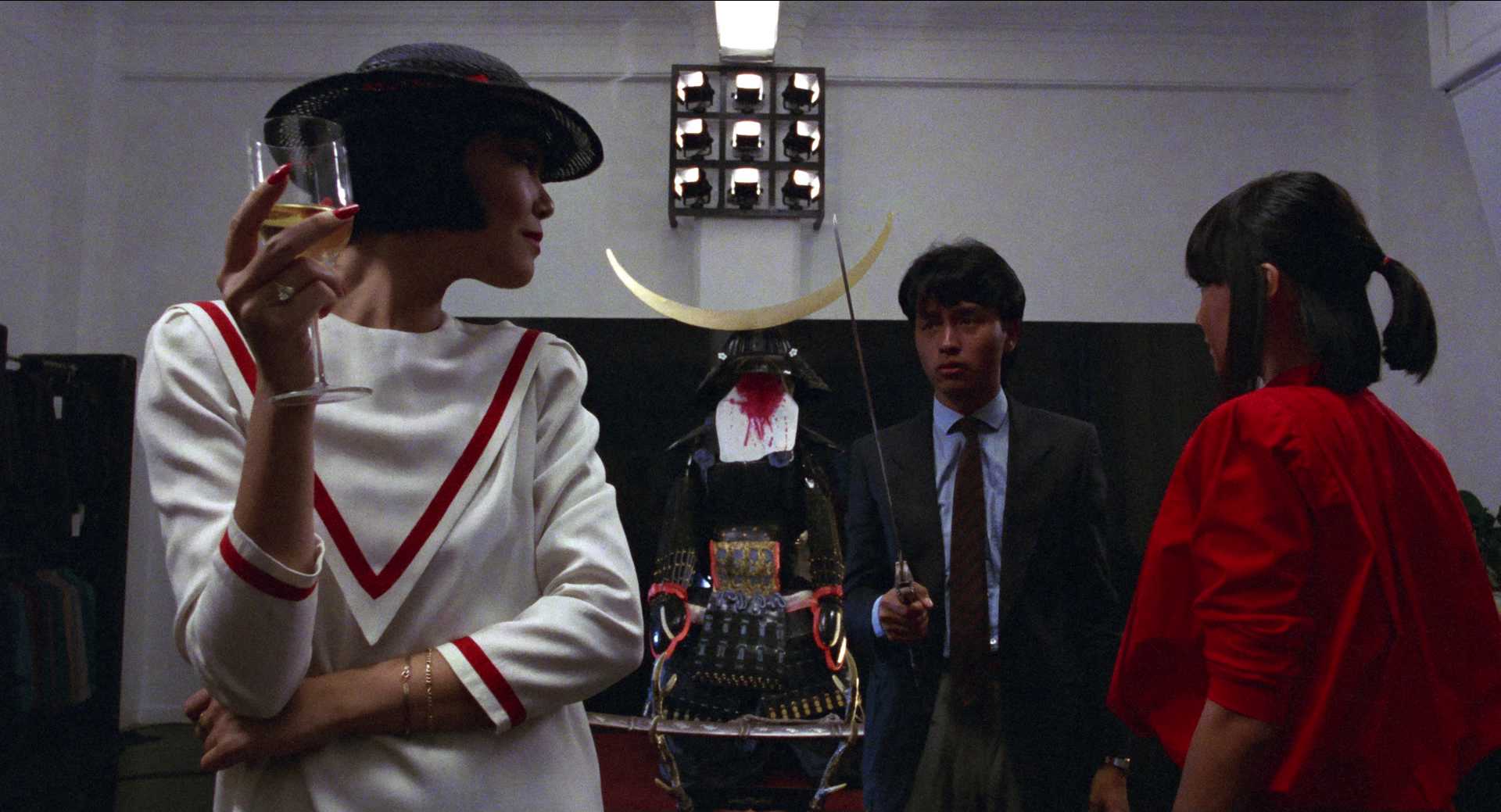
I found Nomad to be quite a peculiar film that took me about half an hour to get into. There’s quite a lot of goofy comedy to begin with, it feels rather episodic and, stylistically, it seemed like a bit of a mixed bag too. I eventually settled into it though and found that the stylistic differences seemed to reflect the two distinct classes being observed in the film. Louis and Kathy are from a wealthy family, whereas Tomato and Pong have been living at the other end of the spectrum.
In its exploration of lost youth, Nomad reminded me of Love Unto Waste, which I reviewed quite recently. I found that film more consistent and effective but it must be noted that Tam’s film came first, so may well have been an influence on the latter. Teenage delinquency was only just beginning to appear in Hong Kong around the time Nomad was made, so some members of the public were concerned about films like this. A steamy night tram sex scene in the film was considered particularly shocking at the time and got the filmmakers in trouble with the censors.

After growing fond of Nomad as it went on, however, a major curveball is thrown at the end that, whilst stylish and impactful, didn’t seem to fit with the rest of the film, leading to me feeling rather bewildered, overall.
Some believe the end of Nomad was reshot by someone else and Tam reportedly disowned the film after being unhappy with the pressure put on him to make it more commercial during production. This might explain the bizarre and shocking nature of the final sequence.
Overall though, whilst I didn’t know quite what to make of it all and the disparate scenes didn’t always gel, I found myself drawn to the characters and quirky stylistic touches.
Film: 


My Heart is That Eternal Rose
Director: Patrick Tam Kar-Ming
Screenplay: John Chan, Tsang Kan-Cheong
Starring: Kenny Bee, Joey Wong Cho-Yin, Tony Leung Chiu-Wai, Kwan Hoi-San, Michael Chan Wai-Man, Gordon Liu Chia-Hui, Richard Ng Man-Tat
Country: Hong Kong
Running Time: 91 min
Year: 1989
My Heart is That Eternal Rose is a romantic crime drama that tells the story of a young couple, Lap (Joey Wong Cho-Yin, a.k.a. Joey Wang) and Rick (Kenny Bee), whose lives are torn apart after a botched Triad job.
Lap’s father, Cheung (Kwan Hoi San), is a retired gangster who gets involved in one last job, which goes wrong. This puts him and his family in danger. To protect her father and Rick, Lap makes a deal with the ruthless gang leader, Godfather Shen (or Lord, as it was translated in the subtitles, played by Michael Chan Wai Man), and becomes his unwilling mistress.

Meanwhile, Rick flees to the Philippines, where he becomes a contract killer. Six years later, he returns to Hong Kong and reunites with Lap. Their rekindled love puts them in even greater danger as they try to escape Shen’s clutches.
Caught up in the middle of it all is Cheung (Tony Leung Chiu-Wai), a low-level Triad member who is in love with Lap. When she is in trouble, Cheung must decide whether or not to incur Shen’s wrath by helping her.
Whereas many action films will throw in a romantic subplot to provide a damsel in distress or to feebly attempt to reach a broader audience, here Tam has turned this convention on its head by making a powerful romantic drama and adding crime and action elements to appeal to a wider audience. However, it could be argued that this was a case of the studios imposing a genre on him, as he’s openly said he’s not interested in such commercial films.

Either way, I found My Heart is… a much more consistent and easy-to-digest film than Nomad. The genre elements are spread much more evenly throughout the film, making for a more consistent, albeit more conventional, experience. In his commentary on the disc, Frank Djeng talks about how Tam is not known for his storytelling but instead lives ‘in the moment’. I can see that in Nomad but I think the story in My Heart is… is quite effective, despite being a little generic.
I found that My Heart is… had considerable emotional heft, which helped draw me into its classic love-triangle tale. Much of the emotion of the performances is carried through intense gazes rather than over-egged dialogue. Tony Leung is the strongest performer here and he does a lot with relatively minimal dialogue. It helps that his character is the most interesting figure among the protagonists.
Cinematic tools are used to tell the story too. Camera movement, light and colour convey emotion and provide metaphors for the themes of the film. The great Christopher Doyle shot the majority of it but had to leave the shoot about 2/3 of the way through so was replaced by David Chung, who appears to have done a good job of maintaining a consistent look.
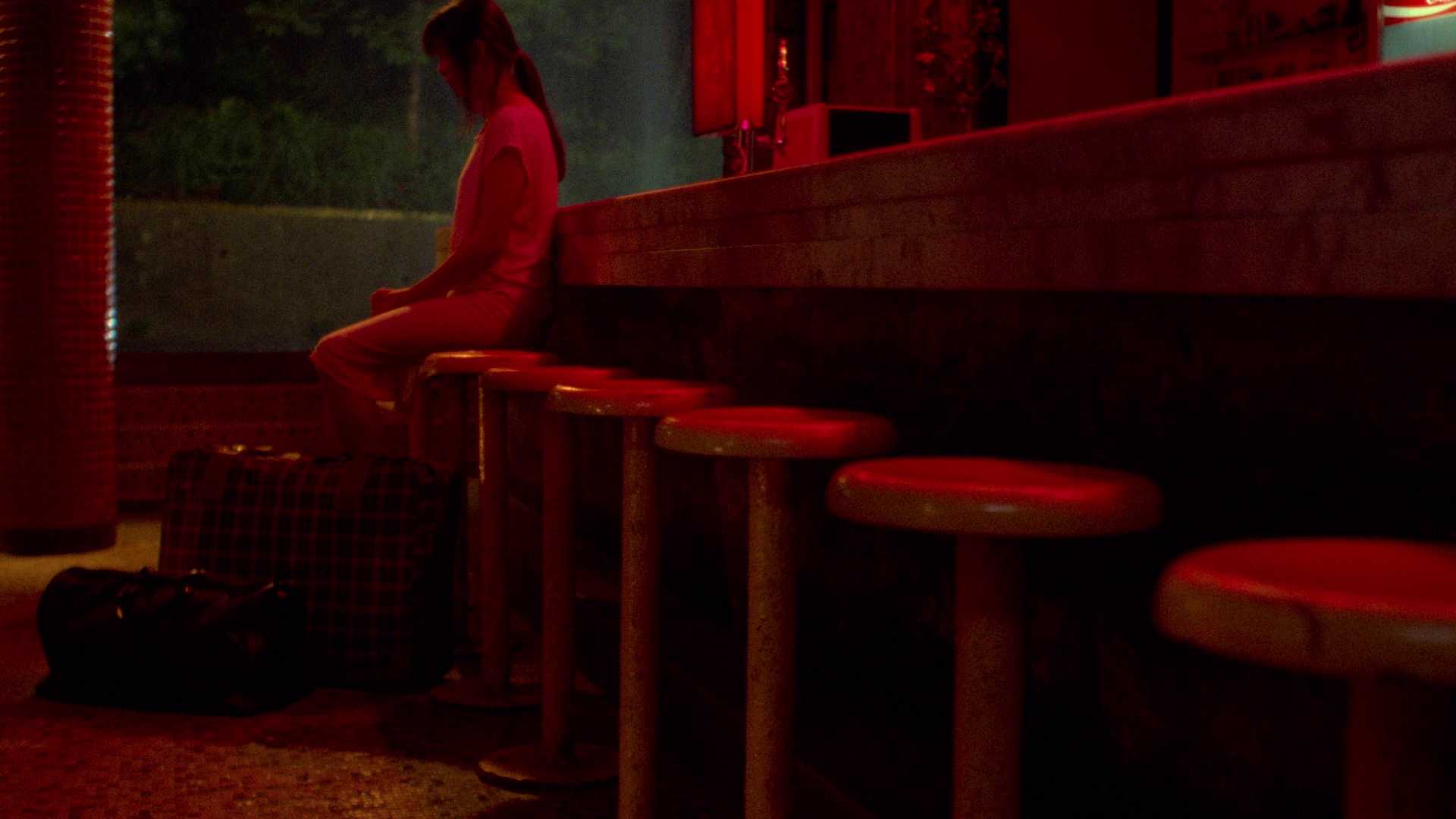
Whilst Nomad explored ‘lost youth’, a topic common to a lot of the Hong Kong New Wave films, My Heart is… thrives on another theme familiar to the movement, that of desire and longing, or unrequited love. Both films, through these themes and some of the stylistic touches, reminded me of the work of another New Wave director, Wong Kar-Wai. He and Tam worked together on several films, so it’s no surprise they have shared interests and visions.
On top of Leung, there’s a star-studded cast here, in general. Kenny Bee was known for his light, cheerful, comedic roles, so it must have been a shock to see him play a beaten-down assassin. Joey Wang was coming off hit films such as A Chinese Ghost Story and Where’s Officer Tuba?, so will have been a big draw too.
Gordon Liu was the surprise for me in My Heart is… though. I had no idea he was in the film and, I must admit, I didn’t recognise him at first with his hairpiece on (which is used as a brief gag later on). It was interesting to see him play such a nasty, slimy piece of work.

Playing the more frightening villain though is Michael Chan. Before starting his film career, he was a policeman turned gangster. His experience in the Triads must have helped inform his role here as the evil Shen. Tam has said that Blue Velvet‘s Frank Booth character inspired his film’s mob boss.
There are some heightened elements to My Heart is… that might put off some who are more comfortable with realistic, fully-fleshed out stories rather than a film driven by emotion, style and atmosphere. However, I fell head-over-heels for this deeply romantic crime drama. Playing out like Douglas Sirk meets John Woo, I thought it was a blast.
Film:
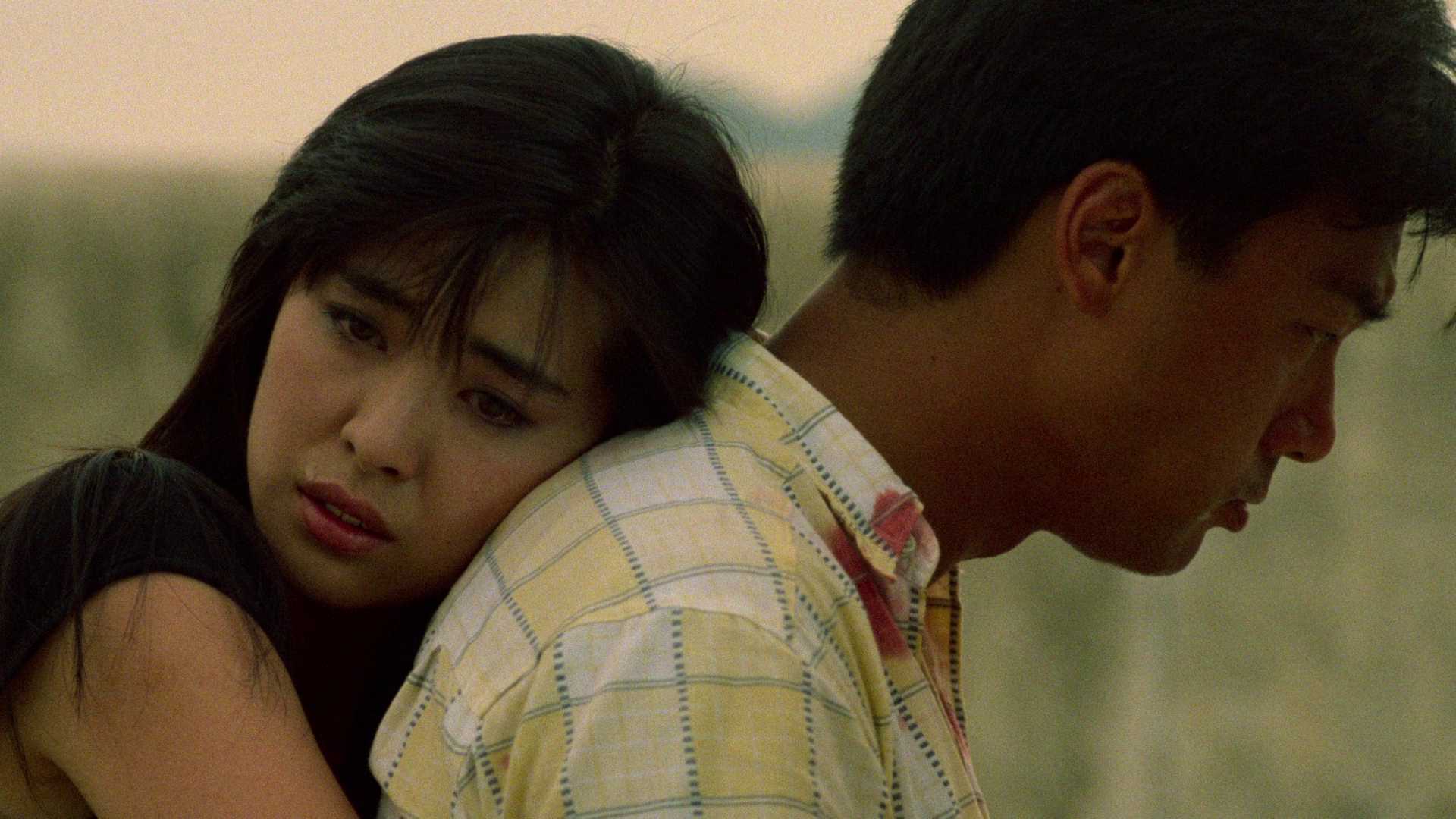
Nomad + My Heart is That Eternal Rose is out on 24th February on region B Blu-Ray, released by Radiance Films. Nomad has rich colours, though the image is a touch soft. This might be down to the source material though. My Heart is That Eternal Rose looks stunning, with pleasingly natural grain, colours and textures. I’ve used screengrabs throughout this review to give you an idea of how the films look, though these have been compressed. The audio on Nomad sounds a little rough to begin with, as dialogue is slightly muted and damaged but this is likely as originally produced and it soon improves. I had no issues with the audio on My Heart… and that includes both Cantonese and Mandarin options.
LIMITED EDITION BLU-RAY SPECIAL FEATURES
– 4K restoration of the Nomad director’s cut, 2K restoration of My Heart is That Eternal Rose, UK premieres on Blu-ray presented on two discs
– Interview with critic Tony Rayns on Nomad (2024)
– Interview with assistant director Stanley Kwan on Nomad (2024)
– Interview with Nomad producer Dennis Yu (2024)
– A visual essay on Patrick Tam and the Hong Kong New Wave by author David Desser (2024)
– Audio commentary on My Heart is That Eternal Rose by Frank Djeng (2024)
– Interview with producer John Sham (2019)
– Two episodes of C.I.D. directed by Tam (1976, 49 mins each)
– Trailer
– Newly improved English subtitle translations by Dylan Cheung
– Reversible sleeve featuring original and newly commissioned artwork by Time Tomorrow
– Limited edition booklet featuring an archival career-spanning interview with Patrick Tam by Arnaud Lanuque and a new essay by Kambole Campbell
– Limited edition of 3000 copies, presented in full-height Scanavo packaging with removable OBI strip leaving packaging free of certificates and markings

My favourite extra features in the set are the two episodes of C.I.D., both directed by Patrick Tam. Running close to 50 minutes each episode, it’s like having two extra films. C.I.D. was a procedural police series made in Hong Kong. The episodes are slightly rough around the edges and haven’t been as nicely remastered as the films, but they show the director honing his craft, throwing in some interesting stylistic touches here and there. I found the Teddy Girl episode included on the Nomad disc a little slow but I enjoyed Dawn Noon, Dusk Night on the other disc a great deal. This offers a typical day in the life of a police officer (though it switches between policemen rather than focusing on one throughout). It looks at the minutiae of the job, as well as looking at the mental toll it can take on the officers.
Tony Rayns talks about Nomad in an interview. He begins by describing how the Hong Kong New Wave kicked off and how this led to to the film in question. Towards the end of the piece, he also shows a clip from the work print of the film, that shows a more shocking take of an early scene. Rayns is honest about his feelings on the film, stating that it’s not one of Tam’s masterpieces but it’s nonetheless a groundbreaking work.
Producer Dennis Yu is also interviewed. He describes how he got into the film industry and how he feels the New Wave filmmakers were largely influenced by Western filmmaking, from France and the US. He goes on to talk about Nomad and how the ending was shot by someone else. He is more positive than most about the ending.
1st AD Stanley Kwan also provides a short interview. He talks about his early career and tells a couple of anecdotes about his involvement in the production.
Frank Djeng provides a commentary over My Heart is… It’s an excellent track, describing the backgrounds of those involved in making the film as well as offering analysis of Tam’s direction and the performances.
David Desser talks about the Hong Kong New Wave and how he feels Patrick Tam is an underrated director.
Producer John Sham is also interviewed. He talks about his working relationship with Tam and their intentions behind My Heart is… He also describes how production was rushed due to various issues and how it went over budget so lost money at the box office.
I didn’t receive a copy of the booklet to comment on that.
So, Radiance have put together an excellent package for two stylish and enjoyable Hong Kong New Wave classics. Highly recommended.
Disc/package: