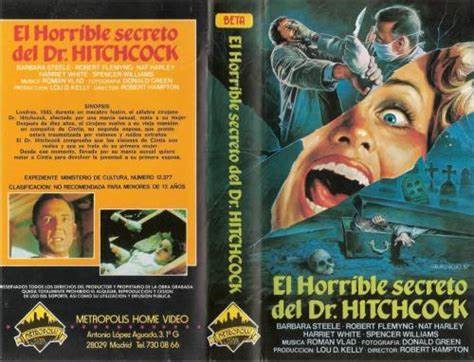



 Director: Robert Hampton (aka Riccardo Freda)
Script: Jelyan Perry (aka Ernesto Gastaldi)
Cast: Barbara Steele, Robert Flemyng, Montgomery Glenn, Teresa Fitzgerald, Harriet White, Maria Teresa Vianello
Running time: 87.5 minutes
Year: 1962
Certificate: 18
The year is 1885, and necrophiliac Dr. Hitchcock (Robert Flemyng) enjoys drugging his wife, Margaret (Maria Teresa Vianello); essentially knocking her out ready for his sexual funeral games. One day he accidentally administers an overdose (oops!) of an experimental formulae and kills her. Bereft, he leaves his ancestral home, shattered.
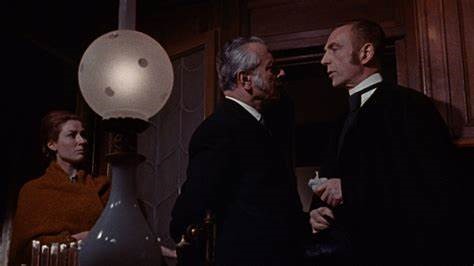
Several years later he remarries, Cynthia (Barbara Shelley), and returns to London with his new wife. Cynthia starts to feel and hear strange things in the house, and becomes increasingly concerned about her husband’s bizarre behaviour. Dr Hichcock tries to reassure her saying that she’s just being neurotic, reminding her that when he met her she was receiving treatment for a psychological problem. However, this second wife is determined to investigate what’s really going on within the confines of his creaky and apparently haunted mansion, which sees her being threatened by the hostile maid (Harriet White), by a mysterious figure in white, (who might just be the maid’s mad sister), and by her own increasingly insane husband, who was already predisposed to pseudo-necrophilia, but who really starts to tip over the brink as he begins to believe his first wife has come back from the grave.
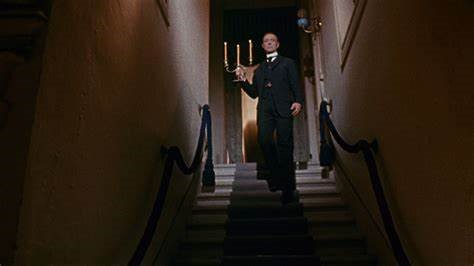
This minor but interesting entry in the Italian Gothic/horror subgenre is a first in that no film had ever dealt before with the subject of necrophilia. This is a gorgeously filmed, but totally eccentric Gothic horror from Riccardo Freda, one which holds its overwrought tone throughout, right up until its fiery climax. It’s both lavish and ludicrous, and benefits from Steele’s incredible screen presence (especially her mesmerising eyes) and from the weight of its own haunting images.
Clearly inspired by Hitchcock’s Psycho (1960), producers Luigi Carpentieri and Ermanno Donati persuaded writer Ernesto Gastaldi to scrawl something along similar lines, maybe encouraging him a little too much to follow in the ghoulish footsteps of Psycho’s original muse, namely Ed Gein. The script, which was originally named Raptus, was given over to Ricardo Freda to direct and he clearly wasn’t put off by the taboo subject matter, probably because his then partner, Gianna Maria Canale, was a very expensive woman to keep, and therefore any pay-check helped! In fact, he managed to finish the film in a fortnight, which is doubly impressive considering it came out so well.
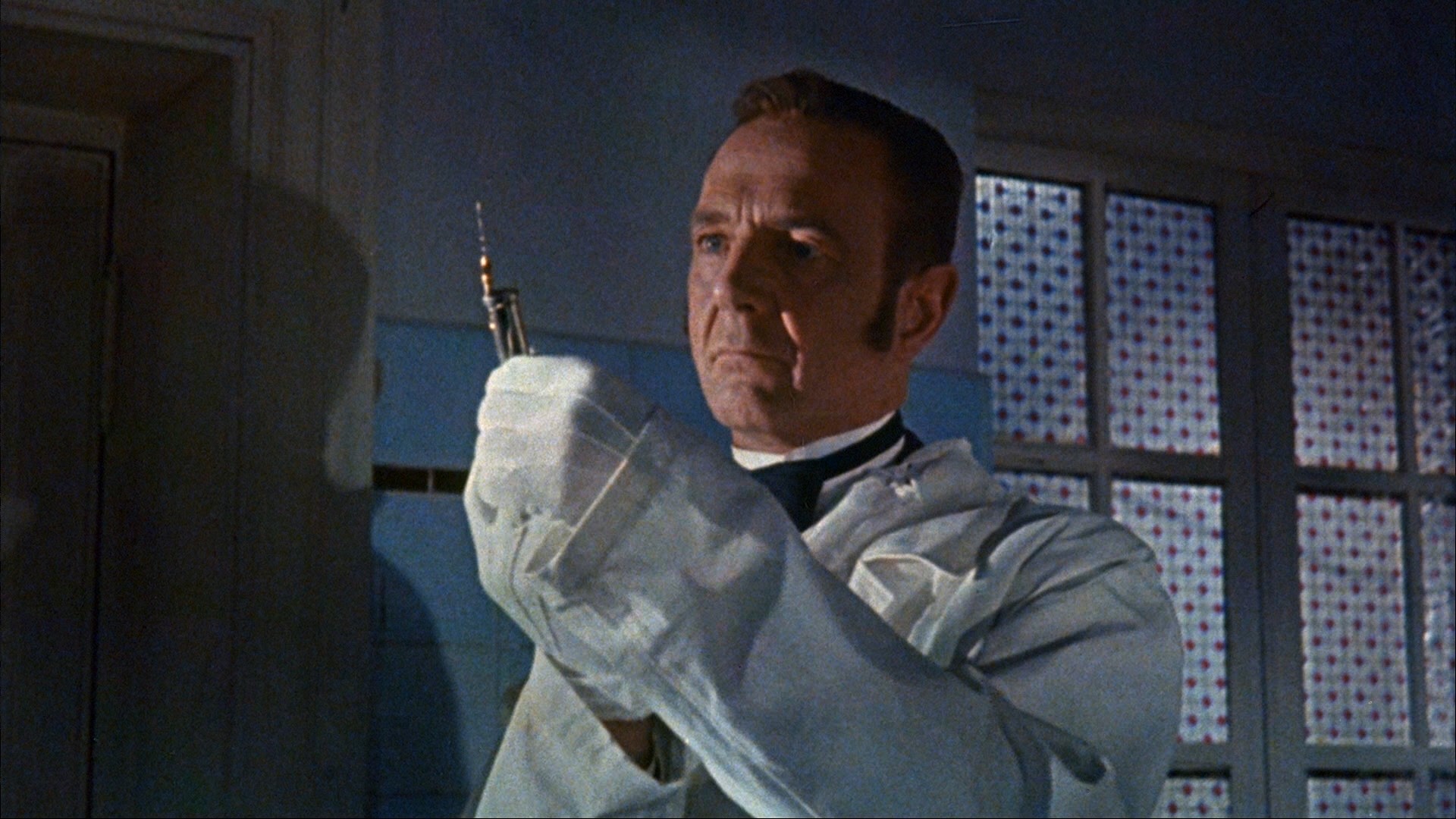
The photography by Raffaele Masciocchi is spot on and makes the film look much better than such a short shooting schedule would normally allow for. A fact reinforced by Radiance having created a fantastic 2K restoration of the film.
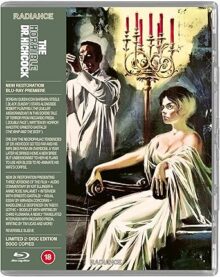
Fans of the film are doubly treated here by the fact that Radiance has given us not one, but three versions of the film, including the unexpurgated version, running at 87 minutes and the trimmed (by 11 minutes) North American version.
Audio commentary with writers/podcasters Kat Ellinger and Anne Rose Malamet – A nicely done commentary with plenty of interesting facts squeezed in. They describe the film as a Gothic romance of the more kinky and queer variety, with a strong nod to Daphne du Maurier’s Rebecca.
Audio commentary with author Tim Lucas – Tim essentially reads out his 25 page article on the film, taken from an earlier edition of his fanzine, Video Watchdog. He describes the film as one of the ‘pillars’ of Italian Gothic, which, in turn, tries to mimic Hammer Gothic tropes, alongside some AIP Poe films from the 1960s. And, apparently Raptus is Italian for ‘seizure’.
Ernesto Gastaldi – screenwriter (34 mins) – Scriptwriter Gastaldi talks about how he was approached to work on the project and about his wider career, including the several gialli he’d scripted before. He also reveals that director Freda used to shoot with three crews at the same time, which probably explains how he managed to finish principal photography so quickly. He also talks about the critics’ reception of the film – mostly they didn’t even comment on it, preferring instead to watch yet another neorealism movie.
Murderous Husbands – An Interview with film scholar Miranda Cororan (28 mins) – Miranda talks about the subgenre of Gaslight films, all set during the Victorian era and featuring similar plots to Rebecca. Gaslight melodramas included the likes of Gaslight, Dragonwyck and Bluebeard and these tended to be set in the UK, New England or in Paris. She also touches on Freda’s techniques, including his pranking the actors and audience by moving the sets around to confuse us all.
Madeleine Le Despencer (18 mins) – Madeleine Le Despencer, a visual artist and scholar, delves into the world of necrophilia and Gothic taboo. Starting off with Poe’s famous quotation that “the death of a beautiful woman is the most poetic occurrence”, Madeleine talks about Gothic’s intrinsic links to death and then moves on to discuss the linking of art and death throughout the ages. And then later discusses the different types of necrophilia – who knew!
Theatrical trailer – (2.46 mins) – The tagline “when love is a horrible perversion” nicely sums up the film and the trailer’s eye-catching marketing campaign.
Image Gallery – 10 cool posters