


Director: Jung Bum-shik
Writers: Jung Bum-shik, Sang-min Park
Starring: Wi Ha-joon, Oh Ah-yeon, Yoo Je-Yoon
Year: 2018
Duration: 95 mins
BBFC Certification: 15
Found footage films always feel like the bastard child of the horror genre. Whether due to their ubiquity, induced motion sickness or the illogical nature that many fall prey too (why the hell are they still filming??) the sub genre sometimes feels like it has more detractors than admirers. Personally, I fall into the latter camp. For all their perceived faults, if done well, found footage films can be incredibly immersive and powerful, often eliciting terror and unease for more insidiously than their more traditional counterparts.
It seems that Second Sight share in this appreciation. Over the last several years, the label has released definitive editions of many found footage films, from genre classics such as Paranormal Activity, undiscovered gems (The Borderlands) and even given a platform to films that show where the genre may head in years to come (Host). This month, the label are dipping their toes yet again into the found footage pool with a deluxe release of the widely praised 2018 Korean horror Gonjiam: Haunted Asylum.

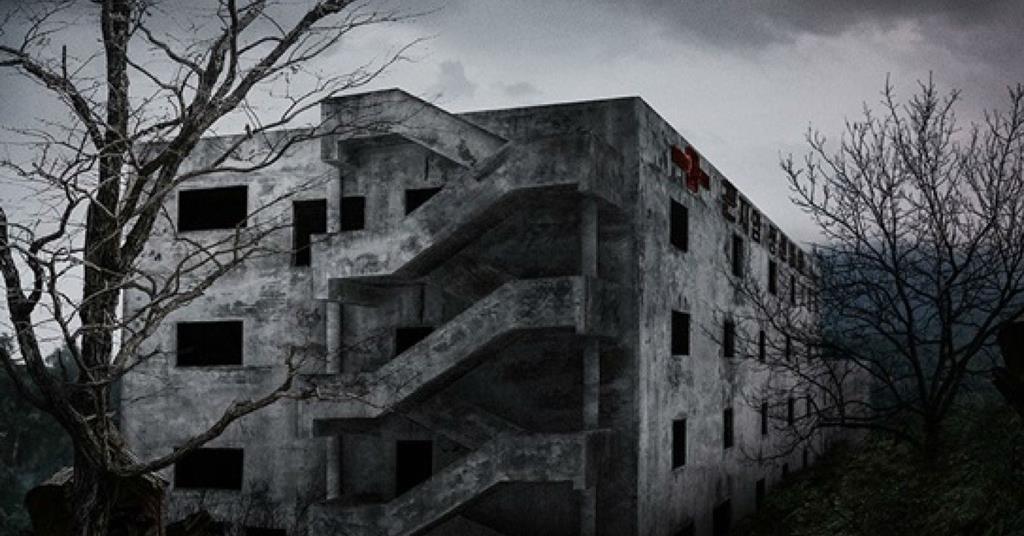
If that name sounds familiar, it is because Gonjiam was actually a real asylum located in South Korea and, before its demolition in 2018, was routinely listed as one of the world’s creepiest locations. Gonjiam: Haunted Asylum uses this fact as a springboard from which to launch its story. Ha-joon runs a horror channel on YouTube, where he and his crew investigate haunted buildings (for those of you reading this in the UK, try to imagine an updated version of Most Haunted). In order to dramatically increase the channel’s popularity and income, Ha-joon has decided to recruit a small band of volunteers to break into the derelict Gonjiam Asylum to see if they can capture any supernatural activity. This ‘experiment’ won’t just be filmed, however; it will also be live-streamed over the internet to a captivated and hopefully increasingly terrified audience.
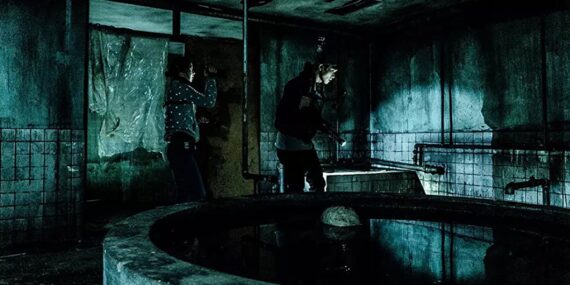
After reading the above synopsis, it might not be just the name Gonjiam that sounds familiar. On paper at least, it seems that Gonjiam: Haunted Asylum has taken liberally from The Vicious Brothers’ 2011 American found footage horror, Grave Encounters. Like Gonjiam, the film sees a ‘documentarian’ and his crew spend the night in a haunted asylum in the hope that they’ll capture great footage in order to boost a cable show’s ratings. Without wanting to go into spoiler territory, while the films do share more than just surface level plot, each eventually dovetails in their own unique direction, which sees Gonjiam: Haunted Asylum emerge as the better paced and ultimately more creepy of the two.
Yet perhaps originality is not what you should be expecting for a horror film set in a haunted asylum – especially one that has decided to use ‘found footage’ as the device through which to tell its story. Yet don’t let the potentially uninspired sounding plot put you off. Gonjiam: Haunted Asylum manages to find originality in well worn tropes, often subtly, at other times ingeniously.

Perhaps one of the best ways that Gonjiam curtails expectations is in its method of filming. As mentioned, one of the bugbears of the found footage genre is characters continuing to film terrifying events even when they are in mortal danger. Any immersion achieved through the style of filming is ruined by this illogical straitjacket that throws character motivation out of the window. Gonjiam’s director Jung Bum-shik brilliantly manages to avoid this problem by physically attaching cameras to his protagonists. Attached using a rig they cannot take off, each character is filmed using two Go Pros, one to film their POV, the other capturing a close up of their face. This ensures that, no matter how terrifying or dangerous things get, characters have no choice but to carry on capturing their experiences. While the film also utilises fixed cameras as well as the traditional camcorder or two, the use of Go Pros ingeniously manages to circumnavigate the usual found footage plot holes and ensures that the sense of immersion so vital to success is never broken.

Gonjiam should also be applauded for its pace. This isn’t a horror film that attempts to go up to eleven within the first twenty or so minutes. In fact, Jung Bum-shik deliberately takes his time, first setting up his characters, then slowly but surely tightening the noose once they have stepped inside in the asylum itself. Even once he has them inside, Jung Bum-shik ensures that, for a long time, a true sense of menace or danger is relatively absent, as the characters have fun filming themselves and certain deceptive plot points are gradually revealed…yet don’t be fooled. By the time the last twenty minutes roll around, the director dramatically exploits his audience’s ill advised and false sense of security by ratcheting up the tension and terror. It is in this final third that the film really shines, where genuinely unnerving and disturbing moments more than compensate for the cheaper ghost train atmosphere that came before.

Gonjiam: Haunted Asylum is certainly not the most original horror film ever made, if judged by its plot or even by its eventual scares. Fans of horror in general and found footage in particular won’t experience anything dramatically new (apart from that Go Pro filming, that is). Yet while Gonjiam doesn’t reinvent the wheel, it does provide a very satisfying ride. Very well paced and laced with enough nightmarish imagery to haunt your sleep for weeks, it may not scale the heights of genre titans like Blair Witch or Paranormal Activity, but it can still claim to be one of the most brilliant and terrifying found footage horror films to emerge in the last ten years. Enter the Asylum if you dare.
Film:


Second Sight are releasing Gonjiam: Haunted Asylum on the 24th June in two editions – a standard Blu Ray and a deluxe limited edition that comes with a 70 page book, 6 postcards and housed in a rigid slipcase.
No one comes to a found footage film expecting stunning visuals; yet what you do want is for those visuals to be faithfully captured. In this sense, Second Sight’s disc is a winner. While the footage is rather flat and dull looking, it has been faithfully reproduced, with no encoding errors that I could see. The DTS 5.1 mix is a winner as well.
There are several extras on the disc. The first is a fun, chatty and lively commentary from podcasters Mary Beth McAndrews and Terry Mesnard, which delves into the pair’s love of the found footage genre. A little light on analysis or background info on the film itself but an entertaining listen nonetheless.
Next up is a visual essay by Zoë Rose Smith. She offers an informative discussion about haunted house films, exploring why we are drawn to this type of story, before going on to discuss other films that, like Gonjiam, use real locations for their horror stories.
The remainder of the disc is made up of original EPK style featurettes and press conferences from the film’s original release. Featuring the film’s original cast and crew, these are actually far more informative and entertaining than their nature might suggest. Offering an interesting look at the technical challenges behind the film (editing all that Go Pro footage must have been absolute hell) as well as at the production design and rehearsal/casting process, these are all well worth a watch.
While I would have liked to have had a little more info on the real Gonjiam asylum itself, overall Second Sight provide a well rounded out disc with faithful, error free A/V presentation.
Disc/Extras: