


 Director: Frank Borzage
Screenplay: Edwin Justus Mayer, Waldemar Young, Samuel Hoffenstein
Based on a Play by: Hans Székely, Robert A. Stemmle
Starring: Marlene Dietrich, Gary Cooper, John Halliday, William Frawley, Ernest Cossart, Zeffie Tilbury, Akim Tamiroff, Alan Mowbray
Country: USA
Running Time: 96 min
Year: 1936
BBFC Certificate: U
Desire (1936) was directed by Frank Borzage and made during Lubitsch’s short tenure as production manager at Universal. It was a remake of the 1933 German film Happy Days in Aranjuez, which itself was based on a play. Whilst Lubitsch is only credited as producing the film, he is believed to have directed a couple of scenes when Borzage was busy on another production and Desire does have a little of that ‘Lubitsch touch’ in how everything flows effortlessly with wit and grace.
Though the film reportedly went wildly over budget it performed well at the box office and one of its stars, Marlene Dietrich, once claimed that “the only film I need not be ashamed of is Desire”. It’s quite a statement, seeing that the film came after her long run of classics made with Josef von Sternberg.
I’ve been trying to get more ‘Golden Age’ Hollywood comedies watched recently after realising I’d not seen nearly enough of them, so snapped up the chance to review Indicator’s new Blu-ray release of Desire. My thoughts follow.
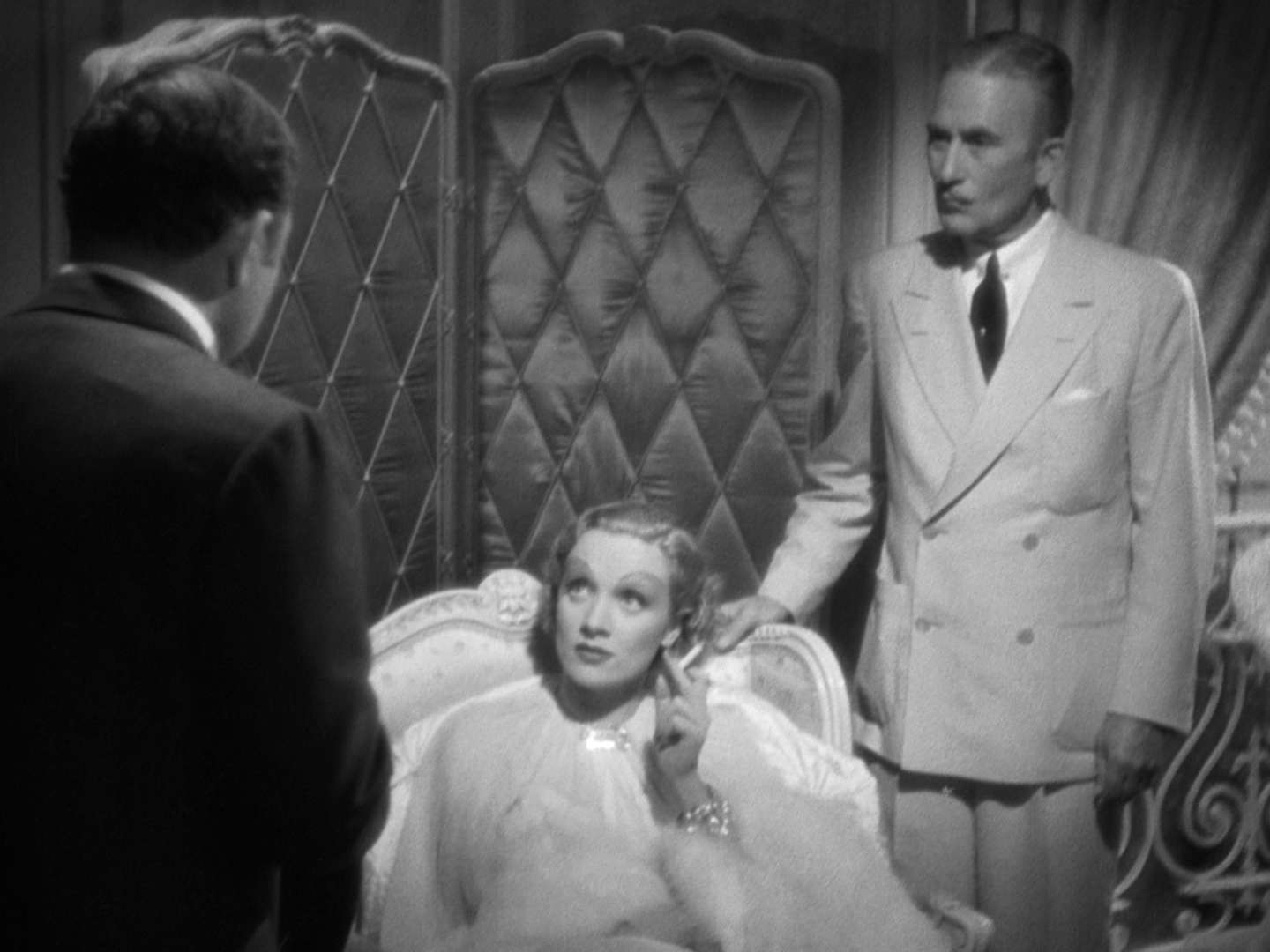
Dietrich plays Madeleine de Beaupre, a professional thief who steals a hugely valuable necklace from a Parisian jeweller in an elaborate con at the start of the film. On her way to the Spanish border, she splashes mud all over Tom Bradley (Gary Cooper), an American automotive engineer enjoying a long-coming holiday in Europe.
Catching up with Madeleine at the border, Tom’s anger soon subsides after the con-woman lays on the charm. Her act is only meant to help her flee the country though and Madeleine even risks sneaking the necklace into Tom’s jacket pocket when she’s faced with a search by the authorities.
When Madeleine later tries to ditch Tom though, she doesn’t realise he’d switched jackets and he’s unknowingly left with the stolen goods.
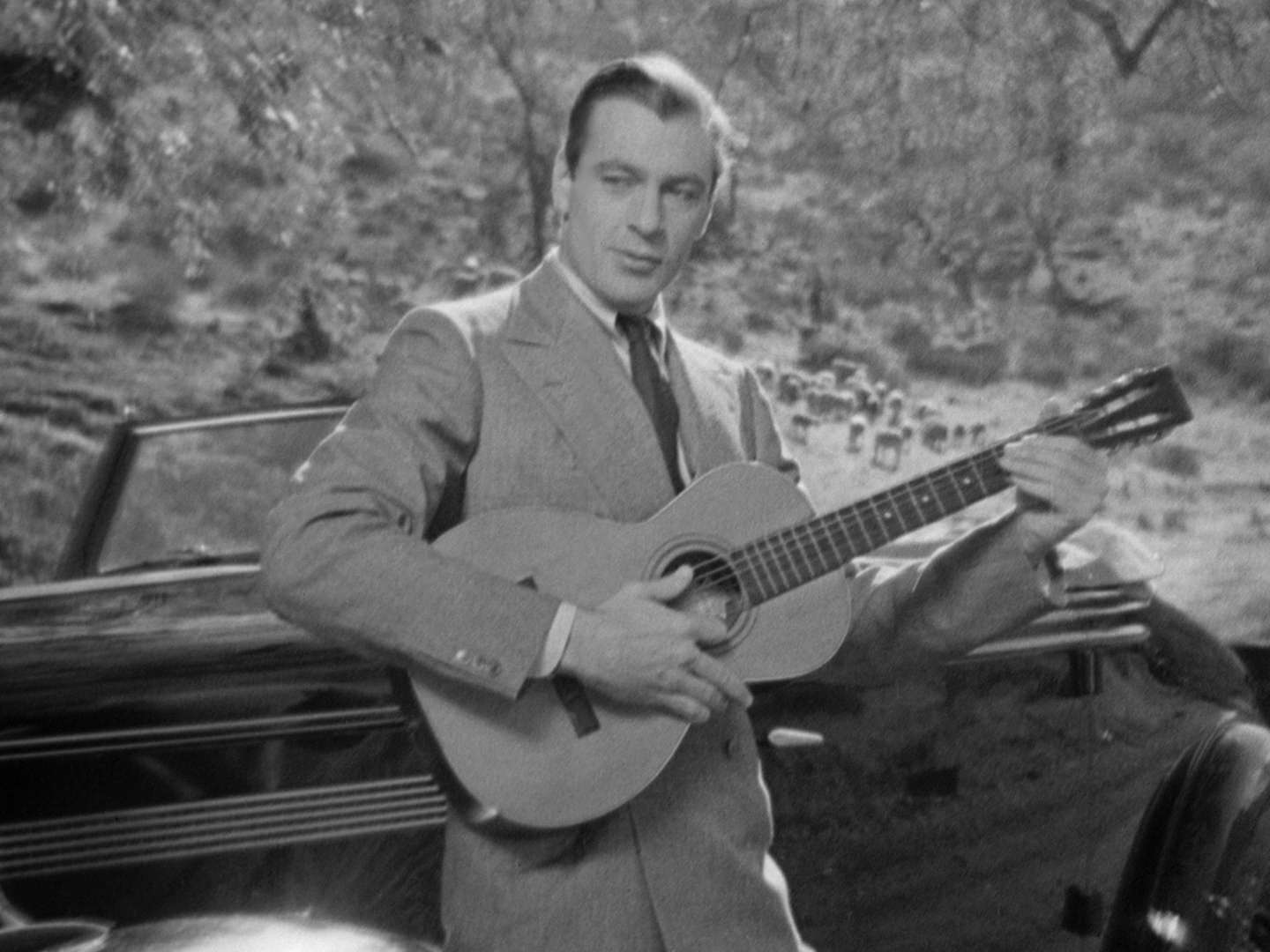
When Madeleine realises this and meets back up with her partner-in-crime Carlos Margoli (John Halliday), the pair work to find Tom and retrieve the necklace. With Tom being utterly besotted with Madeleine, that shouldn’t be difficult, though is she starting to develop feelings for him too?
I enjoyed Desire a great deal and it provides further evidence that the 30s were bursting at the seams with first-class comedies that remain utterly charming roughly 90 years later.
Cooper and Dietrich are wonderful. Desire was made in the same year as Mr. Deeds Goes to Town and the pair of films helped turn Cooper into a megastar. He is enjoyably hapless here and seems entirely driven by his loins through much of the first half of the film but transitions into a stronger and more fitting romantic male lead going into the final act. Dietrich and Cooper had previously starred together in Sternberg’s Morocco. Their chemistry remains strong here and, in fact, it’s believed the pair had a relationship during the production of the earlier film.

Dietrich is as sexy as ever and puts her allure to good use on the frequent occasions when her character manipulates the men in the film. I particularly enjoyed her work during the opening con, which is a little far-fetched but enjoyably clever and well-executed.
The script is sharp and witty and there are some nice visual gags too. The overall construction of the narrative is possibly the MVP of the screenplay though. Everything fits together so beautifully, providing a wonderful flow to the story, for the most part.
I did feel the film stumbled a little in the final act though. There’s quite a tonal shift with the light comedy dropping off to ramp up the crime and romance elements. This more ‘serious’ approach causes the film to lose a little momentum, though the story remains compelling.
Whilst I felt the final act wasn’t as strong as the rest, Desire remains a delightful romantic crime comedy with a wonderful script and winning performances though. Lubitsch’s influence can be felt in much of the film and fans of classic cinema should track it down if they haven’t done so already.
Film: 


Desire is out on 15th January on Region B Blu-Ray, released by Indicator. The picture is a little soft, but I’m guessing this is down to the source material available for the remaster. It’s otherwise a pleasing-looking transfer with well-balanced contrast and minimal damage. For a film of its age, it looks remarkably good. I had no issues with the audio either.
INDICATOR LIMITED EDITION BLU-RAY SPECIAL FEATURES
– 2022 restoration from a 4K scan
– Original mono audio
– Audio commentary with writer and critic Nathaniel Bell and film historian David Del Valle (2021)
– Frank Borzage Oral History (1958, 40 mins): rare archival audio recording of the filmmaker in conversation with George Pratt
– Mr Cooper Goes to Hollywood (2023, 12 mins): film historian and curator Nathalie Morris discusses the stardom and style of iconic Hollywood actor Gary Cooper
– Lux Radio Theatre: ‘Desire’ (1937, 55 mins): radio play adaptation of the film’s screenplay, starring Marlene Dietrich alongside Herbert Marshall in the Gary Cooper role
– Original theatrical trailer
– Image gallery: promotional and publicity materials
– New and improved English subtitles for the deaf and hard of hearing
– Limited edition exclusive 36-page booklet with a new essay by Christina Newland, archival interviews with Gary Cooper, Marlene Dietrich, and Frank Borzage, and film credits
– UK premiere on Blu-ray
– Limited edition of 3,000 copies for the UK
Nathaniel Bell and David Del Valle’s commentary is a well-researched track that sees the pair discuss the backgrounds of the chief players in front of and behind the camera. There’s a little more ‘gossip’ than analysis for my tastes but it remains an enjoyable and informative listen.
Nathalie Morris talks about the life and work of Gary Cooper. She helps you appreciate the wide breadth of his career as well as touching on some of the famous off-screen romances he had.
The archival audio interview with Frank Borzage allows the director to tell his own story. He has some fun tales to tell about his long and illustrious career, which began in the silent era as an actor.
You also get a radio adaptation of the screenplay. With a slightly different cast, it makes for interesting listening, though I think it loses much of the film’s spark. The show also includes an interview with Lubitsch, which feels rather scripted but it’s nice to hear him talk about the film and his then-forthcoming Angel.
In the booklet, Christina Newland provides a solid cover-all piece on the film. There are also archival interviews with Cooper and Dietrich, which are both good fun, though Dietrich is rather spiky so doesn’t give much away. There’s also an early (pre-Desire) interview with Borzage, talking about his thoughts on directing.
So, Desire sees Indicator give another ‘Golden Age’ Hollywood classic the royal treatment and comes highly recommended.
Disc/Package: