


 Director: Glauber Rocha
Screenplay: Glauber Rocha, Walter Lima Jr. (uncredited), Paulo Gil Soares (uncredited)
Starring: Geraldo Del Rey, Yoná Magalhães, Othon Bastos, Maurício do Valle, Lidio Silva, Sonia Dos Humildes
Country: Brazil
Running Time: 120 min
Year: 1964
The Cinema Novo (‘new cinema’ in English) movement in Brazil took place during the 60s and 70s, following three distinct phases. The first took inspiration from Italian Neorealism, showing the people of Brazil and beyond what those in poorer areas of the country were going through.
Glauber Rocha helped push Cinema Novo into the second phase though with his 1964 film, Black God, White Devil. Whilst it shares elements of that first phase and is, indeed, often considered part of it (aided by the fact it was made before the military coup that influenced many of the following Cinema Novo titles), Rocha’s film was bolder, more daring and more distinctly Brazilian than many of its contemporaries.
Receiving critical praise around the world and being nominated for the Palme d’Or, Black God, White Devil was a resounding success and remains one of the most important films in Brazilian film history. In fact, in 2015 it was voted the second-greatest Brazilian film of all time by the Brazilian Film Critics Association (Abraccine).
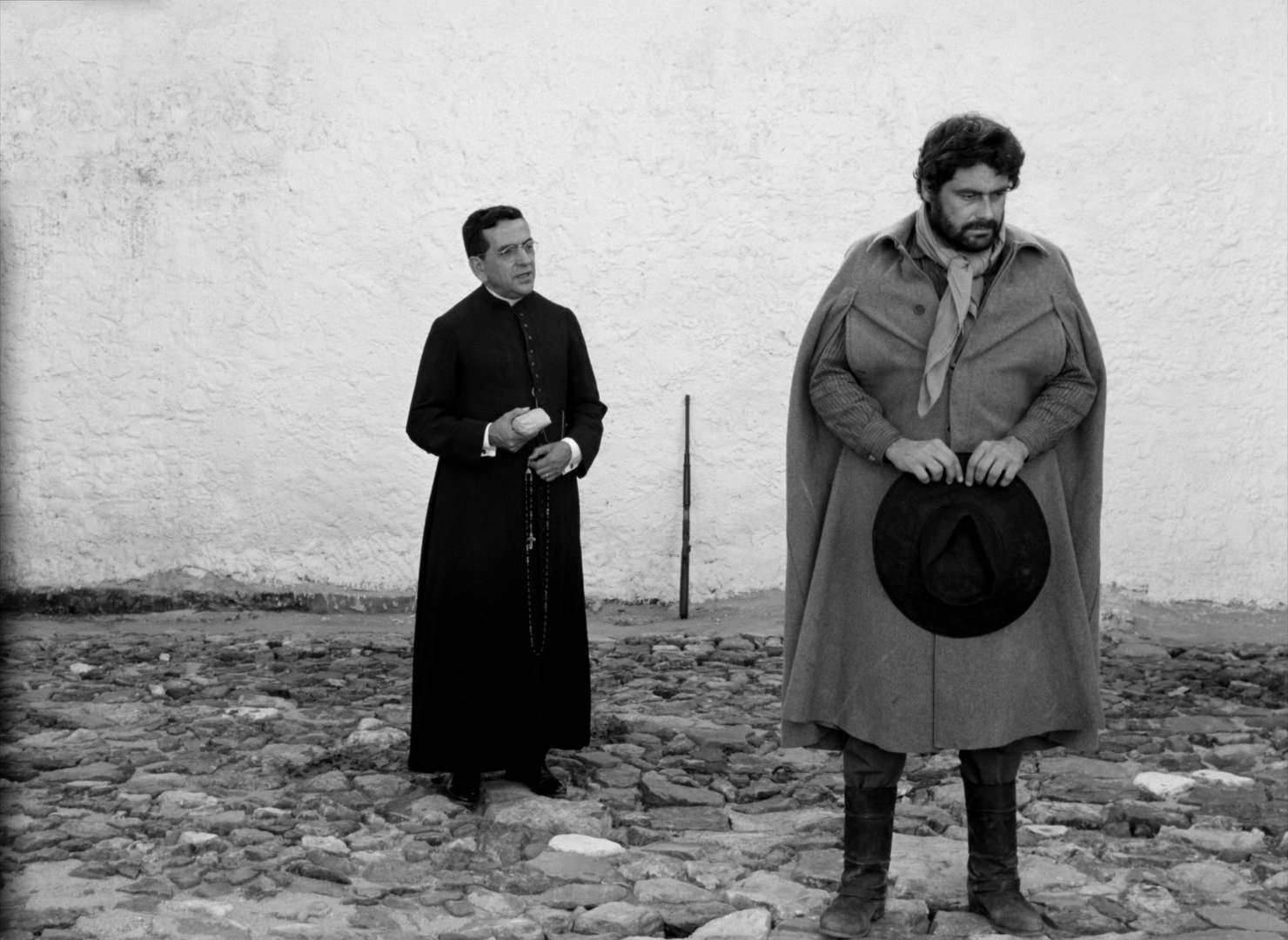
Whilst Black God, White Devil is still appreciated in its home country, it isn’t as well-remembered elsewhere. I must admit, I’d first heard of it only a decade or so ago when it was featured in Mark Cousins’ Story of Film documentary. I watched it not long afterwards on a digital release I came across. Watching that rough-around-the-edges print of the film, I admired Black God but didn’t totally fall in love with it.
So, when Radiance Films announced they’d be releasing Mawu Films’ Blu-ray of Black God in the UK, boasting a new 4K restoration, I figured I would give the film another look. My thoughts follow.
Black God is set in the 1940s, in the scorching heart of Brazil’s sertão (i.e. the wilds or outback). In this drought-ravaged land, ranch hand Manuel’s (Geraldo Del Rey) dreams of owning his own plot of land are cruelly dashed when his ruthless boss cheats him of his hard-earned wages.

Enraged and desperate, Manoel murders his boss and becomes an outlaw, seeking refuge in the holy site of Monte Santo. There, he falls under the spell of Sebastião (Lidio Silva), a self-proclaimed saint who preaches a violent revolution against the oppressive landowners.
Meanwhile, the authorities, fearing Sebastião’s growing influence, hire Antônio das Mortes (Maurício do Valle), a bounty hunter, to eliminate the rebel leader. However, before Antônio can strike, Rosa (Yoná Magalhães), Manoel’s fiercely loyal wife, delivers the fatal blow, leaving them alone and hunted once again.
Seeking solace and protection, Manoel and Rosa join forces with a group of bandits led by Corisco (Othon Bastos), who is believed to be a kind of Robin Hood figure. However, their new leader proves to be equally as needlessly destructive as Sebastião.
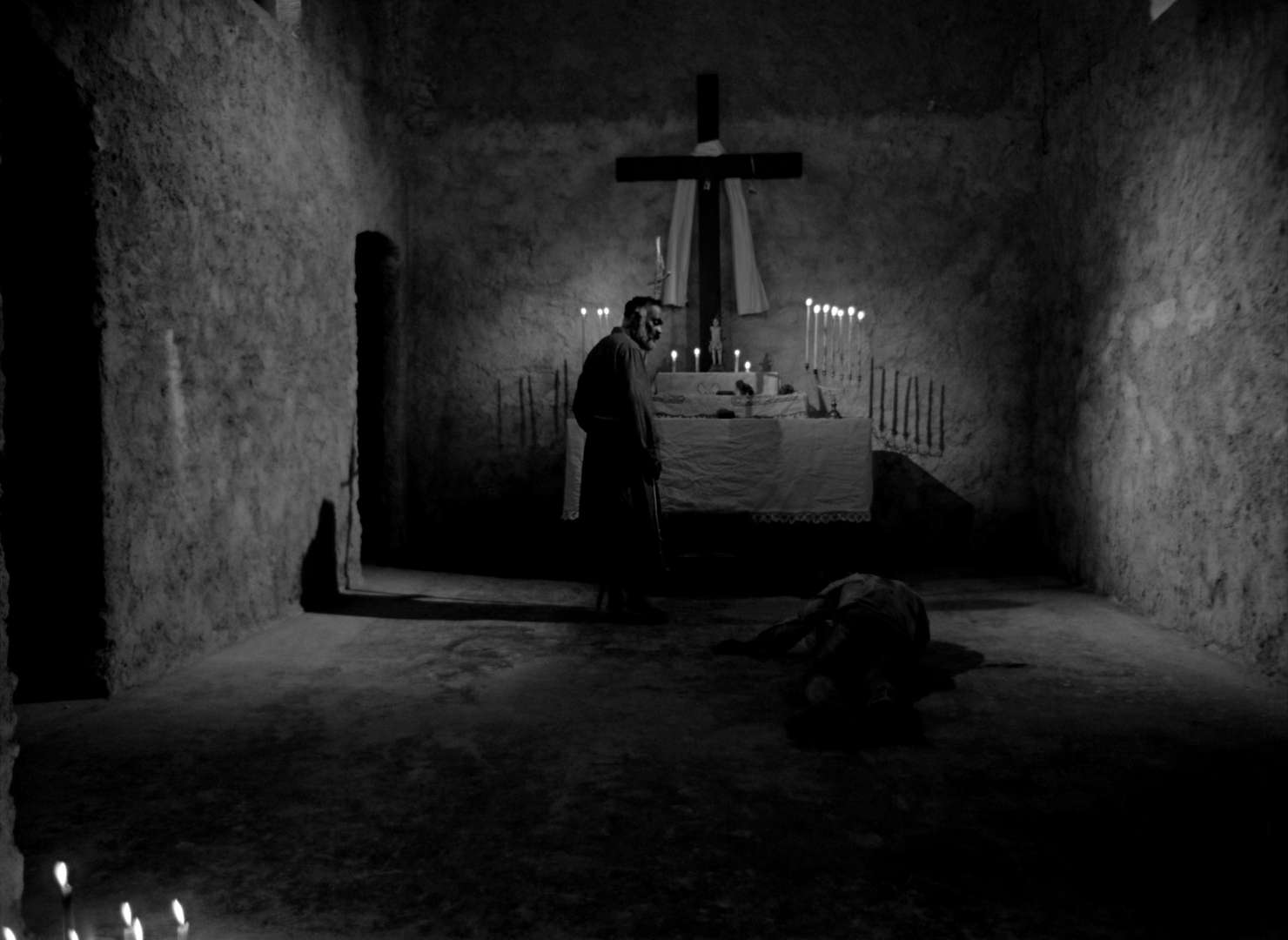
Black God is a near-mythical fable, preaching the dangers of devotion and putting your lives in the hands of someone else. The followers of the film’s ‘Black God’ and ‘White Devil’ do so because they are desperate. Their lives are miserable but they can’t see that their new messiahs will only make matters worse.
It’s a message that’s as prevalent now as ever, with people too often narrow-mindedly praising ‘false idols’ who hold uncaring, often violent attitudes that benefit no one but themselves and their self-aggrandizing myths.
Interestingly, the two key women in the film, Rosa and Dadá (Sonia Dos Humildes) are the only characters with any sense, who can see what’s really going on. The men either blindly follow or stroke their inflated egos, other than Antônio das Mortes, perhaps, who is reluctant to take the job initially offered but ultimately forced upon him.
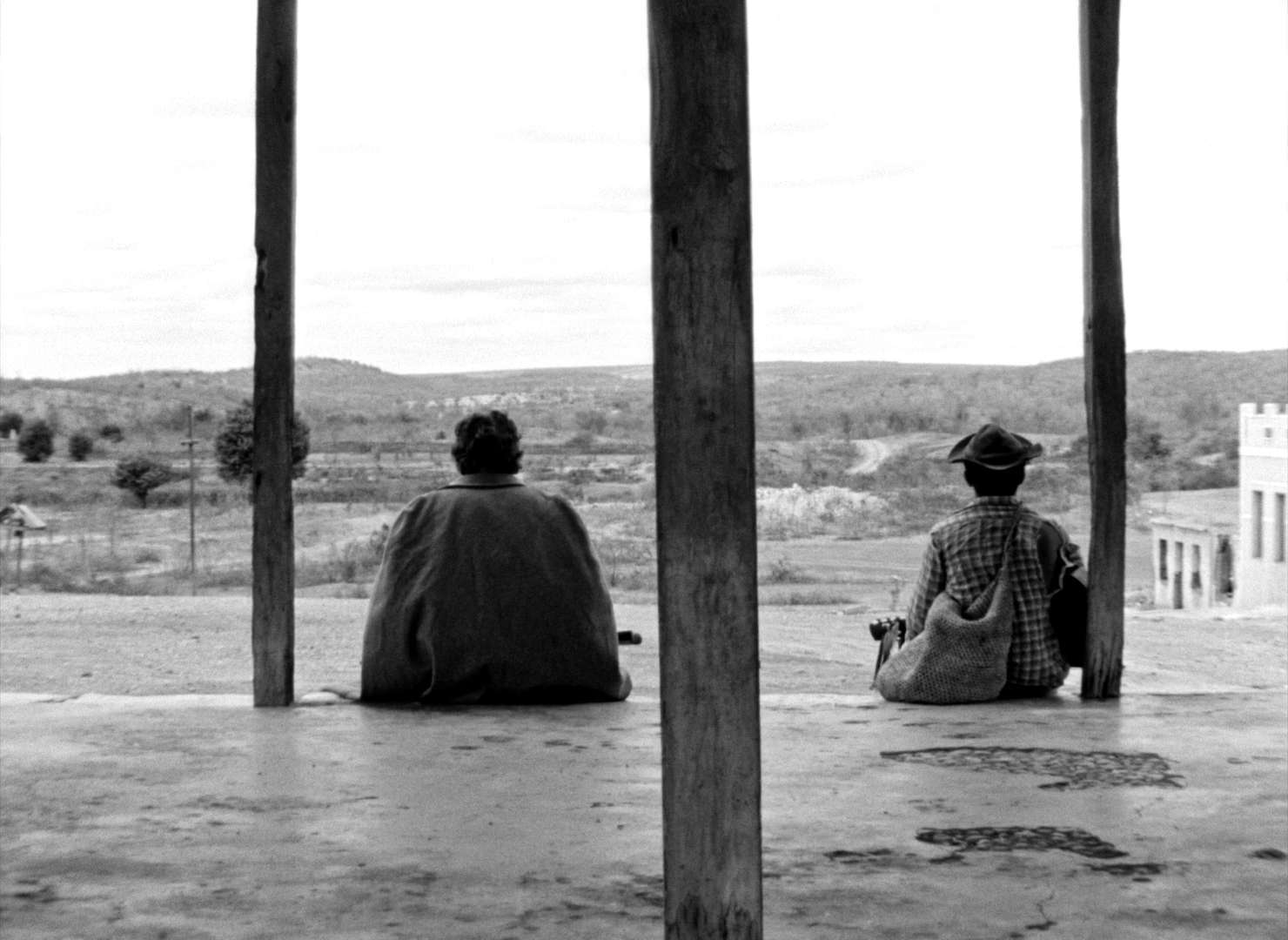
The film is stripped back and stark, with a streamlined plot and a small cast of notable characters. As such, its 2-hour run time can feel quite long and slow. This was my main gripe with the film. Admittedly, I was very tired when I watched the film, which can’t have helped, but I did find it difficult to get through. I like slow cinema but here I felt some simple trims could have made a big difference without losing any of the strengths or messages of the film.
Rocha, however, does make this relatively simple story into something epic. On top of some purposely large performances (particularly Othon Bastos), the use of grand orchestral music by the Brazillian classical composer Heitor Villa-Lobos further heightens proceedings.
A musical narration made up of folk ballads written by Sérgio Ricardo and Glauber himself accompanies those more thunderous passages. These help tell the story more clearly to less attentive viewers (such as myself) on top of adding to the folk story feel of the film.

From a visual perspective, Black God is impressive too. Blending handheld, cinéma vérité inspired material with more carefully composed, relatively static frames, Rocha and his cinematographer Waldemar Lima craft some striking imagery that is often as sparse as the narrative and landscape.
Ultimately, whilst I found Black God, White Devil to be a little slow-moving and challenging, I couldn’t help but admire its bold style and fierce power. It’s a striking piece of work, even if it doesn’t always make for easy viewing.
Film: 


Black God, White Devil is out on 18th December on Blu-Ray, released by Mawu Films via Radiance Films in the UK. The transfer is very impressive, looking detailed and clean but natural-looking, with great depth of tones. I’ve used screengrabs throughout this review to give you an idea of how it looks. The audio is decent too, with only a slight hiss apparent in quieter scenes.
LIMITED EDITION BLU-RAY SPECIAL FEATURES
– New 4K restoration from original 35mm materials preserved by the Cinemateca Brasileira
– Audio commentary by restoration supervisor Lino Meireles
– Intimacy & Distance: the political visual style of Black God, White Devil – a visual essay by Manuela Lazic and Alessandro Luchetti (2023, 14 mins)
– Labyrinth Glauber The Brazilian – a documentary on the filmmaker by Silvio Tendler featuring interviews with colleagues and collaborators (2003, 98 mins)
– Cinema Novo – an award-winning documentary by filmmaker and son of Glauber Rocha, Eryk Rocha on the Brazilian filmmaking movement, featuring interviews with noted figures including Nelson Pereira dos Santos, Joaquim Pedro de Andrade and Rocha himself (2016, 90 mins)
– Trailer
– Optional English subtitles
– Reversible sleeve featuring original and newly commissioned artwork by Time Tomorrow
– Limited edition booklet featuring new writing by filmmaker Kleber Mendonça Filho and critic Rafa Sales Ross
– Limited edition of 3000 copies, presented in full-height Scanavo packaging with limited edition booklet and reversible sleeve

In his commentary, Lino Meireles provides some analysis of the film. He spends a good deal of time explaining what’s happening on screen, which isn’t always necessary, so it’s not the richest track I’ve heard but it’s worth a listen and he makes some important and thought-provoking points.
Manuela Lazic and Alessandro Luchetti analyse the visual style of the film in great detail, particularly paying attention to Rocha’s use of space and distance. Film-makers and scholars will get a lot out of this.
The feature-length documentary ‘Labyrinth Glauber The Brazilian’ begins by charting the director’s final days. The footage of his funeral helps you appreciate how beloved he was in Brazil. The documentary then works backwards through his short but intense life and career. It’s a passionate documentary that attempts to give you an idea of how he was as a person rather than simply running through his achievements.
‘Cinema Novo’ is another feature-length documentary included on the disc. Reflecting the style of the movement it’s exploring, the film is stylish yet raw. It makes effective and extensive use of clips from the films of Cinema Novo to tell its story, alongside some often fiery interviews with those involved in the movement.
I didn’t receive a copy of the booklet to comment on that.
So, it’s an excellent package with a pair of rewarding feature-length documentaries, an intelligent essay and a solid commentary sitting alongside a film that’s long overdue a decent release in the UK. Highly recommended.
Disc/package: