



Between January and March 2022, I watched all Alfred Hitchcock’s films in chronological order and came up with a ranking of them from worst to best. In this five part article, I’m sharing the reviews I wrote as I went along and the final ranking on which I settled. In part 4, I’m looking at the top 20, filled with 4.5 and 5 star classics.
You can find the other parts of this article at the following links:
All entries contain spoilers.
20. SABOTAGE
Like Secret Agent, Sabotage was a film I had seen once many years ago and largely forgotten. I had the vague sense that it was one of Hitchcock’s darker films and also that I didn’t really like it that much. Fortunately, only one of those things proved to be true. The impression of Sabotage I had carried around for years was that it was a dour, humourless effort amidst a run of zippy, fun British thrillers. In fact, there is plenty of humour throughout Sabotage, from Hitchcock’s trademark quirky supporting characters to a final moment that toys with the audiences emotions with an almost throwaway glee. There’s even a very fleeting cameo by an instantly recognisable Charles Hawtrey, decades before he became a Carry On legend. Hitchcock stirs this humour seamlessly into a very bleak story of a wife in a convenient but passionless marriage to a cinema owner, Mr. Verloc, who is also a secret saboteur, working for a gang of European terrorists. The key to the marriage is Verloc’s supportive behaviour towards his wife’s little brother but when the boy unwittingly becomes a pawn in the sabotage, things take a turn for the worse.
Sabotage is the fourth collaboration between Hitchcock and screenwriter Charles Bennett but this one takes a slightly different approach, making its main villain one of the protagonists, often putting the audience in his shoes as much as in those of the more sympathetic characters. Oska Homolka is effectively sinister as Verloc but his character is depicted as more desperate than inherently evil, craving the love of a wife who has no passion for him and even using a tragic event as an excuse to make an attempt to advance the relationship sexually. Verloc is a layered villain, ruthless but pathetic, and never fully in control of his situation. Hitchcock and Bennett allow us to understand him better by making him so prominent rather than hiding his identity, though they wisely never try and get us to sympathise with him. The underrated Sylvia Sidney instead garners all the sympathy as the wife whose need for security for herself and her brother has condemned her to a staid, loveless marriage.

Sabotage is one of those films in which the setting is as important as the characters. Although it mostly takes place in and around one small cinema, Hitchcock manages to give us a real sense of 30s London, which is crucial in making us feel a sense of the threat hanging over the whole community. The film’s major set piece, involving the delivery of an explosive package, particularly gives us a nice trip round the city. It’s a famous sequence filled with tension but one that Hitchcock himself came to regret, feeling he broke an unspoken contract with the audience with its payoff. That payoff though is crucial to the plot and I’ve always felt it’s a strong scene with a refreshingly different take on the suspense we associate with this director.
Sabotage fits into Hitchcock’s run of classic British thrillers nicely, while also standing out as quite different from them. There’s fun to be had but the film has a really dark heart that makes it all the more memorable. It’s an oft overlooked work in the Hitchcock canon, usually flagged up only by aficionados of British cinema, but it’s a clear demonstration of the director’s continued growth after the stumble of Secret Agent.
19. MR. AND MRS. SMITH
Look at the bottom of most people’s Hitchcock rankings and that’s where you’ll usually find Mr. and Mrs. Smith. And fair enough, there are plenty of people who legitimately don’t like this film. But read even a handful of reviews and you’ll start to see that same problem cropping up again and again: people complaining that this is a Hitchcock film without suspense or murder or intrigue, as if all those things were meant to be in this screwball comedy and Hitch just forgot to put them in there. When a director becomes as famous as Hitchcock is for a certain type of film, they more often than not get held hostage by reductive viewers who demand the same thing every time. But the Hitchcock filmography is much more diverse and interesting than 50+ variations on Rear Window and those who wish it weren’t are missing out.
Rant aside, I’m not going to point an accusatory finger at everyone who doesn’t like Mr. and Mrs. Smith. After all, you’ll generally find it towards the bottom of Hitchcock aficionados’ lists too. And while I partially attribute my appreciation of Mr. and Mrs. Smith to a personal love of screwball comedies, I can well see how even fans of that genre have struggled to warm to this film. It doesn’t have that rat-a-tat 100mph dialogue associated with some of the more famous examples of screwball, opting instead for a slow-paced, gag-light dissection of 40s gender relations laced with a poisonous but wickedly funny edge. You could call Mr. and Mrs. Smith a tough-to-love film about tough-to-love people. But I love it.
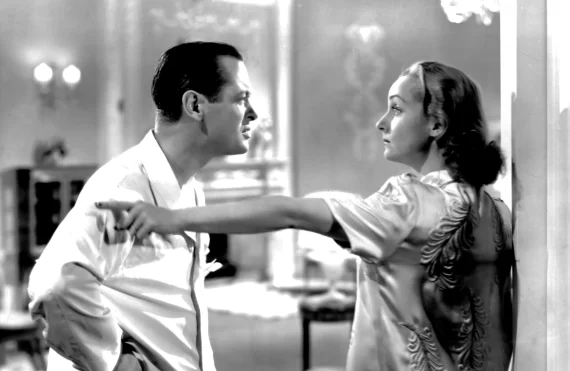
The script, by acclaimed screenwriter Norman Krasna, examines the relationship of a volatile couple who suddenly discover that, due to a minor technicality, they’re not legally married as they had supposed. The obvious solution, to marry immediately, is scuppered when a betrayal by the husband makes the wife think twice about wanting to be together. So begins a lengthy battle between the two, in which anyone unfortunate enough to cross their paths becomes an unwitting pawn. Any comedy about a couple who are perfect for each other because of their mutual awfulness is bound to exist in the long shadow of Leo McCarey’s masterpiece The Awful Truth, and Mr. and Mrs. Smith can’t help but evoke that spectre, although it is ultimately quite different in flavour. There’s a casual cruelty to Mr. and Mrs. Smith that turns some modern audiences off, but this was not unusual in the screwball genre and it only takes a small adjustment of sensibilities to enjoy it rather than be horrified. There are slight line-crossing moments, such as Mr. putting Mrs. in a headlock, but this line between comic embattlement and actual abuse was one that would continue to be prominently crossed in comedy right into the 80s. Fellow fans of the sitcom Cheers, one of the great latter day screwball comedies, will be more than used to having to swallow these objections.
Chief among Mr. and Mrs. Smith’s attractions are stars Robert Montgomery and Carole Lombard, who are witty, hilarious and commendably unrestrained in their blackly comic toxicity. There’s a common complaint that Mr. and Mrs. Smith just isn’t funny enough but I beg to differ. It’s not the same kind of funny as The Awful Truth, which trots out inspired set piece after inspired set piece, but Mr. and Mrs. Smith is artful at a slower, more character-rich approach. The plot is not simply a clothes line on which to hang the gags and there’s a satisfying weight to how the whole thing unfolds, even if the final scenes head into classic screwball territory. There’s also a very risqué edge to certain parts of the dialogue, which reveal more about the Smith’s sex life and its eyebrow-raising but apparently consensual roughness than was common in 40s films. And the final shot feels positively filthy for its era, a classic Hitchcock sexual metaphor over a decade before North by Northwest ended with a train entering a tunnel.
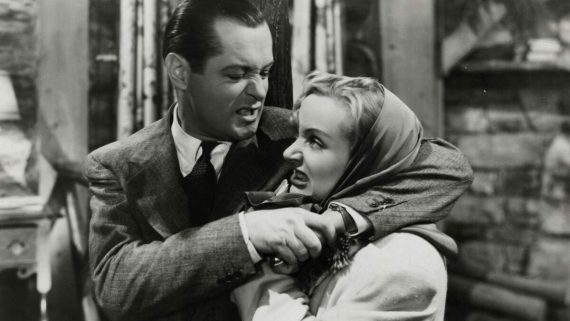
Mr. and Mrs. Smith is a film you’d think twice about recommending to most people but I think it’s a slick, unusual and rather terrific screwball comedy. I wouldn’t say Hitchcock should necessarily have delved into this genre again but his one shot at it was far from the disaster many make out. And though casual Hitchcock fans continue to be confused by it, I’d say this is exactly the sort of result you’d expect from a Hitchcock screwball comedy, and what a delicious proposition that is. It’s different, unique and fascinating. And, if you’ve got a bit of the Devil in you, it’s very funny.
18. STAGE FRIGHT
I’ve loved the lesser-known Hitchcock comedy-thriller Stage Fright for many years but I’ve always wondered if the 5 star rating I gave it many years ago was an overreaction; a concession to my love of these quirky, dark British comedies and an attempt to redress the balance for years of Stage Fright going largely unseen or underrated. The conclusion I’ve come to on this rewatch is that Stage Fright is undoubtedly a hidden Hitchcock gem but it’s not quite up there with his very best work. I’ve downgraded it to a very respectable 4.5 stars but I’d still recommend anyone who hasn’t seen it a seek it out immediately.
Stage Fright is the second of two films that I always think of as constituting a second mini-British-period for Hitchcock. This was tied in with the creation of Hitchcock and Sidney Bernstein’s short-lived production company Transatlantic Pictures, which was intended to allow Hitch to make films in both Hollywood and London. The company was pretty much destroyed by the disaster that was Under Capricorn, and while Stage Fright began as a Transatlantic Picture, it ended as a Warner Bros. one. This did not effect the film’s quintessentially British flavour however, and Stage Fright feels like a jolly little homecoming, a return to the good-humoured 30s British thrillers that made Hitchcock’s reputation. This is a refreshing change after a slew of films that largely, or in some cases completely, lacked the humorous edge so readily identifiable with Hitchcock.
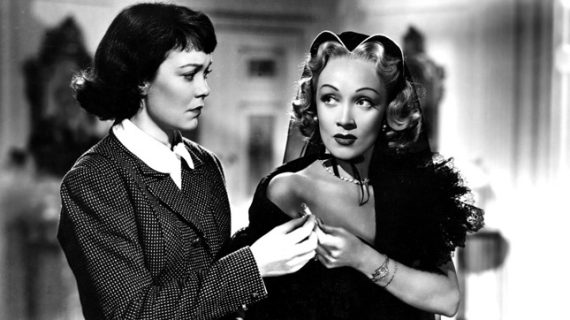
While you can easily draw a line from Hitchcock’s late-30s thrillers to Stage Fright, there are some noticeable differences. The likes of The 39 Steps, Young and Innocent and The Lady Vanishes had a terrific energy, packing a ton of thrills and laughs into their short runtimes. Stage Fright runs a little longer, moves a little slower and brings a hint of Hollywood poise to the charmingly loose-limbed formula of the British films. Into the distinctively British surroundings, Hitchcock drops two big Hollywood stars: Jane Wyman and Marlene Dietrich. Both are great, with Wyman playing a wide-eyed young adventurer getting quickly in over her head and Dietrich essentially parodying her own screen persona as a preening, narcissistic stage actress. While most reviews focus on these two performances, Stage Fright’s major appeal comes from its gallery of great British supporting players. In particular, it’s wonderful to see Hitchcock working with Alastair Sim, one of my favourite actors of the period. Though a comedy legend and hugely popular, Sim was routinely underused even in films where he was given top billing, like Hue and Cry, The Green Man or School for Scoundrels. Here, he is given the meaty role of Wyman’s roguish father, delighted to be drawn into a dangerous adventure by his daughter.
As well as Sim’s reliably entertaining turn, we also get to enjoy the likes of Sybil Thorndike as Wyman’s stuffy mother, Miles Malleson as a pub bore, the scrumptious Joyce Grenfell in a brief skit at a garden party and, in a performance that almost steals the film, Kay Walsh as an opportunistic cockney maid. The joy of these performances is perhaps a little offset by how they begin to fragment Stage Fright into a series of vignettes, entertaining in themselves but not quite flowing as effortlessly as The Lady Vanishes, which managed to make its superficially similar gallery of comic creations coalesce into a focused narrative. Stage Fright instead makes sideshows out of its grotesques, a different approach which creates an extremely likeable but slightly slower and less satisfying end product.
On the rare occasions when Stage Fright is discussed, it is usually in relation to the false flashback, a device that Hitchcock ultimately regretted and which many audience members resented. The film opens with Richard Todd’s man on the run recounting to Wyman how he came to be in trouble with the police. We see a flashback of the events as Todd tells them but they ultimately turns out to be a lie. While some seemed to see this as not playing fair with the audience, I’ve always thought it’s a clever and unconventional twist fiendishly embedded in the narrative. Perhaps having watched the film in an era when unreliable narrators are less uncommon, I was more prepared. There’s a lot of nonsense been talked about the supposed contract a director should have with their audience and Hitchcock himself seemed surprisingly easily swayed by such talk. I’ve always thought that way of thinking only serves to impose limitations on creativity. Stage Fright’s nifty little trick works well for me and is entirely in keeping with the film’s mischievous air. As the great comedian Stewart Lee has observed in his work, it’s easy for an audience used to the mundane to confuse innovation with a mistake.
All in all, I still absolutely love Stage Fright, although seeing it as part of a chronological rewatch has downgraded it slightly by association with Hitchcock’s other masterpieces. Its current placing at number 18 in my ranking is merely an indication of the level of quality we’re dealing with at this stage.
17. YOUNG AND INNOCENT
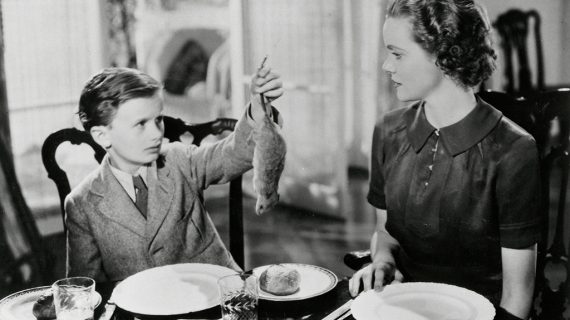
I’ve been looking forward to Young and Innocent coming up ever since I started this Hitchcock adventure. It’s a film that tends to be looked on as minor Hitchcock and its ultra-light tone and fairly thin plot have seen it consigned to semi-obscurity, save for one key moment that tends to be the only context in which Young and Innocent gets discussed. But I’ve always had a massive soft spot for this film and rewatching it last night just confirmed its place as a personal favourite. Young and Innocent was the last of the British collaborations with screenwriter Charles Bennett and, following the strange Secret Agent and the darker Sabotage, Young and Innocent is a breath of fresh country air, with its light, whimsical tone and quaint parochial settings. All of the Bennett collaborations feature some level of humour but Young and Innocent comes closest to being an outright comedy, with its wrongly accused man on the run encountering a quirky collection of characters and some absurd situations. Chief among these is a hilarious scene at a children’s party, in which he is forced to adopt a ridiculous pseudonym.
Derrick De Marney is great fun as the man on the run but it is his reluctant accomplice, police chief’s daughter Nova Pilbeam, who stands out. In fact, Young and Innocent slowly positions her as the main protagonist above De Marney, and it is a wise move. Having appeared as the kidnapped daughter in The Man Who Knew Too Much, Pilbeam had since grown into a strong leading lady and here she is magnetically charismatic and convincingly layered as a conflicted woman drawn into a caper against her will. De Marney and Pilbeam pretty much carry the film between them, although Edward Rigby is also great in a late-arriving but pivotal role.

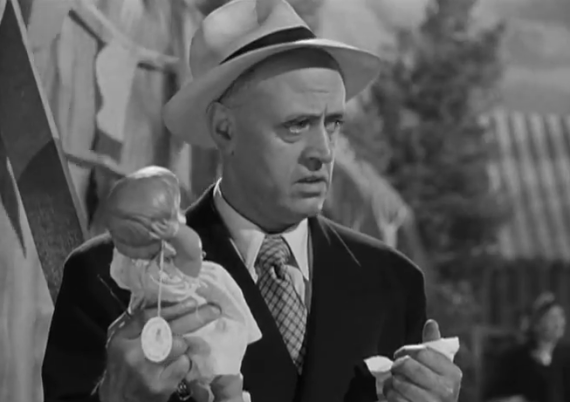
Young and Innocent is far from a perfect film. There are a few too many dodgy model shots standing in for a railway location, including one that makes the baffling choice to try and include the lead characters by utilising dolls. The film feels like it was shot on a shoestring budget so there’s quite a bit of artifice elsewhere, from back projection to obvious studio sets. The plot itself suffers from its central quest to uncover a lost raincoat seeming like nowhere near enough evidence to exonerate the accused as he seems sure it will. And there is a moment involving blackface which is inextricably linked with crucial scenes. It’s not nearly as offensive as many of its contemporary examples of blackface but, in the end, it’s still blackface and still hard to watch in a modern mindset.
The blackface aside however, all of these flaws only serve to make Young and Innocent more endearing to me. It’s a thoroughly good time throughout and Hitchcock seems to be enjoying himself as much as his game cast. And there is, of course, that one famous shot in which the camera pans for a long time through a large room full of people to finally hone in tight on one very small detail which reveals the identity of the murderer. It’s a virtuoso moment in a modest production.
Young and Innocent isn’t as groundbreaking as Blackmail, as weighty as Sabotage, as crucial to Hitchcock’s development as The Lodger, but I’ve placed it above all of them in my ranking because Young and Innocent means a lot to me and I enjoy it enormously. It feels like MY Hitchcock film, the neglected puppy in the litter that I’ve chosen to adopt.
16. FRENZY
I remember absolutely loving Frenzy as a younger man and I still do. Watching it again as part of the full Hitchcock filmography, I did find a few more flaws than on my previous viewing over a decade ago, but at the heart of it Frenzy is a very strong piece of work. It showcases a director skilfully tweaking his style to fit with a new era, rather than an old-school bore trying desperately to keep up with the new wave of filmmakers, as some would have it. Given the potential that relaxed censorship rules had to unleash terrible things in Hitchcock, Frenzy, for all its grim brutality, largely manages to stay on the right side of good taste. It’s perhaps a good thing that Hitchcock didn’t make many more films after this but here he pulls off a late-period gem which manages to explore unpleasant areas of sexual perversion without succumbing to them itself.
Given that it is a story about a man who rapes and strangles women, the fact that much of Frenzy is played as black comedy could be a cause for concern but for the most part Hitchcock achieves this tonal balancing act nicely. Crucially, he never makes the crimes themselves the subject of humour, treating them with the utmost seriousness and condemning those who don’t with unflattering portrayals, such as the two odious businessmen in the pub who make off-colour jokes and relish the vicarious thrill of reading all the sordid details in their newspapers. Hitchcock contrasts these attitudes with the infamous rape scene, which is deliberately repulsive and hard to watch. I do have a small problem with the scene in that, effective as the build up is, the rape itself, with Barry Foster’s repeated cries of “Lovely”, has always played as unintentionally silly to me, while the image of the dead victim with her tongue protruding wildly from her mouth feels perplexingly cartoonish.

Though some have decried it, the rape scene serves a necessary purpose in ensuring the full horror of the crimes are understood by the audience so that when it comes to the moment in the narrative when another attack is imminent, Hitchcock is able to go completely in the other direction and pull the camera away without showing any part of the crime itself. This moment is justly Frenzy’s most renowned. When Foster leads Anna Massey up the stairs to his flat we know what is coming and we’re left in no doubt when Foster utters the words “You’re my kind of woman” as he closes the door, echoing his words to his earlier victim. Even knowing what was coming, my blood ran cold at this line. But then we get total calm onscreen as the camera pulls backwards silently and returns down the stairs and out into the bustling street. It’s one of the greatest shots of Hitchcock’s career. While the onscreen rape is harder to sit through, it is this moment that haunts our thoughts after the film is over, acknowledging as it does that normal life goes on while terrible things are happening close by. It makes you wonder how often you’ve been one of those oblivious passers-by and how often you will be again.
You may be wondering at this stage how on Earth you make a black comedy out of material like this. Well, first of all you hire Anthony Shaffer to write it for you. Shaffer wrote some of the great screenplays of the era, notably The Wicker Man and Sleuth, and Frenzy sits nicely somewhere between those two reference points. Shaffer has a great ear for dialogue, a nice knack for making minor characters stand out and the ability to switch tones abruptly but not jarringly. Frenzy ultimately becomes a three-headed beast, split between the viewpoints of Jon Finch’s wrongly accused man, Barry Foster’s serial killer rapist and Alec McCowen’s Chief Inspector on the case. While Finch shoulders the bulk of the drama and Foster the horror, McCowen’s scenes bring a lighter comic bent to proceedings as he talks over the case with his wife, hilariously portrayed by Vivien Merchant. She has recently taken an interest in gourmet cooking and these scenes are punctuated by the arrival of evermore revolting looking dishes, ostentatiously revealed to the horrified McCowen from beneath silver tureens. It could almost be a sitcom if the characters weren’t simultaneously discussing the psychology of murderers.
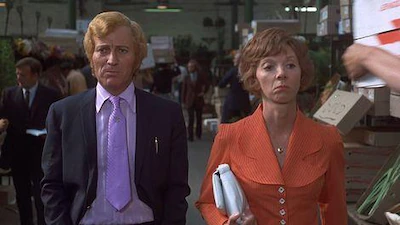
While I’m sure some find the overtly comedic scenes in Frenzy ill-fitting with the deadly serious subject matter, it is exactly that juxtaposition that makes them work for me. It mirrors that scene in which the quiet corridor and innocuous street scene are contrasted with what we know is happening behind those closed curtains. In keeping with these bold tonal choices, Hitchcock and Shaffer give the film’s most prominent comedy set piece not to McCowen but to Foster. In this striking, blackly comedic sequence, Foster dumps the body of his latest victim into a potato lorry heading for Lincolnshire, before realising at the last minute that he has left a crucial piece of evidence on its person. He is forced to then board the lorry and search frantically for the evidence as it begins its journey to deliver its filthy load. Toying with grim slapstick, this sequence can be enjoyed either as a suspenseful moment in which the viewer is suddenly forced to sympathise with the villain or as sheer schadenfreude as we watch Foster being taunted from beyond the grave.
The only other area in which Frenzy falls down a little is the casting of the lead character. Jon Finch is quite unconvincing as Richard Blaney, an unpleasant but innocent man who finds himself implicated in the crimes of an acquaintance, and more and more Hitchcock seems to be trying his best to move the focus away from him and onto the more interesting supporting cast. Fortunately, Barry Foster is superb as the killer and McCowen drolly amusing as the Inspector, while smaller roles are brilliantly inhabited by the likes of Billie Whitelaw, Anna Massey, Bernard Cribbins, Barbara Leigh-Hunt and the aforementioned Merchant, whose quaffing of a revolting margarita is a comic highlight. Also excellent is the location work that serves as the strong cast’s backdrop. Gone is that trademark ropey back projection and those unconvincing model shots, replaced by a gloriously atmospheric Covent Garden. Hitchcock himself was the son of a Covent Garden merchant and this affection for the area informs his beautiful documentation of it.
Frenzy, then, is a powerful and powerfully entertaining film that still feels bold and striking decades down the line. It showed a different side of Hitchcock, unrestrained by censorship, and he feels creatively rejuvenated. Although it fell into comparative obscurity for a while, Frenzy has had a resurgence in recent years to become one of the more widely discussed later Hitchcock films. I’ve placed it at number 16 in my ranking which, with only one film left to go at this stage, is a bloody impressive showing.
15. SABOTEUR
I had an inkling going in that I might love Saboteur. I remembered enjoying it a great deal when I saw it nearly two decades ago. Back then I probably assumed every Hitchcock film was a recognised classic but a growing love of film and awareness of the canon in intervening years led me to the realisation that not only is Saboteur not that well loved, it’s barely even discussed. It seems that Saboteur is considered something of a throwaway trifle, usually seen as either an inferior rehash of The 39 Steps or an underdeveloped dry run for North by Northwest. But while the spirit of both films does loom large when watching Saboteur, it is not to the film’s detriment. If anything, Saboteur emerges as a sort of quirky younger sibling. It’s often compared to B-movies but it actually reminded me more of the independent films of the 80s and 90s on which my love of cinema was founded. It’s an action-adventure for the outsider, filled with humorous asides and characterised by a deep distrust of authority, class snobbery and anti-humanitarian cynicism.

What worked so well for me seems to be part of the reason many people dislike Saboteur. There are several speeches and scenes built around the importance of human kindness and giving people the benefit of the doubt, to the extent that a couple of ostensibly good characters make some pretty questionable decisions in regards to helping an escaped, handcuffed man evade the police when they really have no idea of his supposed crimes. It’s a leap you have to make with Saboteur, a film that is so keen for you to tune into its outsider viewpoint that it slips in a truly bizarre scene in which the hero’s fate is placed in the hands of a small community of what would then have been called “circus freaks.” Heavy handed? Most definitely, but by the standards of the era it is also pretty unique and I was more than happy to go along with it.
One of the reasons Saboteur is so frequently overlooked is its lack of a big star presence. Hitchcock films of this era were beginning to be characterised by lead actors like Joan Fontaine, Cary Grant, Gregory Peck and Ingrid Bergman. Hitchcock apparently originally envisioned Gary Cooper and Barbara Stanwyck in the lead roles here. But by instead casting the lesser-known Robert Cummings and Priscilla Lane, as well as a gallery of great B-list character actors in supporting roles, Hitchcock improved Saboteur by keeping it rooted in that “ordinary people” theme. The encounters Cummings’ wrongly-accused fugitive has may be somewhat bizarre at times but this only serves to highlight his ordinariness, making the moments he steps up and uses his ingenuity or courage to navigate a problem all the more inspiring.
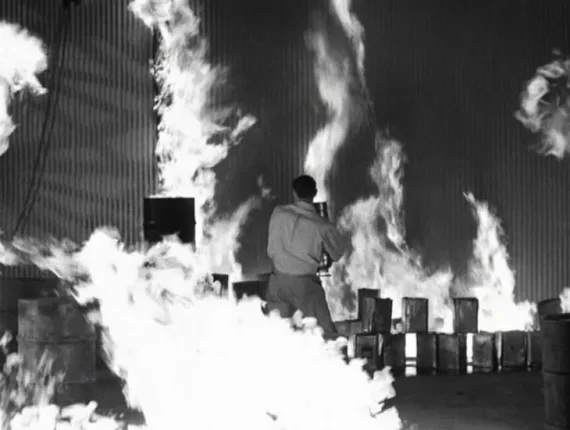
Though Saboteur settles into an unusual, good-humoured groove for a chunk of its runtime, it opens with a fairly grim twenty minutes or so, in which Cummings character watches his best friend burned to death and is then accused of the crime while trying to comfort the man’s devastated mother. The fire itself is a tremendously powerful sequence and the emotional fallout is not shied away from. This visceral opening implants the seed of subversion that underscores Saboteur’s subsequent story, in which the police and the high-standing members of the community whom they revere are the villains and society’s outcasts are the heroes.
Amidst its oddball vignettes, Saboteur makes room for plenty of suspenseful sequences and these eventually take over completely, starting with a brilliant, lengthy sequence at a high society party in which the hero struggles to convince oblivious attendees of the imminent danger they are in. The narrative then cleverly switches focus from hero to villain as a chase ensues leading to a superb scene in a movie theatre and a nail-biting finale at the top of the Statue of Liberty which is Saboteur’s most famous sequence.
Saboteur remains one of Hitchcock’s lesser known films of the 40s but it’s first rate Hitchcock in my book. If you’re looking for one of Hitch’s most purely enjoyable adventure films, pop this one in on Friday night, crack open a beer and discover one of the Master’s hidden gems.
14. THE 39 STEPS
The 39 Steps is as brilliant as its reputation would have you believe. I’ve always liked the film but it’s taken me many years to see it for what it is: the first 5 star classic in the Hitchcock canon. In the past, I think I’ve probably not given The 39 Steps the chance it deserves. As a very young man when I first saw it, it was viewed alongside the glossier Hollywood Hitchcock films whose easy to enjoy glamour I would’ve then craved over the lower budgeted British pictures. Years later when I rewatched The 39 Steps, I did so immediately after reading John Buchan’s source novel. I enjoyed the novel so I found myself frustrated by how different the film was. This is far from a straight adaptation of Buchan’s story, merely taking the central premise of a wrongly accused man on the run to weave a very different tale. Even the meaning of the title is completely different in Hitchcock’s version.
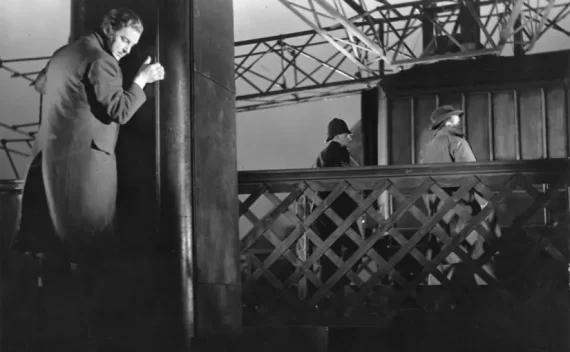
Last night when I sat down to watch The 39 Steps I did so without any constrictive expectations and with the benefit of having placed the film in its proper chronological context. The 39 Steps is a humongous leap forward for Hitchcock, applying lessons learned in the scrappier The Man Who Knew Too Much to create a vibrant, fast-paced, shining jewel of a comic thriller. The directorial choppiness that affected some of Hitch’s early sound films is nowhere to be seen here. The 39 Steps flows with incredible smoothness through its various adventures in apartments, on trains, in big houses and against sprawling Scottish landscapes. The glorious Highland locations recall the beautifully shot Cornwall backdrops of The Manxman, but Hitchcock manages to evoke the lonely claustrophobia of Richard Hannay’s predicament even when he’s a dot against rolling hills. When Ernest Lehman took The 39 Steps as an inspiration for the much larger-scale North by Northwest, he made Cary Grant seem like a dot on an enormous American canvas. Conversely, The 39 Steps makes Robert Donat seem bigger than the whole of the UK.

The blending of comedy and drama that worked so well in The Man Who Knew Too Much is improved upon here. Hannay’s predicaments range from a deadly serious run in with the brave wife of an abusively oppressive crofter (a young, but somehow still old, John Laurie) to a farcical sequence in which he is mistaken for guest speaker at a political rally. Donat is a great lead, bringing a heroic dignity to his frequently undignified situation, and Madeleine Carroll is also excellent as the leading lady. Aside from a brief appearance early on, it’s easy to forget that Carroll doesn’t really turn up until about 25 minutes from the end of the film but her arrival brings with it a screwball comedy dynamic with her reluctant kidnapper, to whom she spends a large amount of screen time literally shackled.
There are many articles out there about elements of misogyny in The 39 Steps. While that’s to be expected to some extent in a 1935 film, I actually found The 39 Steps to be far more of a reflection of the misogynistic society of the time than it was an attempted vindication of it. The women in the film do suffer considerably, from the murdered Annabella to the brutalised Margaret and the exploited Pamela, but it felt to me like the viewer was led to have a great deal of sympathy for all of them. Indeed, Margaret’s whole function in the film feels like a tragic critique on the role of men in oppressing women. Many have pointed to Pamela’s refusal to believe Hannay as a denunciation of her on the film’s part but from the first moment when Hannay attempts to save his own skin by forcing a kiss on her (a hoary trope that survived right into the 21st century), The 39 Steps gives Pamela every reason to hate and distrust Hannay. Hitchcock even slips in one of those moments at which he quickly became adept, in which the audience is forced to switch allegiances as we watch Pamela attempt to escape from the sleeping Hannay’s room. We know her presence is crucial to the hero’s quest but we are firmly placed in Pamela’s justifiably terrified position, a fact confirmed by Hitchcock deriving tension from the near-dropping of an ornament that would wake the slumbering hero.
The 39 Steps confirmed that the success of The Man Who Knew Too Much was no fluke. It remains the most acclaimed film of Hitchcock’s British period.
13. ROPE
Having finally escaped his contract with David O. Selznick, Hitchcock was ready to try something different with his newfound freedom. Teaming up with British businessman Sidney Bernstein, he founded the short-lived Transatlantic Pictures, a production company through which he could direct films in both Hollywood and London. The first fruit of this partnership was Rope, one of Hitchcock’s boldest experiments. Box office receipts and critical response were disappointing but in subsequent years Rope has been embraced as one of the great cult Hitchcock films.
For my part, Rope is a film with which I’ve had a shifting relationship. It was one of the very first, perhaps THE first, Hitchcock film I saw and it kicked off a lifelong love of the director. But when I returned to the film many years later, I found my opinion on it has cooled a bit. I found it stagey, a tad overwrought and I thought James Stewart, with whose work I had since grown more familiar, was badly miscast. I still liked the film but I put it down as second tier Hitchcock, albeit maintaining my affection for it as my doorway to the Master of Suspense. This, then, became my official line on Rope and I did not return to the film again until last night. Whereupon, of course, I absolutely loved it! It’s always worth revisiting films we’ve seen already because opinions inevitably change as we do ourselves. And on my third viewing of Rope, I saw yet another kind of film. This time I didn’t feel it was stagey at all. Quite the opposite, in fact. Limited to one space in the second of Hitchcock’s “limited-setting” films (the first being the wonderful Lifeboat), Rope’s stage origin is obvious but in making it a technical exercise as well as a taut little thriller, Hitchcock renders the potentially claustrophobic story entirely cinematic. This is helped by the sumptuous Technicolor, in which Hitchcock was shooting for the first time, and the innovative techniques he used to give the impression that the film is taking place in real time. Using long takes of ten minutes at a time, Hitchcock covers the joins with conspicuous but often effectively atmospheric moments in which the camera is consumed by people and objects momentarily obscuring the audience’s vision. The younger me probably took this for a dated, obvious effect but now I see it as one that deliberately draws attention to itself. Hitchcock wants us to be complicit in the magic trick he is performing. And if we go willingly, the spell is successful.
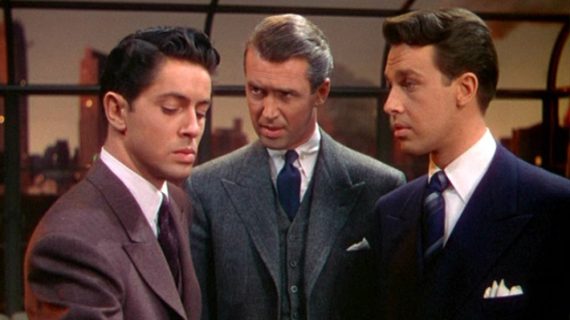
In a more covert move, Hitchcock had his sets placed on wheels so they could be moved or widened to make way for the constantly exploring, large Technicolor camera. This gives the film an incredible sense of space where a static set would surely have closed things in and made it more like a straight filmed play. The large cyclorama that depicts a cityscape out of the apartment window was the biggest ever used on a soundstage, with details such as smoking chimneys, flashing neon signs, shape-shifting clouds and a slowly encroaching sunset giving the film a real sense of atmosphere. Again, the artifice is clear if you look at it that way but Rope is more than just an attempt to replicate real life and this magnificent backdrop is something to behold. Likewise, the melodramatic outbursts that I once smirked at knowingly are all part of a great Hollywood melodrama tradition, with Arthur Laurents’ witty and morally-layered screenplay often demanding a heightened delivery to achieve its considerable effect.
My feeling that James Stewart was miscast in the role of Rupert, the former prep-school housemaster of his murderous hosts, was also founded on a lack of knowledge and overprescriptive expectations. I’d only seen Stewart in his “aw-shucks” small town hero roles, which, in themselves, I’d somewhat underestimated, and was not ready for this complex, arrogant, slightly troubled creation. Having since become a huge Jimmy Stewart fan, I’ve seen him in a wide range of roles including deeply flawed, neurotic, even occasionally villainous parts. And this time round, I thought Stewart was brilliant here. The rest of the cast are also impressive, with John Dall and Farley Granger powerful as murderers with contrasting responses to their recent crime, Joan Chandler effervescent as the victim’s unwitting girlfriend, Cedric Hardwicke quietly devastating as the father gradually realising that something may have happened to his absent son, and Constance Collier vividly dotty as a self-proclaimed psychic. But the film is pretty much stolen by Edith Evanson as Mrs. Wilson, the murderous pair’s housekeeper who has developed a borderline maternal relationship with her employers.
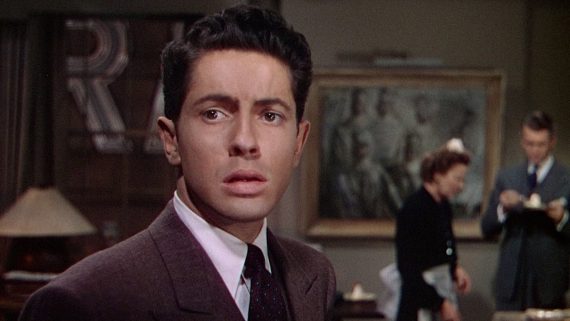
Rope is such a fascinating technical exercise that it’s easy to overlook how narratively and thematically fascinating it is too. The story, in which two men murder their friend for the thrill of it, before hiding his body in a chest which they make the centrepiece of a party for his family, was considered too lurid by many contemporary critics but it allows for an examination of various issues, including intellectual snobbery, societal obligation and Nietzschean theories of the Superman. In the current climate, Rope feels most fascinating as an ahead-of-its-time comment on the consequences of our actions, something that too regularly gets swallowed up in confused debates on so-called Cancel Culture. Stewart’s Rupert, arrogantly and carelessly espousing ludicrous theories of the intellectual superior’s right to murder to impressionable young students, is arguably handed the biggest epiphany of the film, perhaps facing a similar post-credits crumbling as we see Farley Granger experience throughout the runtime. This makes Rope still feel like a very relevant piece of work indeed and I loved every minute of its short runtime.
12. REBECCA
There was a ridiculous article in Empire in 2016 in which they included Rebecca in a list of the Top 100 British Films. The write-up acknowledged that Rebecca was an American production (Hitchcock’s first, in fact) but argued that it belonged on the list since it was largely set in England and starred a primarily English cast. This is nonsense, of course. It’s immediately apparent, especially after watching Rebecca back to back with Hitchcock’s British films, that it is a Hollywood production through and through. You can immediately feel the change in Rebecca’s sweeping grandeur, blustery romanticism and gothic heft. Not to mention that our point of entry in the story is outsider Joan Fontaine, who’s experience of returning to England with her new husband is one of anguish and alienation. Hitchcock gave audiences a haunting version of British life in Rebecca but it is most definitely very much a Hollywood film. The first fruits of Hitchcock’s move to Hollywood could scarcely have been more impressive. After the disappointment of his first Daphne du Maurier adaptation Jamaica Inn, Hitch more than made up for it with an epic gothic melodrama that enraptured critics and audiences alike. None of Hitchcock’s films up to that point had troubled the Oscar voters but Rebecca stormed onto the Best Picture winners podium right out of the gate. It remains a much treasured classic.
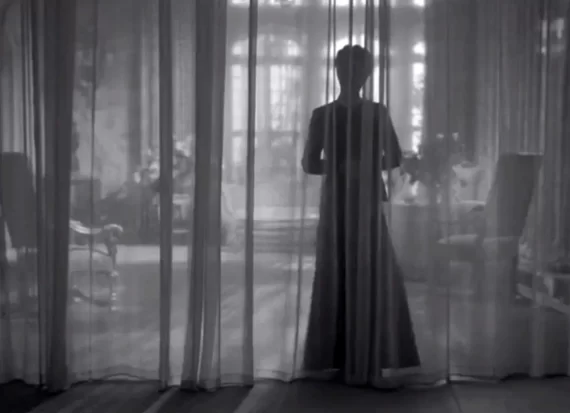
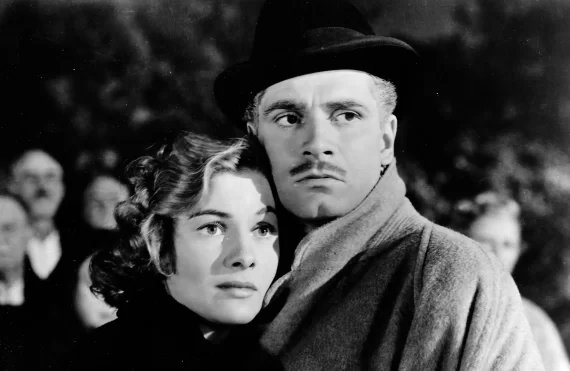
I knew I loved Rebecca before this rewatch but it’s even more fascinating seeing it in its chronological context. Though Hitchcock’s touch is still more than evident, the move from Britain to Hollywood requires a slight recalibration in the viewer’s mindset as the filmmaking becomes more opulent, the acting more stormily melodramatic and the story more grandly ambitious. After the scrappy naturalism or quirky playfulness of performances in The Lady Vanishes or The 39 Steps, the swooning performances of Laurence Olivier and Joan Fontaine can at first seem slightly overwrought. This effect doesn’t last long however, as the expansiveness of the film quickly chimes with the intensity of the performances. Fontaine in particular is excellent, her downtrodden timidity shifting seamlessly into overawed joy, overwhelmed anguish and terrified desperation, her teary eyes penetrating the viewer’s sympathetic heart. Olivier’s performance as the haunted widower Maxim de Winter takes a while longer to snap into focus but this is in keeping with the enigmatic character. By the time we reach the two-hander scene in which the film’s main revelations are revealed, Olivier and Fontaine are positively spellbinding and this dramatically mesmerising moment emerges as one of the best sequences Hitchcock had yet shot.
Olivier and Fontaine were both Oscar nominated and a third well-earned nomination went to Judith Anderson for her thoroughly chilling performance as Mrs. Danvers, housekeeper of the cavernous country pile Manderley, in which most of the film takes place. Danvers would be an easy role to completely overplay but Anderson’s performance has a pleasing dramatic rise and fall, maintaining the mystery that is so crucial to Rebecca’s narrative power.
Though the film is also peppered with smaller turns by great British actors like George Sanders, C. Aubrey Smith and Nigel Bruce, as well as scene-stealing American Florence Bates, the other major presence in Rebecca is Manderley itself. When a suitable real location could not be found for exterior shots, Hitchcock again worked with models but they are of a higher quality than the toy-like distractions of his British films. Still, their artificiality is apparent and it feels like a bit of a shame when the interior scenes of Manderley are so effective. The only other flaw that prevents Rebecca from ranking higher is its slightly hurried third act. The build up of the eerie mystery is superb and the pay-off does not disappoint, but after such an extraordinary scene the film struggles to maintain the drama for the 25 minutes or so that it takes to tie up the loose ends and the sudden dramatic final flourish feels a bit abrupt. It’s still engaging enough but it’s a shame to end the film with a slow wind-down rather than maintain that gripping atmosphere. Nevertheless, Rebecca is still a five star classic for me and the perfect way to kick off Hitchcock’s Hollywood career.
11. LIFEBOAT
Lifeboat is the first of four limited-setting films Hitchcock made in the 40s and 50s and it remains the least-seen of the four. It is also arguably the most ambitious, at least from a narrative point of view. The other limited-setting films were all set in reasonable-sized rooms while Lifeboat confines itself entirely to the titular vessel, into which it crams nine characters. These characters are a mixture of British and American civilians and service members left adrift after their ship was sunk by a German U-boat. With the U-boat also destroyed in the battle, a German survivor is pulled aboard the lifeboat, but not everyone is keen on keeping him there.
So begins one of Hitchcock’s richest and most complex morality plays. Its focus is on both character and philosophical matters relating to life and death, with the wartime setting muddying the moral waters further. This factor certainly muddied the critical and commercial waters as well, with several critics incandescent at what they felt was too sympathetic a portrayal of a German officer. While it’s easy to understand why some felt this approach was less than judicious during wartime, it’s hard to believe when watching Lifeboat now that the German character was considered sympathetic. What he actually is is another morally compromised character on a boat filled with them. Lifeboat is entirely concerned with these moral grey areas and so to portray the German as a wholly despicable character without nuance would be to torpedo the film itself, without any narrative lifeboat to save it.
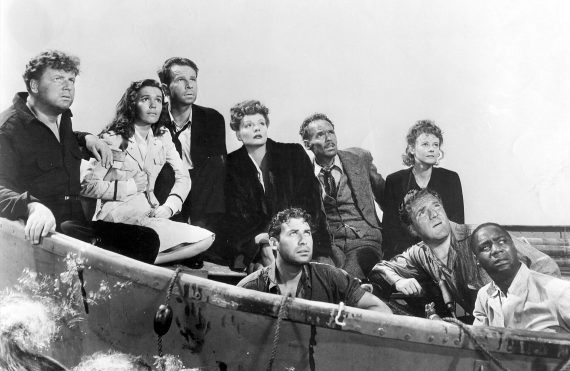
To force Lifeboat to become yet another tedious film about pure allied heroism in the face of unadulterated German tyranny would have been to rob the era of one of its most fascinating examinations of human nature. Lifeboat has no easy answers and in large part it refuses to prod us towards a particular moral judgement. The events of the story are carefully worked out in order to challenge our views of right and wrong to the fullest but there is no finger-wagging omniscient presence demanding we come down on one side or the other. In fact, the film’s climactic line, which at first seems abrupt but on further rumination feels entirely appropriate, seems to openly acknowledge that the answers Lifeboat seeks are beyond human comprehension. Perhaps this is why Lifeboat doesn’t end with the rescue many may expect. The fate of the reluctant crewmates is left uncertain, trapping them forever in a celluloid purgatory. The cyclical final plot point suggests that this may be entirely the point. To quote Eleanor Rigby, “no one was saved.”
Lifeboat features another top notch cast. In particular, Talulah Bankhead is one of Hitchcock’s finest leading ladies, enjoying every minute of her role as a razor sharp journalist who slowly watches all her treasured possessions disappear over the side of the boat. The screenplay is perhaps the greatest asset though. Written by Jo Swerling, it was adapted from a story by John Steinbeck, who subsequently disowned the film and requested his name be taken off it. The studio refused to comply with these wishes, and Steinbeck was ultimately Oscar nominated for the since-discontinued Best Story Oscar. Hitchcock also received a Best Director nomination, perhaps unsurprising given that even Lifeboat’s harshest critics could not deny the film was a technical marvel. Filmed using four different lifeboats and a large water tank, Lifeboat captures the feeling of being adrift in an endless body of water, without ever falling foul of the artifice of some of Hitchcock’s earlier films. This effect was not achieved without some difficulties however. Illnesses dogged the production, including multiple cases of pneumonia for Bankhead and the near drowning of Hume Cronyn, who cracked two ribs during a simulated storm.

For all its reputation as a talk-heavy philosophical piece, Lifeboat isn’t lacking in incident either. Plenty happens on board the boat, including a riveting amputation scene and a chaotic, impulsive murder which might’ve been the only moment when Lifeboat’s critics cheered but is also the key to why a simple rescue finale would not have made narrative sense. The film is often seen as one of Hitchcock’s bleakest but the tone is balanced by the vivid characters and the ever-present wit in Swerling’s excellent script. If it doesn’t immediately hit with the entertaining force of Saboteur or the melodramatic heft of Rebecca, Lifeboat instead creeps up on you over time as you think more about the film. Years ago I had it rated at a middling 3.5 stars, perhaps due to my inability to fully comprehend what the film was aiming for at such a young age. After watching last night, I initially rated it a strong 4 stars. Then, after thinking about it for the rest of the evening, I upped this to 4.5 stars. Finally, after I couldn’t shake the film from my mind, I just gave in and upped it to the full 5 stars. I’m confident now that it deserves that rating and have placed it at number 11 in my ranking, above classics like Rebecca and The 39 Steps. Lifeboat itself is also a classic, but currently a cult one. It refuses to be dragged under by demands of a greater moral simplicity and that has made it resonate more strongly down the ages. It’s a brilliant film that demands a wider reappraisal.