



 Director: Don Siegel
Screenplay: Howard Rodman, Abraham Polonsky
Based on a Novel by: Richard Dougherty
Starring: Richard Widmark, Henry Fonda, Inger Stevens, Harry Guardino, James Whitmore, Susan Clark, Steve Ihnat
Country: USA
Running Time: 101 min
Year: 1968
BBFC Certificate: 12
Don Siegel’s Madigan is somewhat of a transitional film. A fairly gritty police drama, it’s transitional for its director, paving the way for Coogan’s Bluff only a few months later, the first of five films Siegel made with Clint Eastwood, including another tough cop movie, Dirty Harry.
Madigan also seems to bridge the gap between the generally more clean-cut and honourable police heroes of the 50s and early 60s and the corrupt cops and gritty, naturalistic style of crime movies of the late 60s and early 70s. In fact, Bullitt was released the same year as Madigan and more clearly looks forward to the New Hollywood era, whereas Siegel’s film lies somewhere in between old and new Hollywood.
Though fairly well-received at the time, Madigan hasn’t endured quite as effectively as some of Siegel’s better-known films, like Invasion of the Bodysnatchers, Escape From Alcatraz and Dirty Harry. Being a fan of the director and not having seen Madigan, I got my hands on a screener for Indicator’s new Blu-ray release of the film, to see if it should rank as highly as those aforementioned titles.
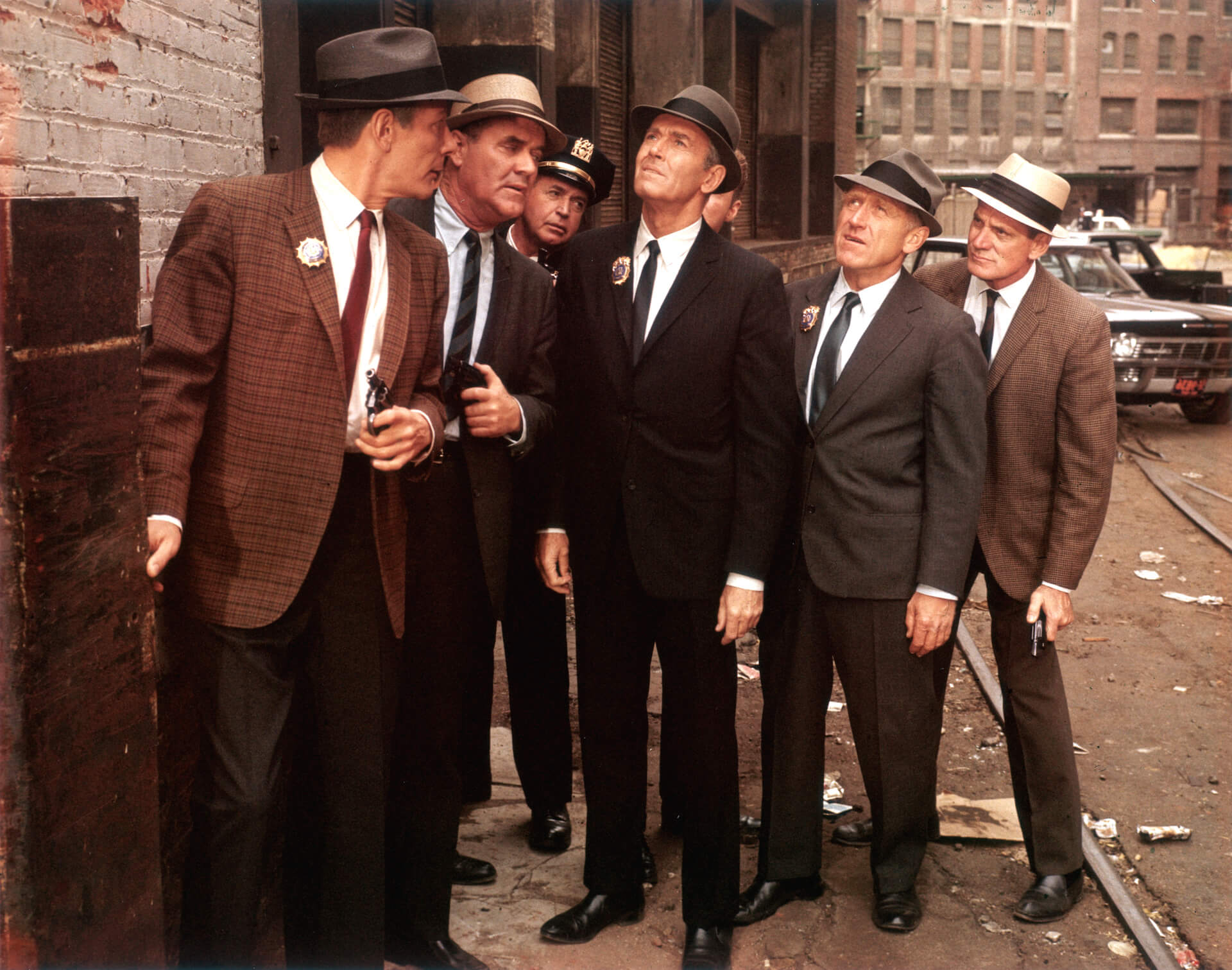
The film sees Richard Widmark play the titular character, a police detective who, along with his partner Rocco Bonaro (Harry Guardino) gets in deep trouble when a supposedly routine questioning goes sour. Busting into the apartment of Barney Benesch (Steve Ihnat), the slippery criminal turns the tables on the pair of cops and steals their guns, before running off.
We follow the detectives as they attempt to find Benesch (who it turns out is now wanted for murder) and restore their reputations. Whilst this is going on, we also examine the trials and tribulations of the pair’s superior, Commissioner Anthony X. Russell (Henry Fonda), who has more than just Madigan and Bonaro’s balls-up to worry about.
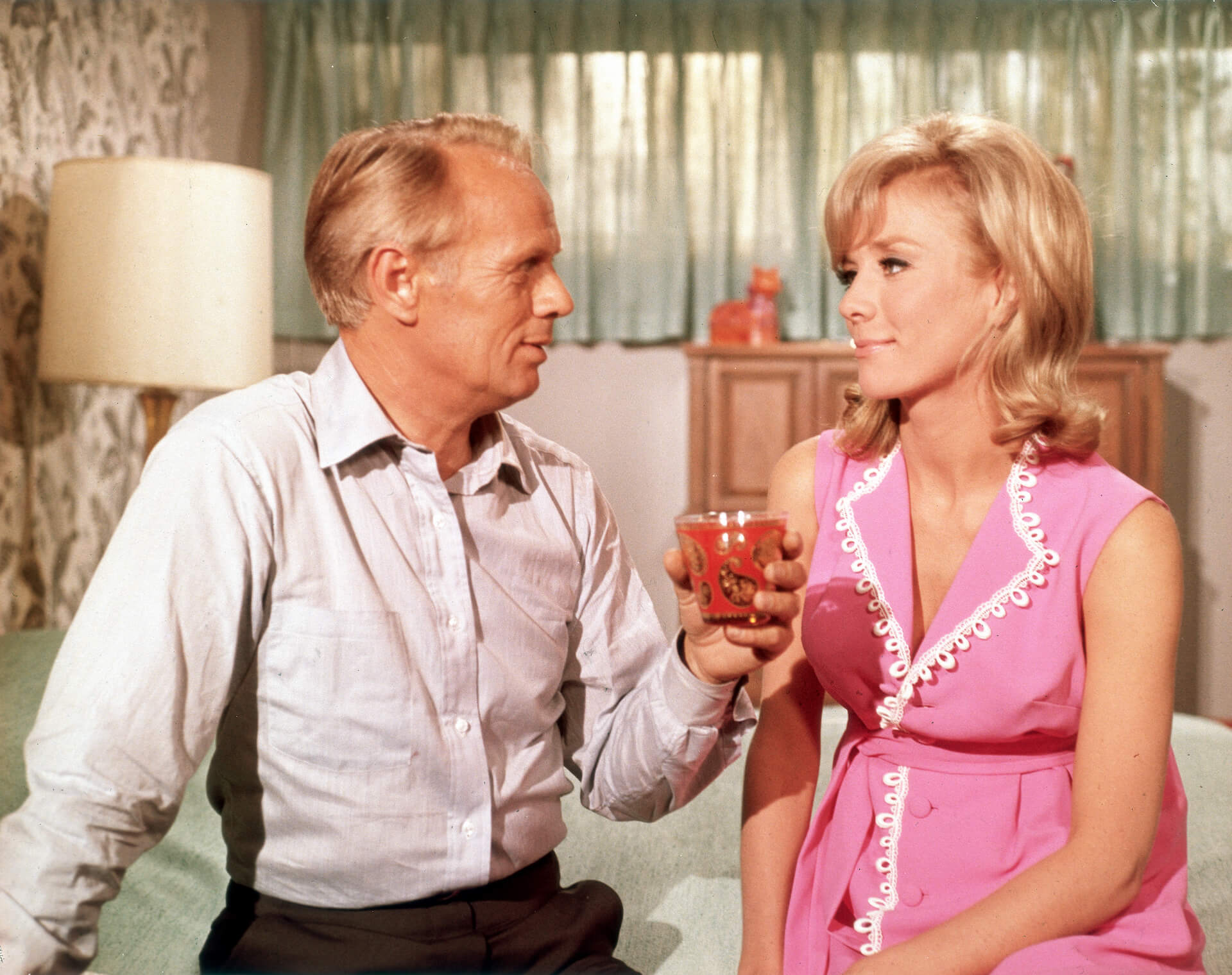
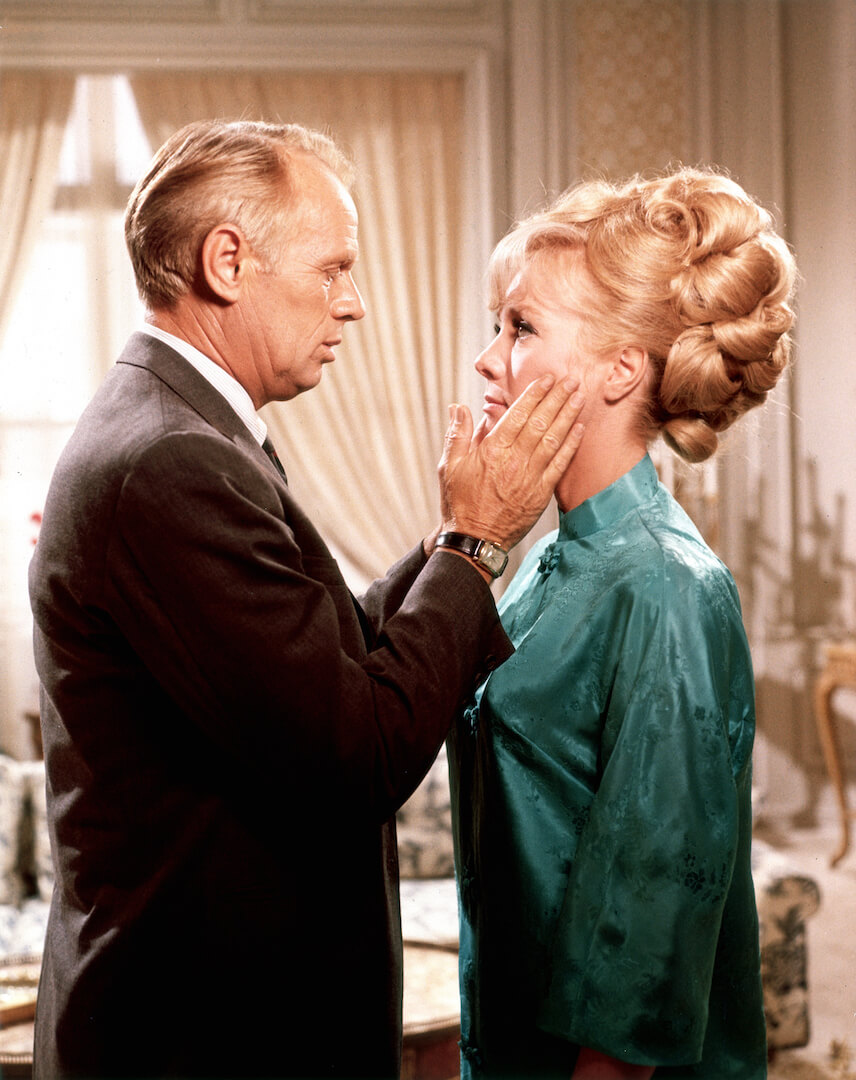 On top of all that, we also get to see the homelives of the three policemen. Bonaro is happily married to Rita (Rita Lynn) and Madigan is unhappily married to Julia (Inger Stevens), who’s fed up with his lack of affection and obsession with his work. Madigan also has a mistress, Jonesy (Sheree North), who’s equally as tired of Madigan’s coldness. Surprisingly, the straight-laced Russell has his own mistress too, Tricia (Susan Clark). We watch as he struggles to decide whether to take the honourable path or continue his affair.
As my synopsis alludes, Madigan is more of a soap opera about a group of cops on the job than it is an exciting police thriller focussing on a specific case. It’s based on a novel by Richard Dougherty that takes a ‘few days in the life of’ approach. Siegel had already made a film like this, with The Lineup (which I reviewed as part of Indicator’s Columbia Noir #1 set https://blueprintreview.co.uk/2020/11/columbia-noir-1-indicator/). Personally, I preferred that film. Madigan opens well, with some enjoyably tough and racy banter leading into an exciting chase, but becomes much less lean and thrilling than Siegel’s better work, as it moves on.
That’s not to say Madigan isn’t worth your time though. In a move towards Dirty Harry, Siegel’s cops here are more flawed and morally dubious than in The Lineup and I enjoyed Madigan’s tough edge in general. It takes a fairly frank approach to the less reputable side of police work.
There’s a lot of hard-boiled dialogue and wisecracks, which I always appreciate, though some of the lines are rather cliched. There are a few too many subplots too, meaning most don’t get developed as much as they deserve.

Siegel himself reportedly wasn’t happy with the script (or at least the changes made by his overbearing producer Frank Rosenberg), but was happy with his cast. Indeed, You can’t go wrong with Richard Widmark and Henry Fonda. They hardly deliver their finest work, but they’re two actors I always enjoy watching. Inger Stevens proves her worth in a couple of powerful scenes too.
Going back to how the film plugs a gap between old and new Hollywood, that can also be seen in the overbearing and over-orchestrated music, carried over from the old days (Siegel hadn’t yet started his fruitful collaboration with Lalo Schifrin, who would have done a much better job here). You also get a mix of location filming and studio backlots, where later films would be made up of almost solely the former.
So, overall, Madigan lacks the drive and focus of Siegel’s best films, with a little too much time spent away from police work. It was pretty tough and frank for the time though, so feels like a trendsetter, even if the films it influenced often turned out better. It’s certainly worth a watch, but don’t set your expectations too high.


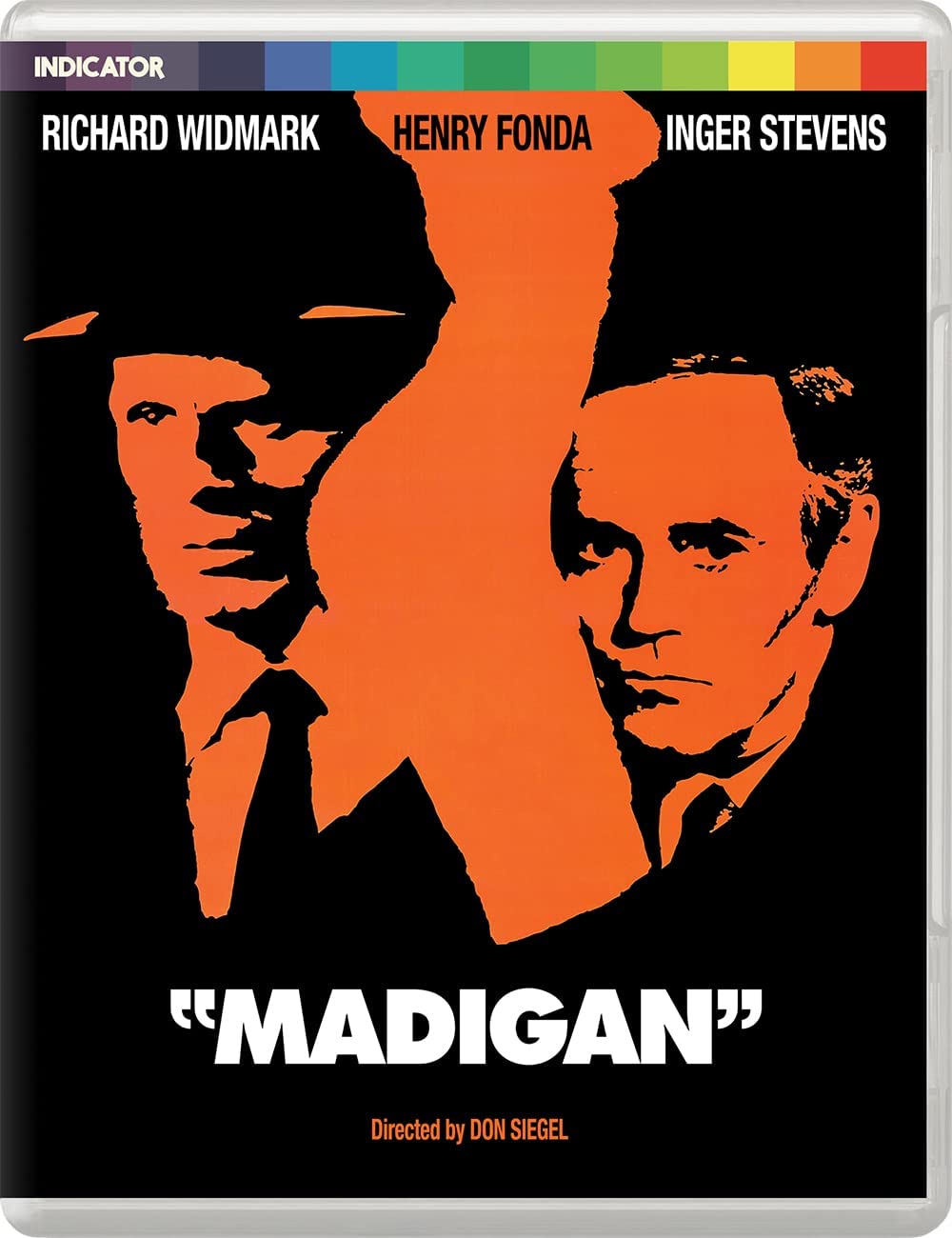
Madigan is out on 12th September on Blu-Ray in the UK, released by Indicator. It has a generally detailed picture with a natural look. There are a few soft spots, but this looks to be as originally presented. The audio is sturdy too.
There are a few special features included in the Limited Edition package too:
– High Definition remaster
– Original mono audio
– Audio commentary with writers and film experts Barry Forshaw and Kim Newman (2022)
– Richard Widmark on ‘Madigan’ (1983): extract from the French television programme Cinéma cinémas
– Super 8 version: cut-down home cinema presentation
– Isolated music & effects track
– Original theatrical trailer
– Image gallery: on-set and promotional photography
– New and improved English subtitles for the deaf and hard-of-hearing
– Limited edition exclusive 32-page booklet with a new essay by Elena Lazic, an archival interview with Don Siegel, an extract from A Siegel Film, an overview of contemporary critical responses, and film credits
– UK premiere on Blu-ray
– Limited edition of 3,000 copies
It’s not one of Indicator’s more expansive packages, but what’s here is of great value. In their commentary, Barry Forshaw and Kim Newman are honest about the film’s shortcomings, so providing an interesting dissection, often discussing the original novel it was based on.
The archive interview with Richard Widmark is a fine addition too. It allows the actor to discuss his career, albeit briefly. He has an enjoyably frank opinion on the auteur theory, though he goes back on it a little when talking about Elia Kazan, whom he has a lot of respect for. I really enjoyed the interview but wish it were longer.
The booklet is great too, as is to be expected from Indicator. It has an interesting essay on the film and some enjoyable archive pieces about Siegel and Madigan. It’s always worth getting in early and paying a bit extra for Indicator’s Limited Editions to get their booklets.
So, another strong release from Indicator.
Disc/package: 