


Director: Kon Ichikawa
Screenplay: Kon Ichikawa, Shinya Hadaka, Norio Nagata
Starring: Kōji Ishizaka, Yoko Shimada, Meiko Takamine
Country: Japan
Running Time: 146 minutes
Year: 1976
BBFC Certificate: 15
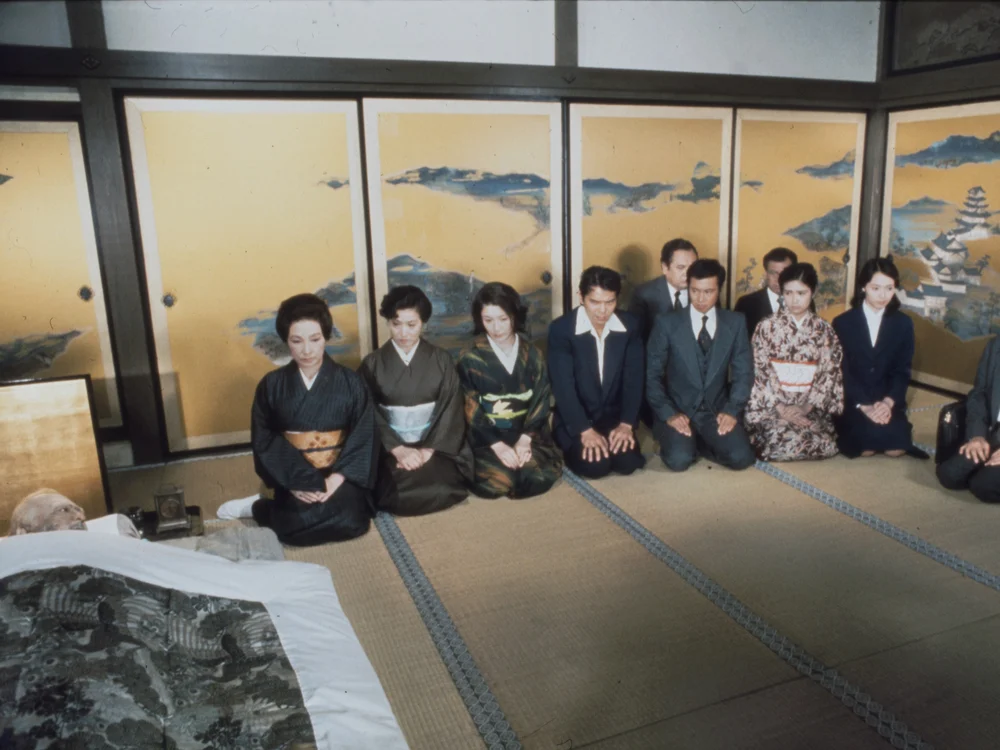
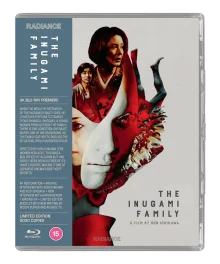
The best releases sometimes come in pairs. Not content with recently releasing Kon Ichikawa’s Ten Women in Black, Radiance Films has followed that up with the release of one of the great landmarks of post-war Japanese cinema, The Inugami Family. The film is an example of something that had previously not been thought possible – a truly Japanese blockbuster that took on the best that Hollywood had to offer, and winning big at the box office. It was the first film produced by Kadokawa Pictures, an upstart new venture by publisher and entrepreneur Haruki Kadokawa. Determined to make maximum impact with his first cinematic release, Kadokawa entrusted veteran director Kon Ichikawa with a prestige project: to adapt a novel by one of Japan’s most famous authors, the crime writer Seishi Yokomizo, and featuring his most beloved character, the dishevelled detective Kosuke Kindaichi.
The Inugami Family is a dark and twisted tale of a family thrown into chaos by the death of its patriarch Sahei (Rentarō Mikuni). The contents of his will are explosive, instantly dividing the surviving family members – and sewing suspicion within those outside of it. Into this toxic environment wanders our crumpled detective hero Kindaichi, portrayed with great skill and grace by Kōji Ishizaka. Ostensibly invited by the family solicitor Furudate (Eitaro Ozawa) to witness the reading of the will, people soon start dropping dead around him. As the body count climbs and the family’s emotions are stretched to breaking point, how will this unassuming private eye solve this particular mystery?
Part of the joy of The Inugami Family is watching a truly awful bunch of people, portrayed by some of most famous actors of their generation being tested to destruction by forces completely beyond their control. Ichikawa’s masterful direction keeps you on the edge of your seat as the plot continually wrongfoots expectations. The film’s tense atmosphere and remote lakeside setting have more in common with the Italian giallo, as does some of the macabre staging of the murders themselves. The family’s buried secrets are dragged into the light, with ever more dangerous revelations putting everyone’s lives at risk. Some of the finest names in Japanese cinema fully sink their teeth into their roles, notably Meiko Takamine as the utterly indomitable would-be matriarch Matsuko, and Takeshi Katō as the headstrong detective Tachibana. Yoko Shimada is outstanding as Tamayo, the frequent target of murderous impulses.
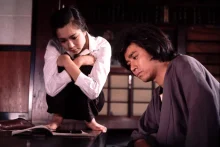
Kindaichi has been described as Japan’s answer to Sherlock Holmes or Hercule Poirot, a fictional character who has been reinvented by scores of actors over the decades of film and TV adaptations, and there is a grain of truth to this. But for me he most resembles that other great hangdog detective Columbo. Perpetually scruffy and completely underestimated by pretty much everyone, Kindaichi’s perceptive abilities leave no room for error. He worries away at the case until he finally cracks it, leading to a brilliant climactic showdown involving everyone left standing. This grandiose conclusion will naturally be familiar to any fan of crime drama, but it is still a superbly staged set piece which packs a tremendous punch. Balancing elements of humour and horror to great effect, with a first rank ensemble cast giving their all to one of the great prestige dramas of the 1970s, The Inugami Family is a superbly entertaining watch.
BLU-RAY LIMITED EDITION SPECIAL FEATURES
- 4K restoration by Kadokawa Pictures
- Original uncompressed mono audio
- Newly filmed interview with Aaron Gerow on the film’s impact in Japan (2026, 23 mins)
- The Secrets of Kon Ichikawa’s Visual Style – an archival interview with Kon Ichikawa, recently re-edited and produced by Yuuki Mori (44 mins)
- Off Shots – The Day of Filming “The Secrets of Kon Ichikawa’s Visual Style” – outtakes from Kon Ichikawa interview, produced by Yuuki Mori (8 mins)
- Verification: How The Inugami Family Was Made – archival making-of documentary, featuring interviews with director Kon Ichikawa, star Koji Ishizaka and editor Chizuko Osada (30 mins)
- The Birth of Kosuke Kindaichi – archival interview with star Koji Ishizaka (16 mins)
- The Path of the 4K Digital Restoration – archival documentary on the 4K restoration process (12 mins)
- Theatrical and teaser trailers
- New and improved English subtitle translation
- Reversible sleeve featuring original and newly commissioned artwork by Time Tomorrow
- Limited edition booklet featuring new writing by Midori Suiren and Akihiko Ito
- Limited edition of 3000 copies, presented in full-height Scanavo packaging with removable OBI strip leaving packaging free of certificates and markings
There is a wealth of treasures amidst the plentiful special features on the disc. First of which is a terrific piece by Aaron Gerow which provides all the context regarding the decline of the studio system in Japan alongside the foundation of Kadokawa Pictures, and how their freelanced methods and aggressive marketing brought forth the first real Japanese blockbuster. The archive interview with Kon Ichikawa dates from 1991, and is an in-depth exploration of the director’s visual motifs and working methods,. He seen relaxing at an editing console, fully in his element, content to reply to questions about his aesthetics. This is followed by a smaller film with some outtakes that is more a heartfelt tribute to Ichikawa than a mere archival document.
The documentary about the film ‘s production was created for both a blu ray release in Japan, and as a promotional film for the remake filmed in 2006, again helmed by Ichikawa – it was his final film. It is a thoroughly professional making-of extra, with involvement from the author’s son to important costume and effects crew to the great man himself, again sat in an editing suite. The interview with Koji Ichizaka was clearly taken from footage shot for the documentary, but provides fascinating detail about his approach to the legendary character (he was the seventh actor to take on the role), and some humorous information about the celebrated ‘dandruff’ scene in the film, and how the effect was achieved. The Inugami Family was digitally restored to celebrate the 40th anniversary of Kadokawa Pictures, and the short film shows just how painstaking that process was. Those for an eye to film restoration will greatly enjoy this special feature.
The accompanying limited-edition book was sadly unavailable to me for review.