


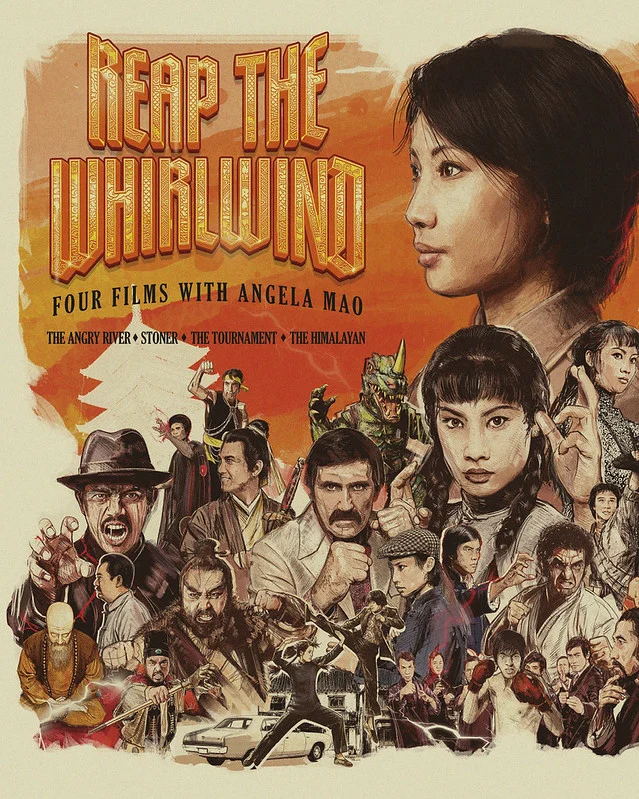
 Eureka have been gradually working their way through the films of Angela Mao over the years, but now they’ve gone all out, putting together a great value boxset of four of the films she made at Golden Harvest under the direction of Huang Feng. He’s reportedly the man who discovered Mao in Taiwan and brought her to work in Hong Kong.
The set is called Reap The Whirlwind: Four Films with Angela Mao, and it features the films:
The Angry River
Stoner
The Tournament
The Himalayan
I already reviewed The Angry River when 88 Films released it in the US, so please refer to my review here for that title. Below are my thoughts on the rest of the films and the set as a whole.
Stoner (a.k.a. Shrine of the Ultimate Bliss or Tie jin gang da po zi yang guan)
Director: Wong Fung (a.k.a. Huang Feng)
Screenplay: Ni Kuang, Wong Fung (a.k.a. Huang Feng)
Starring: Angela Mao Ying, George Lazenby, Betty Ting Pei, Hwang In-Shik, Takagi Joji
Country: Hong Kong
Running Time: 115 min (HK cut)
Year: 1974
To borrow Eureka’s short synopsis: “Stoner (also known as The Shrine of Ultimate Bliss), sees Mao’s secret agent team up with a tough Australian cop (George Lazenby) to bring down a drug trafficking ring.”
Stoner was originally supposed to star Bruce Lee with Lazenby playing the villain. Shinichi ‘Sonny’ Chiba was even rumoured to be involved. It was tentatively titled The Golden Eagles of Ecstasy (or Shrine of the Ultimate Bliss, which is still listed as the title in some territories) and it was due to be co-produced with Warner Bros with a whopping 10 million HKD budget. Lazenby was actually in Hong Kong and due to meet Lee for dinner to discuss the project on the day the star died.
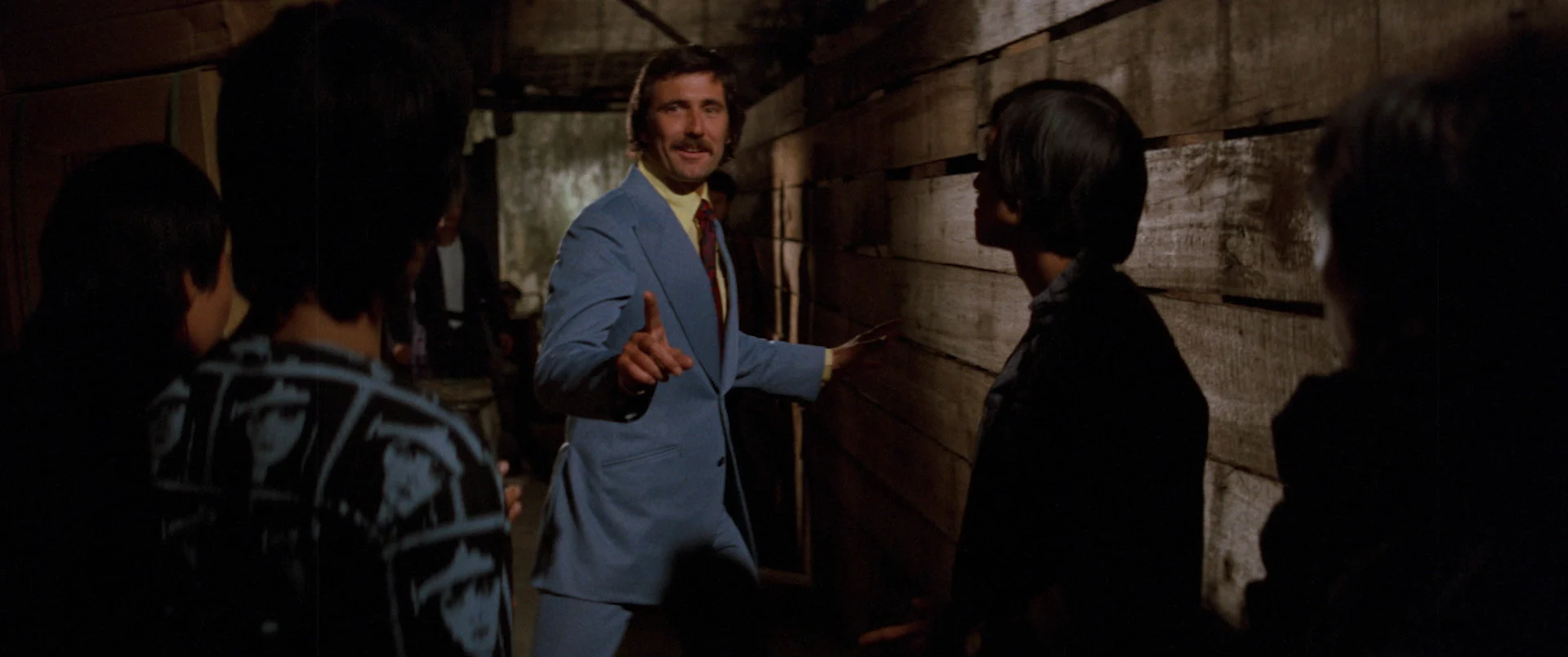
However, after Lee’s death, the project was set aside, then resurrected a couple of years later with a drastically reduced budget, no involvement from Warner Bros and a reshaped script that made Lazenby one of the heroes, alongside Angela Mao.
The resulting film feels a little trashy to begin with. Lazenby’s sister is involved in a drug-fuelled orgy that’s clearly been directed by someone totally out of touch with the ‘hippy’ subculture they’re supposedly damning.
However, the film soon turns into something that heavily riffs on Enter the Dragon and the James Bond movies. Interestingly, it’s Mao who gets the Bond/Lee role here, as she’s the one playing a spy who sneaks around trying to break the drug ring. Lazenby, meanwhile, lumbers from location to location, trying to get revenge on the drug dealers that almost killed his sister by beating everyone up that he comes across.
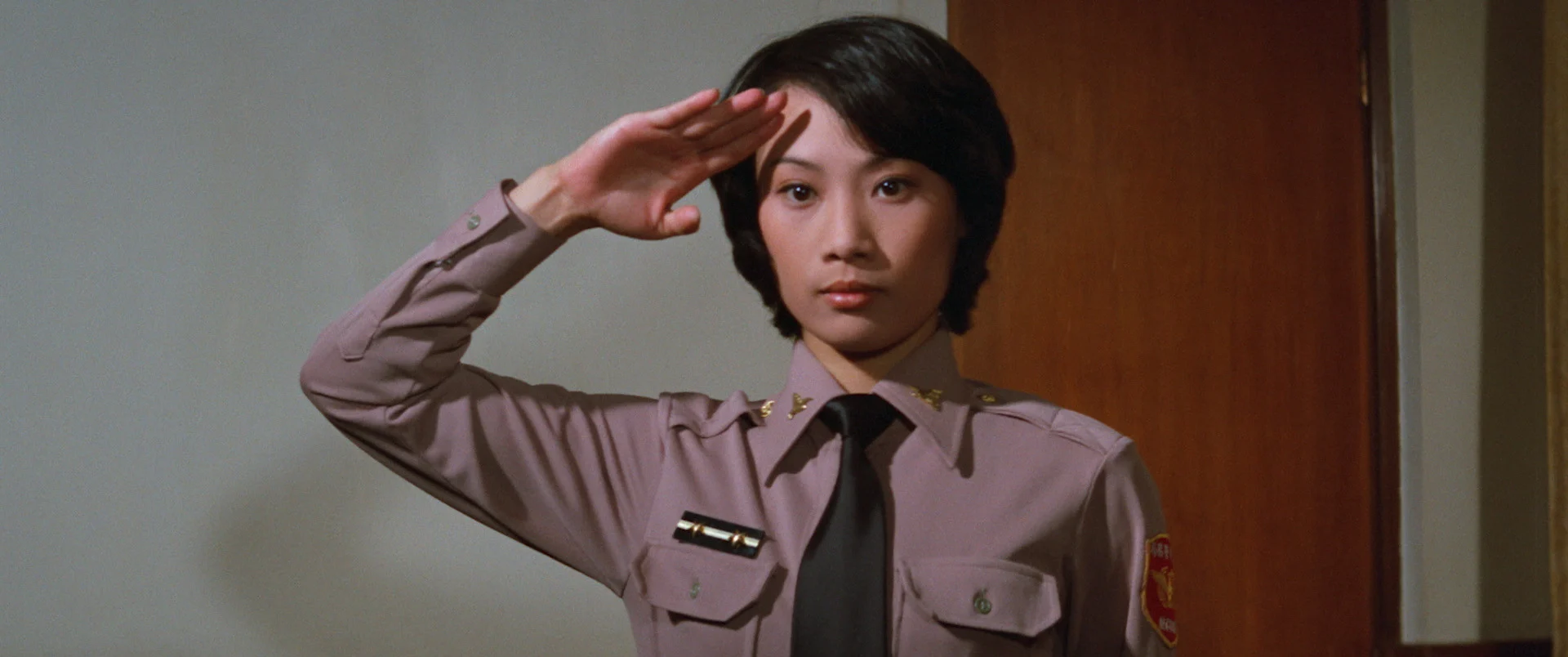
Stoner feels a little too long, perhaps, though I watched the extended Hong Kong cut. The export version might be a little tighter. It’s still good fun, though.
Sammo Hung and Chan Chuen choreographed the fights. Lazenby’s moves are a little slow and wild, but they have force. Mao fares much better, as you might expect from her Beijing opera and martial arts background. She doesn’t have as many fights as Lazenby in the first half but takes over the action scenes in the finale, with a particularly cool showdown against the lead antagonist around piles of flaming wreckage.
Film: 


The Tournament (a.k.a. Zhong tai quan tan sheng si zhan)
Director: Wong Fung (a.k.a. Huang Feng)
Screenplay: Huangpu Kuan-Hua
Starring: Angela Mao Ying, Carter Huang Chia-Ta, Hwang In-Shik, Guan Shan, Maria Yi Yi
Country: Hong Kong
Running Time: 98 min
Year: 1974
I’m going to diverge from Eureka’s synopsis here, as it’s not quite accurate. In The Tournament, a martial artist (Yeung Wai) talks his master (Ko Hsiang-Ting) into letting him fight in a tournament in Thailand. However, he fights poorly and is killed. His partner, played by Carter Wong, is also badly beaten.
Humiliated and shunned by the rest of the Chinese martial arts association members, who believe the loss cast the nation’s skills in a poor light, the master commits suicide. His daughter, Lau Siu-Fung (Mao), decides to honour his name and restore glory to Chinese martial arts by taking on the Muay Thai fighters herself (once again alongside Wong).
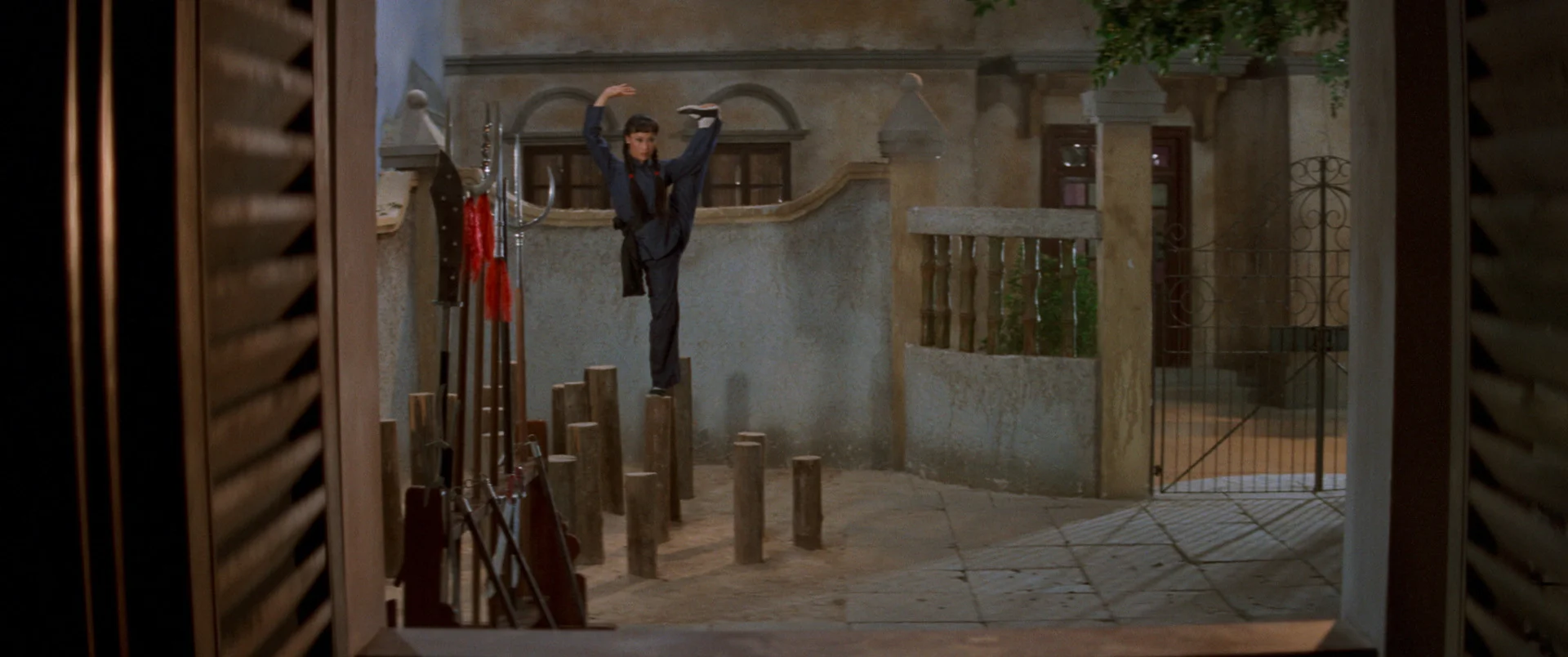
The Tournament feels like a follow-up to Hapkido and When Taekwondo Strikes in how it pits a non-Chinese martial art, this time Muay Thai (a.k.a. Thai kickboxing), against Chinese kung fu. All three films also co-star Carter Wong and are directed by Huang Feng.
However, The Tournament has its own distinct feel that I appreciated a great deal. It’s quite a fresh take on the martial arts movie, particularly for its time. Set in the present day, it opts for a more realistic tale that has a flavour of Rocky (which wouldn’t be released for another two years), in how it sees an underdog fighter train hard to beat a theoretically more skilled fighter.
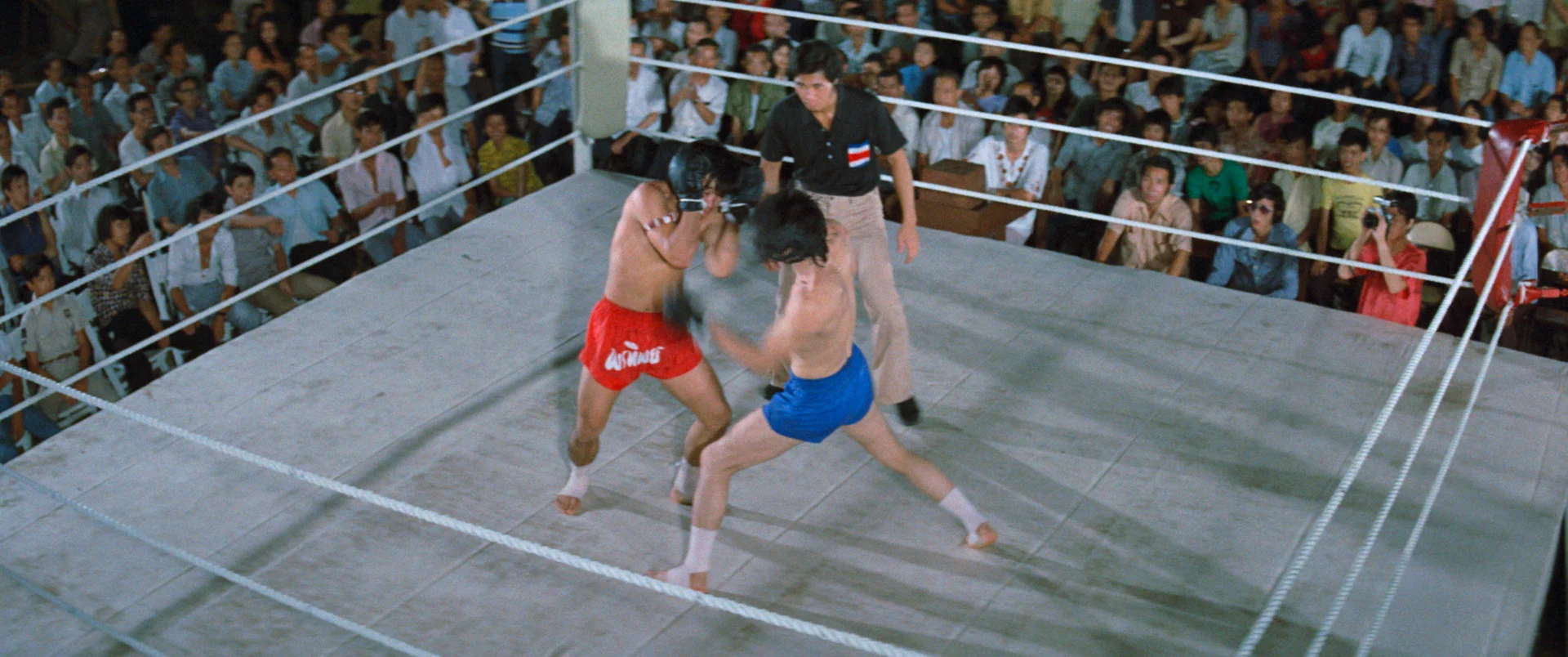
What I like is that, rather than learning some special move to take on her foe, Mao heads to Thailand, films Muay Thai training sessions and analyses the moves, as a competition fighter would do, in reality.
There are, perhaps, some issues with pacing and writing. Some of the story strands get lost, making it feel like Huang started out making one kind of film before changing his mind partway through production. However, the eventual payoff works, leading to a satisfying ending.
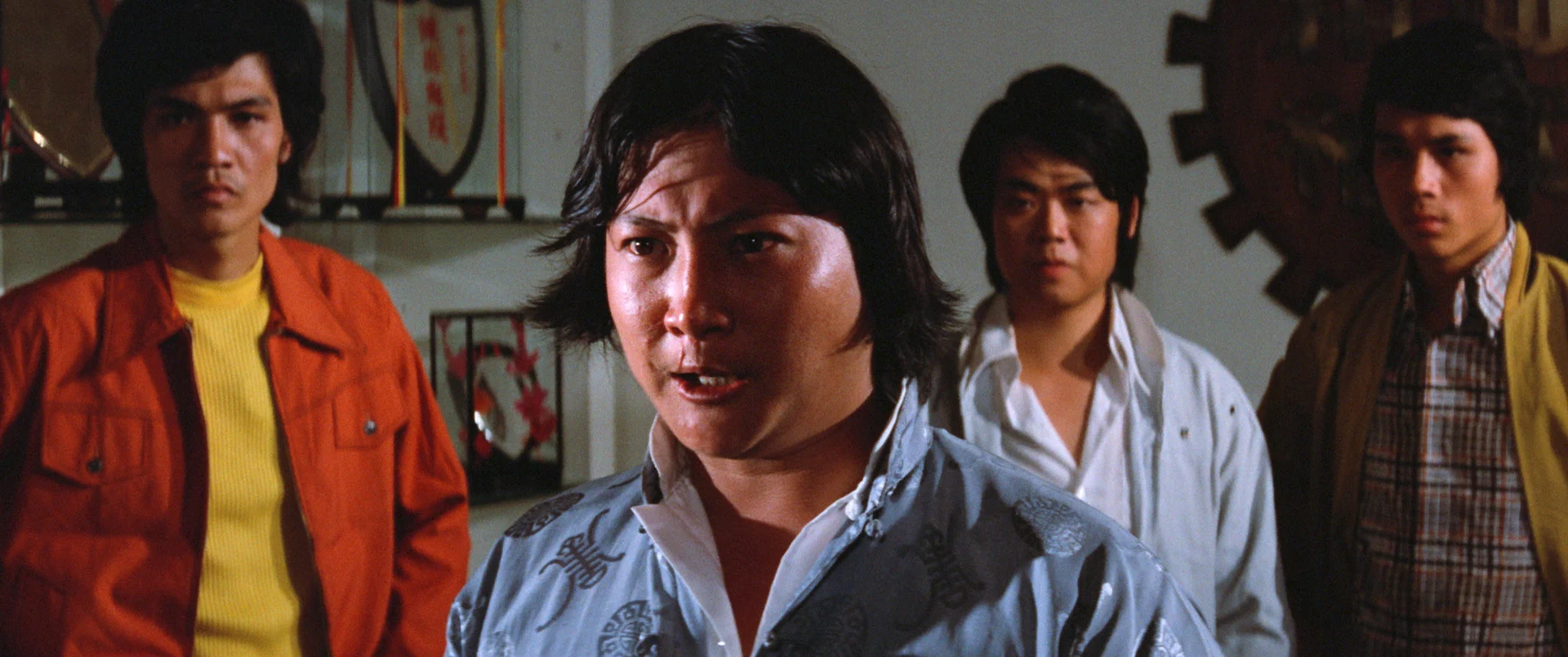
There are some great fight scenes, too. The central set piece where Mao takes on all the local kung fu masters one by one is perhaps the most impressive fight sequence in her entire career. Sammo and Chan Chuen were once again behind the choreography and throw in a wide variety of styles as well as appearing on camera as a couple of the fighters that Mao takes on.
Film:
The Himalayan (a.k.a. Mi zong sheng shou)
Director: Wong Fung (a.k.a. Huang Feng)
Screenplay: Ni Kuang
Starring: Angela Mao Ying, Chan Sing, Dorian Tan Tao-Liang, Guan Shan, Ling Hon
Country: Hong Kong
Running Time: 117 min
Year: 1976
To borrow Eureka’s brief synopsis: “The Himalayan casts Mao as the bride-to-be in a wedding orchestrated by a scheming murderer who intends to steal everything from her family.”
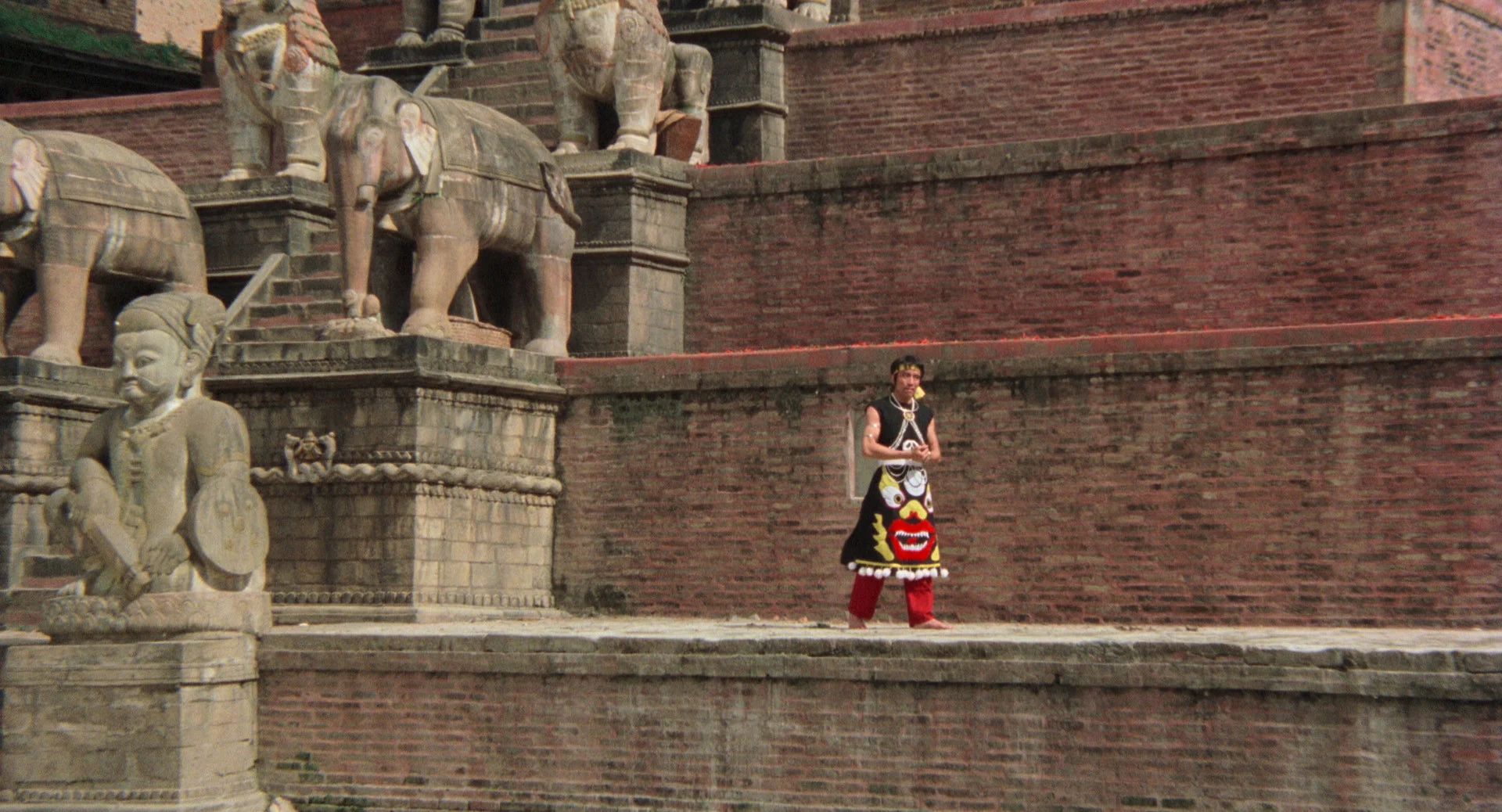
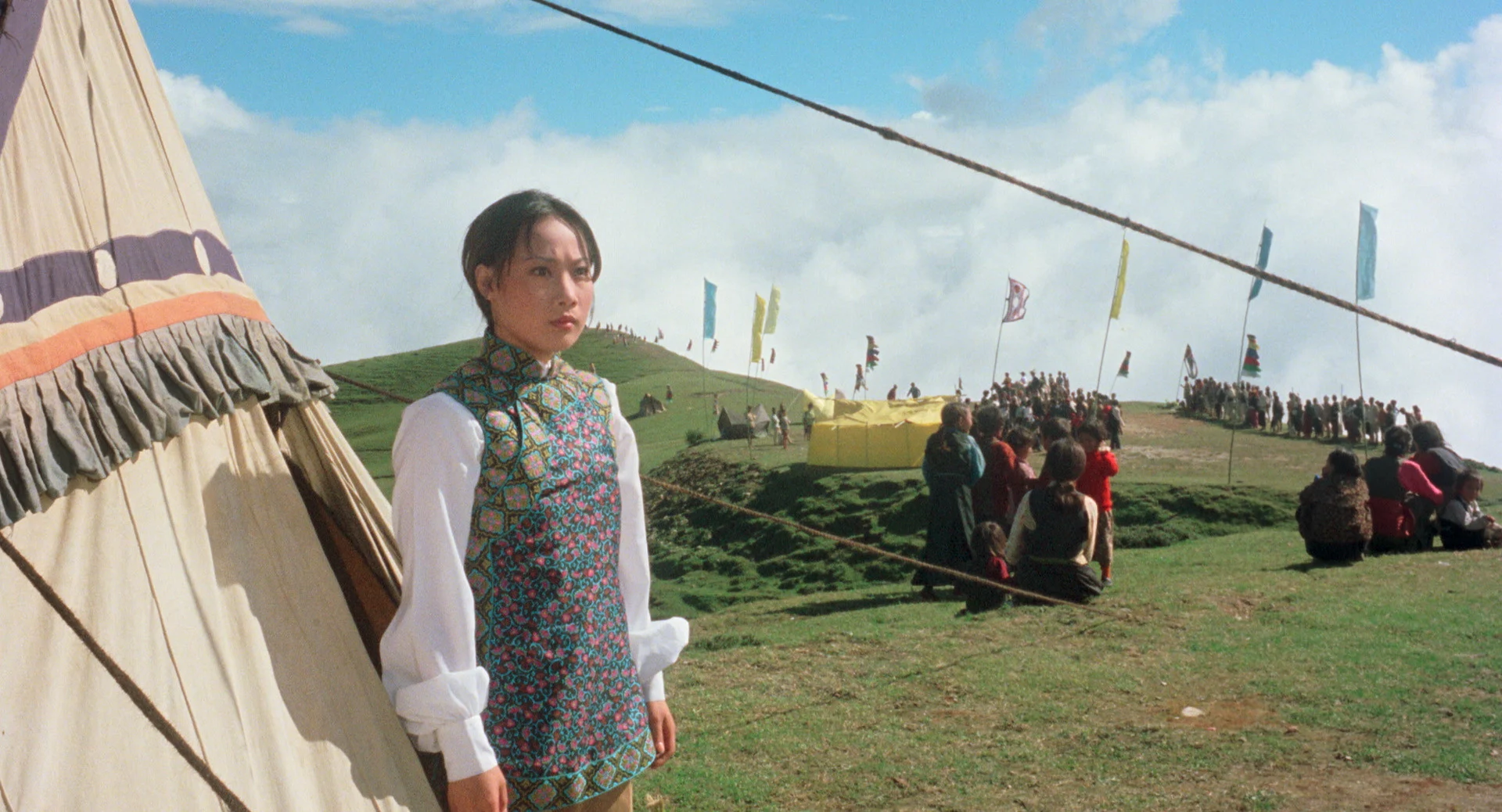
Golden Harvest’s martial arts films were floundering a little by 1976, but The Himalayan was a clear attempt to take things up a notch. The film is set in Nepal, and much of it was actually shot there, though some sequences appear to have been shot in South Korea and Hong Kong, too. Reportedly, Golden Harvest was given permission to shoot in Nepal, so long as the film never mentioned politics or nationalism. It was also submitted to the Cannes Film Festival, along with Hand of Death that same year.
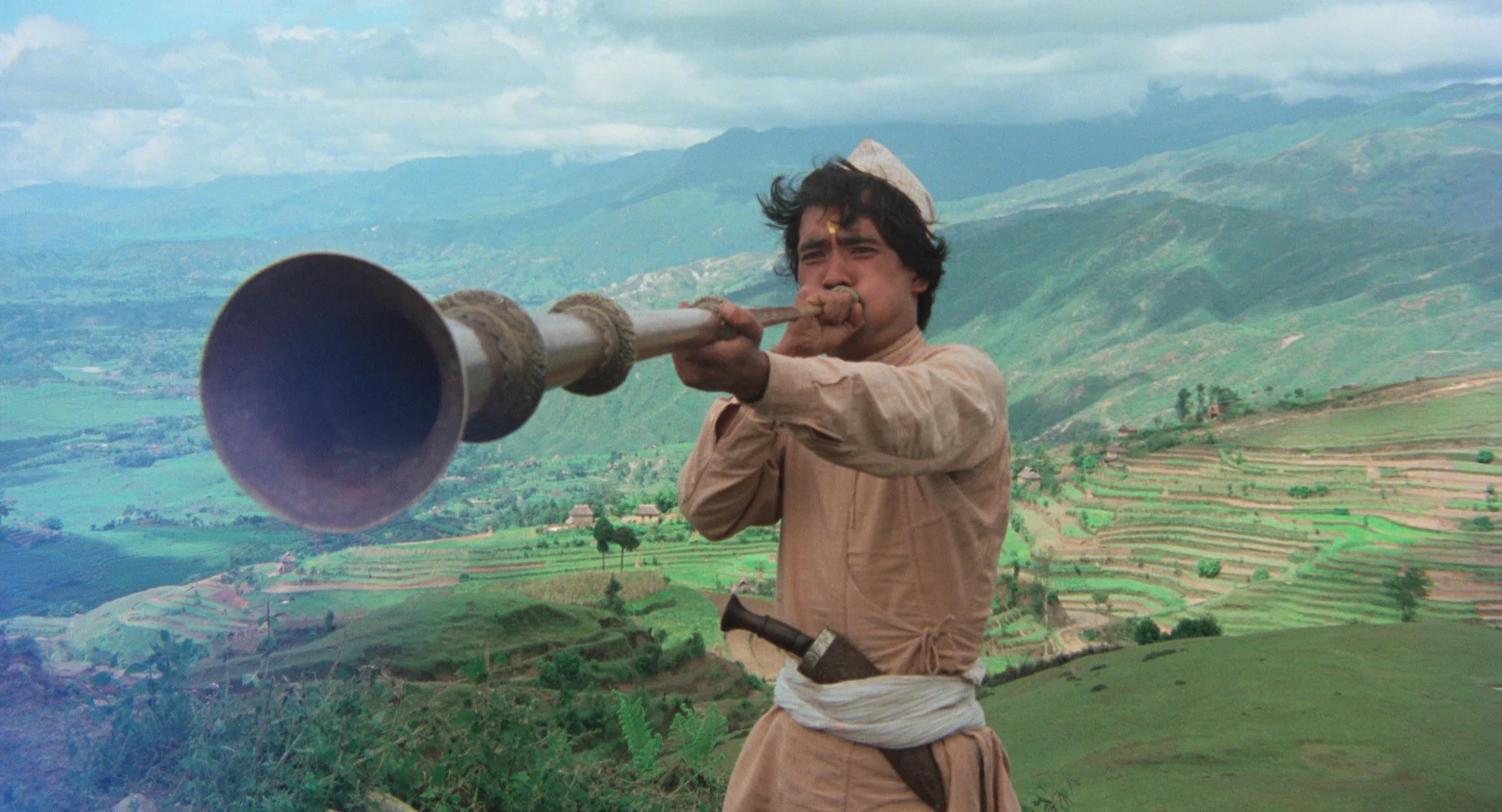
The result is a rather melodramatic but decent martial arts movie. Its greatest strength lies in its visuals. Huang makes striking use of the epic landscape and ancient temples. There are some breathtaking backdrops, and Huang chose to shoot in the 1.85 aspect ratio, rather than the customary ultra-wide 2.35 anamorphic format. This might have been down to the fact that the equipment was lighter, but it gives a little more space in frame for the vast mountains among which the film is set.
Chan Sing makes for a wonderfully despicable villain, and he gets to show his hand-to-hand combat skills, whilst Mao and fellow protagonist Dorian Tan Tao-Liang show off their impressive legwork. Once again, Sammo was behind the choreography, alongside the legendary Han Ying-Chieh.
Like Stoner, the film could do with a trim, perhaps, but it’s a handsome, engaging romp, with some great fight scenes.
Film:
Reap The Whirlwind: Four Films with Angela Mao is out on 24th August on Blu-Ray in the UK, released by Eureka. The films all look great, with clean and detailed pictures, and natural colours and textures. There are some discoloured or possibly burnt-out patches on the left-hand side of the screen in the first few minutes of The Himalayan, but this appears to be a source issue, and it soon clears up. There are both Mandarin and English dub options available on each film. I opted for the former and had no issues.
SPECIAL FEATURES
– Limited edition O-card slipcase featuring new artwork by Chris Malbon [2000 copies]
– Limited edition collector’s booklet featuring new writing on the life and career of Angela Mao by Hong Kong cinema expert Camille Zaurin [2000 copies]
– All four films presented in 1080p from new 2K restorations
– Stoner presented in both its original Hong Kong theatrical version and alternate English dubbed export version | Original Mandarin mono audio |
– Optional English dub tracks
– Optional English subtitles, newly translated for this release
– New audio commentary on the theatrical cut of Stoner by film critic James Oliver
– New audio commentary on the export cut of Stoner by action cinema expert Arne Venema and filmmaker Domting
– New audio commentaries on The Angry River, The Tournament and The Himalayan by East Asian cinema expert Frank Djeng (NY Asian Film Festival)
– Huang Tough – new interview with martial arts scholar Wayne Wong on writer, director, producer, actor and frequent Angela Mao collaborator Huang Feng
– Alternate scenes from the Malaysian release of Stoner
– Alternate English credits
– Original theatrical trailers
It looks like Frank Djeng’s commentary on The Angry River is different to that on the 88 Films release, as the latter featured both Djeng and Michael Worth, whereas the one on Eureka’s disc is just Djeng. I must admit, I haven’t listened to this, as I didn’t have time and had already covered the 88 Films release. If it’s anything like that, the commentary should be well worth a listen.
There are two commentaries on Stoner. One features Arne Venema and Domting. This is excellent. The pair have plenty of interesting facts to share and have good chemistry together.
The second commentary, with James Oliver, is perhaps even better. It’s loaded with interesting background information on those involved in making the film. Thankfully, there’s not much crossover between the tracks, so you can enjoy both without feeling like they’re repeating themselves.
Frank Djeng also provides commentaries for The Tournament and The Himalayan. As usual, they’re well-researched and engaging tracks. Djeng looks at what makes the films interesting, providing detailed analyses alongside some background on those involved.
There’s also a piece on Huang Feng by Wayne Wong. He examines how the director helped shape the image of Angela Mao. He also makes a good argument for Sammo Hung’s choreography being key in allowing the actress to shine. It’s a thoughtful and valuable piece.
I didn’t receive a booklet to comment on that, I’m afraid. Eureka’s booklets are usually good, though.
So, Eureka have put together a wonderful set, celebrating probably the greatest female martial arts star of the 1970s. It’s a must-buy for kung fu movie fans.
Disc/Package: