

 Director: Tai Katô
Screenplay: Akira Murao, Norifumi Suzuki
Based on a Story by: Gohei Kamiya
Starring: Kôji Tsuruta, Sumiko Fuji (as Junko Fuji), Tetsurô Tanba, Tôru Abe, Hiromi Fujiyama, Minoru Ôki, Masahiko Tsugawa, Kanjûrô Arashi
Country: Japan
Running Time: 89 min
Year: 1965
BBFC Certificate: 15
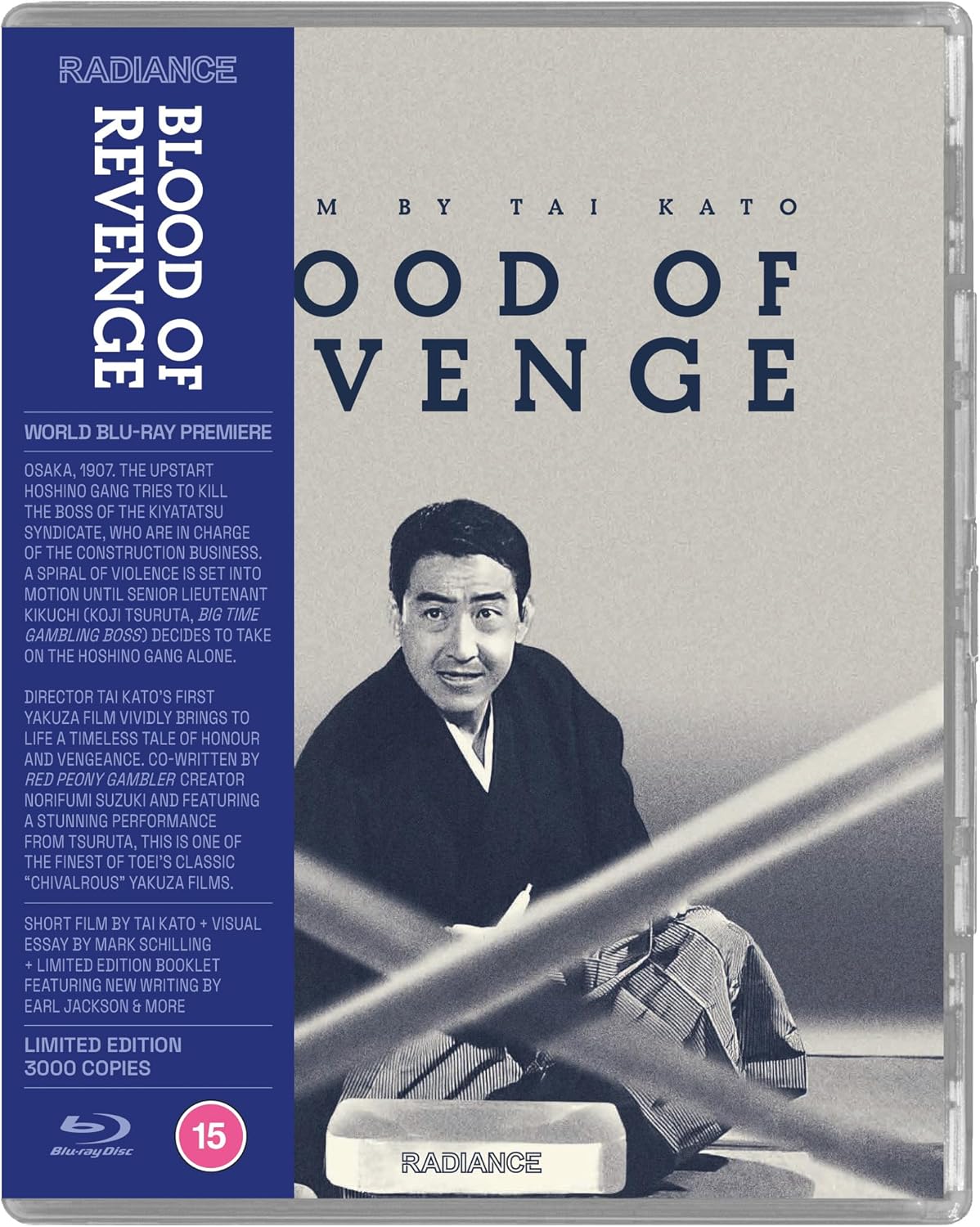
Radiance Films continues to mine the filmography of the previously overlooked Japanese director Tai Katô with a Blu-ray release of Blood of Revenge. It was the director’s first yakuza film, made during the era of the ‘chivalrous’ yakuza titles (a.k.a. ninkyo eiga).
I’ve yet to be disappointed by a Katô film, so I got hold of a copy and my thoughts follow.
Blood of Revenge is set in Osaka in 1907 and opens in a blistering fashion with an assassination attempt during a drumming performance at a rowdy festival. The target is the boss of the Kiyatatsu syndicate and the rest of the family assume (rightfully so) that the hit was put out by their rivals, the Hoshino gang.
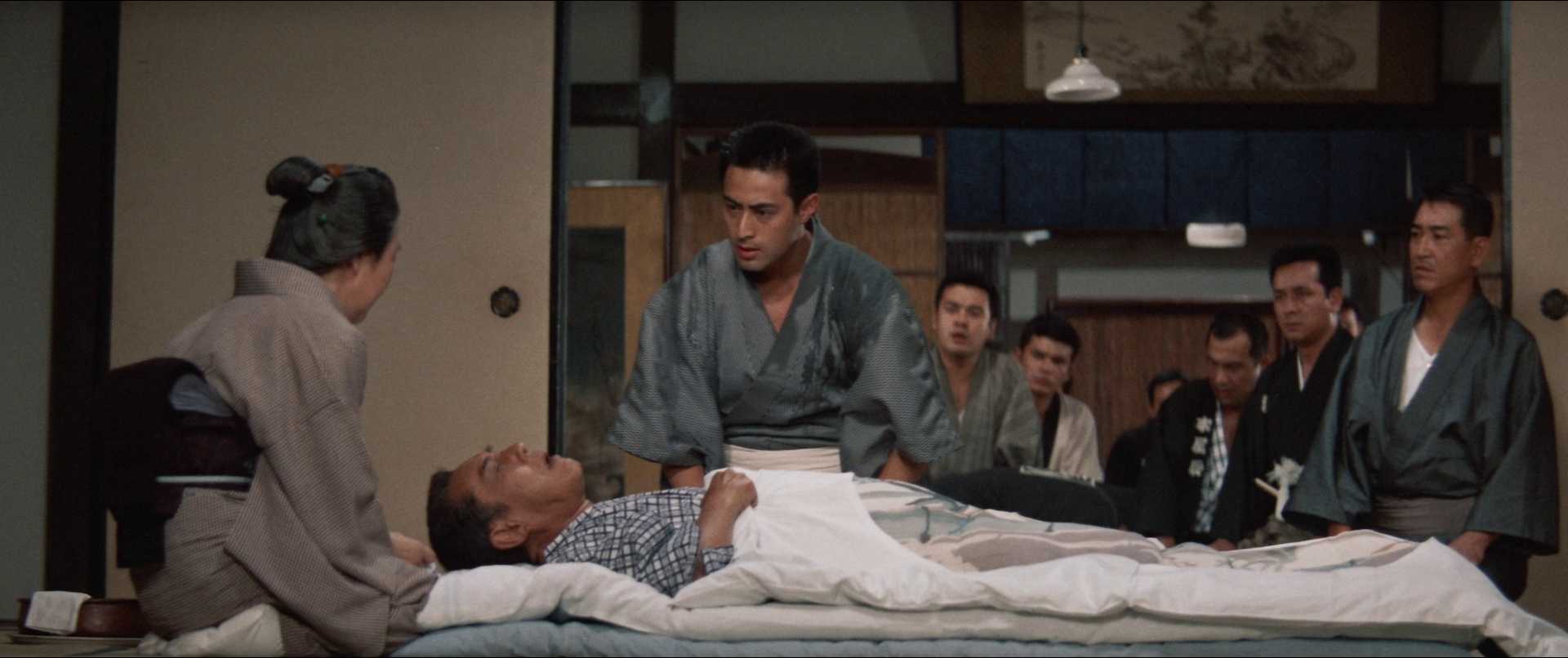
The Kiyatatsu boss is gravely injured in the incident. During his final days, he urges his fellow syndicate members to remain calm and not retaliate. He’s determined to rise above his family’s yakuza roots and make Kiyatatsu a legitimate business. In particular, he wants to continue to honour a lucrative construction contract for the respected Nomura organisation.
The Hoshino gang want this contract for themselves though, so continue to make things difficult for the Kiyatatsu syndicate. Attempting to keep them on the straight and narrow is Asajiro Kikuchi (Koji Tsuruta). He’s an honourable man who many believe will become the next boss, though the Kiyatatsu boss’ hot-headed son, Haruo (Masahiko Tsugawa), wants the position himself.
Having promised his boss that he would look after his son and keep him on the right path, Kikuchi must delicately balance relationships on both sides of the gang conflict.
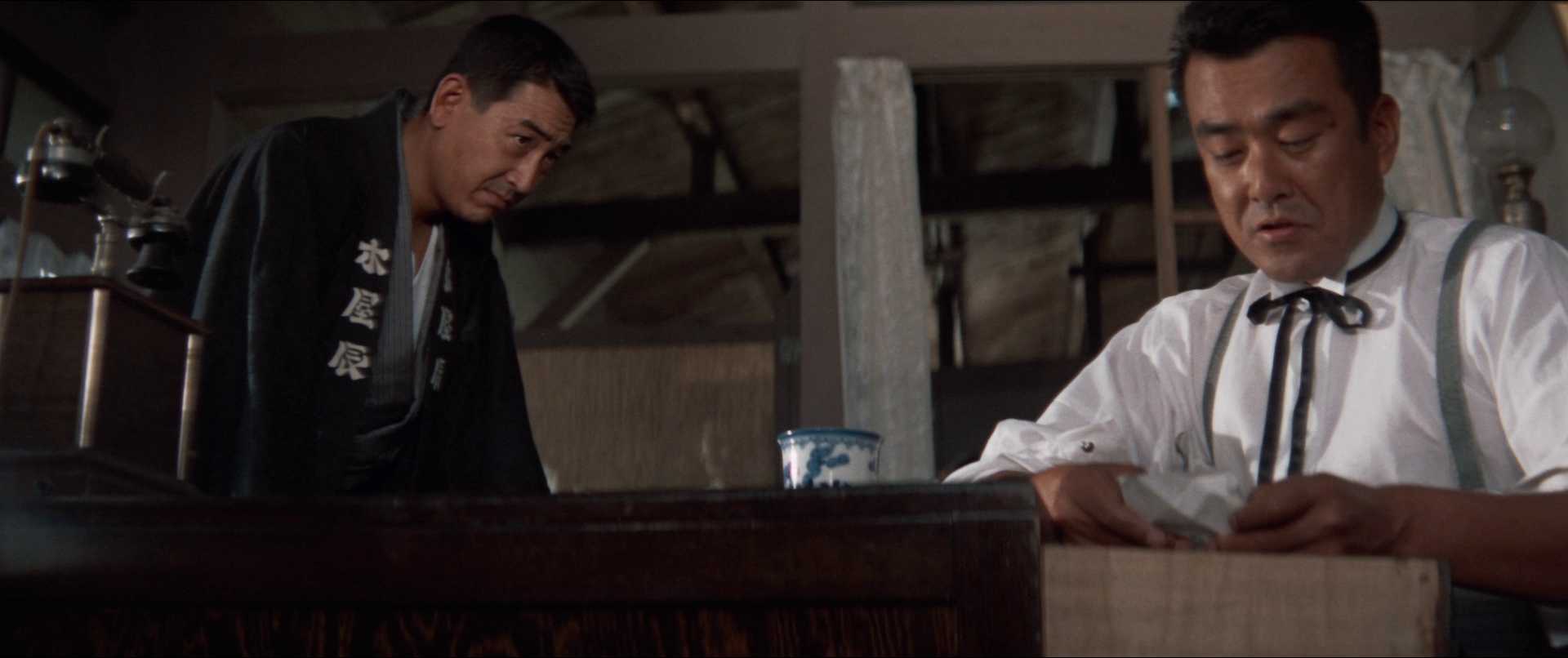
Also making life complicated, is the fact that Kikuchi has fallen in love with Hatsue (Junko Fuji), who is the regular prostitute of the fiery and abusive Karasawa (Tôru Abe).
After the forementioned opening, which is a masterclass in rhythm, movement, tension and energy, Blood of Revenge settles into a more mellow tone for much of the rest of the film. It’s more of a crime melodrama than the title suggests.
There are quick bursts of violence here and there, particularly in the final act, when all hell breaks loose. However, the film largely focuses on Kikuch’si relationship with Hatsue and his attempts to keep simmering tensions between the families from boiling over. This is one of the honourable yakuza tales, after all, rather than one of the later jitsuroku eiga, popularised by Kinji Fukasaku.
Less violence doesn’t equate to a lesser film, however. Whilst a touch slow in pace, Blood of Revenge is emotionally engaging, well performed and eloquently directed.
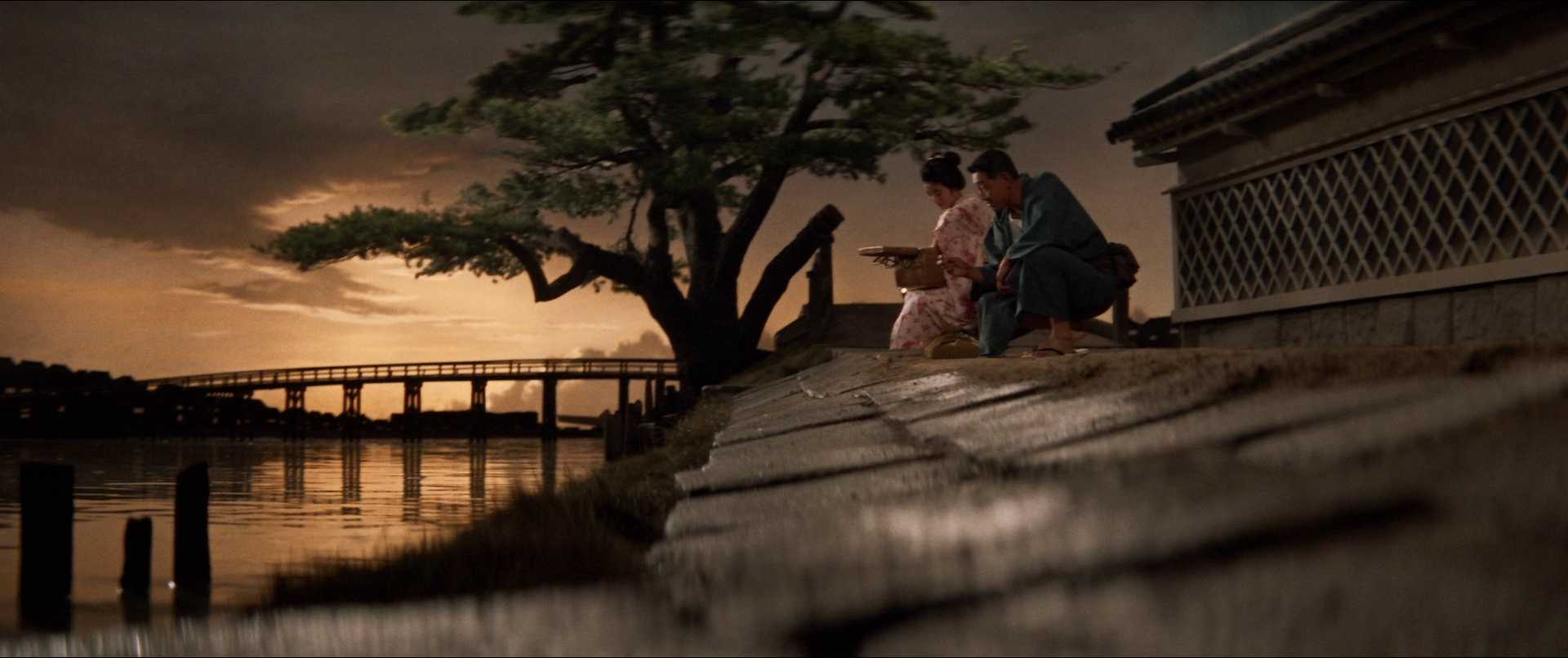
Katô shoots with his usual keen eye for interesting compositions, as well as a great use of depth and screens. Colour is put to good use here too and there are a couple of effective ‘needle drops’ throughout the film.
There are quite a few characters and narrative strands, making for a rich and lively tale. These seem slightly overwhelming to begin with but soon converge to make this a story largely about Kikuchi and his noble quest.
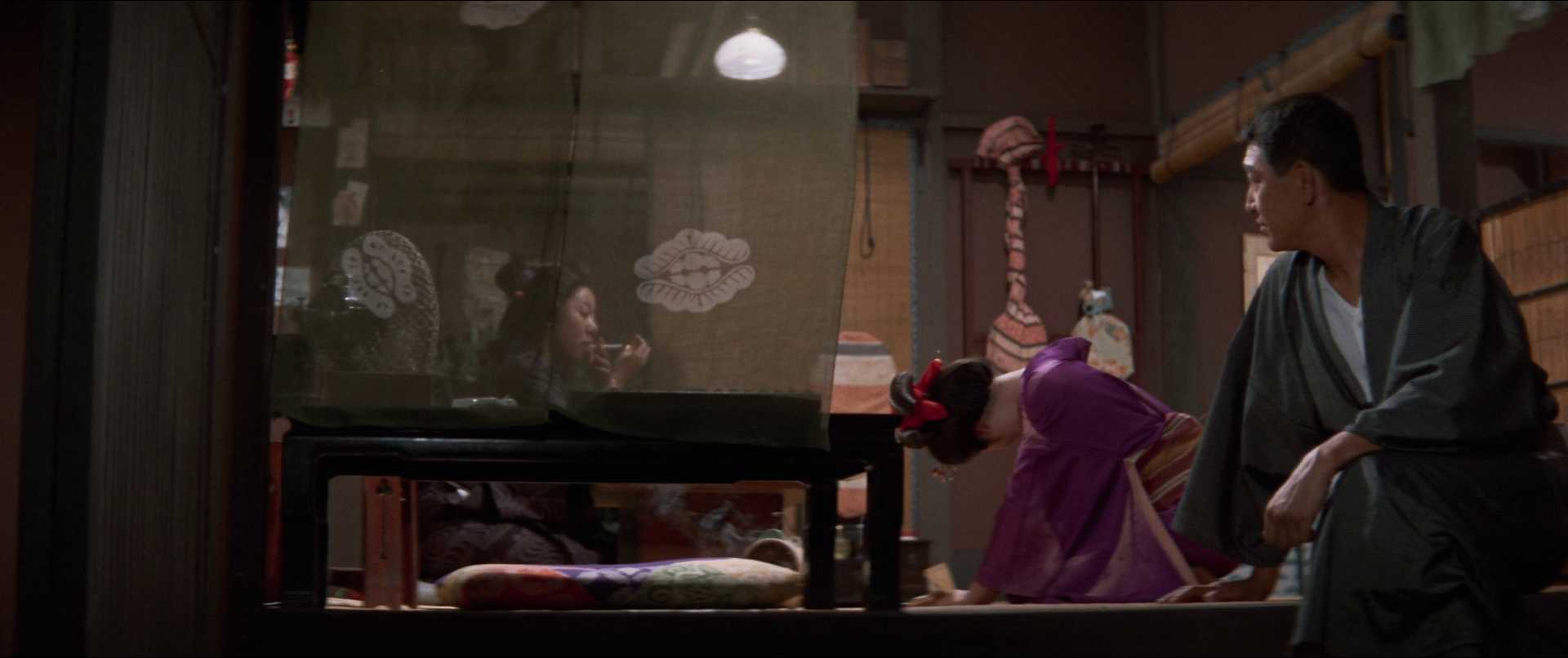
Overall, it’s another gem from Katô – a rousing, expertly directed yakuza melodrama.
Film: 

Blood of Revenge is out on 26th January on region A&B Blu-Ray, released by Radiance Films. It looks great, with lovely colours, a clean print and perfect tonal balance. I’ve used screengrabs throughout this review to give you an idea of how it looks. It sounds good too, for a film of its era.
LIMITED EDITION BLU-RAY FEATURES
– High-Definition digital transfer
– Uncompressed mono PCM audio
– Lice Are Scary – short film by Tai Kato (1943, 14 mins)
– Junko Fuji: Flower and Storm – a visual essay by Mark Schilling (2025, 15 mins)
– New English subtitle translation
– Reversible sleeve featuring original and newly commissioned artwork by Time Tomorrow
– Limited edition booklet featuring new writing by Earl Jackson and an archival review of the film
– Limited edition of 3000 copies, presented in full-height Scanavo packaging with removable OBI strip leaving packaging free of certificates and markings
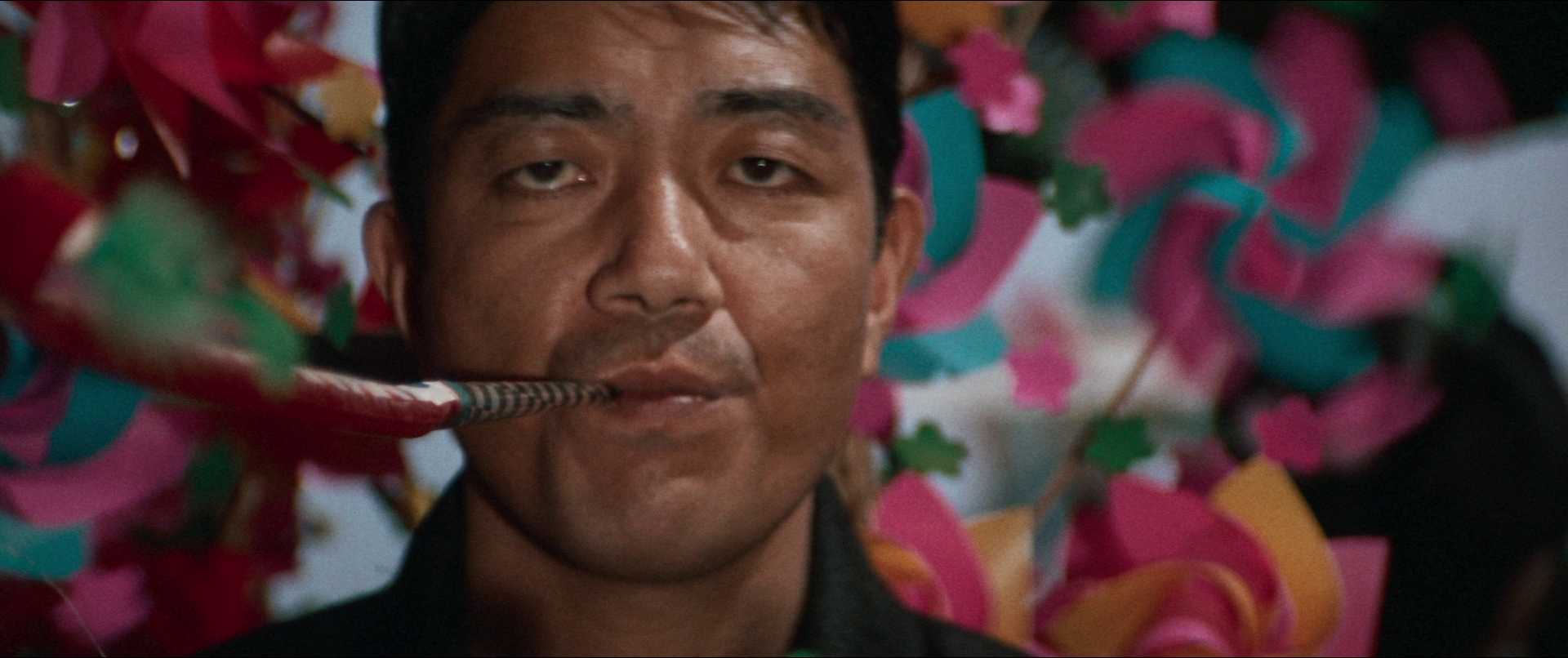
Mark Schilling provides a 15-minute video essay about Junko Fuji. He discusses her rise to fame and how she continues to impress in more recent films. It’s a decent piece.
Also included on the disc is ‘Lice Are Scary’, an early short film made by Katô in 1943. It was made as a wartime educational film for overseas subjects of the Japanese Empire. It uses some animation to tell its story. It has its moments but feels a little fractured and obviously can’t escape its educational background with a splash of propaganda (“The UK and US are like lice. We must defeat them!” pops up as a caption at one point).
I didn’t receive a copy of the booklet to comment on that, unfortunately.
Overall, it’s a little lightweight on extras, but what is included is worthwhile, the transfer is excellent, and, more importantly, a lesser-known ninkyo eiga is getting a new lease of life on Blu-ray. Recommended.
Disc/package:
Leave a Reply