


 Director: John Ford
Screenplay by: Dudley Nichols
Based on Plays by: Eugene O’Neill
Starring: John Wayne, Thomas Mitchell, Ian Hunter, Ward Bond, Barry Fitzgerald, Wilfrid Lawson, John Qualen, Mildred Natwick, Arthur Shields
Country: USA
Running Time: 106 min
Year: 1940
The Long Voyage Home comes at the end of a great run of John Ford films released over two years, including Stagecoach, Young Mr. Lincoln, Drums Along the Mohawk and The Grapes of Wrath. Like the first and last of the films listed, The Long Voyage Home was well received by critics on release but, unlike those long-esteemed pictures, it has been pushed aside over the years.
Reportedly, Ford himself preferred this and some of his other independent films to his bigger, Oscar-winning studio titles such as Grapes of Wrath and How Green Was My Valley. The playwright Eugene O’Neil, whose four one-act plays formed the basis for The Long Voyage Home, was also known to have counted this among his favourite adaptions of his work. Nevertheless, the film has since become somewhat lost among the crowd of Ford’s classics.
Giving The Long Voyage Home a much-needed new lease of life then, is Imprint. The Australian label is releasing a restored print of the film on Blu-ray with a host of special features. I’ve got too many gaps in my Ford watchlist, so picked up a copy to give it a look.
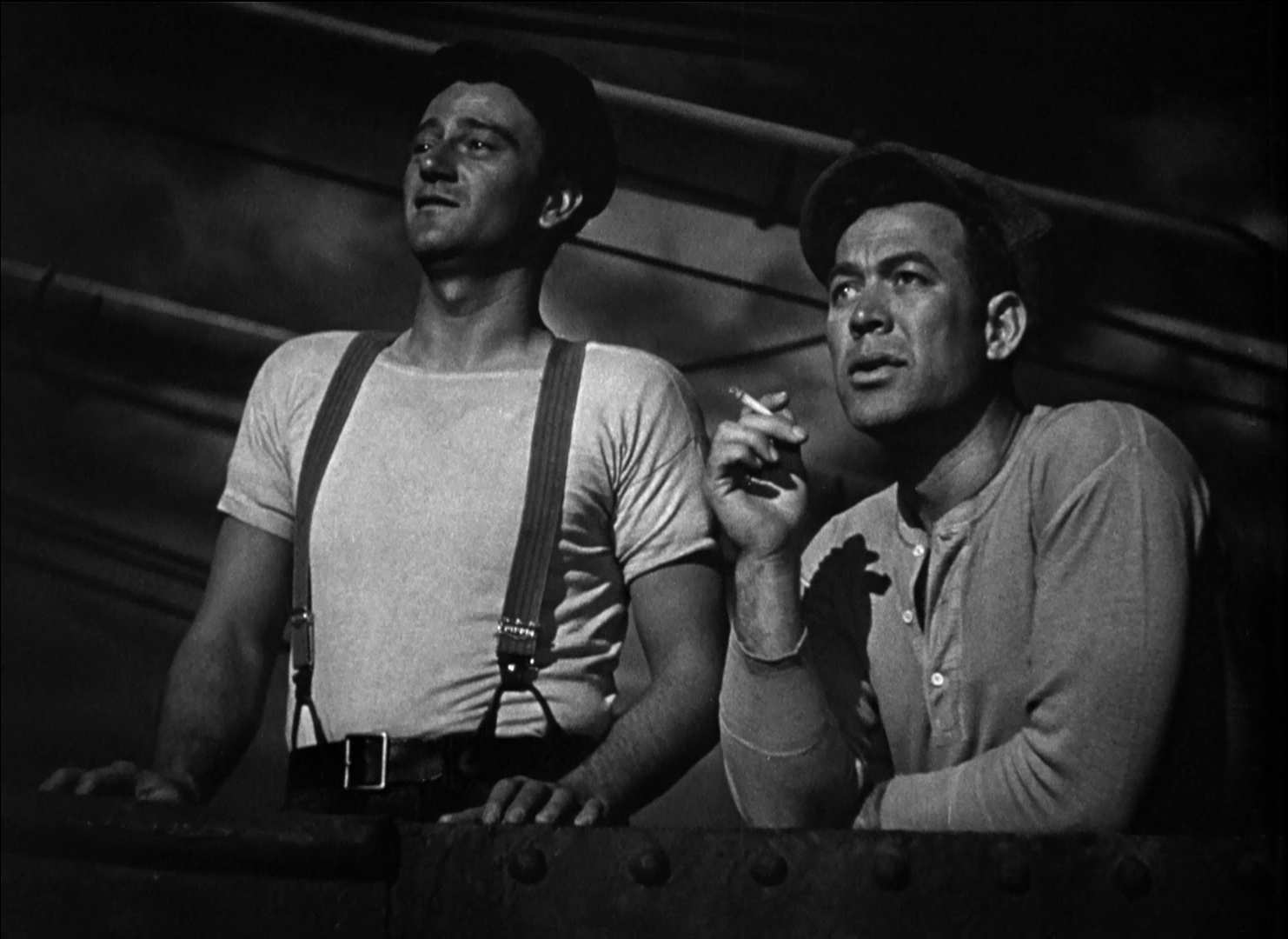
The Long Voyage Home is set during World War II and focuses on the crew of the British merchant ship, the SS Glencairn, as they embark on a journey from the West Indies to the UK, via Baltimore. This stop adds more danger to the voyage than the crew would like, as they pick up a large supply of explosives to ship over to Britain to aid the war effort.
On board, we follow the trials and tribulations of the various crew members, hailing from different countries and backgrounds. Among them are the group’s unofficial ringleader Driscoll (Thomas Mitchell), a Swedish sailor named Olsen (John Wayne) who’s keen to get back home after this final trip, a well-spoken but struggling alcoholic named Smitty (Ian Hunter) and a tough fight-loving American the crew call Yank (Ward Bond).
As the ship sets sail, tensions and personal conflicts arise among the crew. They encounter storms, aerial attacks and other dangers. Throughout the voyage, the crew’s camaraderie and resilience are tested as they face the harsh realities of life at sea and the emotional toll it takes on them.

The Long Voyage Home is an unusual film, in a way, due to it being a wartime picture set during the conflict that avoids propaganda or even any Nazi fighting (other than one scene in which the German attacker is never shown). It’s more of a psychological, character-based drama than the action-adventure I expected, given the setting and Wayne’s top billing. The war does play a part in the background though and, whilst the film doesn’t push the U.S. to assist, as a lot of American war movies did around this time, it does show arms being sent from the States to the UK.
In essence, it’s a story about men with problems, who find support from each other through being forced together into a confined community. This allows for the film to have some surprisingly moving passages, particularly the gut-punch ending, which is poignantly delivered. A little of Ford’s usual sentimentality creeps in occasionally but there’s a melancholic, fairly gritty edge that prevents this from ever taking over.
The dangers of alcohol play a key role in the film too. You could even say this provides the linking theme between the otherwise episodic acts of the film. Both O’Neil and Ford had documented issues with the substance, so these aspects of the narrative have a genuine and particularly personal touch behind them.
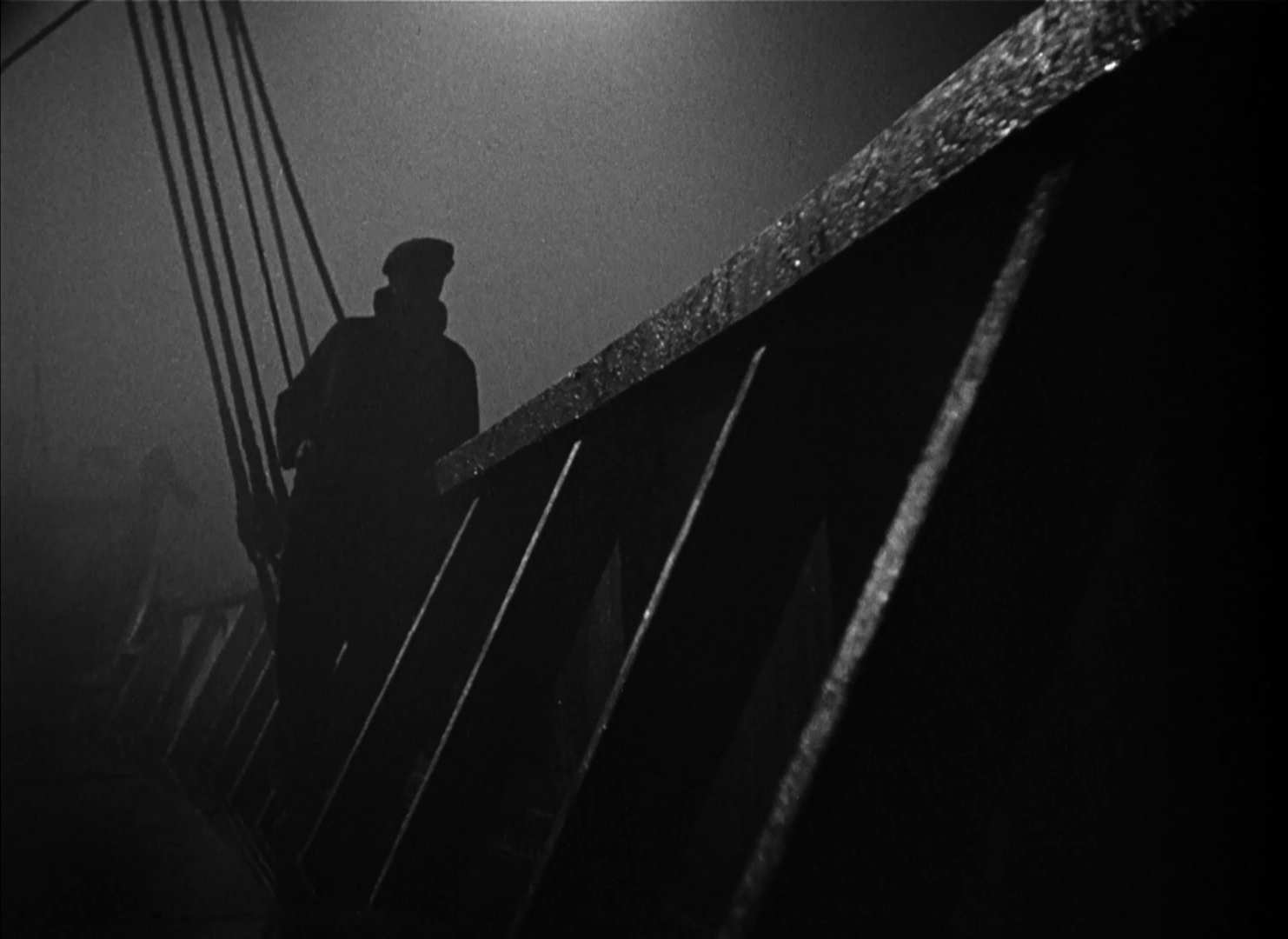
On a technical level, the film is also very impressive. Ford’s skill as a director and background in silent filmmaking is on display here, right from the wordless opening that draws you into the film. Whilst Ford’s visual storytelling is first-rate, he also makes great use of sound, with the storm sequence particularly effective with its crashing waves and great clangs of a loose anchor that set the seamen’s nerves on edge.
Ford’s set pieces, in general, are superbly realised. Whilst there isn’t a lot of so-called ‘action’ here, when it comes it is gripping and dramatic. Tension is also effectively drawn in the final act, where the audience is made aware of a plot to drug Olsen and drag him on board a vessel looking for another man.
Cinematographer Gregg Toland is credited alongside Ford in the opening titles and such an occurrence is a rarity among the director’s work. The gorgeous photography and thick atmosphere of the film justifies it though. The dated rear-projection shots let the film’s visuals down a little, feeling quite flat, but these are more than redeemed by some stunning low-key lighting and shots elsewhere that make great use of depth and perspective.

One of the few criticisms I’d aim at the film would be that John Wayne is bizarrely cast here as a Swedish sailor. This means his dialogue is kept short and simple (Ford didn’t yet trust Wayne with lots of lines at this stage) but his attempts at an accent (when he can be bothered to try) are a little comical. Thankfully, he’s less of a central figure than the marketing suggests. The film is very much an ensemble piece, with many of Ford’s stock company doing a grand job, as usual, even if some actors lean into broad performance territory. Thomas Mitchell is the standout of the bunch. He’s a central figure in all of the stories and steals every scene he’s in, playing things big but never straying too far over the edge.
Ian Hunter was not a Ford regular, which makes his Smitty stick out somewhat. This works in the film’s favour though, as his character is supposed to be an outsider and one of the narrative threads sees his shipmates grow suspicious of him. Smitty can actually be seen as a stand-in for O’Neil. He too struggled with alcoholism and went to sea for a time (a period in his life that inspired the plays this film was based on).
Overall, The Long Voyage Home sees Ford using all the tools of cinema at his disposal to beautifully tell a melancholy tale of life at sea. Atmospherically presented and enjoyably performed by an ensemble cast of character actors (and Wayne), it’s a voyage well worth taking.
Film: 


The Long Voyage Home is out now on Blu-Ray in Australia, released by Via Vision as part of their Imprint Collection. The 2016 restoration is decent, with a clean print and a reasaonably sharp image for a film of its age. Details can be lost in the heavy blacks, but this may be as originally intended and adds to the atmosphere. I’ve used screengrabs throughout my review to give you an idea of how it looks, though these have been compressed. The audio is faultless too.
Special Features and Technical Specs:
– 1080p High-definition presentation on Blu-ray of the 2016 UCLA Film & Television Archive restoration
– NEW Audio Commentary by film historians Alain Silver and Jim Ursini
– NEW University of Warwick film professor José Arroyo on ‘The Long Voyage Home’
– NEW Cambridge University English professor Jean Chothia on Eugene O’Neill and ‘The Long Voyage Home’
– Going Home – video essay by Tag Gallagher, film critic and author of John Ford: The Man and His Films
– Aspect Ratio 1.33:1
– Audio English LPCM 2.0 Mono
– Optional English HOH subtitles
– Limited Edition slipcase on the first 1500 copies with unique artwork
The commentary is excellent. Alain Silver and Jim Ursini analyse the film in depth and provide a great deal of production background alongside their deconstruction. It’s clearly a very well-researched track and helps you better appreciate the film.
José Arroyo also discusses the film and its strengths. He’s quite passionate about it, so his piece is easy to watch, whilst remaining intelligent and thoughtfully compiled. He goes into particular detail on the qualities of Toland’s photography and Ford’s framing. He also discusses scenes that have been criticised and stands up for them, describing why he thinks they work.

Jean Chothia talks about Eugene O’Neill and the film. On top of giving some background on the original plays, she describes in fair detail the similarities and differences between them and the film, whilst extolling the virtues of both.
Tag Gallagher’s piece is a little shorter than the rest at about 16 minutes (the others are somewhere around half an hour), but it’s no less valuable. As we’ve come to expect from the critic, he digs deep and makes some intriguing analyses. He also talks about the specially commissioned paintings Ford arranged for the film and shows us a number of them, which was a welcome touch.
So, there’s a great deal of added value to the release, complementing another fine film from the great John Ford and one that deserves to be better known. Highly recommended.
Disc/Package: