


 Director: Jean Renoir
Screenplay: Jean Renoir, Carl Koch
Starring: Marcel Dalio, Nora Gregor, Paulette Dubost, Mila Parély, Julien Carette, Jean Renoir, Roland Toutain, Gaston Modot
Country: France
Running Time: 107 min
Year: 1939
BBFC Certificate: PG
Jean Renoir’s La Règle du Jeu (a.k.a. The Rules of the Game) was a very expensive production that was struck by many difficulties due to the weather and an escalating shooting schedule. It was given a fairly poor response by the critics and audiences at early screenings too, prompting Renoir to cut a good chunk out of the film, bringing it down from 98 minutes to 80. It had a disappointing box office taking, following this. The situation wasn’t helped when the film was banned in France once the war kicked in, due to it being deemed demoralising.
However, over the next decade or so, the film’s reputation improved, with a group of French critics who would later make up the New Wave being notable admirers. By the late 50s, after already entering Sight and Sound’s first prestigious poll of the greatest films of all time at number 11, a couple of cinephiles embarked on a mission to restore the film (the negatives were destroyed during the war), expanding it into a version that brought Renoir to tears.
This 106-minute cut played at the Venice film festival, where it fared much better than before. Three years later, it was picked as the third greatest film of all time in the second Sight and Sound poll and has featured in every top ten since, up until last year, where it ranked 13th.

La Règle du Jeu is a film I first watched when I was making my initial explorations into classic cinema, picking up VHS and later DVD copies of anything that cropped up on top 10 lists and the like. I saw it a couple of times back then and, whilst I thought it was very good, I couldn’t quite see what all the fuss was about.
Years have passed though and my tastes have broadened and matured. So, when the BFI announced they’d be releasing La Règle du Jeu on Blu-ray from a recent 4K remastered print, I figured I should give the film another shot.
For those of you who haven’t seen the film at all, it’s set during the time it was made, that is in the precarious years in Europe where the threat of a second world war loomed. It opens with the arrival on French soil of the famous aviator André Jurieux (Roland Toutain), following a record-breaking flight. He should be jubilant but is instead devastated that the woman he loves, Christine (Nora Gregor), is not there to greet him.
We soon learn that Christine is married to the Marquis Robert de la Cheyniest (Marcel Dalio) and she’s having doubts as to where her heart truly lies. This seeming love triangle is turned into a square when we learn that Robert has his own lover, socialite Geneviève (Mila Parély).
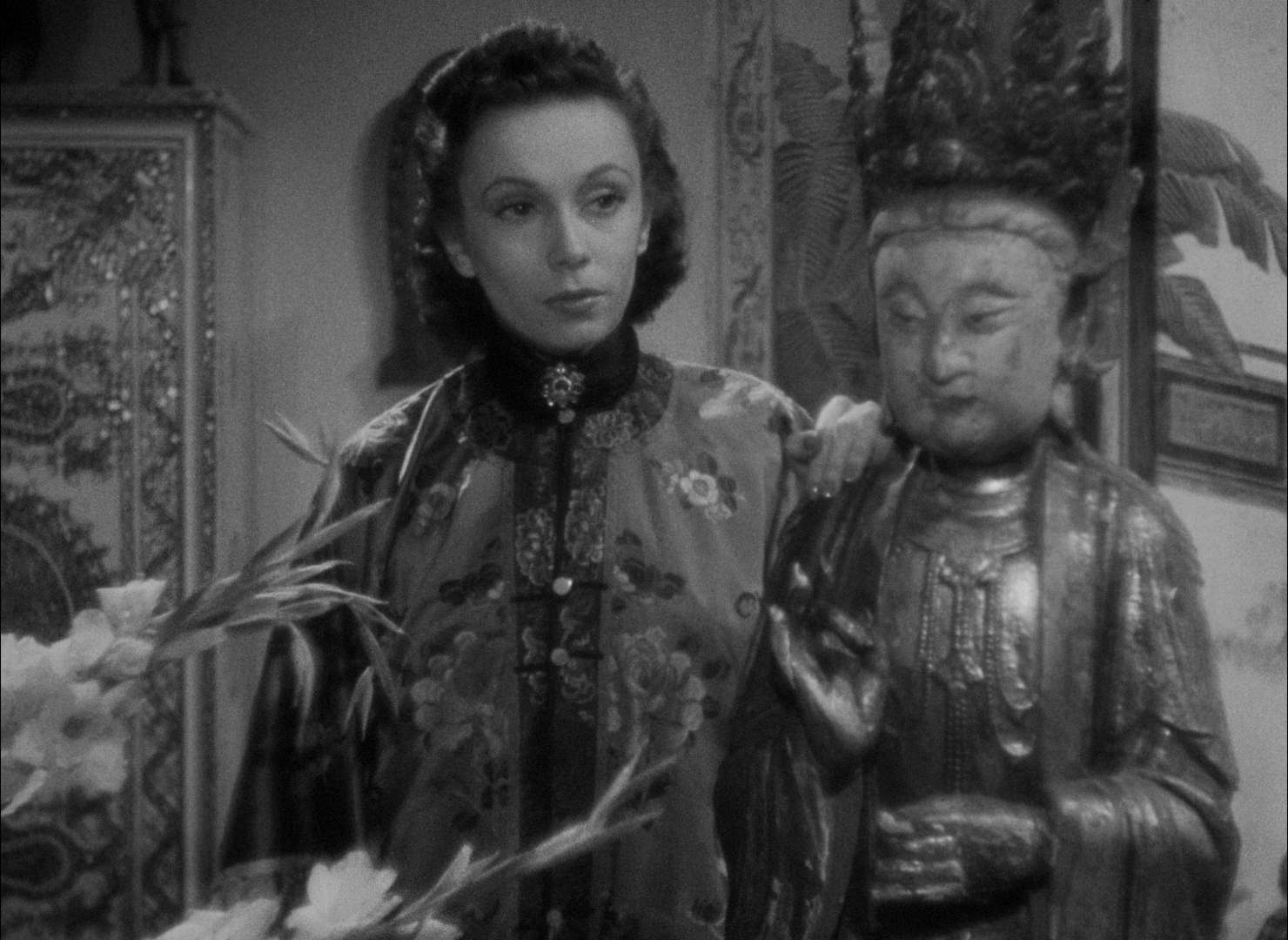
Octave (Renoir himself), a good friend to both André and Christine, attempts to intervene by convincing Christine and Robert to invite André to their country estate, La Colinière, for one of their lavish hunting parties.
Everyone involved agrees, leading, as you might expect, to a rather complicated relationship conflict which only worsens when further potential lovers add even more sides to the ‘love square’.
Also during the get-together, there’s another messy affair taking place between Christine’s handmaid Lisette (Paulette Dubost), her husband Schumacher (Gaston Modot) and an amorous poacher-turned-servant named Marceau (Julien Carette).
As you might glean from the synopsis, La Règle du Jeu is a film that can seem light and throwaway on first viewing, appearing like one of many bedroom farces, but the more often you watch and dig into it the more depth is unearthed.
It’s advertised as being a satire of French society and attitudes in the time shortly before WWII. Knowing little of French history, some of this was largely lost on me but I still appreciated the savage treatment of the aristocracy, the hypocrisy of their actions and mindless dedication to ‘keeping up appearances’. A nice little touch (among many) is how most of the music in the film is diegetic and comes from a mechanical source, such as a gramophone, player piano or a fairground organ. This reflects the soulless actions of the aristocratic guests, even when they’re supposed to be having fun.
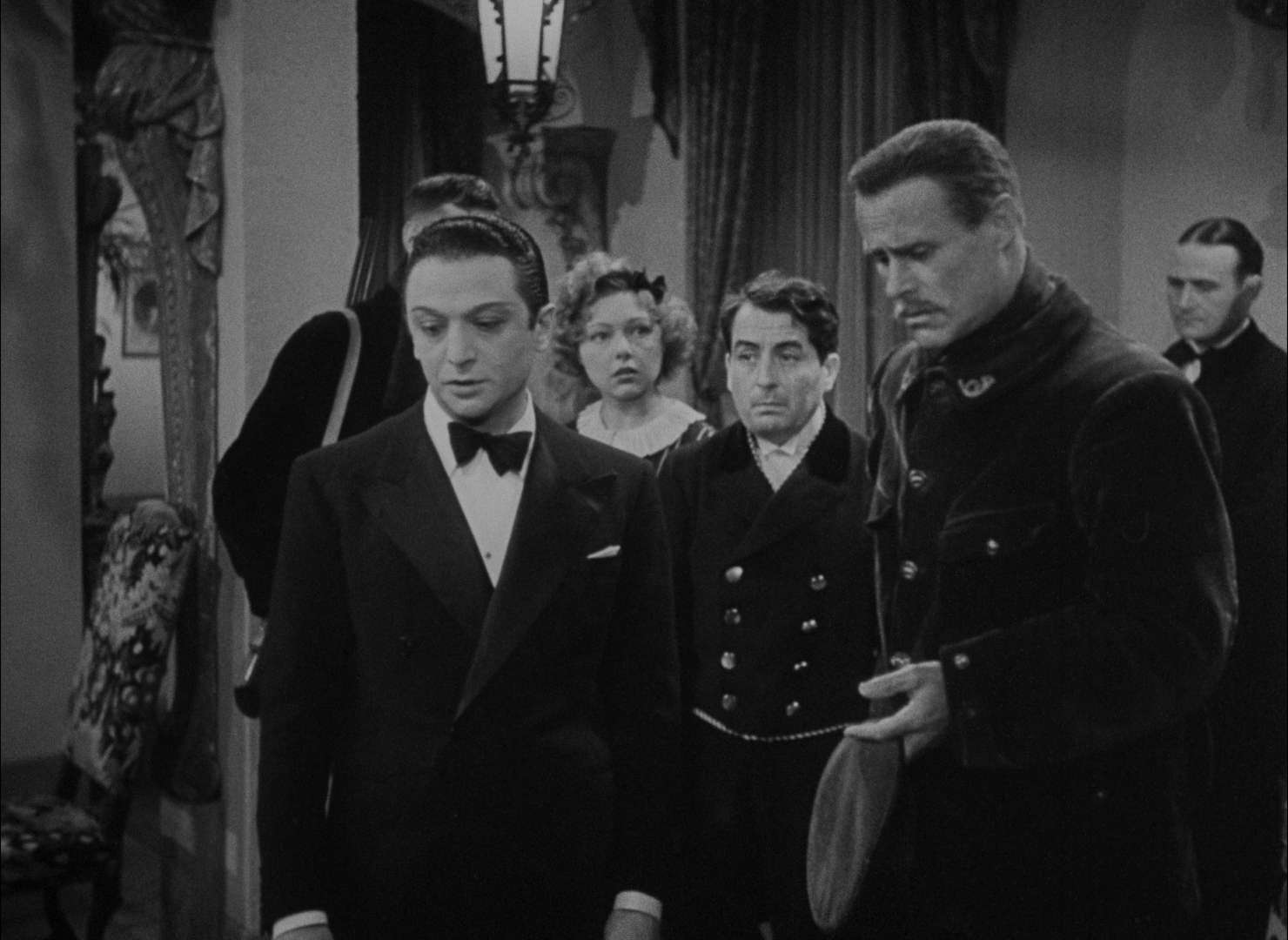
One reading that I can also get on board with is how the upper classes are seemingly blind or unphased by the horror going on around them, instead continuing their frivolous games and social niceties. As Renoir himself put it, “I wanted to depict a society dancing on the edge of a volcano”. A key metaphor in the film is the hunt. We watch a montage of the upper-class guests blasting away at countless small defenceless animals for pleasure (shots of which animal-lover Renoir was not present for). As individuals, the guests are charming but together they form a killing machine with little sympathy for those ‘below’ them or even on a level, going by how they treat each other throughout the film.
There are many more readings that can and have been made of La Règle du Jeu, but you can dig out more intelligent and eloquent reviews for those. On the surface, however, there is still much to appreciate. For one, it has a seemingly effortless style and energy. Whilst a number of critically acclaimed ‘masterpieces’ can be a bit of a chore to sit through, La Règle du Jeu sails by, with a good portion of its second half, in particular, descending into a wildly enjoyable farce.
On top of its sharp, no punches pulled script, the performances are a key factor in the film’s charm. Renoir’s Octave is particularly enjoyable. He originally came under criticism by producers and audiences for his role, leading to much of his part being cut out of the shortest version, but his lively, uninhibited performance works a treat now that we’re used to more ‘natural’ acting styles.

I enjoyed all of the performances though. Reportedly, the dialogue wasn’t fully scripted, allowing or rather forcing some improvisation from the cast. This gives the film a modern sensibility and is likely key to its dialogue-heavy style.
The editing is also important in keeping things ebullient, with the rhythm of the film effortlessly controlled. Renoir and his editor wife Marguerite Renoir, as well as co-editor Marthe Huguet, know when to use regular intercutting and when to hold back, leading to a film that simply breezes along, even when there are some shifts in tone.
Visually, the film is stunning too. The use of framing and the complex blocking of its numerous graceful dolly shots are still impressive, 84 years later. The film is famous for its use of deep focus and this allowed Renoir to construct these elaborate shots with multiple layers of action whilst keeping the details within each frame looking clear and sharp.
I could go on and on about the merits of La Règle du Jeu but there’s plenty of writing out there about the film already. Needless to say, on this third or fourth watch, the film finally clicked for me. I’m surprised it didn’t before though, as this isn’t a stuffy relic to be merely admired. It’s stunningly well-crafted, yes, but it’s also a buoyant and lively yet sharp and cynical delight, tearing into the hypocrisies of the upper classes whilst revelling in wild farce. As such, it’s a joy as well as a masterpiece.
Film: 

La Règle du Jeu is out on 14th November on Blu-Ray, released by the BFI. Considering the original negatives were destroyed during WWII, the film looks remarkably good on Blu-ray. Yes, it’s a touch softer than some first-rate restorations but, all things considered, I can’t see it looking any better in HD. It has an impressive tonal range and no notable damage. I’ve used screengrabs to give you an idea of what it looks like, though these have been compressed. The audio is impressively robust for a film of its age too.
SPECIAL FEATURES
– Restored in 4K in 2021 by La Cinémathèque française and Les Grands Films Classiques and presented on Blu-ray
– Newly commissioned commentary by film writers David Jenkins and Trevor Johnston
– Image par image: La Règle du jeu (1987, 42 mins): Jean Douchet and Pierre Oscar Lévy provide a detailed analysis of La Règle du jeu
– Leslie Caron on La Règle du jeu (2016, 18 mins): the actor introduces Renoir’s classic as part of the Screen Epiphanies series at BFI Southbank
– La Vie est à nous (1936, 64 mins): French Communist Party election film depicting political turmoil and the threat of fascism, with creative input from Jean Renoir and Henri Cartier-Bresson, among others
– Pheasant Shooting (1913, 1 min): newsreel item on the start of the shooting season in a Norfolk game reserve
– Society on the Moors (1921, 1 min): newsreel footage of Lord and Lady Savile’s shooting party on the Yorkshire Moors near Hebden Bridge
– Stills gallery
– **FIRST PRESSING ONLY** Illustrated booklet including essays by David Thompson, Ginette Vincendeau and Barry Nevin
The commentary is a deeply analytic affair, with the two critics digging into what makes the film special. They also explore its history, discussing why audiences and critics might have initially been put off by the film and how and when opinions changed. It’s vital listening to better appreciate La Regle de Jeu.
The archival essay on the film, ‘Image par image: La Règle du jeu’ has appeared on previous releases but it’s more than welcome here. Jean Douchet and Pierre Oscar Lévy dissect the film in great detail.

The Leslie Caron introduction discusses the actress’ career. She wasn’t actually involved in La Règle du Jeu, so it seems an odd inclusion here at first but her story is an interesting one. Plus she selected the film for the screening she’s introducing and did work with Renoir. As such, in the second half of the piece, she talks about the director and the film.
La Vie est à nous (which translates to ‘Life is Ours’) is a fiercely political form of anthology film that attacks numerous aspects of French society in a bid to convert viewers to communism. One memorable section uses sound effects and editing to lampoon and criticise some of the world leaders of the time, such as adding a dog barking sound over footage of Hitler. There are a few effective dramatic shorts included within it too. It’s an interesting film, even if its message is heavy-handed.
The two archive shooting party shorts are very brief, both only running around the 1-minute mark, but they give a nice glimpse into the past.
The BFI always put together decent booklets and this one opens with an intelligent overview by the great David Thompson. Ginette Vincendeau’s essay in the booklet is even better though. In it, she breaks apart the usual key points made when discussing La Regle de Jeu‘s background and qualities. This can initially seem like she’s belittling the film, but she instead uses these to explain what really makes Renoir’s work here special, rather than the usual ‘deep focus’ remarks and stories of how it was initially hated and now loved (both of which I’ve touched upon here but tried to play down after reading Vincendeau’s comments).
So, it’s a fine package for an essential film. A very high recommendation.
Disc/package: 