

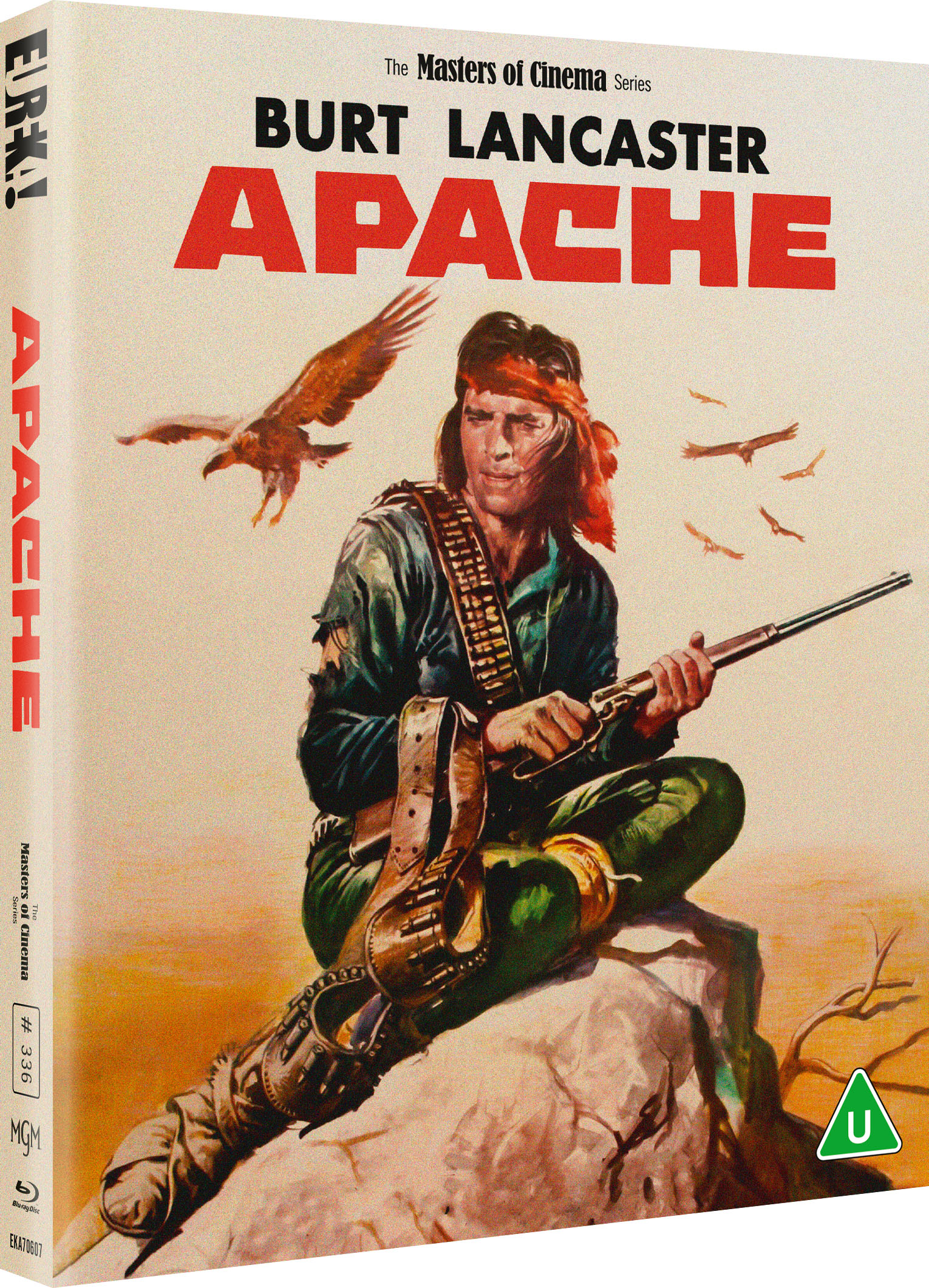
Director: Robert Aldrich
Screenplay: James R. Webb
Based on the novel by: Paul Wellman
Producers: Harold Hecht
Starring: Burt Lancaster, Jean Peters, John McIntire
Year: 1954
Country: USA
BBFC Certification: U
Duration: 91 mins
Apache is the story of Massai (Burt Lancaster), who is the last Apache warrior. He is captured following the surrender of the great leader Geronimo and sent on a prison train bound for a Florida reservation. However, Massai is not to be contained and breaks free to head back to his homeland and win back the woman he loves, Nalinle (Jean Peters). Along his various incursions with the law, he slowly comes to the realisation that maybe the land can serve both his needs as a warrior and as a man.
In the early 1950s, there was no bigger star than Burt Lancaster. He had catapulted to success with his debut in the noir classic, ‘The Killers’ in 1946, and by the time he got around to making ‘Apache’ in 1954, he, along with Harold Hecht, had formed a powerful production company. In fact ’Apache’ marks a turning point for Lancaster as a star and a major Hollywood player. United Artists had partnered with Lancaster and Hecht to offer them a two picture deal after the success of 1953’s ‘From Here To Eternity and when they saw the rushes coming out from ‘Apache’ they believed they had an even more bankable film with its lead star. The continued partnership with United Artists throughout the 1950s meant that Lancaster became the best paid actor in Hollywood and had a status unseen since Charlie Chaplin. In 1951, he starred as an American Indian in ‘Jim Thorpe – All American’ and you can view ’Apache’ as a prequel of sorts. The building civil rights movement, of which Lancaster was an active member, is an important moment in history to keep in mind when watching ’Apache’
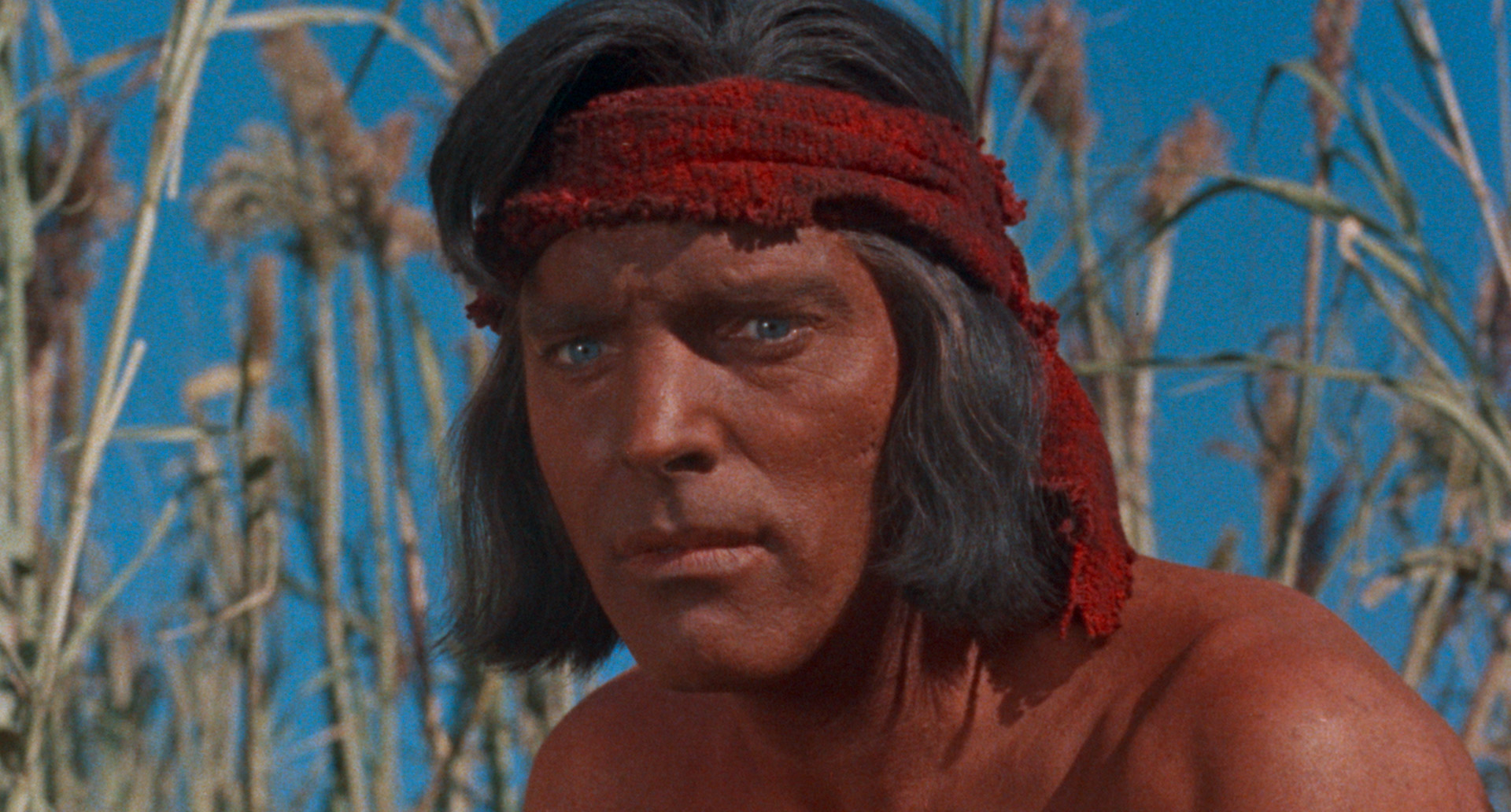
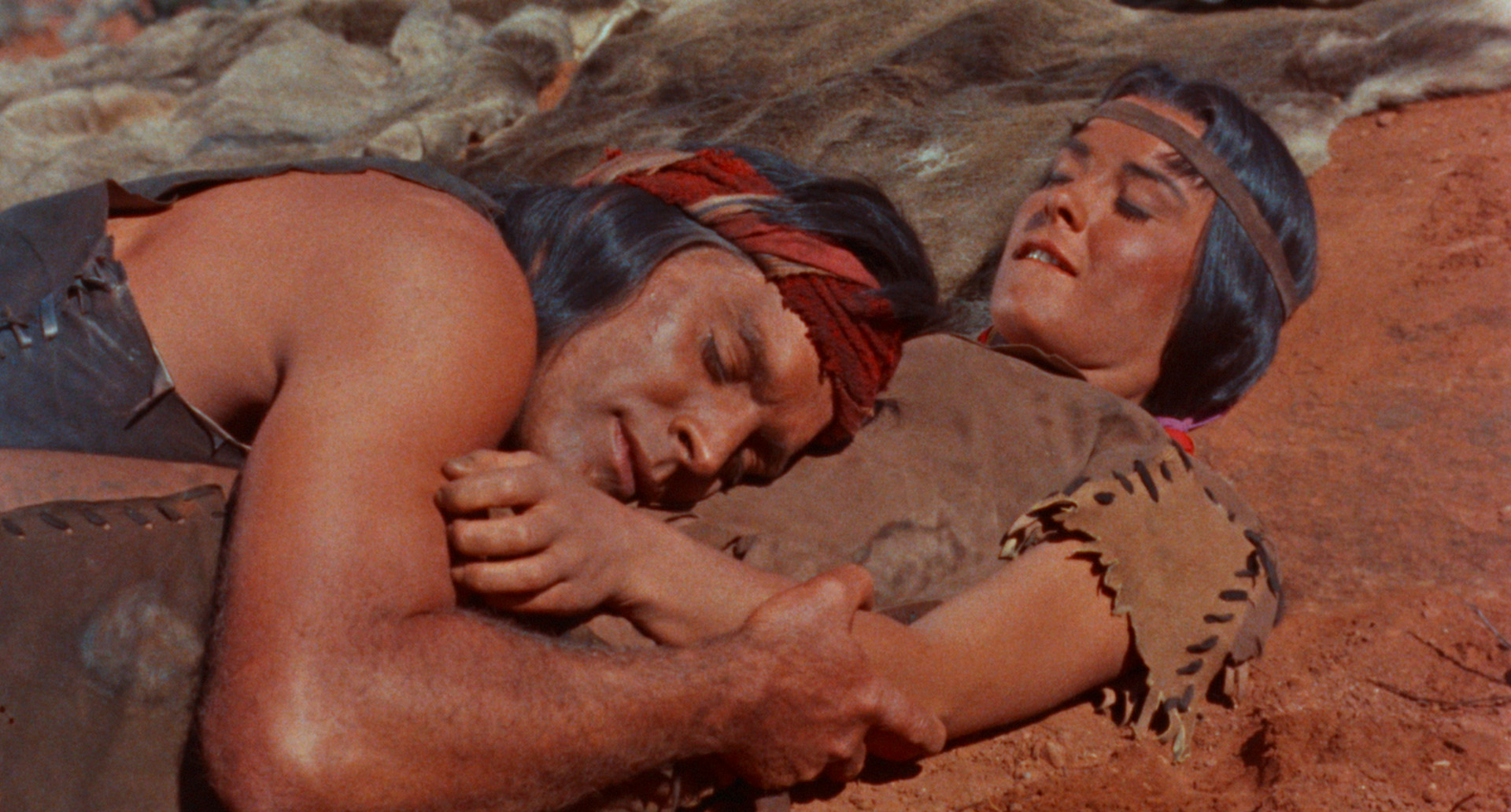
Like all of Lancaster’s roles, he attacks the film with his usual pure physical strength, and it is the domination in the role that sets this film apart from other Native American westerns of the time. There is no getting away from the fact that both Peters and Lancaster are in redface during the film, and it does take a bit of getting used to, but Massai is the lead of this film, and there is no doubt of that. He takes no prisoners, as the opening shoot-out attests. He is continually outsmarting the bumbling and outdated army officer, Al Sieber (John McIntire), and rather than just being all force, he is shown to have brains and ingenuity as he turns seemingly infertile land into a homestead for himself and Nalinle. The ending of the film was changed by the studio just before the end of shooting. The change was lamented by Lancaster and director Robert Aldrich and would seek to make sure that their follow up, ’Vera Cruz’, released the same year didn’t suffer from similar interference. Jean Peters is an amazing shining light of the film, as she constantly asks for forgiveness from her captors for Massai and pushes them to believe in him, adding the softness to Lancaster’s blunt edges.
‘Apache’ is also the first western for a leader in the genre, Robert Aldrich, who had previously worked as Assistant Director on ‘The First Time’for Hecht-Lancaster in 1952. Like Lancaster’s depiction of Massai, Aldrich launches himself into this film with incredible confidence. The filming of the exterior locations is grand and epic and really helps create the expansive world that Massai is trying to protect. As we move into the film and Massai slowly gets boxed in, you feel that claustrophobia setting in as Lancaster is like a tiger getting pushed into a cage. Aldrich was also admired by Harold Hecht for taking any budget and making it look like more money had been spent on it. A rare but very valued quality to hold in Hollywood then or now.
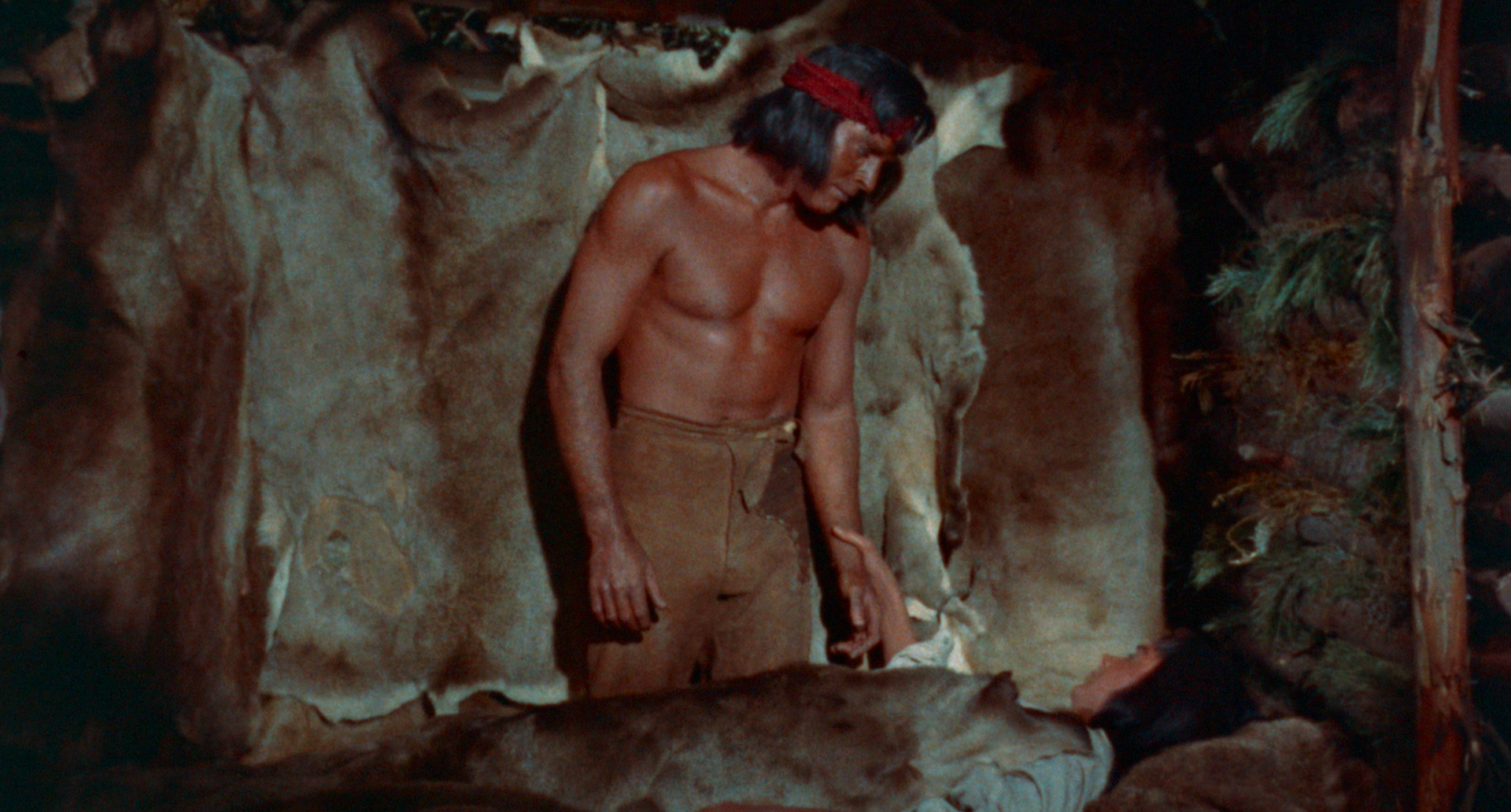
Lancaster was not an easy actor to deal with. He would play mind games with his directors and other cast members and normally take himself away from the rest of the cast and crew. If it really wasn’t working out, he was even prone to physical aggression. All of these things considered, it appears that Aldrich (like John Frankenheimer who amazingly worked with Lancaster 5 times) was able to successfully prove himself to Lancaster and would partner with the star for 1954’s ‘Vera Cruz’, 1972’s ‘Ulzana’s Raid’, and finally 1977’s ‘Twilight’s Last Gleaming’. However with Lancaster just because he worked with you again it didn’t mean he liked you or what you did but just knew that you could do it and ultimately do what you were told. I find Lancaster an incredibly fascinating and important person in the history of Hollywood who until very recently was not lauded like his peers were.
The two’s combined power and hunger for success is apparent in ‘Apache’, and it’s a worthy addition to Eureka’s Masters of Cinema line.
Special Features
- The Story of the Massai – with author Austin Fisher
This interview runs at just over 10 minutes and Fisher covers the history of Native Americans in films from the period to put ‘Apache’ into context. It’s short but full of social history and is an important inclusion on the disc. - The Last Sunset in Vera Cruz – with film historian Sheldon Hall
Hall’s interview provides a great overview of Robert Aldrich’s career but specifically focuses on his Westerns. Hall is very engaging and partners up Aldrich’s Westerns into thematic pairs. This extra runs at just over 16 minutes. - Booklet
The limited edition booklet also contains new essays by Western scholar Jenny Barrett and film writer Richard Combs. There is some inevitable crossover of information between these and the interviews on the disc but I enjoyed some of the production stories that both pieces expand upon.
Leave a Reply