



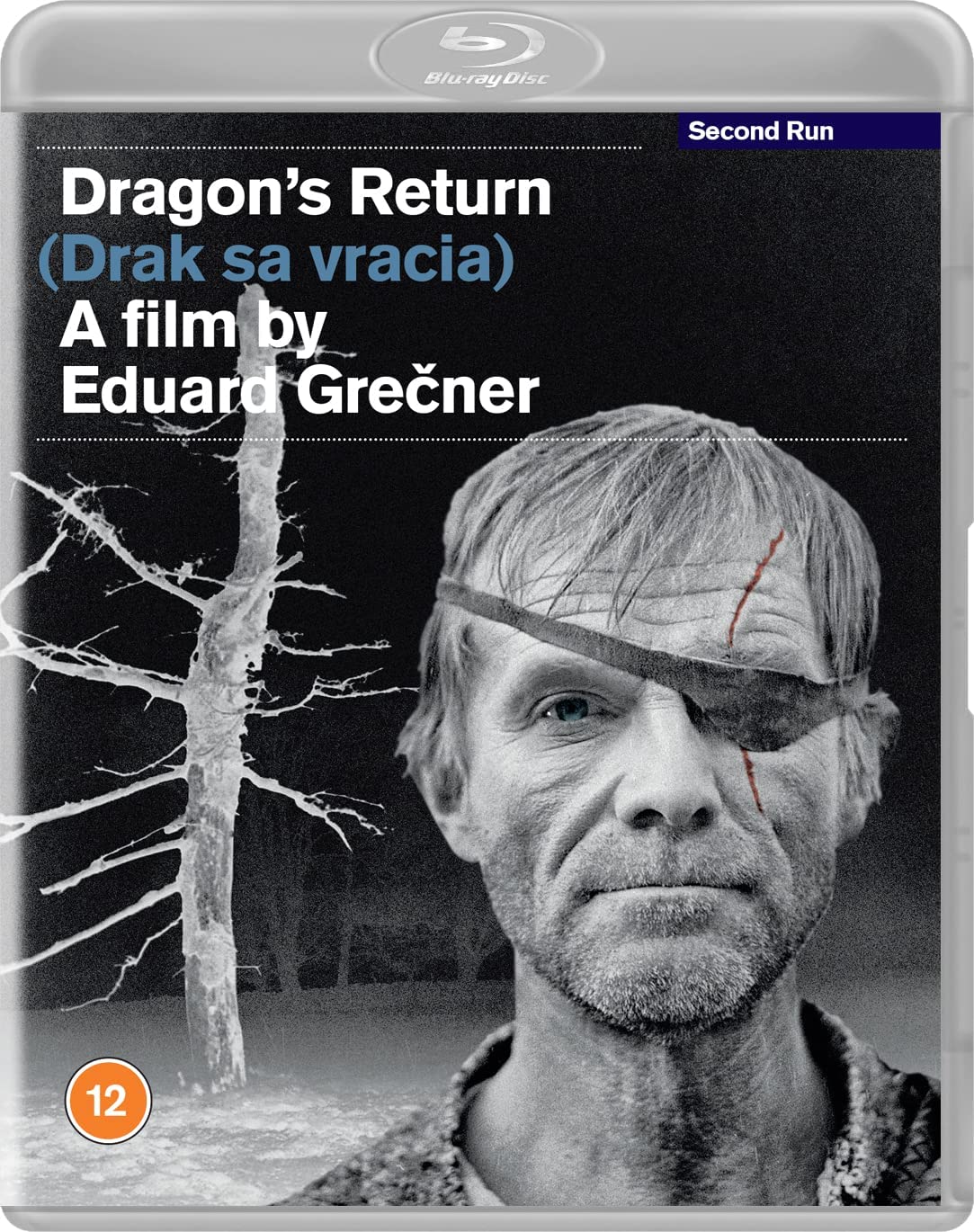
 Director: Eduard Grečner
Screenplay: Eduard Grečner
Based on a Novel by: Dobroslav Chrobák
Starring: Radovan Lukavský, Gustáv Valach, Emília Vásáryová, Viliam Polónyi
Country: Czechoslovakia
Running Time: 85 min
Year: 1967
BBFC Certificate: 12
The Slovak writer-director Eduard Grečner is not one of the best-known figures in his nation’s film history but he studied at FAMU alongside fellow Czech and Slovak new-wave luminaries and was part of the first generation of directors breaking boundaries in the Slovak side of the movement.
Grečner’s most famous film is probably Dragon’s Return (a.k.a. Drak sa vracia or The Return of Dragon). He had been wanting to make it back when he was in secondary school, after reading Dobroslav Chrobák’s novel, which was much loved in his home country. Grečner said he was drawn to the individualist protagonist, likely reflecting his own character and feelings.
Grečner wrote the script in 1956 and it was originally approved for production in 1959 before film industry leaders vetoed it soon after. Eventually, in 1965, a new version of the script was approved and the film was finally produced and released in 1967.
Dragon’s Return proved to be Grečner’s last film for 25 years though, as he got in trouble for calling for passive resistance during the Warsaw Pact invasion of Czechoslovakia. The film didn’t make much of an impact either, receiving mixed reviews at home and gaining no international recognition as it never got out there. The film was due to show at the Pesaro festival but this got cancelled by a student rebellion, assisted by Jean-Luc Godard.
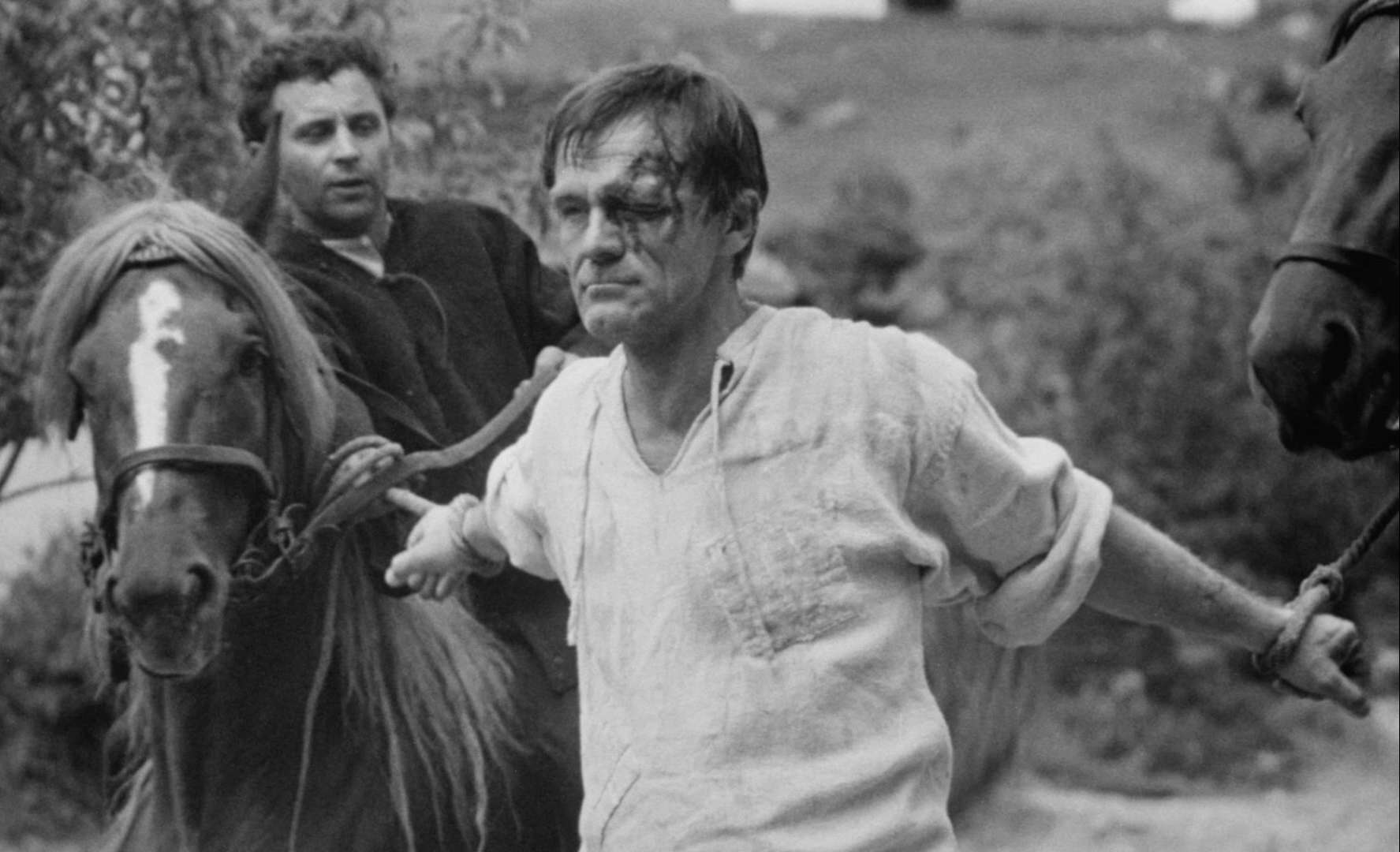
Looking to give Dragon’s Return the international respect it deserves, Second Run are releasing the film on Blu-ray with a newly remastered transfer and a handful of special features. I’m always happy to watch anything they put out so took a peek.
Dragon’s Return begins with, well, the return of Dragon (Radovan Lukavský), a.k.a. Martin Lepiš, to a rural village in the Tatra mountains in an undisclosed but seemingly distant time period. Though we initially don’t know where he had been or why the villagers seem so worked up about his arrival, we eventually learn that Dragon was banished after they believed the lonely, slightly unusual potter was behind the bad drought ravaging their land.
Also causing a stir is the fact Dragon was known to have been in love with Eva (Emília Vásáryová), who reciprocated his love but was married to Šimon Jariabek (Gustáv Valach). As such, the villagers expect Šimon to get revenge on Dragon, which he seems drawn to do, yet loses his nerve whenever he gets close.
A chance for acceptance within the community comes to Dragon when he volunteers to take the local cattle on a treacherous journey to escape a forest fire that is trapping them. This also opens up an opportunity for Šimon to kill Dragon, when he volunteers to help the potter herd the cattle.
I knew nothing about Dragon’s Return prior to watching it for this post, other than skimming through the summaries of a couple of very positive reviews, but it totally blew me away.
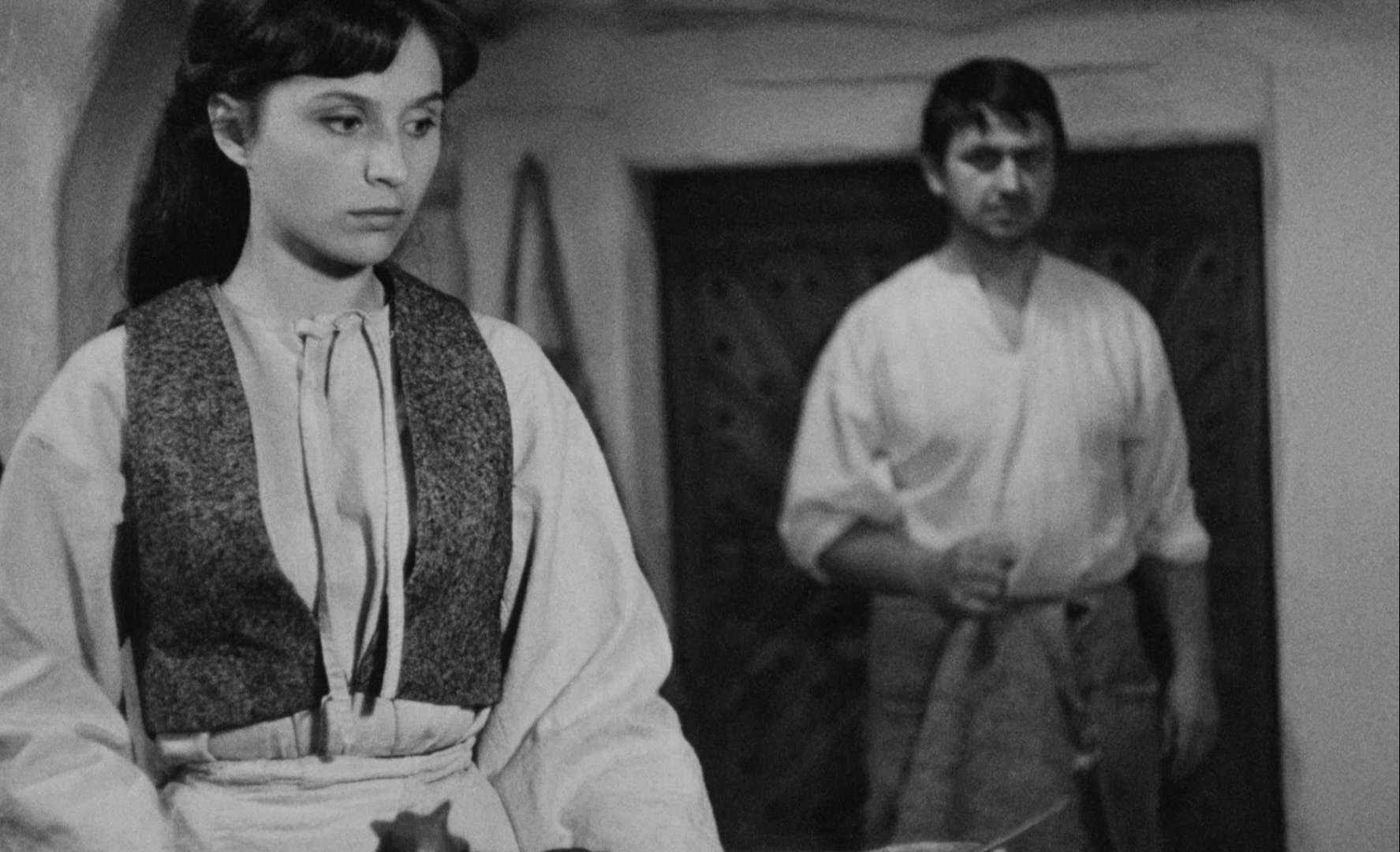
Immediately striking is its style. Whilst there’s a rough quality to the focus pulls within a largely shallow focus visual approach, there are some starkly beautiful shots making stunning use of the rural locations and an adventurous streak in the way the camera moves, often panning longer than you’d expect to track down the next subject. Flashbacks are brilliantly implemented too, filling in the blanks in the story from different viewpoints, often incorporating slow motion to give them a dreamlike quality.
It’s the use of music and sound design that truly push this style into avant-garde territory though. The largely atonal score, which often uses voices as instruments, creates a thick, unsettling atmosphere. The sound design merges with this, frequently using the disembodied mutterings and whisperings of the conspiring villagers to further the sense of unease. Particular sounds are accentuated and sometimes dropped out too. For instance, during the cattle drive, at one point we only hear the musical clatter of the cowbells but not the cracks of Dragon and Šimon’s whips.
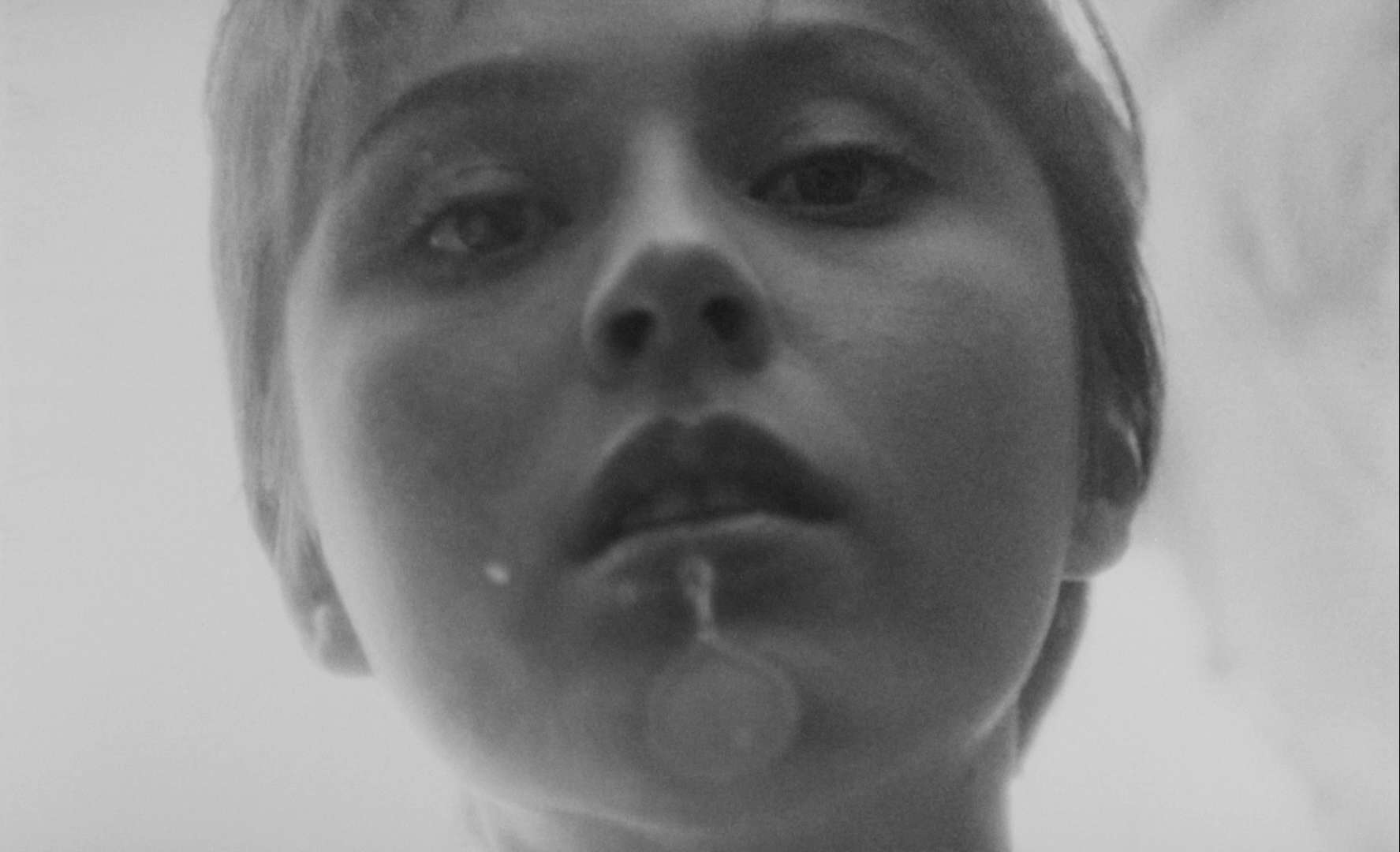
The film is presented in an avant-garde fashion then but it’s thankfully not a distancing, intellectual exercise, as some ‘out-there’ films can seem. It is driven by an almost tactile, elemental style, fuelled by the fire, earth, water and clay often on-screen, helping form a folk-horror vibe alongside the doom-laden score. As such, it reminded me very much of the work of the contemporary director Robert Eggers.
Grecner, in an interview in the booklet here, states that his key theme was one of “unfulfilled love”. As such, in essence, it’s a simple, traditional folk-inspired story told in a modernist fashion. The film could also be seen as an attack on the development of Communism in Slovakia though. In the story, Dragon’s life is being controlled, threatened and abused by a committee, or a “collective evil” as it’s put in a documentary included on this disc.
It’s also about a man who doesn’t fit within his environment. Dragon is not accepted partly because he’s an artist and the primitive, mob-led townsfolk don’t understand him. Even after committing a heroic act, he’s still not respected or left alone. Rastislav Steranka puts it best in his introduction on the disc when he says, “Dragon’s Return is a symbol of timeless loneliness where hell is other people”. Our hero, however, survives as an outcast largely because of his connection with nature.
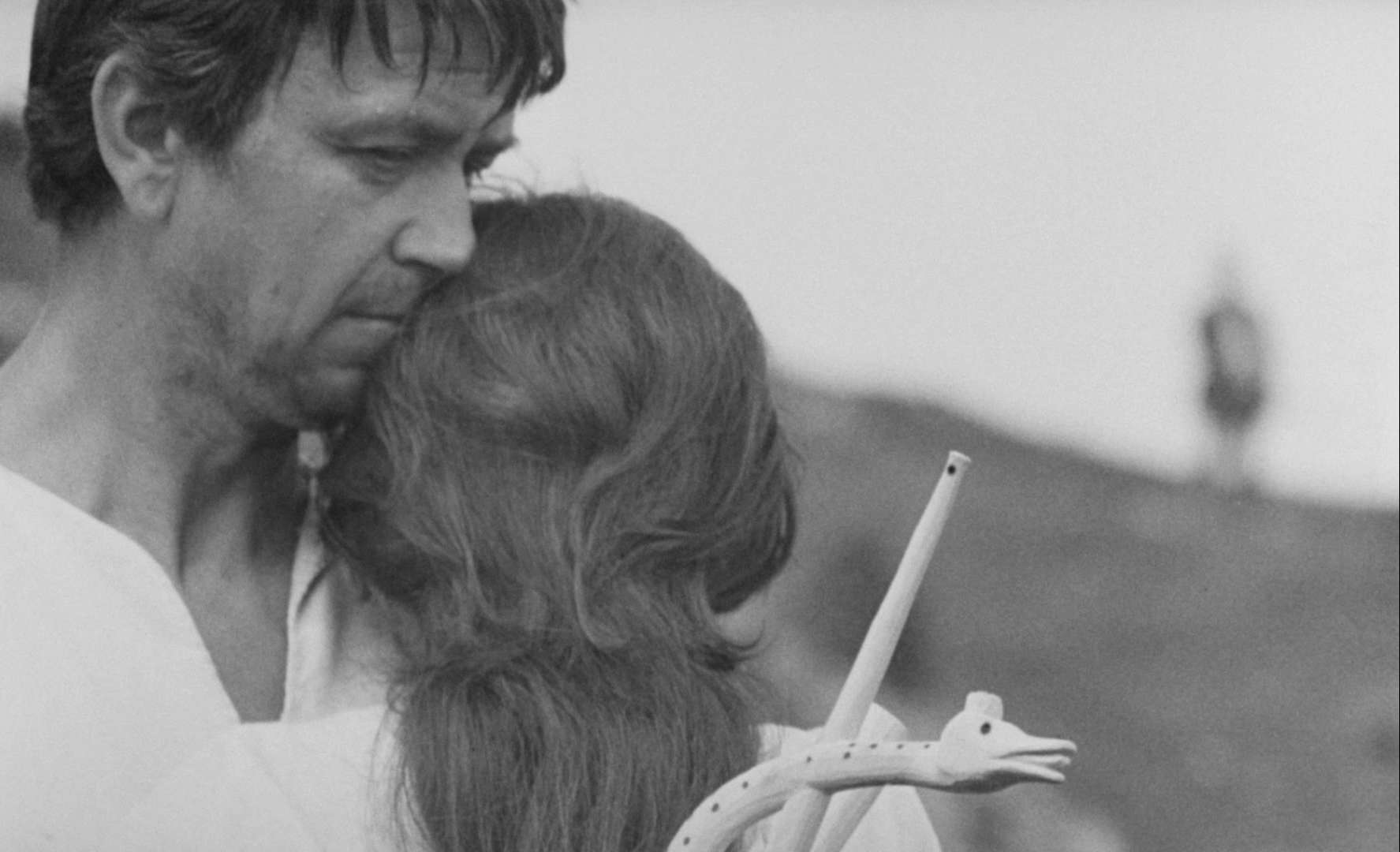
You could criticise the film by saying Grecner’s depiction of women leaves much to be desired. Eva is given very little to do other than sit in the middle of the central feuding pair of men. She’s a luminous presence but sadly her inaction is a product of the time. There is an argument that her silence might purposely signify how powerless women were back in the time depicted but this might be me clutching at straws, as I wouldn’t want to criticise an otherwise exceptional film.
Overall, however, Dragon’s Return is a stunning work of cinematic art. Under Grečner’s masterful direction, it uses visual and sonic poetry to craft an unsettling folk tale that’s stripped back to the bare essentials but thematically rich and utterly compelling.


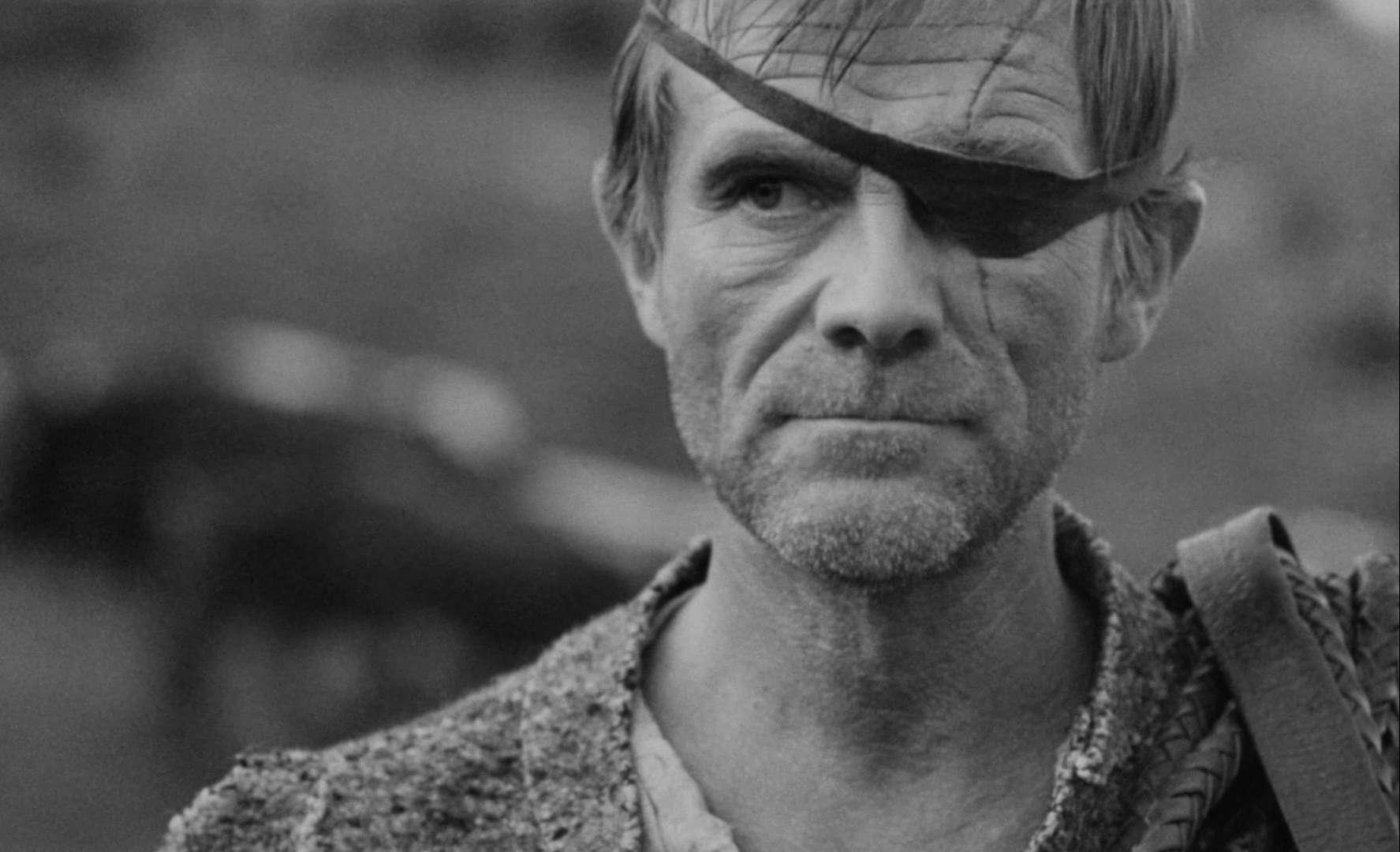
Dragon’s Return is out on 24th October on Blu-ray, released by Second Run. It’s not the most pristine transfer I’ve seen. There’s no damage as such, but the picture is a touch soft and some of the whites seem a little burnt out. This could be as intended though. It’s still a decent-looking picture, regardless. I’ve used screengrabs to give you an idea of what it looks like, though these have been compressed for upload.
It sounds great, with the experimental score coming through strongly.
BLU-RAY SPECIAL EDITION CONTENTS
– Dragon’s Return (Drak sa vracia, 1967) presented from an HD transfer of the new 2K restoration supervised by the Slovak Film Institute.
– On ‘Dragon’s Return’ (2022): a new and exclusive documentary on the film, with the special participation of director Eduard Grečner.
– A newly filmed introduction by Rastislav Steranka of the Slovak Film Institute.
– An exclusive, archival filmed appreciation of the film by Czech and Slovak cinema expert Peter Hames (2015).
– 20-page booklet featuring an essay on the film and an interview with Eduard Grečner by author Jonathan Owen.
– New and improved English subtitle translations.
– World premiere on Blu-ray.
– Region Free (A/B/C) Blu-ray.
The 20-minute documentary is beautifully shot, mimicking the style of the film, and mixes an interview with Grečner alongside analysis from a trio of critics.
Peter Hames’ essay is typically informative, giving background history on the film as well as offering his own thoughts and analysis. It’s a valuable addition to the set.
Rastislav Steranka’s introduction is only short but he gives an intelligent distillation of what makes the film special as well as giving a little background on Grečner.
The booklet is as strong as ever, offering a vital essay on Grečner and the film, as well as an interview with the writer/director.
It’s not one of Second Run’s more stacked releases perhaps, but the material is all of great value and the film is strong enough to make it come very highly recommended.
Disc/Package: 