



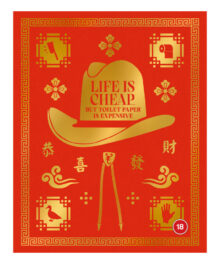
 Director: Wayne Wang
Screenplay: Spencer Nakasako, Amir Mokri, Wayne Wang
Starring: Spencer Nakasako, Wan Kin Chang, John Chan, Kwan Min Cheng, Allen Fong, Rocky Ho, Cinda Hui, Gary Kong, Lam Chung, Lo Lieh, Wei Lo, Cora Miao, Bonnie Ngai, Victor Wong, Wu Kin Man, Angela Yu Chien, Mr. and Mrs. Kai-Bong Chau (as themselves)
Country: United States
Running Time: 85 min
Year: 1989
BBFC Certificate: 18
Director Wayne Wang was inspired by some of the greats of cinema, from French New Wave director Jean-Luc Godard to Italian Spaghetti Western icon Sergio Leone. Wang was born and raised in Hong Kong and brought up with an American influence. His Hollywood-loving father named him after film star John Wayne and watched Hollywood movies with him.
Wang moved to the United States when he was 17, and it was whilst in America that he studied film and television at California College of Arts and Crafts in Oakland and then embarked on a film career of mostly independent productions, including the likes of Dim Sum: A Little Bit of Heart, Eat a Bowl of Tea, and The Joy Luck Club.
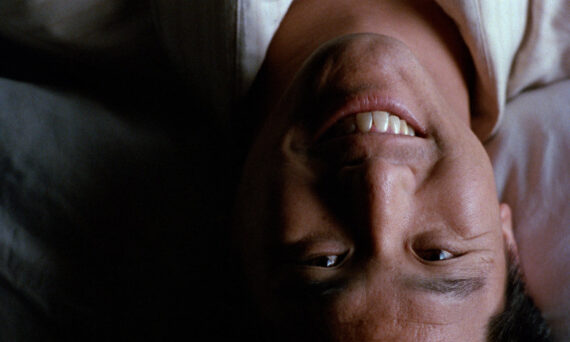
For Life is Cheap… but Toilet Paper is Expensive, his influences, both from film but also his life, can be seen on the big screen, together with a plethora of outlandish characters and sequences which were, mostly, inspired by stranger than fiction news stories or tales from gossip columns.
For example, the title character is nameless, just like the Man With No Name whom Clint Eastwood portrays in Leone’s Three Dollars Trilogy. There’s a Western feel to the film (Wang’s father loved Westerns so Wang came across the genre at a young age), the style of a Jean-Luc Godard film, and Wang’s love of still portraits (characters pose for the camera as portraits throughout the film).
The film follows the Man With No Name (Spencer Nakasako), an English-speaking Asian cowboy figure, who arrives in Hong Kong to see it before the “Wild, Wild East” disappears (with the 1997 transfer of the region from the United Kingdom to China) and who is tasked with delivering a mysterious briefcase to a Triad boss (Wei Lo). The briefcase is soon stolen and our hero has to track it down.

We meet a variety of other characters along the way, including Money (Cora Miao), the girlfriend of the Triad boss, and the boss’s daughter (Bonnie Ngai) whom Money is secretly in love with.
The film, as an essay in the excellent accompanying booklet outlines, was a way for Wang to “negotiate his own feelings of foreignness and familiarity to his birthplace” of Hong Kong. So, what we get, as the essay astutely continues, is Wang’s “bravely uncensored account of his feelings for Hong Kong at the time”. That includes fondness for the city and people but also frustrations with it, too.
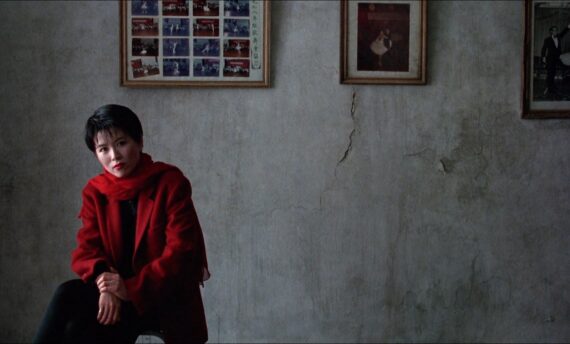
In an interview on the disc, Wang says how he and the crew “just did” what they wanted to do during the filming, and wanted the film to go just anywhere, rather than just focusing on a narrative. The result is incredibly unorthodox; characters address the screen, breaking the fourth wall in an almost documentary style manner, and there’s a real blending of fiction and documentary-style filmmaking. There are also frequent shifts in tone from humour to violence to action to some tender moments, too.
The centrepiece of the film is a technically bravura chase sequence, shot handheld, that runs for around six minutes and sees the briefcase stolen by two men. The chase takes in the streets, a mall, the stairwell of an apartment block, and more and sees the camera provide a first-person chase sequence with us, the audience, as the lead, chasing the thieves. The sequence leaves the first person at its conclusion, and we see the lead character covered in what seems to be flour. It’s fantastic, masterful filmmaking.
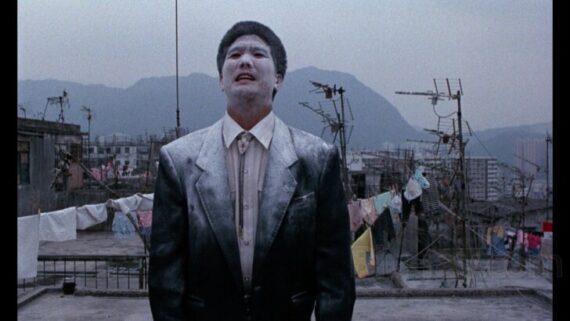
It’s true guerrilla filmmaking, apparently no permits being secured for some of the sequences, several shot documentary style, and with a range of styles deployed throughout. I couldn’t help but admire the craft on show.
A word of warning. There are some shocking, unflinching and incredibly uncomfortable moments in the film, from dead birds in a slaughterhouse, the walls covered in blood, and other uncomfortable sequences involving animals, to a sequence where our lead character is forced to eat faeces.
 It’s very rare that I come away from a film really not knowing what to make of it, but Life is Cheap… but Toilet Paper is Expensive has done that for me. I found so much to admire in the avant-garde film, but found it equal parts perplexing. But then director Wang wanted to make a film with no restrictions, not focused on narrative, and just seeing where it would take him. And on that front, he succeeded. There are some beautiful shots and excellent sequences in a film that’s always entertaining.
Film: 


Life is Cheap… but Toilet Paper is Expensive is available now from Radiance Films, who are distributing the Arbelos release of the film in the UK. The film looks amazing with its recent 4K restoration from the original 35mm colour interpositive. It’s a very visual film, and the new transfer allows the perfectly framed shots and use of colour to shine. Detail is fine, though there are some sequences where the quality dips, presumably because of the type of camera or film stock used. Overall, though, I found it to be a very pleasing transfer. The audio is also great, the film featuring a mix of English language, Cantonese and Mandarin throughout, with subtitles provided for the non-English language sections of dialogue. A note that the version included is the re-edited director’s cut of the film from a few years ago, which incorporates additional footage shot in Hong Kong in 1996.

Limited edition Blu-ray features:
New 4K restoration from the original 35mm colour interpositive
New video interview with director Wayne Wang
New video interview with co-writer/co-director Spencer Nakasako & Wang
Original full-length chase sequence
Trailer
Newly improved English subtitle translation
Limited edition booklet with new writing by Aliza Ma
Limited edition slipcover – exclusive to radiancefilms.co.uk
The video interview with director Wayne Wang is from 2023, when the Arbelos release of the film came out in the United States of America. It runs for 24 minutes and is really good. Wang discusses his upbringing, shares how he was named Wayne because his father was a film buff who loved John Wayne, and how he wasn’t allowed to see Chinese films as a child. Wang shares his views of Hong Kong, what led to him leaving for the USA and what got him into filmmaking, including his influences like French New Wave director Jean-Luc Godard. Wang also shares some great insights into the making of Life is Cheap, including the chase sequence. It’s a quite wonderful interview.
Equally good is the video interview, also from 2023, with co-writer/ co-director and star Spencer Nakasako and Wang. Running for half an hour, the pair together are really entertaining, starting with a look at film ratings and censorship, the film’s reception and challenges in it being screened uncut, before moving on to inspirations for some of the sequences and much, much more. Frequently hilarious, and always incredible watchable, it’s probably my favourite of the extras, just edging that equally brilliant solo Wang interview.
The inclusion of the original full-length chase sequence is excellent and a chance to see more of the film’s standout scene from a technical perspective. It runs for 10 minutes, around four minutes longer than the version in the final film.
A trailer for the Arbelos release is also included and runs for two minutes. It sells the film well, and includes quotes from reviews.
The booklet is fantastic and includes a fabulous overview of director Wang by Aliza Ma, followed by a very in-depth interview with the director, which manages to give plenty of information that isn’t shared in the on-disc interviews. This is an upgrade to the booklet featured in the original Arbelos release, which only contained Aliza Ma’s essay.
Finally, the limited edition release available on the Radiance Films website comes with a beautiful and tastefully produced slipcase.
In closing, the distribution of the US Arbelos disc in the UK by Radiance Films is incredibly welcome. The disc contains a strong transfer of the 2021 director’s cut of Life is Cheap… but Toilet Paper is Expensive, and includes a brilliant booklet and two great interviews totalling almost an hour, as well as the full-length version of the bravura chase sequence.
Disc/Package: