



 Director: Wallace Worsley
Screenplay: Perley Poore Sheehan, Edward T. Lowe Jr., Chester L. Roberts (uncredited)
Based on a Novel by: Victor Hugo
Starring: Lon Chaney, Patsy Ruth Miller, Norman Kerry, Kate Lester, Winifred Bryson, Nigel De Brulier, Brandon Hurst, Ernest Torrence
Country: USA
Running Time: 100 min
Year: 1923
BBFC Certificate: TBC
Victor Hugo’s classic 1831 novel ‘Notre-Dame de Paris’, better known in English as ‘The Hunchback of Notre Dame’, is among the most famous works of French literature. As such, it’s been adapted into a huge array of films, TV programmes, radio serials, ballets, theatrical productions, concept albums and even a couple of video games over the past near-two-hundred years.
There are three film adaptations that are probably best known from the dozen or so that currently exist. These include the 1996 animated Disney version and the 1939 version starring Charles Laughton. However, the first major adaptation for the screen (but the fifth overall), that proved a benchmark for future efforts, was the silent 1923 version directed by Wallace Worsley and starring Lon Chaney, the ‘man of a thousand faces’.
The film was one of Universal’s ‘super jewel’ productions, i.e. one of their most expensive blockbusters, costing over $1,250,000 to produce, and went on to become the studio’s most successful silent film, grossing $3.5 million, an impressive sum at the time.
It continued to have an impact as time went on, with some seeing the film as the start of the horror movie cycle. It’s not what you’d call a horror movie now, playing out more like a historical melodrama, but its success and the grotesque side of the film led to Universal’s groundbreaking horror classics that blossomed in the early sound era.

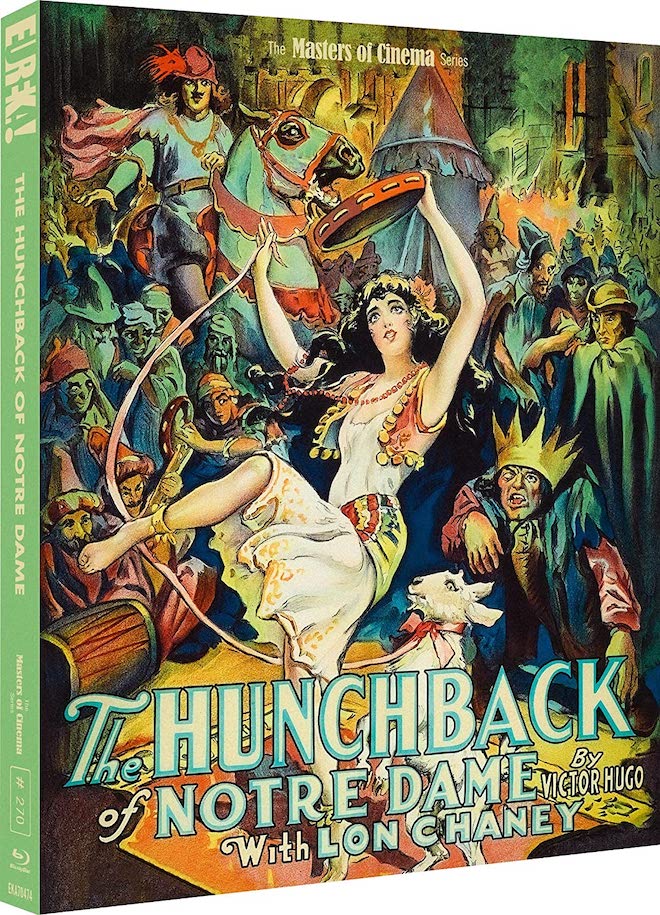
Eureka are soon releasing Worseley’s take on The Hunchback of Notre Dame on Blu-ray in the UK, as part of their Masters of Cinema series. I hadn’t seen the film before and have fond memories of the Laughton version, so thought I’d give it a try. Here’s what I thought about it.
I’m sure you know the story. If not, where have you been these last couple of centuries? But, in summary, the film is set in 1482 around Notre Dame Cathedral in Paris. We follow the trials and tribulations of a number of characters, largely the beautiful Roma girl Esmerelda (Patsy Ruth Miller), who’s popular among the local populace, Captain Phoebus (Norman Kerry), who falls madly in love with Esmerelda despite being engaged to Fleur de Lys (Winifred Bryson), Jehan (Brandon Hurst), the evil brother of Notre Dame’s saintly archdeacon Dom Claude (Nigel De Brulier), and Clopin (Ernest Torrence), the self-appointed ‘King of the Beggars/Thieves’.
Caught up in everyone’s romances and wicked schemes is the titular hunchback, Quasimodo (Chaney), a disfigured, simple-minded man who lives in the cathedral and is a servant to Jehan. Quasimodo does the wicked lord’s bidding until he falls in love with Esmerelda, who comforts him after a public flogging.
When Esmerelda is sentenced to death after being wrongfully accused of attempting to kill Phoebus, Quasimodo saves her from the gallows and offers her sanctuary in the cathedral. This and other actions stir up the local underworld though who, led by Clopin, storm Notre Dame.
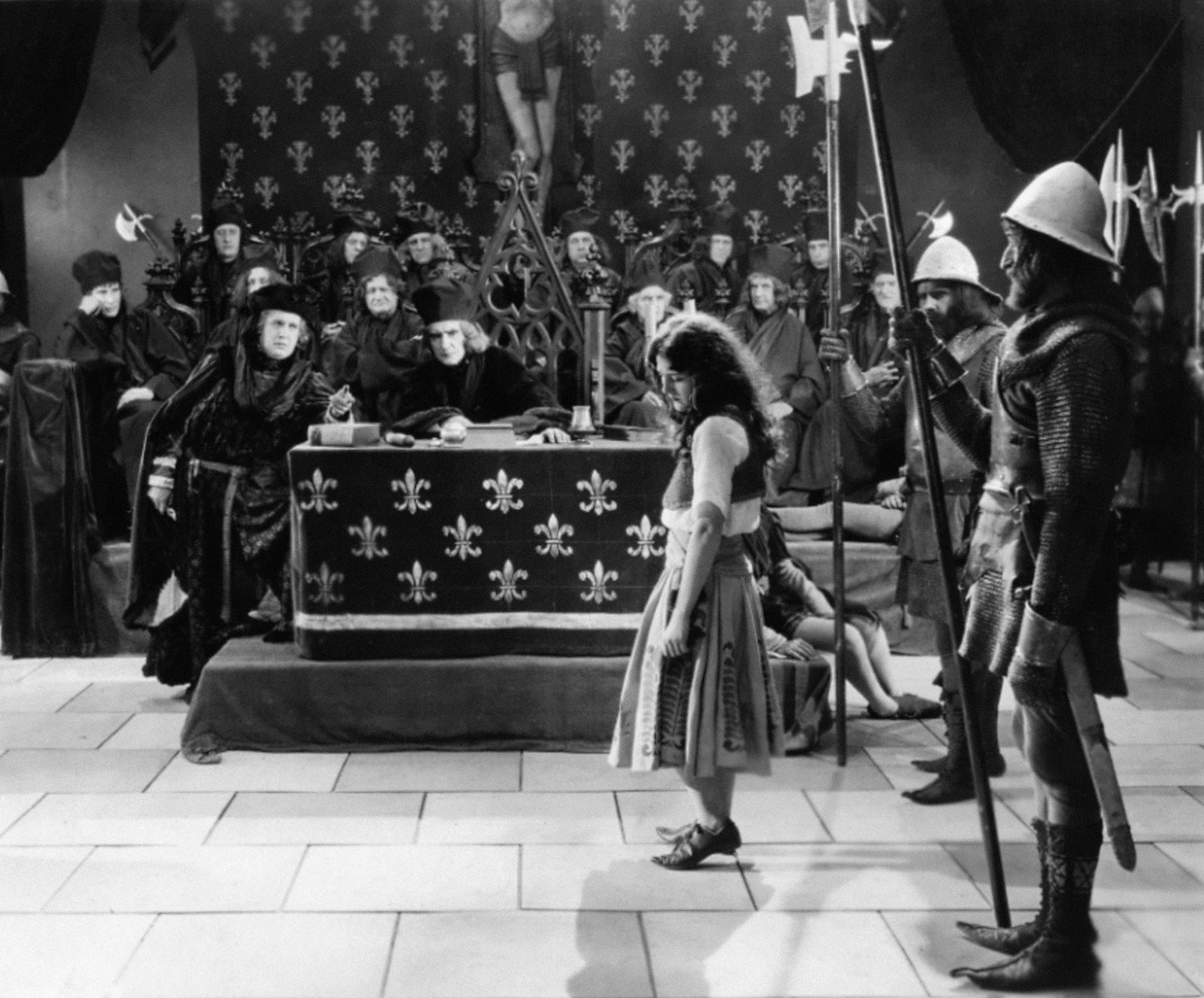
I didn’t find this early adaptation of The Hunchback of Notre Dame had quite the emotional wallop of the 1939 version and it didn’t grab me in quite the same way as Universal’s other late silent ‘super jewel’ The Man Who Laughs, but it remains a polished, grand and well-told tale that keeps you enthralled.
No expense was spared in bringing the much-feted novel to the screen and this shows in some spectacular gothic sets and busy crowd scenes. The latter breathe much life into the film, particularly in the grand set-pieces around the ‘Festival of Fools’, ‘Court of Miracles’ and the final riot.
It’s Chaney’s film though, really. Though this is one of the few adaptations of the dense novel that remains more of an ensemble piece, focusing on numerous narrative strands, it’s the Quasimodo character that sticks in the mind. Chaney, as usual, put his body through torture for the role, wearing various inhibitive prosthetics and physical aids. Despite all the obstacles, he delivers a fiercely animalistic performance.
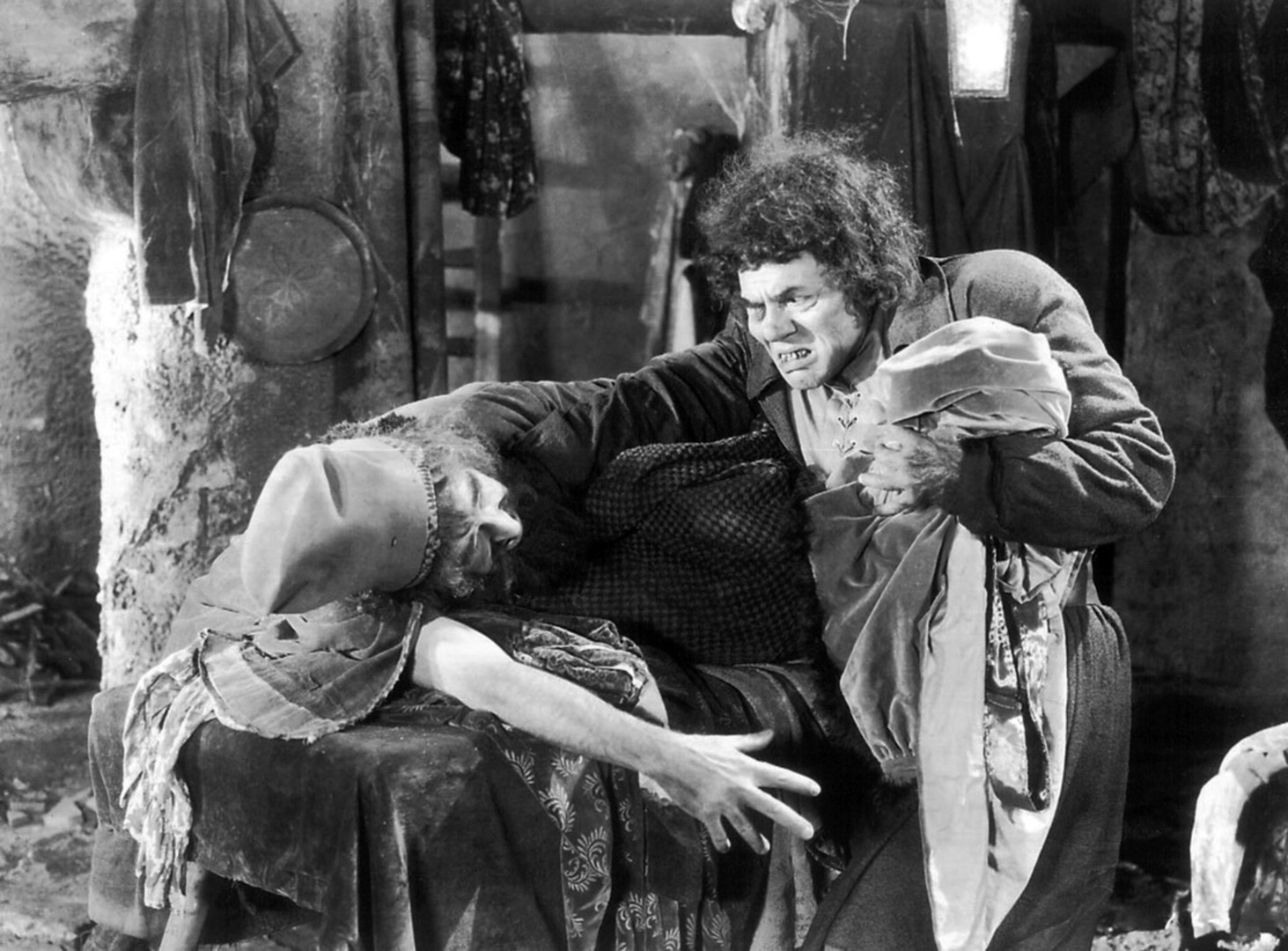
His Quasimodo isn’t quite as lovable as some later depictions, with a violent temperament, though we are still able to sympathise with him due to how the character is treated as well as through Chaney’s performance. The howl he gives after his flogging is so powerful you feel as though you can actually hear it, despite the silent presentation. You can also practically feel the joy when Quasimodo dances on and around the bells after being elated by Esmerelda’s presence.
At least 15 minutes of material was cut out or lost from the film following its original release and that shows from time to time in the version we now see. There are a few story jumps and dropped threads, for instance. However, whether caused by these cuts or not, the film flies by and largely balances the various characters and plot points very effectively.
So, on the whole, The Hunchback of Notre Dame is a classic tale effectively told on a grand scale and holds up well among the many screen adaptations of the novel. Centred around a stunning performance by Chaney, it’s a fine example of a silent movie blockbuster.
Film: 


The Hunchback of Notre Dame is out on 17th October on Blu-Ray in the UK, released by Eureka as part of their Masters of Cinema series. Only a 16mm print exists so it’s not a sharp and pristine image, but it’s likely as good as the film will ever look unless the negatives are discovered. The suitably grand score comes through nicely though.
The Blu-ray includes:
– Limited Edition O-Card Slipcase [2000 units]
– 1080p presentation on Blu-ray from a 4K restoration conducted by Universal Pictures
– Music by Nora Kroll-Rosenbaum & Laura Karpman (presented in uncompressed LPCM stereo)
– Brand new audio commentary with author Stephen Jones and author / critic Kim Newman
– Brand new interview with author / critic Kim Newman on the many adaptations of Victor Hugo’s novel
– Brand new interview with film historian Jonathan Rigby
– A collector’s booklet featuring a new essay by journalist Philip Kemp, illustrated with archival imagery
Stephen Jones and Kim Newman’s commentary makes for wonderful listening. The pair know their onions and talk about the history of Chaney and others involved in the production whilst also discussing the differences between the film, novel and other interpretations of Hugo’s story.
Newman also provides a fascinating interview about the history of Hugo’s novel and the vast array of stage and screen adaptations that followed.
Jonathan Rigby goes more in-depth into the production history of this particular version of ‘The Hunchback’. He also gives an overview of the cast and breaks down some of the qualities and flaws of the film. It’s an excellent coverall piece.
I jumped the gun a bit on my review, so haven’t received the booklet yet. Eureka are one of the best in the business at compiling these though, so it’s sure to be loaded with well-written essays.
Overall then, Eureka have given a silent classic the platinum treatment it deserves. Recommended.
Disc: